
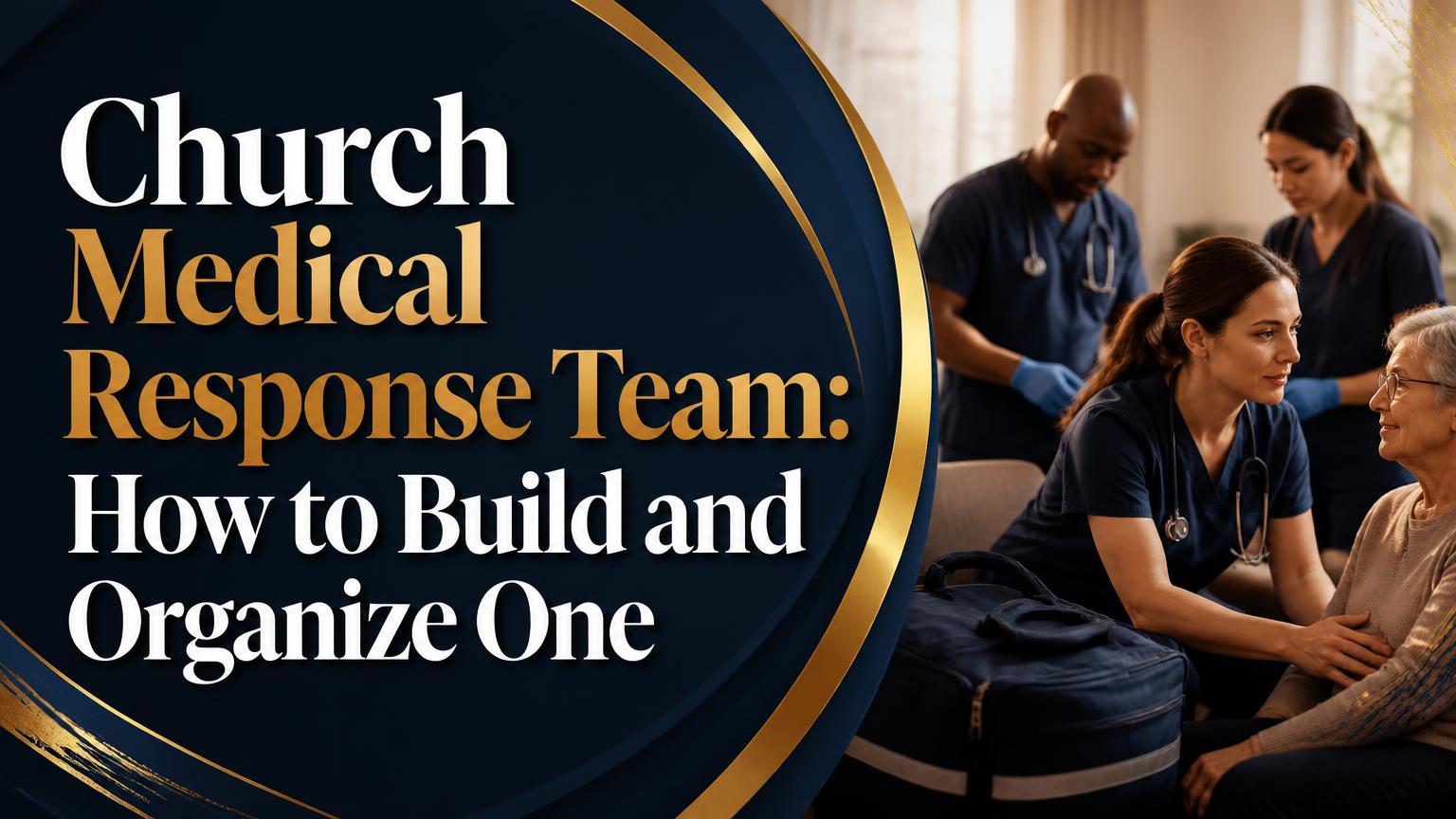
A church medical response team provides organized first-aid and emergency support during worship services, classes, outreach programs, conferences, and other church activities. Its purpose is not to replace emergency medical services or operate as an unsupervised clinic. Instead, it gives prompt, competent assistance until a person recovers, receives care from a qualified clinician, or is transferred to professional responders. A successful team combines trained volunteers, clear authority, reliable equipment, communication procedures, safeguarding practices, and regular drills.
Church Medical Response Team: How to Build and Organize One
Define the Mission and Boundaries
Begin with a written mission statement. The team may be responsible for recognizing emergencies, providing basic first aid and CPR, using an automated external defibrillator (AED), responding to injuries, supporting people with known medical conditions, and coordinating with emergency services. It may also review hazards before large events and advise church leaders about prevention.
The boundaries must be equally clear. Volunteers should work only within their training, authorization, and comfort level. A team member should not diagnose illness, prescribe medication, perform invasive procedures, transport seriously ill people in a private vehicle, or delay an ambulance while attempting treatment beyond the team’s competence. The team’s central rule is simple: provide appropriate immediate care, activate professional help early, and avoid making the situation worse.
Choose Leadership and Define Roles
One person should coordinate the program, maintain records, arrange training, inspect supplies, and communicate with church leadership. This coordinator does not need to be the most medically advanced volunteer, but should be organized, dependable, and capable of making decisions during a stressful event.
Useful roles include:
- Medical team coordinator: Maintains the plan, roster, training records, and equipment.
- On-duty responder: Serves as the primary contact during a service or event.
- Communications lead: Calls emergency services, directs responders to the correct entrance, and relays updates.
- Safety or access lead: Controls hazards, clears pathways, and keeps bystanders away when appropriate.
- Documentation lead: Records the incident factually and securely after the situation ends.
- Church liaison: Connects the team with pastors, ministry leaders, facilities staff, and event organizers.
On a small campus, one person may perform several roles. During a large event, responsibilities should be assigned in advance rather than improvised.
Recruit and Verify Volunteers
Recruit people with current medical, nursing, emergency medical, first-aid, CPR, or mental-health training, but do not assume that professional credentials alone make someone suitable for every church response. A licensed clinician may still be unfamiliar with the team’s procedures, equipment, or legal limitations. Other valuable volunteers may have no clinical background but can manage communication, crowd control, access, documentation, or logistics.
Every volunteer should complete the church’s normal screening and safeguarding process, especially if the team may respond in children’s areas, youth programs, overnight events, or private pastoral settings. Collect emergency contact information, relevant certifications, availability, and any restrictions the volunteer wants the coordinator to know. Participation should remain voluntary, and volunteers should be able to decline assignments outside their competence.
Create Written Response Procedures
A short response plan should answer the questions that become difficult during an emergency:
- How does someone request medical help?
- Who calls the local emergency number?
- Where are the AED, first-aid kits, gloves, and other supplies?
- Who meets an ambulance at the entrance?
- How are children, vulnerable adults, or people with communication needs supported?
- Who informs a family member or church leader?
- Who documents the incident?
- When is the facility or ministry area closed because of a hazard?
The plan should include the church’s address, building names, room numbers, access points, elevator locations, parking instructions, and the best ambulance entrance. A responder should not have to search for this information while someone is seriously ill.
Procedures should address common situations such as fainting, falls, bleeding, burns, allergic reactions, seizures, chest pain, breathing difficulty, suspected stroke, diabetic emergencies, head injuries, and severe emotional distress. The response should always prioritize scene safety, rapid assessment, emergency activation when indicated, and continued monitoring.
Assemble Equipment and Communication Tools
A basic equipment system should include gloves, protective barriers, gauze, dressings, adhesive bandages, medical tape, antiseptic supplies, instant cold packs, scissors, hand sanitizer, a flashlight, a sharps container when needed, and a method for recording incidents. The church should also maintain clearly marked AEDs and inspect them according to the manufacturer’s instructions. Supplies need to be accessible, inventoried, replenished, and protected from extreme temperatures or unauthorized use.
The team also needs dependable communication. Options may include radios, a dedicated phone, an internal extension, text alerts, or a public-address procedure. Choose one primary method and one backup. Test communication in basements, classrooms, parking areas, and outdoor spaces where reception or sound may be poor. Every event briefing should identify who carries the communication device and who has authority to activate emergency services.
Train, Drill, and Review
Training should match the team’s actual responsibilities. At minimum, designated responders should maintain current CPR and first-aid training, and the church should provide AED instruction. Additional education may cover bleeding control, allergic reactions, seizure first aid, child and infant emergencies, mental-health crisis response, infection control, disability awareness, and the use of church-specific equipment.
A certificate is not the same as readiness. Conduct practical exercises using realistic but non-traumatic scenarios: a collapse during worship, a child injured on a playground, an allergic reaction at a meal, or a fall in a crowded hallway. After each drill or real incident, ask what worked, what caused delay, whether equipment was reachable, and whether roles were understood. Update the plan rather than treating it as a document that is written once and forgotten.
Decide What the Team Should Handle
A church medical response team should handle immediate, low-risk first aid and early emergency coordination. Examples include applying pressure to minor bleeding, providing basic care for small burns, assisting someone who feels faint, responding to a minor sprain, helping with an established personal medical plan when authorized, and supporting a person until family members or professional responders arrive.
Serious symptoms require rapid escalation rather than extended on-site treatment. These include unconsciousness, absent or abnormal breathing, chest pressure, severe breathing difficulty, signs of stroke, uncontrolled bleeding, severe allergic reaction, major trauma, suspected spinal injury, serious burns, poisoning, and sudden confusion or weakness. The response team should activate emergency services and follow dispatcher instructions while trained responders provide care within their qualifications.
The team should also distinguish first aid from ongoing medical management. A church generally should not function as a walk-in clinic, administer prescription medication without an appropriate policy and authorization, or store personal health information casually. If the church supports people who carry epinephrine, glucose, inhalers, or other prescribed treatments, its procedures should address consent, storage, access, documentation, and the limits of volunteer involvement.
Establish Legal, Ethical, and Safeguarding Guardrails
Legal requirements differ by location and may depend on the volunteer’s credentials, the kind of care provided, the presence of minors, and whether the church employs medical staff. Church leaders should review applicable laws, insurance coverage, occupational-safety expectations, and professional rules with qualified local advisers. Good Samaritan protections may exist, but they are not a substitute for training, reasonable conduct, consent, or following established procedures.
Consent matters. When a conscious adult can make decisions, explain what you intend to do and obtain permission. In an immediate life-threatening emergency, implied consent may apply when a person cannot respond, but volunteers should still act within their training. Procedures involving children should identify who may authorize care, how parents or guardians are contacted, and what happens when a guardian cannot be reached.
Privacy requires discipline. Share health information only with people who need it to provide care, coordinate emergency assistance, or meet a legitimate safeguarding responsibility. Store incident reports securely, avoid discussing cases in public areas, and do not photograph injured people or post details online. Documentation should record observable facts, actions taken, times, witnesses, and the transfer of care—not speculation, blame, or unnecessary medical history.
Safeguarding is broader than medical treatment. A responder should avoid being alone with a child or vulnerable adult when practical, follow the church’s two-adult or visibility policies, and distinguish medical assistance from pastoral counseling. A medical emergency may reveal abuse, neglect, self-harm risk, or another safeguarding concern; volunteers need a clear reporting pathway rather than trying to investigate the matter themselves.
Build the Program Around the Church’s Actual Risks
The right plan depends on the congregation and facility. A church with a preschool, commercial kitchen, sports ministry, large outdoor grounds, older members, or frequent community events faces different risks from a small congregation meeting in a rented room. Review previous incidents, building hazards, attendance patterns, seasonal activities, and the distance and access route for emergency vehicles.
Create a simple risk map showing AED locations, first-aid supplies, fire exits, locked doors, stairways, elevators, kitchens, playgrounds, athletic areas, and gathering spaces. During large events, assign a responder to areas where injuries are more likely and establish a visible medical-help point if appropriate. The goal is not to place a volunteer in every room; it is to reduce the time between an incident, recognition, emergency activation, and effective assistance.
Coordinate the plan with ushers, children’s ministry workers, security or facilities personnel, event leaders, and church administrators. These people often notice an emergency first or control access to the location. They should know how to summon the team, where emergency equipment is located, and when to call emergency services without waiting for permission.
Use a Simple Activation Workflow
A practical workflow can be remembered under pressure:
- Ensure safety. Do not enter a dangerous area or expose yourself to blood, fire, electricity, traffic, or violence.
- Assess the person. Check responsiveness and breathing, identify obvious life threats, and obtain relevant information when possible.
- Activate help early. Direct a specific person to call emergency services and another to retrieve the AED or first-aid kit.
- Provide care within training. Follow CPR, AED, first-aid, and dispatcher instructions as appropriate.
- Control the scene. Keep pathways clear, protect privacy, manage bystanders, and guide responders to the correct location.
- Transfer care clearly. Tell emergency personnel what happened, what was observed, what care was provided, and when it occurred.
- Document and debrief. Complete the incident report, replenish supplies, support affected volunteers, and correct weaknesses in the plan.
Direct assignments work better than general requests. “You in the blue shirt, call emergency services and return with the AED” is more reliable than shouting, “Someone call for help.” The workflow should be practiced until volunteers can use it without searching through a policy manual.
Measure Readiness Without Creating False Confidence
A functioning team is more than a list of names and a locked first-aid cabinet. Church leaders should periodically check whether trained responders are present at each major service, whether certifications remain current, whether equipment is accessible, whether emergency entrances are unlocked or quickly opened, and whether volunteers know how to summon help.
Review every incident for system improvements, not merely individual mistakes. A delayed response may reflect poor signage, an unreliable radio, an unclear children’s ministry policy, or a locked room rather than negligence by one volunteer. After-action reviews should be respectful and factual. They can lead to changes in staffing, equipment placement, training, building access, or event planning.
The team should also have a succession plan. Volunteers move, change jobs, or step away from ministry. Keep procedures understandable to new members, cross-train people for key roles, and appoint someone who can maintain the program when the coordinator is unavailable.
Conclusion
A church medical response team is best organized as a carefully limited emergency-support ministry, not as an informal medical service. Its strength comes from defined responsibilities, appropriately trained volunteers, accessible equipment, fast communication, clear escalation to emergency professionals, and consistent safeguarding. Begin with the church’s real risks, write procedures that people can follow under stress, practice them in realistic drills, and improve the system after every incident. The result is a safer church environment in which compassion is matched by competence, restraint, and dependable preparation.