
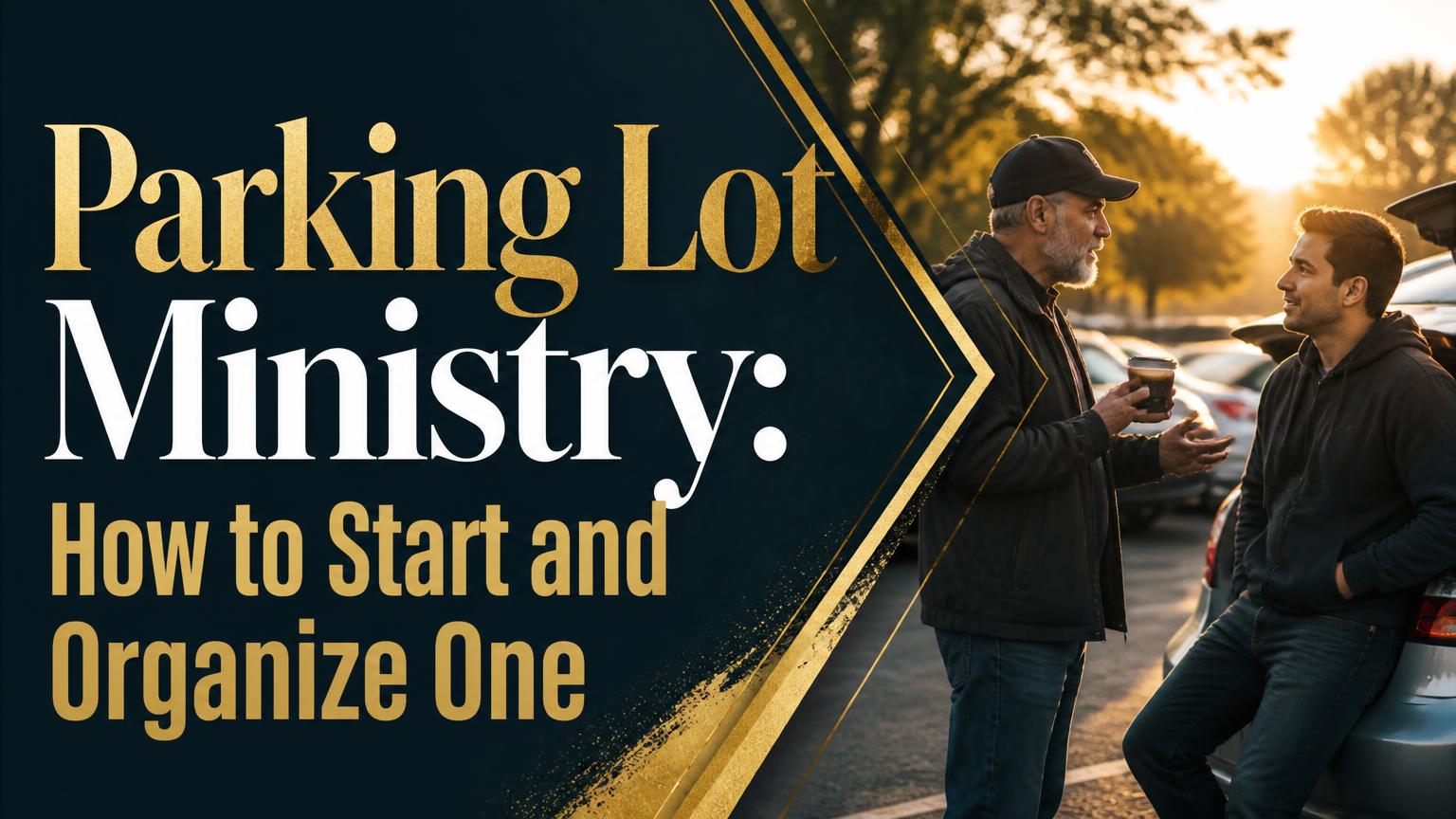
Parking lot ministry is a practical Christian ministry of welcome, service, safety, and connection that begins before people enter the church building and continues as they leave. Volunteers may greet families, direct vehicles, assist older adults and people with disabilities, answer questions, help newcomers find the right entrance, provide prayer, and respond appropriately to practical needs. The ministry is not merely traffic control. It communicates that every person is seen and valued while helping the church operate in an orderly and safe way.
Parking Lot Ministry: How to Start and Organize One
A successful parking lot ministry combines hospitality with responsible organization. Its purpose is to remove avoidable barriers between people and the church community without creating confusion about authority, safety, or personal boundaries. The following steps provide a workable structure for launching one.
Define the Ministry’s Purpose and Boundaries
Begin with a clear mission statement. For example: “The parking lot ministry welcomes guests, assists those with practical needs, supports safe traffic flow, and helps people connect with the church.” This gives volunteers a shared understanding of their work and prevents the ministry from becoming an undefined collection of tasks.
The ministry should also state what volunteers are not authorized to do. They should not physically confront aggressive drivers, search vehicles, provide medical treatment beyond their training, discipline children, promise financial assistance, or act as law enforcement. Clear boundaries protect volunteers and church attendees while directing serious concerns to pastors, designated safety personnel, emergency services, or other appropriate authorities.
Build a Safe, Welcoming Volunteer Team
Recruit people who are dependable, observant, patient, and comfortable speaking with strangers. Physical strength is not the main qualification. A volunteer may serve effectively by offering directions, noticing that someone needs assistance, or helping a confused guest find the correct entrance.
Use a team rather than relying on one person. A coordinator can oversee the service, while station volunteers cover arrival lanes, accessible parking areas, pedestrian crossings, and the main entrance. Establish a schedule with substitutes so the ministry remains dependable during illness, vacations, and seasonal attendance changes.
Biblically, this work reflects the call to practice hospitality and serve others with the abilities God provides. Romans 12:13 connects hospitality with Christian life, while 1 Peter 4:10 describes gifts as resources to be used in service. These passages do not create a formal “parking lot ministry” category, but they provide a sound framework for treating ordinary acts of assistance as meaningful ministry.
Assign Clear Roles for Each Service
Volunteers serve better when they know exactly where to stand and what decisions they may make. A typical Sunday team may include the following roles:
- Welcome volunteers: Greet arrivals, identify first-time guests, and explain where to go.
- Traffic guides: Help drivers understand the intended flow without stepping into unsafe positions.
- Accessibility assistants: Help people locate accessible spaces, ramps, drop-off points, or elevators.
- Pedestrian monitors: Watch busy crossings and encourage drivers and pedestrians to use designated routes.
- Prayer or care volunteers: Offer prayer when appropriate and connect urgent pastoral needs with church leaders.
- Team coordinator: Handles communication, weather decisions, incidents, and last-minute adjustments.
The exact arrangement should match the property. A small church may need only two volunteers, while a large campus may require several stations and a radio or phone communication plan.
Create a Simple Arrival-and-Departure Plan
Walk through the property during a busy service and observe where confusion occurs. Mark entrances, exits, overflow areas, accessible spaces, one-way lanes, pedestrian crossings, drop-off points, poorly lit areas, and locations where vehicles regularly back into traffic. A written site map can make training much easier.
Plan both arrival and departure. Guests often need more help leaving than entering because many vehicles move at once after a service. Decide who will remain outside, how pedestrians will reach their cars, whether traffic should be released in stages, and how volunteers will respond if a lane becomes blocked.
Signs, cones, high-visibility clothing, and simple hand signals can support the plan, but equipment does not replace judgment. Volunteers should never stand where a driver might not see them or assume that every driver will follow directions.
Train Volunteers to Serve With Discernment
Training should include more than instructions about where to park. Practice common situations: a family arriving late, a guest who cannot find the children’s entrance, an older adult requesting help, a driver who ignores directions, a minor collision, severe weather, and someone asking for financial assistance.
Teach volunteers to use a calm greeting, short explanations, and respectful language. They should ask before touching a person, wheelchair, walker, vehicle, or personal property. They should also understand confidentiality. A volunteer may hear about a medical, family, or financial concern, but should share information only with the appropriate ministry leader or emergency responder.
Prayer should be offered rather than imposed. A simple question such as, “Would you like me to pray with you or help you find a pastor?” respects the person’s choice and keeps the interaction focused on care rather than pressure.
What Parking Lot Volunteers Actually Do
Parking lot ministry is most effective when it addresses real needs rather than turning every interaction into a formal evangelistic conversation. The parking area is often where newcomers form their first impression of the congregation, and it is also where practical obstacles become visible.
Welcome and Orient Arrivals
A genuine greeting is more useful than a shouted instruction from a distance. Volunteers can say hello, identify themselves, point out the main entrance, and explain where families should go for children’s ministry, restrooms, or visitor information. If the property is confusing, walking with a guest may help more than giving several directions.
Newcomers should not be singled out in a way that embarrasses them. A friendly question—“Is this your first time here, or can I help you find something?”—allows people to explain what they need. Volunteers should avoid assuming someone’s religion, family situation, health condition, or reason for attending.
Support Accessibility and Practical Needs
A well-organized ministry considers people who use wheelchairs, walkers, canes, hearing aids, or other mobility and communication supports. Keep accessible spaces and curb ramps clear, prevent vehicles from blocking designated routes, and know the location of accessible entrances and restrooms.
Offer assistance without treating disability as a problem to be fixed. Ask, “How may I help?” rather than moving a mobility device or physically guiding someone without permission. Families with small children, pregnant women, older adults, and people temporarily injured may also benefit from a clear drop-off point or an escort to the entrance.
Guide Traffic Without Becoming Traffic Police
Traffic volunteers can point drivers toward available areas, identify closed lanes, and encourage vehicles to yield at crossings. They should use agreed signals and maintain visible positions. Reflective vests may be appropriate where vehicles are moving, especially in low light or poor weather.
Their role is guidance, not enforcement. Volunteers should not argue with drivers, block a vehicle deliberately, threaten consequences, or attempt to resolve disputes. If a driver behaves dangerously or aggressively, the safest response is to move away, alert the coordinator, and contact emergency services when necessary.
Safety, Policies, and Pastoral Boundaries
A church should treat parking lot ministry as a real ministry operation that requires preparation. Hospitality is not opposed to safety; good safety practices make hospitality more dependable and protect the people being served.
Establish Incident and Emergency Procedures
Write a short response plan for injuries, vehicle collisions, severe weather, missing children, suspicious activity, fire, and interpersonal conflict. Include the location of first-aid supplies, emergency exits, shelter areas, building contacts, and the address that should be given to emergency dispatchers.
Volunteers should know when to call emergency services rather than trying to manage a situation themselves. They should preserve the scene of a serious incident, avoid speculative statements, and promptly notify the designated church leader. The church should review its insurance, property-use requirements, and local regulations with qualified advisers rather than assuming that volunteer service eliminates liability concerns.
Protect Children and Vulnerable Adults
Parking areas create particular risks for children because vehicles move unpredictably and visibility can be limited. Children should not be escorted away from their guardians or taken into a vehicle by parking volunteers. If a child is separated from a parent, follow the church’s established child-protection and reunification procedure.
Use the same safeguarding standards required in other church ministries. Avoid isolated one-on-one situations, do not promise secrecy, and report concerns through the designated process. Volunteers who work around children should receive the church’s normal screening and training when applicable.
Plan for Weather and Changing Conditions
Heat, cold, rain, ice, darkness, and lightning can quickly make outdoor service unsafe. Set limits for when volunteers will remain outside, where they can take breaks, and how the ministry will operate during severe conditions. Provide water and weather-appropriate clothing, and rotate posts so no one remains exposed unnecessarily.
Poor weather also changes traffic patterns. Snowbanks may reduce visibility, rain may cause pedestrians to cross unexpectedly, and darkness may make reflective clothing essential. The coordinator should be empowered to suspend outdoor duties when conditions exceed the team’s training or equipment.
How to Organize the Ministry Week by Week
After launching the ministry, use a simple operating rhythm. Before each service, the coordinator checks weather, attendance expectations, construction or special events, equipment, and volunteer coverage. Volunteers then receive a brief assignment and safety reminder rather than a long meeting.
During service, the coordinator remains available to answer questions and redirect people to the right leader. Afterward, the team should report recurring problems: blocked accessible spaces, confusing signs, unsafe crossings, insufficient lighting, or repeated questions from guests. These observations can guide improvements to the property and the church’s communication.
Review the ministry periodically with church leadership. Useful measures are not only the number of greetings or visitor cards collected. Consider whether guests can find entrances easily, whether people with disabilities can move safely, whether volunteers understand their boundaries, and whether incidents are handled consistently. A parking lot ministry succeeds when it reduces confusion, reflects Christian character, and connects practical service with genuine welcome.
Conclusion
Parking lot ministry is a practical expression of Christian hospitality that begins before worship and often continues after the service ends. To organize one well, define its purpose, assign clear roles, train volunteers, plan for accessibility and traffic, establish safety boundaries, and provide procedures for emergencies and safeguarding. The ministry should be warm without being intrusive and orderly without becoming controlling. When volunteers serve attentively and wisely, the parking lot becomes more than a place for vehicles: it becomes an early point of welcome, care, and connection for the church community.