
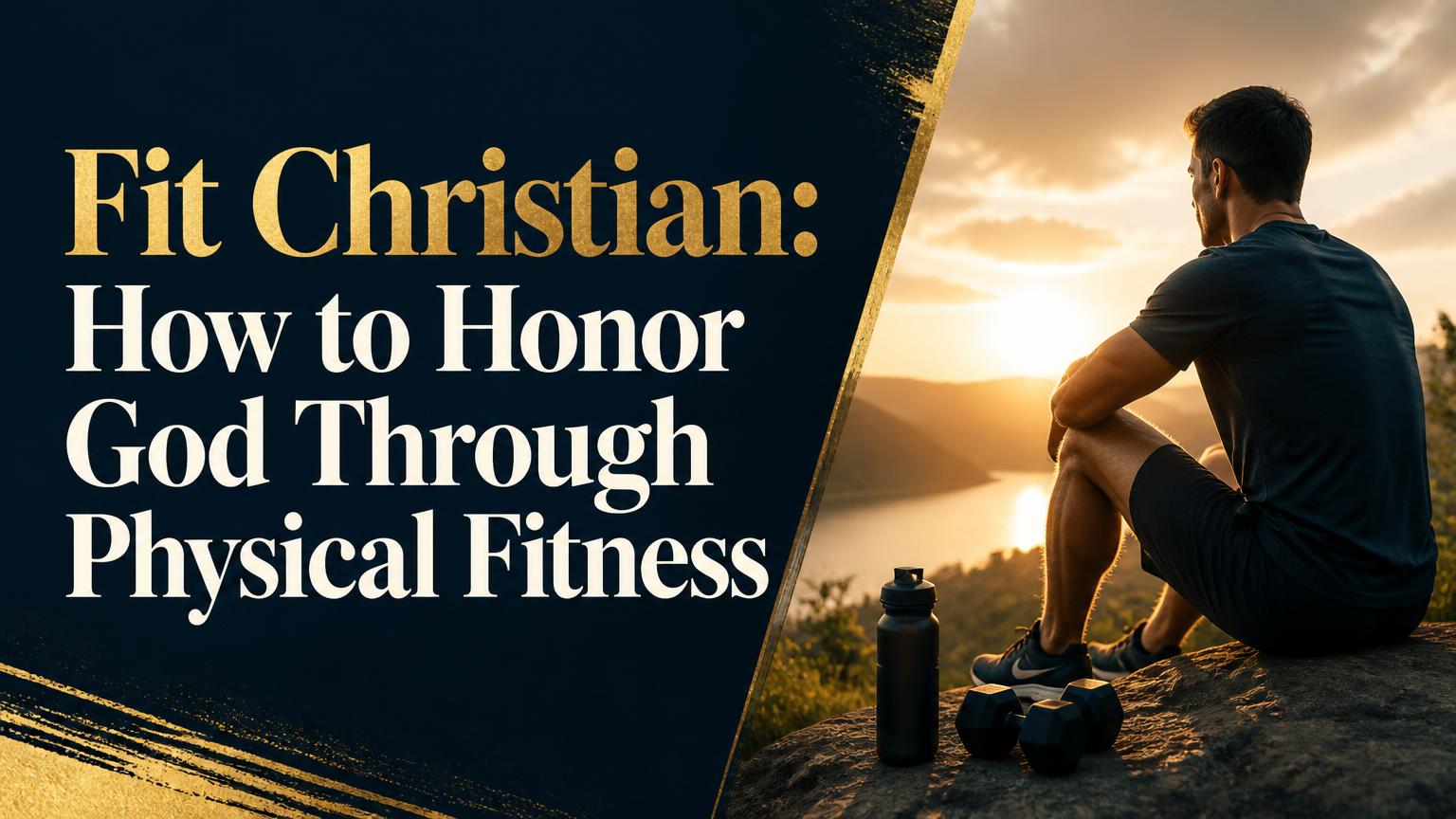
Physical fitness can be part of faithful Christian stewardship, but it is not a requirement for salvation or a measure of spiritual maturity. A fit Christian seeks to care for the body God has entrusted to them while keeping exercise, nutrition, appearance, and performance in their proper place. Christian fitness joins physical discipline with sound motives, humility, self-control, rest, and love for God and neighbor. It also recognizes that health, ability, age, disability, resources, and life circumstances differ widely from person to person.
What Does It Mean to Be a Fit Christian?
A fit Christian is not simply someone who has visible muscles, runs long distances, follows a strict diet, or meets a particular body-composition standard. The term describes a believer who pursues physical health as one part of responsible discipleship, without treating fitness as an idol or confusing bodily condition with spiritual worth.
Christian fitness is therefore about direction and stewardship rather than appearance. It asks whether a person is using their body, time, energy, and abilities wisely for faithful living.
Treat Fitness as Stewardship, Not Salvation
The body is a gift and responsibility, but physical fitness does not earn God’s acceptance. Christians are justified by God’s grace through faith, not by athletic performance, weight loss, dietary perfection, or physical appearance. Exercise should flow from gratitude and wise stewardship, not from an attempt to prove worth before God.
First Corinthians 6:19–20 teaches that believers should honor God with their bodies. In its immediate context, Paul addresses sexual immorality and bodily holiness, so the passage should not be reduced to a slogan about workouts. Still, it supports the broader principle that the body matters to Christian discipleship. Caring for it can help a person serve, work, worship, and love others with greater consistency.
Pursue Whole-Person Health
Christian fitness includes more than strength or endurance. Physical health interacts with sleep, stress, emotional well-being, relationships, work, and spiritual practices. A person who exercises intensely but regularly neglects sleep, family responsibilities, honesty, or prayer has not necessarily achieved a balanced form of fitness.
The biblical vision of discipleship treats people as integrated beings rather than divided into unrelated parts. Romans 12:1 describes presenting the body to God as a living sacrifice. That involves the whole person: habits, decisions, desires, energy, and conduct. Physical training can support faithful living, but it remains one dimension of a larger life of obedience.
Examine Motives Before Measuring Results
The same workout can arise from very different motives. One person may exercise to gain energy for serving family and community; another may be driven by fear, vanity, comparison, or compulsive control. External behavior alone does not reveal whether a practice is spiritually healthy.
Useful questions include: Am I caring for my body or punishing it? Can I rest without guilt? Has fitness displaced worship, relationships, work, or service? Do I despise people whose bodies differ from mine? Am I pursuing health, or am I seeking identity through appearance and performance? These questions expose whether discipline is serving love or becoming an idol.
Hold Physical Training in Proper Perspective
Paul writes in 1 Timothy 4:8 that bodily training has some value, while godliness has value for all things. This is not a rejection of exercise. It is a statement about proportion. Physical training produces real but limited benefits; spiritual maturity shapes a person’s relationship with God and their conduct across every area of life.
The distinction matters because Christian culture can sometimes praise fitness with the same intensity as secular culture. A strong body may be useful, but it cannot produce patience, wisdom, forgiveness, holiness, or faithfulness by itself. Exercise is valuable when it supports those virtues rather than competing with them.
Biblical Principles for Christian Fitness
Several biblical themes provide a sound framework for physical fitness. Scripture does not prescribe a universal workout routine or body type, but it offers principles about stewardship, discipline, self-control, rest, freedom, and love.
Discipline Should Serve a Worthy Purpose
Paul uses athletic training as an illustration in 1 Corinthians 9:24–27. His point concerns disciplined ministry and self-control, not a command that every Christian become an athlete. The metaphor is useful because meaningful goals usually require repeated choices rather than occasional enthusiasm.
A Christian might apply this principle by establishing a manageable walking routine, strengthening the body for work, improving cardiovascular health, or reducing habits that undermine energy. Discipline becomes most durable when connected to a purpose larger than appearance. “I want energy to care for my children” or “I want to remain capable of serving others” can provide a healthier foundation than constant comparison with an idealized body.
Self-Control Includes Freedom From Compulsion
Christian self-control does not mean maximizing restriction. It means refusing to be mastered by destructive desires, including overeating, substance misuse, compulsive exercise, or obsessive concern with appearance. First Corinthians 6:12 presents the principle that believers should not be dominated by anything.
This principle creates balance. A person may choose nutritious food without labeling every indulgence as sinful. They may train seriously without treating missed workouts as moral failure. They may pursue weight-related health goals without assuming that thinness equals holiness. Freedom allows wise choices while resisting bondage to rules, numbers, mirrors, or public approval.
Rest Is Part of Responsible Care
Training creates stress that the body must recover from. Rest, sleep, lighter activity, and recovery days are not signs of laziness; they are part of how physical adaptation occurs. Constant exertion can increase fatigue, injury risk, irritability, and loss of motivation.
Biblical teaching about Sabbath establishes a pattern in which human beings are not defined solely by production. Although Sabbath is not simply a sports-recovery rule, it challenges the belief that worth depends on continuous output. A Christian fitness plan should leave room for sleep, worship, relationships, recreation, and unhurried restoration.
How to Build a Christian Fitness Practice
A practical approach should be realistic, flexible, and consistent with a person’s health and responsibilities. Fitness does not require expensive equipment or an extreme lifestyle. Walking, cycling, swimming, recreational sports, body-weight exercises, resistance training, mobility work, and active service can all contribute to physical well-being.
Set Goals Related to Health and Service
Choose goals that can be evaluated without making appearance the center of identity. Examples include walking regularly, improving mobility, gaining strength for daily tasks, managing blood pressure with medical guidance, sleeping more consistently, or developing enough endurance for a charity event or outdoor activity.
Goals should fit the person’s current condition. Someone recovering from illness, living with a disability, managing pain, or carrying significant responsibilities may need a very different plan from a healthy competitive athlete. Progress can mean improved function, reduced fatigue, better balance, or greater confidence—not merely a change on a scale.
Combine Different Forms of Movement
A balanced program commonly includes aerobic activity, resistance training, mobility, and ordinary movement throughout the day. Aerobic exercise challenges the heart and lungs; resistance training supports muscle and bone strength; mobility work helps maintain usable range of motion. Everyday activity, such as walking, gardening, climbing stairs, or active play, also matters.
The appropriate amount and intensity depend on age, health, experience, and goals. Beginners generally benefit from gradual progression rather than sudden intensity. People with chronic conditions, pregnancy-related concerns, significant pain, or a history of injury should seek qualified medical or rehabilitation advice before making demanding changes.
Eat for Nourishment, Not Fear
Food can be approached with gratitude, wisdom, and moderation. First Corinthians 10:31 connects eating and drinking with the glory of God, which encourages neither careless excess nor anxious perfectionism. Nutritious meals can support energy, recovery, and disease prevention, while enjoyment and cultural traditions can remain part of a healthy pattern.
Christian nutrition should avoid turning food into a test of righteousness. Different bodies and medical conditions require different approaches. A registered dietitian or physician may be appropriate when someone has diabetes, food allergies, gastrointestinal disease, an eating disorder, or another condition requiring specialized guidance.
Practice Fitness With Community and Humility
Community can strengthen consistency and protect against isolation. A walking group, church recreation program, training partner, or supportive family member can provide encouragement without turning exercise into competition. Shared activity may also create opportunities for friendship and service.
Humility keeps fitness from becoming a source of superiority. Stronger or healthier people can encourage others without shaming them, and those with limitations should not be treated as less disciplined or less faithful. Christian community should make room for different abilities, bodies, ages, and levels of participation.
Fitness, Appearance, and Christian Identity
Physical appearance can influence how people are treated, but it is an unstable foundation for identity. Bodies change through age, illness, childbirth, injury, disability, and ordinary biological variation. Even excellent training cannot permanently preserve a particular appearance. Building identity on appearance therefore creates anxiety and comparison.
Christian identity rests in relationship with God through Christ, not in attractiveness, strength, weight, or athletic achievement. This does not make appearance irrelevant; personal grooming and health can be reasonable concerns. It means they must remain subordinate. A person may seek physical improvement while refusing to despise their present body or measure another person’s character by physical condition.
Fitness also has ethical limits. Encouraging health should never become mocking, unsolicited body commentary, public weigh-ins, or assumptions about another person’s habits. Some medical conditions are invisible, and body size does not reliably reveal fitness, diet, character, or spiritual commitment. A faithful approach combines truthful health goals with compassion and dignity.
When Exercise Becomes Spiritually or Physically Unhealthy
Exercise is generally beneficial, but more is not always better. Warning signs include training through serious pain, refusing all rest, hiding workouts, intense distress over missed sessions, persistent exhaustion, repeated injuries, severe food restriction, or allowing exercise to displace work, worship, sleep, and relationships.
These patterns may indicate compulsive exercise or an eating disorder rather than admirable discipline. Prayer and personal resolve can be valuable, but they should not replace professional help when someone is trapped in harmful behavior. A physician, licensed mental-health professional, or qualified dietitian can help address physical and psychological risks. Seeking help demonstrates honesty and stewardship, not weak faith.
Christian freedom also means accepting seasons when normal exercise is impossible. Illness, caregiving, injury, pregnancy, disability, and aging may require adaptation. Resting, receiving assistance, and grieving lost abilities can all be faithful responses. The body’s limitations do not reduce a person’s value before God.
Conclusion
A fit Christian seeks physical health as an act of wise stewardship, not as a path to salvation or a measure of spiritual superiority. Exercise, nourishing food, sleep, mobility, and strength can support a person’s ability to work, serve, worship, and love others. Yet Christian fitness must remain governed by grace, self-control, humility, and freedom rather than vanity, fear, comparison, or compulsion. The goal is not a universally ideal body; it is faithful care of the body and life God has entrusted to each person, within their actual abilities and circumstances.