
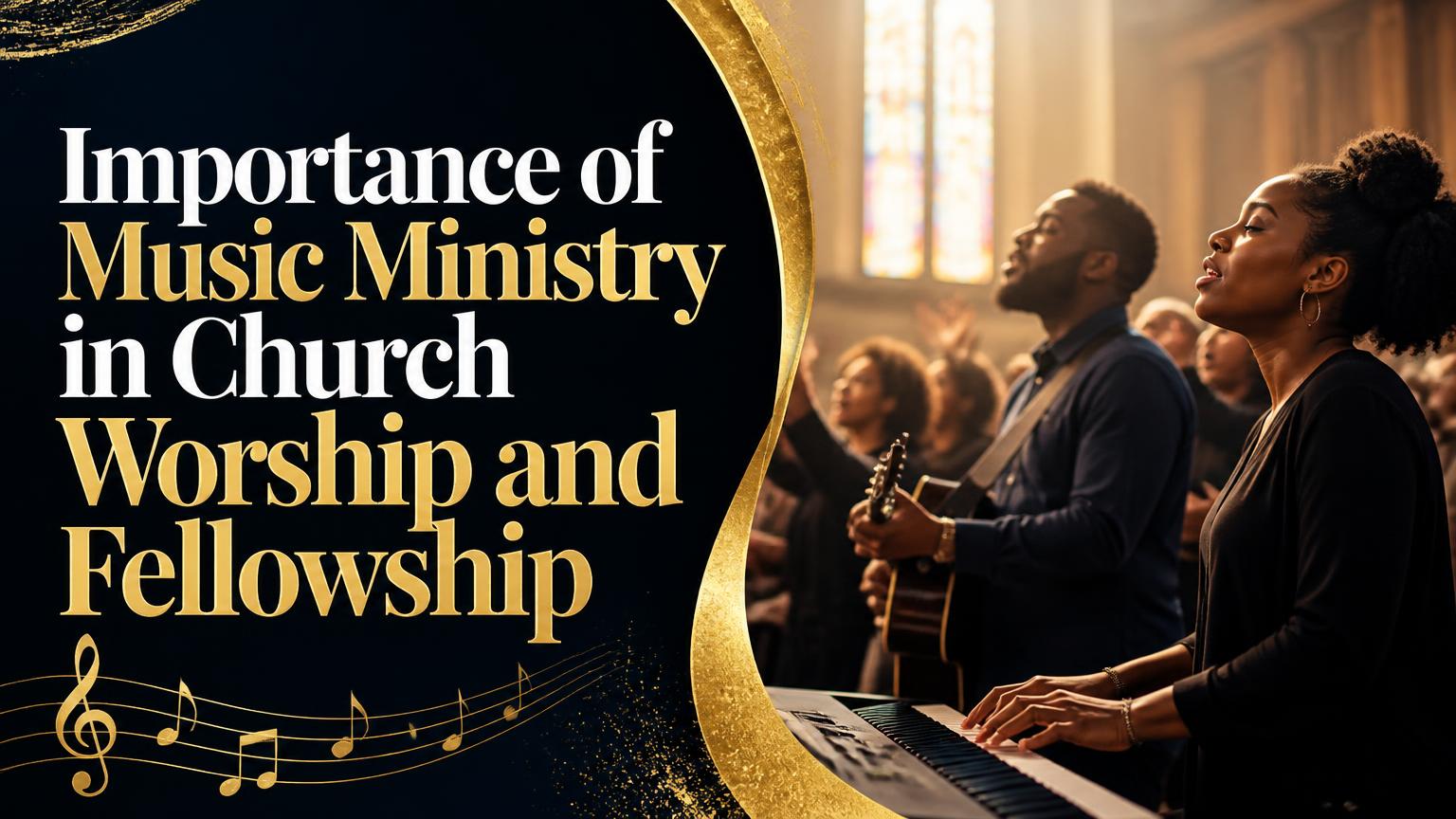
Music ministry is important in church because it helps the congregation worship God, remember biblical truth, express faith, and participate together rather than merely observe a service. Its value, however, does not come from musical style, technical excellence, or emotional intensity alone. Music becomes ministry when it serves the gospel, strengthens the church, and directs attention toward God. Healthy music ministry therefore joins spiritual maturity, biblical substance, congregational participation, pastoral wisdom, and responsible musical preparation.
What Is the Importance of Music Ministry in Church?
Music ministry supports several essential purposes of the gathered church. It gives believers a shared language for praise, confession, thanksgiving, lament, and hope. It also helps the church teach truth, encourage one another, and develop the gifts God has given different members. When music serves these purposes, it becomes more than an opening activity or performance; it becomes one means through which the church worships and builds up the body of Christ.
It Directs the Church Toward God
The primary purpose of Christian music is to turn the church’s attention toward God’s character and work. Songs of praise declare who God is; songs of thanksgiving remember what He has done; songs of confession acknowledge human sin and the need for grace. The Psalms demonstrate this wide range, moving from celebration to fear, grief, repentance, confidence, and hope.
This purpose protects music ministry from becoming centered on the musicians or the congregation’s emotional response. A song may be moving without being spiritually formative, while a simple hymn or chorus may faithfully focus the church on God’s holiness, Christ’s saving work, and the promises of Scripture. The central question is not merely whether music sounds impressive, but whether it helps people respond truthfully to God.
It Teaches and Reminds Through Biblical Truth
Music helps people remember ideas because melody, rhythm, and repeated words can reinforce language over time. Paul instructs believers to teach and admonish one another through “psalms and hymns and spiritual songs” (Colossians 3:16). This places congregational music alongside the teaching ministry of the church, not outside it.
A song therefore communicates theology, whether intentionally or not. Its words may shape how people understand God’s character, human sin, salvation, suffering, prayer, and Christian hope. Songs cannot replace preaching, Scripture reading, or careful discipleship, but they can reinforce biblical truth between services and give believers words to recall during ordinary life, temptation, grief, or uncertainty. Churches should evaluate lyrics for theological accuracy rather than choosing music only for popularity or familiarity.
It Creates Shared Participation and Unity
Congregational singing makes the church’s unity visible and audible. People with different ages, personalities, backgrounds, and levels of musical ability can confess the same faith and praise the same Lord. The shared act matters because Christian worship is not designed merely for an audience watching skilled performers.
First Corinthians 14:26 presents gathered worship as something in which different members contribute for the strengthening of the whole church. Music can embody that principle when leaders make room for the congregation to sing, listen, respond, and participate appropriately. Unity does not require musical uniformity; churches may use different instruments, arrangements, and traditions. The deeper unity comes from a shared focus on God and a shared confession of the gospel.
It Gives Voice to Joy, Lament, and Hope
A mature music ministry makes room for the full range of Christian experience. Celebration is necessary, but it is not the only faithful response to God. The Psalms include lament, questions, fear, mourning, waiting, and appeals for justice. Christian songs can therefore help people bring painful realities to God rather than concealing them behind forced optimism.
This pastoral function becomes especially important during illness, bereavement, injustice, disappointment, and seasons of spiritual dryness. A song of lament does not deny God’s goodness; it expresses trust while acknowledging suffering. Likewise, songs about resurrection and future hope do not minimize grief. They give the church language for holding sorrow and confidence together, enabling people to pray when their own words are difficult to find.
It Develops and Directs Spiritual Gifts
Music ministry provides a practical setting in which believers can use abilities such as singing, playing instruments, arranging, writing, leading, organizing, teaching, and encouraging. Romans 12:3–8 describes different gifts functioning together for the good of the body. Musical ability is one form of service, but it must be joined to humility, reliability, and love.
This means a church should not measure ministry only by the visibility of a platform role. Someone who trains younger musicians, prepares music carefully, operates sound equipment, accompanies a small group, or offers pastoral encouragement may serve just as meaningfully as a public worship leader. A healthy ministry recognizes varied contributions and helps people serve according to both ability and character.
It Strengthens Fellowship Beyond the Worship Service
Music can deepen fellowship when it becomes part of the church’s shared life rather than remaining limited to a stage or scheduled service. Small groups may sing and pray together; families may learn songs at home; choirs and teams may build relationships through disciplined cooperation; members may sing with those who are sick or unable to attend worship.
This fellowship develops through mutual service. Musicians learn to listen to one another, adjust their preferences, and support the congregation rather than compete for attention. The church also learns that worship belongs to the whole body, not to a select group of performers. In this way, music ministry can strengthen relationships while reinforcing the church’s common identity in Christ.
Music Ministry Is More Than Musical Performance
Music ministry differs from a concert because its goal is spiritual service rather than artistic display. Musical skill remains valuable: poor preparation can distract the congregation, obscure lyrics, or make participation difficult. Scripture also presents skilled musicians serving in worship, including the organized musicians associated with Israel’s worship in 1 Chronicles 25. Excellence can therefore reflect diligence and respect for the church.
Yet excellence is not the same as perfectionism or entertainment. A technically impressive arrangement may be unsuitable if it prevents the congregation from singing or draws attention primarily to the performer. Conversely, a modest musical presentation may serve the church well when it communicates truth clearly and invites genuine participation. The relevant standard is faithful service, not the imitation of a professional concert.
Music ministry is also part of worship but is not identical to worship itself. Worship includes hearing and obeying God’s Word, prayer, giving, service, repentance, fellowship, and daily obedience. Romans 12:1 describes the believer’s whole life as an offering to God. This broader understanding prevents churches from treating singing as the only spiritual part of a service or assuming that a strong emotional response proves that worship has occurred.
Principles for Healthy Music Ministry in Church
Keep Christ and Scripture at the Center
Healthy music ministry should consistently point to God through the person and work of Jesus Christ. Songs may focus on God’s holiness, creation, faithfulness, grace, the cross, resurrection, the Spirit’s work, the church, or Christian hope, but their message should fit the teaching of Scripture. Leaders should examine whether lyrics are clear, truthful, and appropriate for congregational use.
This does not mean every song must state the entire gospel in detail. It does mean that the ministry’s overall repertoire should provide a balanced and substantial presentation of Christian faith rather than concentrating only on personal feelings or material blessing. Music serves discipleship best when it gives the church language grounded in biblical reality.
Design for Congregational Participation
Leaders should choose keys, tempos, arrangements, volume levels, and song structures that allow ordinary worshipers to participate. A congregation does not need to sing every musical part, but it should be able to hear and understand the words. Extended instrumental sections, frequent unfamiliar songs, or arrangements that require professional vocal ability can unintentionally turn worshipers into spectators.
Participation also includes silence, responsive readings, prayer, and attentive listening when those practices serve the service. Different churches will express participation differently, but the principle remains consistent: music should help the gathered people respond to God together.
Join Musical Skill With Spiritual Character
A gifted musician is not automatically prepared to lead the church. Public ministry shapes the congregation, so leaders should demonstrate humility, teachability, dependability, moral integrity, and a willingness to serve without recognition. Character does not require flawless perfection, but it does require honest repentance, accountability, and a life that is not deliberately contradicting the message being sung.
Training should therefore address more than musical technique. Teams benefit from biblical formation, prayer, communication, rehearsal discipline, conflict resolution, and pastoral awareness. Skill improves the ministry’s clarity, while character protects its credibility and direction.
Exercise Order, Wisdom, and Pastoral Care
First Corinthians 14:40 calls the church to do things decently and in order. Order does not mean lifeless formality; it means that music supports the purpose of the gathering instead of competing with preaching, prayer, communion, or other elements. Leaders should understand the service’s pastoral aim and select music that prepares, reinforces, or responds to that aim.
Pastoral wisdom also requires sensitivity to the congregation’s circumstances. A church grieving a recent death may need songs of comfort and hope. A congregation divided by conflict may need music that emphasizes reconciliation and the lordship of Christ. Good planning does not manipulate emotions; it recognizes that words, timing, and tone affect how people receive ministry.
Common Problems That Can Weaken Music Ministry
Treating the Platform as a Stage
When musicians become the primary focus, the congregation may evaluate worship as a performance rather than participate in it. Excessive emphasis on personality, volume, appearance, or musical complexity can shift attention away from God and create unhealthy comparisons. Leaders can resist this tendency through modest presentation, shared responsibility, clear communication, and arrangements designed to support congregational singing.
Choosing Music Without Evaluating Its Message
A memorable melody does not guarantee sound theology. Some songs use vague spiritual language, make promises Scripture does not make, or focus so heavily on individual experience that God’s character and the gospel disappear. Churches should evaluate lyrics in context, consider what the congregation will learn through repeated singing, and balance contemporary songs with hymns, psalms, and other biblically substantial material.
Separating Music From the Wider Life of the Church
Music ministry becomes weak when it operates as an isolated department concerned only with rehearsals and services. Its leaders should communicate with pastors, teachers, small-group leaders, and other ministry teams so that music supports the church’s wider discipleship. Musicians also need the same pastoral care, correction, fellowship, and accountability expected of other servants. Integration helps the ministry remain part of the church rather than becoming a self-contained production.
Conclusion
The importance of music ministry in church rests in its ability to serve worship, truth, fellowship, discipleship, and pastoral care at the same time. It helps the congregation praise God, remember Scripture, express both joy and sorrow, and participate as one body. Its effectiveness does not depend on a particular musical style or the size of a church’s budget. It depends on whether music is Christ-centered, biblically faithful, congregationally accessible, pastorally wise, and offered by people whose character supports their service.
When churches treat music as ministry rather than performance, musicians become servants of the congregation, songs become instruments of truth, and gathered worship becomes more participatory and formative. Music cannot replace preaching, prayer, obedience, or Christian fellowship, but it can unite these aspects of church life by giving the people of God words and melodies through which they respond to Him together.