
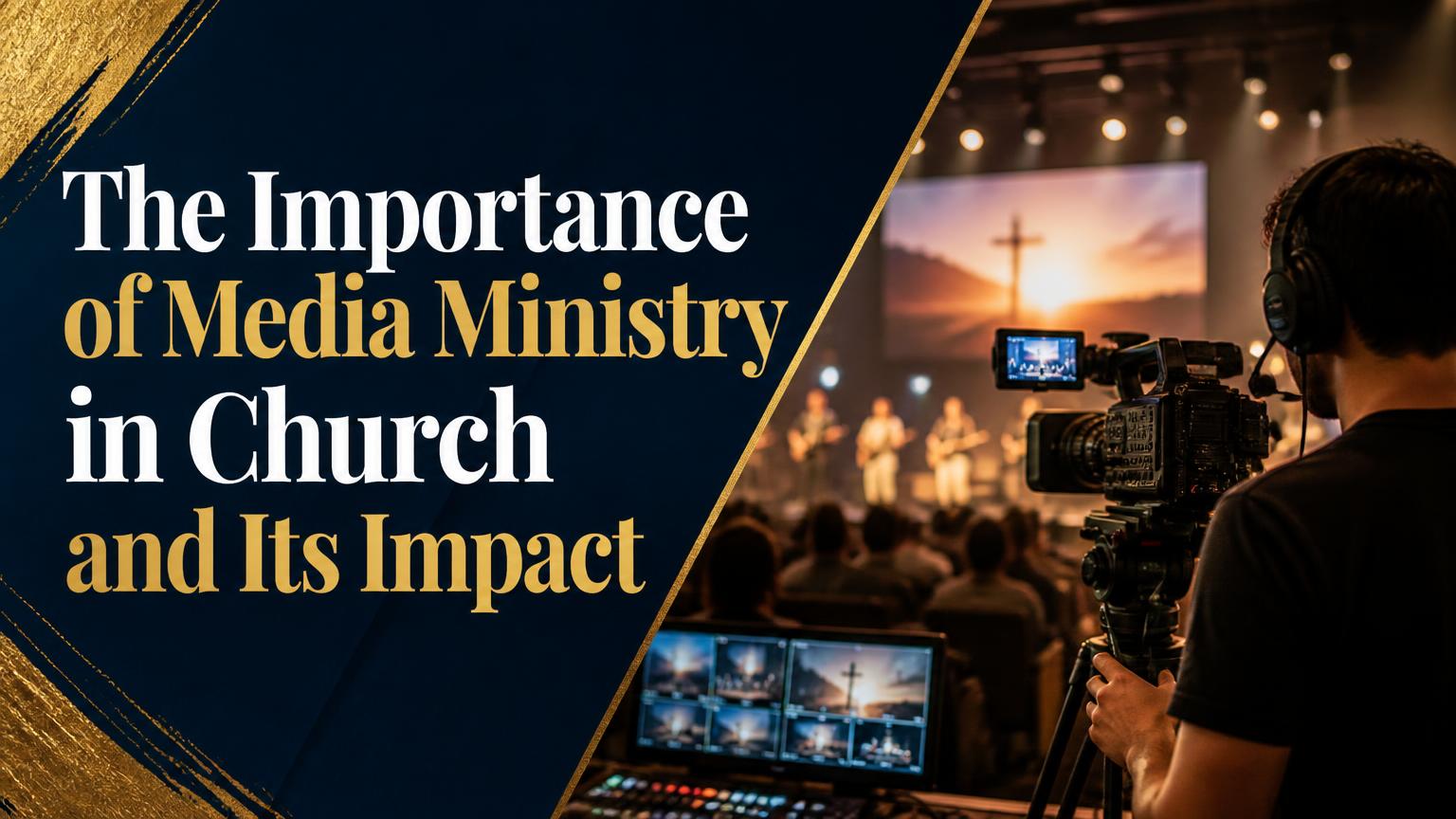
Media ministry is the area of church service that uses tools such as sound, video, livestreaming, photography, websites, social media, presentation software, and digital communication to support the church’s mission. Its importance is not found in technology itself, but in how thoughtfully technology helps people hear the gospel, participate in worship, receive biblical teaching, connect with the church, and respond to genuine pastoral needs. A healthy media ministry extends the church’s communication without replacing Christian community, face-to-face discipleship, or embodied worship.
The Importance of Media Ministry in Church
Extend the Church’s Gospel Proclamation
Media ministry enables a church to communicate biblical truth beyond the people physically present in a worship service. A sermon, testimony, Bible study, or evangelistic message can reach people who are sick, traveling, homebound, serving in another ministry, or exploring Christianity from a distance. Digital communication also allows members to share church content naturally with friends and family who might not yet attend a service.
This wider reach does not automatically produce spiritual transformation. Media is a channel, not the message and not the work of the Holy Spirit. Its value comes when it faithfully carries Scripture, explains the gospel clearly, and directs people toward genuine Christian fellowship and discipleship rather than merely increasing views.
Strengthen Worship Participation and Discipleship
Good media support helps a congregation engage rather than struggle with avoidable distractions. Clear audio allows people to hear Scripture, preaching, prayer, and music. Well-designed lyrics and Scripture slides help worshipers participate. Appropriate lighting, camera work, and recording practices can also help people follow what is happening without making the service feel like a performance.
The same ministry can strengthen discipleship throughout the week. Churches may publish teaching clips, discussion questions, devotional material, or recordings for members who need to review a sermon. Used wisely, digital resources reinforce the church’s teaching ministry by helping people reflect, discuss, and practice what they have learned.
Improve Access for People With Different Needs
Media ministry can make church communication more accessible. Livestreams and recordings may serve older adults, people with temporary illness, parents caring for children, shift workers, travelers, or members with disabilities. Captions, readable slides, transcripts, strong audio, and clear visual contrast can remove barriers that are easy to overlook.
Accessibility should not be treated as a special benefit for a small group. It expresses the church’s commitment to welcome people with dignity. At the same time, online access should not become an excuse to neglect personal care. A livestream may help someone remain connected, but it cannot by itself provide pastoral visitation, sacramental participation where applicable, mutual encouragement, or the full experience of Christian community.
Support Communication, Connection, and Mission
A church’s media ministry often serves more than the Sunday service. It may communicate schedule changes, explain ministry opportunities, share testimonies, promote missions, train volunteers, and help newcomers understand what to expect. Clear communication reduces confusion and allows people to take meaningful next steps instead of remaining uncertain about how to participate.
Media can also reveal the church’s priorities. If content consistently highlights celebrity personalities, polished production, or internal announcements while giving little attention to prayer, Scripture, service, and people in need, the ministry may be communicating an unintended message. The strongest media ministry supports the church’s mission rather than becoming a separate platform with its own identity.
Biblical Foundations for Church Media Ministry
Communicate Truth in Understandable Ways
The New Testament presents proclamation as central to the church’s mission. Jesus commands his disciples to make disciples of all nations and to teach them to obey his commands (Matthew 28:19–20). Paul connects faith with hearing the message about Christ (Romans 10:14–17). These passages do not command churches to use modern technology, but they establish a principle: God’s people should communicate the truth clearly and faithfully.
Modern media can serve that principle when it helps people encounter sound teaching in a form they can understand and access. The medium must remain subordinate to the message. A visually impressive video that distorts Scripture is not successful ministry, while a simple recording that communicates truth accurately may be highly useful.
Steward Skills and Resources for Service
The New Testament describes the church as one body with many members and different gifts (1 Corinthians 12:12–27). Media ministry can provide meaningful service for people skilled in audio engineering, editing, design, photography, writing, software, organization, or communication. These abilities are not spiritually superior to preaching, caregiving, hospitality, or practical service; they are different contributions to the same body.
This perspective also corrects two opposite errors. Churches should not treat technical work as spiritually unimportant, because it affects how people receive and participate in ministry. They should also avoid treating technical skill as a source of status or control. Christian service requires humility, cooperation, and accountability regardless of whether someone stands on a platform or works behind a camera.
Practice Hospitality Without Confusing Access With Community
Scripture repeatedly calls God’s people to welcome others, care for the vulnerable, and remove unnecessary barriers to fellowship. Media can support that calling by helping people know where to go, what to expect, and how to connect. Captions, accessible communication, and reliable online information can communicate consideration before a visitor ever enters the building.
However, digital access is not identical to Christian fellowship. Hebrews 10:24–25 emphasizes gathering, mutual encouragement, and perseverance together. Media ministry should therefore function as a bridge into deeper relationship where possible. It can welcome the isolated, but the church must still pursue personal contact, shared worship, pastoral care, and practical service.
What Does a Church Media Ministry Do?
Manage Audio, Video, and Worship Technology
The most visible responsibility is often production: microphones, sound levels, projection, cameras, livestreaming, lighting, and recording. This work requires preparation because technical failures can distract a congregation and prevent people from hearing or seeing essential parts of the service. Volunteers need clear roles, rehearsal opportunities, troubleshooting procedures, and a calm response when problems occur.
The goal is not flawless production. It is dependable support. Technical choices should serve the congregation’s ability to worship and understand, not encourage constant attention to the equipment or the people operating it.
Create Digital and Educational Content
A media team may produce sermon recordings, short teaching videos, devotionals, social posts, podcasts, event materials, testimony videos, and written resources. Each format has different strengths. A short clip may introduce a biblical idea, while a full sermon provides context and a study guide encourages application.
Content should be planned around ministry objectives rather than created simply because a platform is available. The church should ask what people need to understand, practice, or discuss, then select the format that serves that purpose.
Maintain Reliable Church Communication
Media ministry often works closely with pastors, ministry leaders, administrators, and volunteers. It may maintain the website, schedule announcements, send email updates, organize digital files, and communicate emergency changes. Accuracy matters because incorrect dates, unclear instructions, or outdated information can create frustration and exclude people from opportunities to serve.
A reliable communication system usually includes approval procedures, shared calendars, consistent branding, secure access to accounts, and a clear plan for correcting mistakes. These administrative details are part of responsible ministry because they affect real people.
How to Build a Healthy Media Ministry
Begin With Mission Rather Than Equipment
A church should define what it wants media to accomplish before purchasing cameras, upgrading software, or creating new accounts. Possible aims include improving congregational participation, serving homebound members, supporting discipleship, welcoming visitors, or communicating mission work. A defined purpose helps leaders decide which tools are necessary and which are merely attractive.
Budget decisions should consider the total cost of ownership, including training, maintenance, replacement, subscriptions, storage, and volunteer time. Expensive equipment cannot compensate for unclear communication or weak ministry planning.
Develop People, Processes, and Accountability
A sustainable ministry depends on trained people rather than one highly capable volunteer who carries every responsibility. Churches should recruit a team, document recurring tasks, cross-train volunteers, and create schedules that respect people’s family, work, and worship needs. Leaders should also provide pastoral oversight so that media decisions remain connected to the church’s doctrine and mission.
Clear policies are especially useful for livestreaming, photography, child protection, privacy, copyright, password security, and the use of personal information. Good intentions do not remove the need for consent, appropriate safeguards, and careful judgment.
Pursue Excellence Without Chasing Performance
Biblical excellence means faithful preparation and responsible stewardship, not perfectionism or entertainment. A media team should improve clarity, reliability, accessibility, and consistency while remembering that ministry success cannot be measured by production quality alone. A simple service may bear deep fruit, while a polished presentation may produce little spiritual benefit.
Leaders should evaluate whether media helps people understand Scripture, participate in worship, connect with others, serve, and grow in Christ. View counts, likes, and attendance data may provide useful information, but they are limited measures. They cannot reveal repentance, faithfulness, restored relationships, or quiet acts of obedience.
Common Risks and Necessary Boundaries
Avoid Replacing Church With Content
Online sermons and services can serve people who cannot attend, but regular digital consumption can also encourage passive Christianity. Watching a service is different from worshiping with a gathered community, receiving personal care, serving others, and being accountable to fellow believers. Churches should present online resources as a form of connection and ministry, not as a complete substitute for every dimension of church life.
This distinction matters especially when people use media to avoid difficult relationships or responsibility. Digital access should make participation more possible, not make commitment unnecessary.
Guard Against Distraction, Vanity, and Harm
Media can shift attention from worship to performers, metrics, production mistakes, or the church’s public image. It can also expose people to privacy violations, misleading editing, copyright problems, online conflict, and the exploitation of personal stories. Children and vulnerable adults require particular care in photography, recording, and public communication.
A healthy ministry asks whether a proposed post or recording protects dignity, tells the truth, and serves people rather than using them. The church should be willing to omit compelling content when publishing it would cause harm or turn someone’s hardship into publicity.
Conclusion: Why Media Ministry Matters
The importance of media ministry in church lies in its ability to support the church’s calling through responsible communication. It can extend gospel proclamation, strengthen worship participation, improve accessibility, support discipleship, and connect people with opportunities for fellowship and service. Its effectiveness depends less on technological sophistication than on faithfulness, clarity, humility, and wise pastoral oversight.
Media should remain a servant of the church’s mission, not a replacement for the church or a measure of its worth. When technical skill is joined to biblical truth, ethical care, and genuine love for people, media ministry becomes more than production support. It becomes a practical way to help people hear, understand, participate in, and live out the message of Christ.