
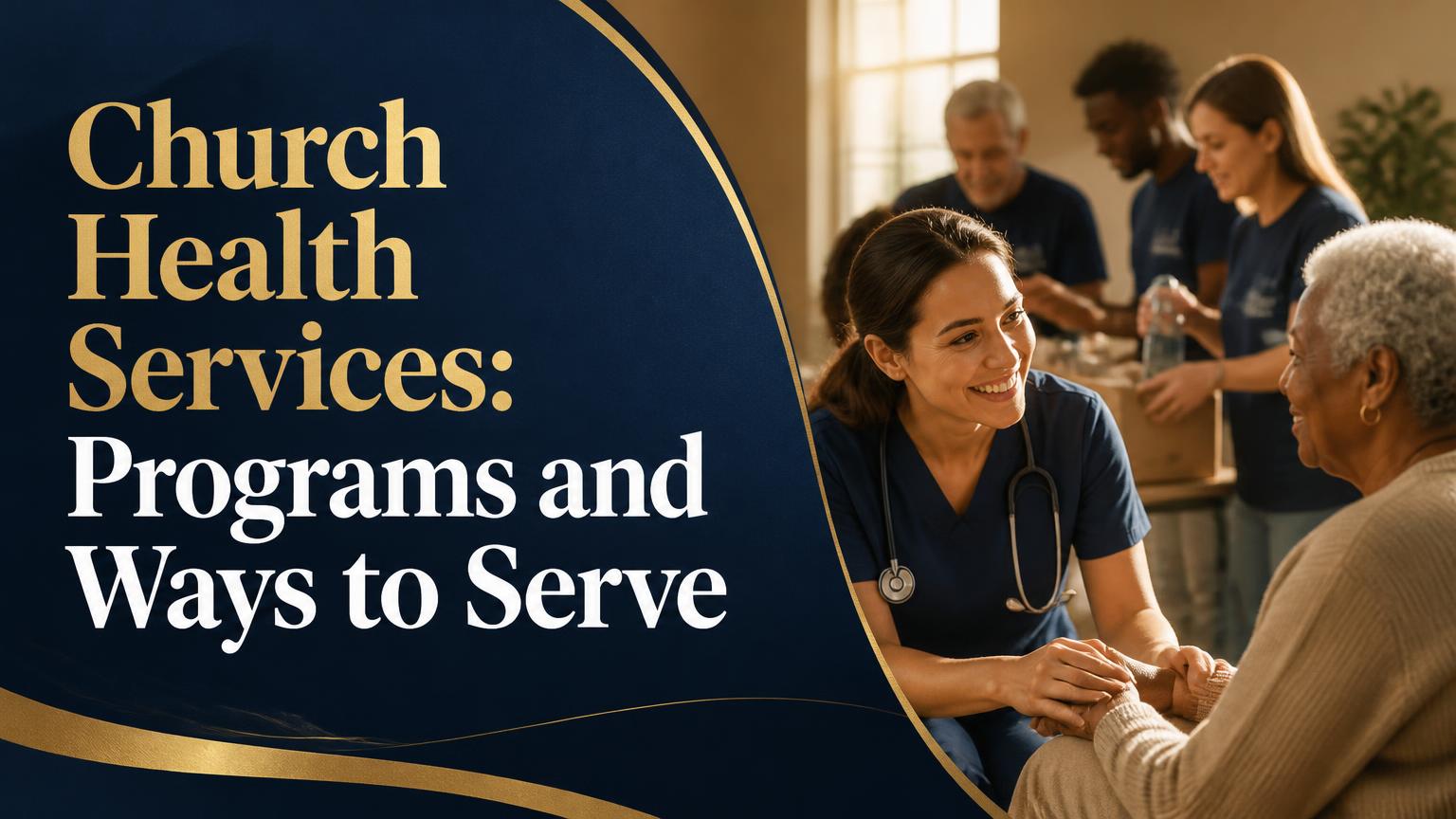
Church health services are organized efforts through which a church promotes physical, mental, emotional, and spiritual well-being. They may include health screenings, education, counseling referrals, support groups, transportation, meals, visitation, and partnerships with licensed medical providers. Some ministries operate clinics, while others focus on helping people access existing care. Effective church health services do not replace professional healthcare; they extend compassionate, practical support to congregations and surrounding communities while respecting consent, privacy, safety, and professional boundaries.
What Are Church Health Services?
Church health services are health-related ministries provided or coordinated by a congregation, denomination, faith-based nonprofit, or church-community partnership. Their purpose is usually broader than treating illness. They address barriers that often prevent people from receiving care, including cost, transportation, loneliness, limited health knowledge, disability, language differences, and distrust of institutions.
The services a church offers should match its resources and the actual needs of its community. A congregation may provide basic wellness education and referrals rather than direct medical treatment. Another may host a licensed clinic, employ a nurse, organize behavioral-health programs, or coordinate extensive social services. The central principle is responsible care: churches can serve generously without presenting unlicensed assistance as medical treatment.
Medical Clinics and Health Screenings
Some churches host periodic or permanent medical clinics in partnership with physicians, nurses, dentists, pharmacists, or community health organizations. Services may include blood-pressure checks, diabetes-risk screening, immunization events, dental examinations, medication education, or help scheduling primary-care appointments.
Screenings are useful for identifying possible concerns, but they are not the same as diagnosis. A high reading or concerning symptom should lead to appropriate follow-up with a qualified provider. Churches should also establish clear procedures for consent, documentation, referrals, and urgent situations rather than relying on informal arrangements.
Mental and Emotional Health Support
Church health ministries may offer support groups, pastoral listening, grief care, marriage or family programs, stress-management classes, and referrals to licensed counselors or psychiatrists. These services can reduce isolation and help people recognize when professional treatment may be necessary.
Mental-health ministry requires particular care because spiritual encouragement is not a substitute for clinical evaluation. Depression, addiction, trauma, psychosis, abuse, and suicidal thoughts may require specialized intervention. A responsible church trains leaders to recognize warning signs, maintain appropriate confidentiality, follow safeguarding procedures, and connect people with qualified services. In an immediate danger or crisis, emergency services and crisis professionals take priority.
Health Education and Prevention
Health education helps people make informed decisions before a crisis develops. Churches may teach nutrition, exercise, sleep, chronic-disease management, medication safety, first aid, childbirth preparation, or disease prevention. Classes can be especially valuable when they use plain language and address the practical realities of the community rather than assuming everyone has equal time, money, transportation, or access to healthy food.
Prevention should avoid shame-based messages. A church can encourage healthier habits while recognizing that health is affected by genetics, disability, employment, housing, environment, stress, and access to care. Education is most effective when it gives people realistic choices and connects them with resources that make those choices possible.
Support for Older Adults, Families, and People With Disabilities
Many church health services focus on practical support for people whose health needs affect daily life. Volunteers may visit homebound members, deliver meals, provide respite for caregivers, assist with transportation, organize accessible worship, or help families locate disability and elder-care resources.
This work addresses social conditions that influence health. A person may understand a physician’s instructions yet be unable to follow them because no one can drive them to an appointment or prepare food afterward. Churches can help close these gaps, provided volunteers respect independence, avoid unnecessary control, and understand when a situation requires professional or protective services.
Referrals, Transportation, and Practical Assistance
A church does not need its own clinic to provide meaningful health services. A well-organized referral ministry can help people find primary care, specialists, counseling, pharmacies, dental services, insurance assistance, substance-use treatment, or public benefits. Volunteers may also arrange rides, accompany someone to an appointment with permission, help complete forms, or provide translation through qualified interpreters.
The quality of a referral system depends on current, verified information. Churches should avoid promising that a provider is appropriate merely because the provider is nearby or personally known. They should explain that individuals remain free to choose their care and should protect private information throughout the referral process.
Biblical Foundations for Church Health Services
Christian service treats the whole person as worthy of care. Jesus’ ministry joined teaching, compassion, presence, and healing, while the parable of the Good Samaritan illustrates practical responsibility toward a wounded neighbor (Luke 10:25–37). These passages do not prescribe one modern church program, but they establish a pattern: notice suffering, respond with mercy, use available resources wisely, and continue caring beyond the first moment of crisis.
The New Testament also connects faith with tangible action. James 2:15–17 challenges believers who offer kind words while ignoring a person’s material needs. Galatians 6:2 calls Christians to bear one another’s burdens, and 1 Corinthians 12:12–27 describes the church as a body in which different members contribute different abilities. In health ministry, that means physicians, counselors, caregivers, administrators, prayer ministers, drivers, donors, and advocates may all serve—but their responsibilities are not interchangeable.
Ways to Serve Through Church Health Services
Church health services depend on more than people with medical credentials. They require a coordinated team in which each person serves within an appropriate role.
Serve as a Licensed Health Professional
Doctors, nurses, dentists, therapists, pharmacists, dietitians, and other licensed professionals may volunteer at clinics, teach classes, review procedures, supervise appropriate programs, or help the church build referral relationships. Their professional knowledge can improve safety and accuracy, but they still need to follow licensing rules, documentation requirements, ethical standards, and the limits of volunteer practice.
Professionals should avoid creating an informal system that operates without proper oversight. A church may provide space and coordination, while clinical decisions remain with qualified practitioners who have established responsibility for the care they provide.
Serve as a Trained Nonclinical Volunteer
Nonclinical volunteers can provide transportation, meal delivery, reception, appointment reminders, translation, accessibility support, visitation, data entry, and event organization. These roles often determine whether a service is actually usable. A dependable driver or compassionate visitor may remove a barrier that a medical professional cannot address alone.
Training should cover boundaries, confidentiality, infection prevention, respectful communication, abuse reporting, emergency procedures, and cultural humility. Volunteers should know what they may do, what they must not do, and whom to contact when a concern exceeds their role.
Provide Prayer and Pastoral Care Responsibly
Prayer, spiritual companionship, and pastoral presence can bring comfort during illness, grief, disability, and uncertainty. They become harmful when offered as a replacement for needed treatment or when a person is pressured to disclose private information, stop medication, or interpret illness as evidence of weak faith.
Responsible pastoral care asks permission, respects different beliefs, and supports informed medical decisions. Church leaders can pray with someone while also encouraging them to seek a physician, counselor, crisis service, or specialist. Spiritual care and clinical care can work alongside each other without being confused.
Give Financial, Material, and Practical Support
Donations can fund transportation, prescription assistance, food, mobility equipment, clinic supplies, counseling scholarships, or emergency needs. Churches may also collect useful items, coordinate meal schedules, repair accessibility features, or provide temporary household help after surgery or childbirth.
Assistance should be distributed with dignity and clear criteria. Transparent procedures reduce favoritism and protect both recipients and volunteers. Whenever possible, churches should help people access sustainable resources rather than creating indefinite dependence on an unpredictable emergency fund.
Advocate for Health and Community Well-Being
Church members can serve by identifying barriers to care and working constructively with local providers, schools, shelters, public agencies, and nonprofits. Advocacy may involve improving transportation, expanding accessibility, supporting addiction recovery, reducing food insecurity, or educating the congregation about preventive care.
Advocacy is most credible when it begins with listening. Churches should avoid speaking for a community without involving the people affected. They should also distinguish charitable service from professional or legal advice and refer policy questions to appropriate specialists.
How to Build a Safe and Effective Church Health Ministry
A church should begin by assessing local needs rather than copying another congregation’s program. Conversations with members, community organizations, healthcare providers, and people who experience barriers can reveal whether transportation, elder care, mental-health referrals, nutrition, addiction recovery, or another need deserves priority. A small, reliable program is usually stronger than a broad program the church cannot sustain.
The ministry should define its purpose, leadership structure, budget, referral network, volunteer expectations, and evaluation process. Written policies should address informed consent, privacy, record access, safeguarding, conflicts of interest, emergency response, and boundaries between pastoral and clinical care. Legal and professional requirements vary by location and service type, so churches should obtain appropriate local guidance before offering regulated services.
Establish Partnerships and Referral Pathways
Partnerships extend a church’s capacity and reduce the temptation to handle every need internally. Potential partners include primary-care practices, hospitals, behavioral-health providers, pharmacies, public-health departments, food programs, transportation services, and disability organizations.
A partnership should specify who provides care, who handles records, how referrals are made, and what happens when a person needs urgent attention. Personal familiarity is not enough; the relationship should be dependable, current, and appropriate for the population being served.
Protect Privacy, Consent, and Dignity
People seeking help should understand what information is collected, who can see it, and how it will be used. Churches should obtain permission before sharing health details, photographing recipients, announcing prayer requests, or involving additional volunteers. Confidentiality is not merely a courtesy; it helps people seek assistance without fear of embarrassment or exposure.
Consent must be voluntary. No one should have to attend worship, adopt a particular belief, or disclose more personal information than necessary to receive assistance. Faith-based service is most consistent with Christian compassion when it gives help without coercion.
Train Volunteers and Recognize Limits
Training should be practical and repeated when responsibilities change. Volunteers need clear instructions for boundaries, safety, communication, disability access, infection control, suspected abuse, emergencies, and referrals. Leaders should also plan supervision and debriefing, because volunteers may encounter grief, crisis, or situations beyond their experience.
The ministry must state plainly that volunteers do not diagnose illness, prescribe medication, provide psychotherapy without authorization, or promise outcomes. Knowing when to stop and refer is a mark of responsible service, not a failure of compassion.
Evaluate Whether the Ministry Is Helping
Evaluation can include the number of people served, successful referrals, appointment attendance, volunteer retention, response times, participant feedback, and unresolved needs. Numbers alone do not show whether a program is useful. A transportation ministry may serve fewer people than a health fair but have a greater effect on those who repeatedly miss appointments.
Church leaders should review incidents, listen to recipients, and adjust programs accordingly. Evaluation may reveal that a popular service is duplicating existing resources while a less visible need—such as language access or caregiver respite—remains unmet.
Conclusion
Church health services can express Christian compassion through medical partnerships, mental-health support, prevention education, pastoral care, practical assistance, and advocacy. Their greatest value often lies in connecting people to appropriate care and addressing the social barriers that make care difficult to reach. Churches should serve within their competence, protect privacy and dignity, and never present prayer or informal help as a substitute for professional treatment. When congregations combine spiritual concern with trained service, sound partnerships, and accountable procedures, they can care for neighbors in ways that are both compassionate and safe.