
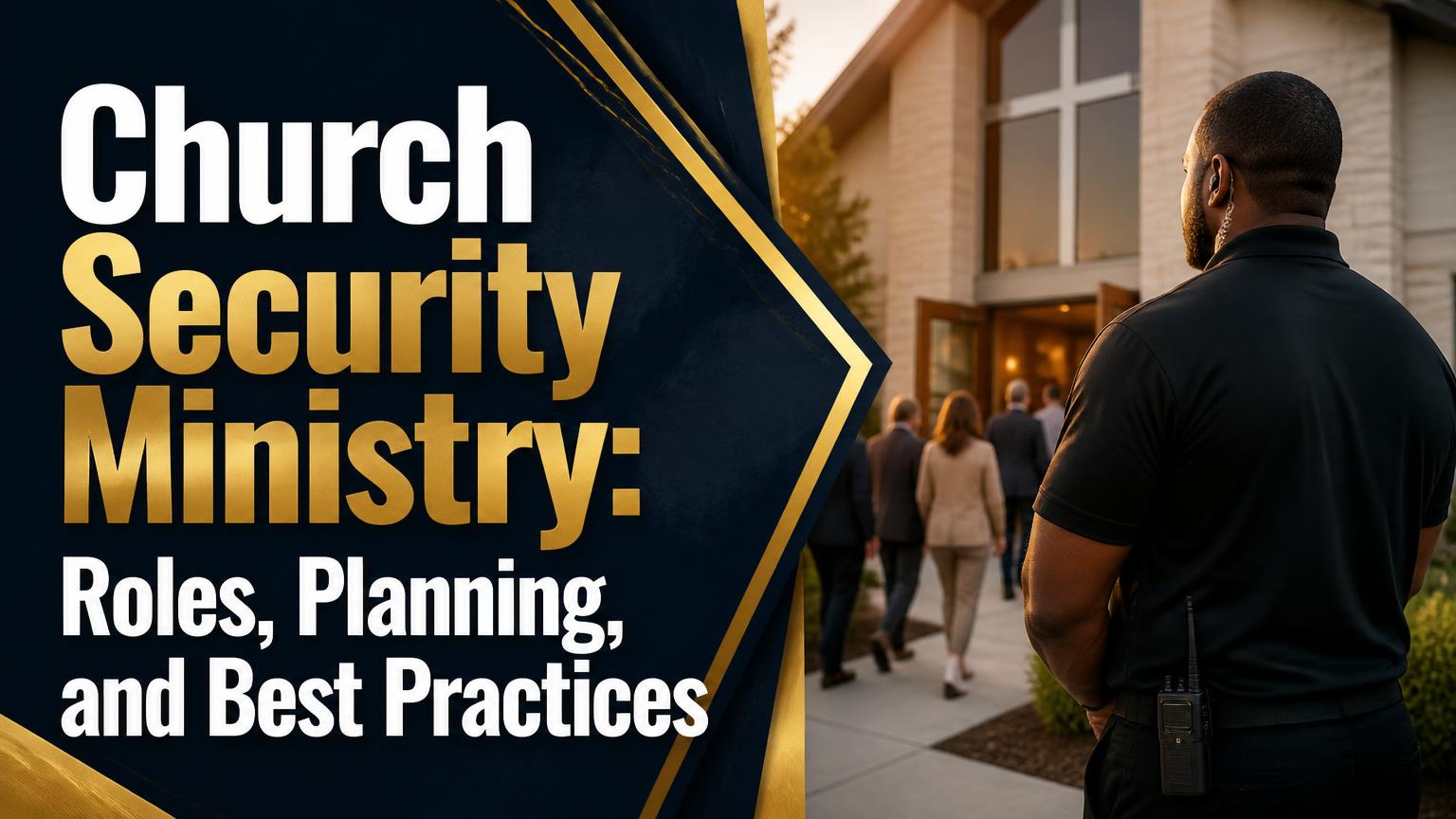
A church security ministry helps a congregation prepare for emergencies while protecting worship, fellowship, and service from unnecessary disruption. Its purpose is broader than guarding doors or responding to violence. A sound ministry combines prevention, observation, communication, medical readiness, emergency response, child protection, evacuation planning, and compassionate care. It also operates within local law and the church’s pastoral values. The strongest programs are organized, discreet, trained, and accountable rather than fear-driven. They seek to preserve a welcoming environment while taking reasonable steps to protect people who gather on the property.
Church Security Ministry: Roles, Planning, and Best Practices
Define the Ministry’s Purpose and Scope
A church security ministry exists to help create a reasonably safe environment for worship, education, events, employees, volunteers, and visitors. It should not function as a private police force or place untrained volunteers in situations beyond their competence. The ministry’s role is to identify hazards, reduce preventable risks, notice concerning behavior, communicate clearly, assist during emergencies, and summon professional responders when needed.
The ministry should address more than intentional violence. Common planning concerns include medical emergencies, fires, severe weather, missing children, disruptive behavior, suspicious packages, utility failures, vehicle accidents, and unauthorized access to restricted areas. Defining this broad scope prevents the team from focusing so narrowly on an active-threat scenario that it overlooks more frequent emergencies.
A written mission statement can establish the right balance: protect people, support ministry operations, respect dignity, use the least force legally permitted, and coordinate with emergency services. That statement gives volunteers a standard for decision-making when a situation is confusing or emotionally intense.
Assign Clear Roles and Responsibilities
A church security ministry works best when responsibilities are assigned before an incident occurs. One person may coordinate the team, while others monitor entrances, support children’s areas, observe the parking lot, manage communications, assist with first aid, or guide evacuation. Roles depend on the size and layout of the church, but ambiguity should be minimized.
Important functions may include:
- Ministry coordinator: Maintains policies, schedules coverage, communicates with church leadership, and oversees training.
- Safety team members: Observe conditions, welcome and assist visitors, report concerns, and respond according to policy.
- Children’s ministry liaison: Coordinates access control, check-in procedures, reunification, and child-protection concerns.
- Medical and emergency support: Maintains first-aid supplies, identifies trained responders, and calls emergency services when appropriate.
- Communications lead: Establishes reliable methods for contacting pastors, staff, ushers, and public safety agencies.
- Facilities liaison: Understands alarms, utilities, doors, lighting, cameras, fire equipment, and evacuation routes.
The team should know who has authority to make decisions, who contacts emergency services, who communicates with the congregation, and who documents the incident afterward. Clear assignment prevents several people from assuming someone else is handling a critical task.
Conduct a Risk Assessment Before Choosing Equipment
A risk assessment examines the church’s actual circumstances rather than beginning with technology or weapons. Consider the building’s entrances, classrooms, sanctuary, offices, parking areas, stairways, kitchens, and outdoor gathering spaces. Review how people enter and leave, where crowds form, which areas are isolated, and how emergency responders would reach the property.
The assessment should consider the congregation’s activities and local conditions. A church with a preschool, food pantry, counseling ministry, large youth program, or frequent public events may face different risks from a small congregation meeting in a shared facility. Past incidents, neighborhood conditions, severe weather, traffic patterns, and building changes may also affect planning.
After identifying hazards, rank them by likelihood and potential impact. This helps the church direct limited resources toward practical improvements such as better lighting, clearly marked exits, controlled children’s check-in, working communication systems, staff training, and accessible first-aid equipment. Cameras and other tools can help, but they do not replace trained people, sound procedures, or appropriate supervision.
Use Layered Prevention and Thoughtful Access Control
Effective security usually comes from several modest safeguards working together. This is sometimes called layered security. The layers may include visible greeters, well-maintained entrances, visitor procedures, lighting, locked nonpublic doors, child check-in systems, staff awareness, communication plans, and relationships with local emergency personnel.
Access control should be welcoming but meaningful. During services, the church may keep one primary public entrance open while limiting access to classrooms, offices, and staff areas. Children’s spaces may require authorized pickup procedures and clear identification. Volunteers should understand that an unlocked door, propped-open entrance, or missing visitor badge can create confusion during an emergency.
Security should not become unnecessarily hostile or discriminatory. Appearance alone is not a reliable indicator of danger, and unusual behavior should be interpreted in context. The goal is to notice specific conduct, credible threats, boundary violations, or access attempts—not to profile people. A calm greeting often provides both hospitality and useful awareness without making visitors feel treated as suspects.
Train for De-Escalation, Medical Aid, and Evacuation
Most security volunteers need practical training in observation, communication, conflict de-escalation, emergency calls, first aid, fire response, evacuation, sheltering, and child reunification. De-escalation begins with a calm voice, appropriate distance, active listening, simple instructions, and an effort to identify the underlying need. Volunteers should know when to disengage and request professional help rather than trying to win an argument.
Medical readiness deserves particular attention because illness, falls, cardiac events, and injuries can occur during ordinary church activities. The team should know the location of first-aid supplies, automated external defibrillators if available, fire extinguishers, emergency exits, and building addresses used by dispatchers. At least some regularly scheduled personnel should maintain current, appropriate first-aid or CPR training.
Evacuation and shelter procedures should be practiced in ways that do not create panic. Ushers and ministry leaders need to know how to direct people, assist children and individuals with disabilities, prevent reentry when unsafe, and account for groups afterward. Drills should be announced or carefully planned, evaluated afterward, and adjusted when they reveal confusion.
How to Organize a Church Security Ministry
Establish Leadership and Accountability
The security ministry should operate under the authority of church leadership, not as an independent group. A pastor, elder, administrator, or designated safety leader should approve policies, clarify the ministry’s boundaries, and ensure that security decisions support the church’s broader mission. The team also needs a documented chain of command for ordinary services and emergencies.
Accountability includes scheduling, attendance, equipment control, incident reporting, complaint procedures, and regular policy review. Volunteers should know how to report misconduct or unsafe practices without fear of retaliation. If the ministry uses cameras, access records, radios, or personal information, leaders should establish rules for privacy, retention, and authorized use.
A written standard of conduct is valuable. It can prohibit unnecessary confrontation, unauthorized searches, public disclosure of sensitive information, intoxication while serving, discriminatory treatment, and the use of ministry authority for personal disputes. These expectations protect the congregation and the volunteers themselves.
Select Volunteers for Character, Judgment, and Reliability
Security service is not simply an opportunity for people who enjoy tactical equipment or confrontation. The most valuable qualities are sound judgment, emotional control, humility, dependability, discretion, communication ability, and a willingness to follow policy. Volunteers should be able to remain calm around frightened people and accept direction from church leadership.
The church should use its normal screening and safeguarding procedures, including appropriate background checks for those serving around children and vulnerable adults. Screening does not guarantee perfect behavior, but it establishes a responsible process. Leaders should also consider conflicts of interest, relevant experience, physical limitations, and whether a person can serve without allowing personal grievances to shape decisions.
A team should include people with different strengths. A retired emergency professional may understand incident coordination, while an usher may know the congregation and building better. A medically trained member, a children’s worker, a facilities volunteer, and a strong communicator can each contribute without pretending to be law-enforcement officers.
Build Competence Through Repeated Practice
One orientation session is not enough. Training should begin with the church’s policies and mission, then address the situations volunteers are most likely to encounter. Topics may include recognizing hazards, reporting concerns, emergency communications, crowd movement, missing children, severe weather, fire, medical response, de-escalation, documentation, and coordination with public safety agencies.
Practice should be realistic but controlled. Tabletop exercises—guided discussions of hypothetical scenarios—can reveal gaps in communication without exposing people to unnecessary danger. Walkthroughs can test whether volunteers know exits, gathering points, restricted areas, and accessible routes. After each exercise or real incident, the team should conduct a brief after-action review: what happened, what worked, what failed, and what policy or training needs revision.
Armed service, if the church considers it at all, requires separate legal review, careful selection, formal training, secure storage, strict rules, and coordination with qualified professionals. A person’s personal firearm experience does not automatically qualify that person for armed ministry service.
Legal, Ethical, and Pastoral Boundaries
Church security ministries must comply with applicable laws concerning private security, firearms, use of force, trespass, recording, privacy, child protection, employment, accessibility, and emergency reporting. Requirements vary by jurisdiction, so church leaders should obtain qualified local legal advice rather than assuming that a volunteer role has no legal consequences. Insurance coverage should also be reviewed before launching the ministry or changing its responsibilities.
The ethical boundary is equally important. Security should protect people without treating every unfamiliar person as a threat. Matthew 10:16 combines wise awareness with the character of a harmless servant, while Romans 12:18 calls believers to pursue peace where possible. Those principles do not eliminate the need for boundaries or emergency action; they shape the manner in which authority is used. Volunteers should preserve dignity, avoid unnecessary force, protect confidential information, and remember that ministry presence is meant to serve people rather than control them.
What a Written Church Security Plan Should Contain
A usable plan should be short enough for leaders and volunteers to understand, but detailed enough to guide action under stress. It should identify the building, emergency contacts, primary and secondary exits, shelter locations, assembly areas, restricted spaces, utility shutoffs, first-aid equipment, fire equipment, and procedures for contacting emergency services. The plan should also explain how leaders will communicate with the congregation without spreading unverified information.
At minimum, the plan should address:
- Medical emergencies and emergency calls
- Fire, evacuation, and accountability
- Severe weather and sheltering
- Missing or endangered children
- Disruptive or threatening behavior
- Suspicious items or unauthorized access
- Active violence and coordination with police
- Reunification of families after an evacuation
- Media inquiries and congregational communication
- Incident documentation and follow-up care
Plans should be reviewed whenever the building, staff, schedule, or ministry activities change. A procedure that works during a small Sunday service may fail during a wedding, concert, school program, or large community event. Reviewing the plan with ushers, children’s workers, facility staff, and ministry leaders makes security a shared responsibility rather than a task assigned to one isolated team.
The Spiritual Character of a Security Ministry
A church security ministry should be marked by service, restraint, courage, and compassion. Its members may stand in the background, but their work affects whether children are protected, visitors are welcomed, emergencies are handled calmly, and vulnerable people receive help. That makes character as important as procedure.
Biblical hospitality does not require careless access, and prudence does not require suspicion toward everyone. The balance is practical: prepare carefully, observe responsibly, communicate honestly, and act only within proper authority. A well-designed ministry reduces preventable risks while preserving the church’s identity as a place where people can worship, learn, receive care, and seek help.
Conclusion
A church security ministry is most effective when it combines wise preparation with a servant’s posture. Its essential work includes risk assessment, clear roles, access awareness, emergency planning, medical readiness, de-escalation, child protection, training, documentation, and accountability. It should support—not replace—pastoral leadership and professional emergency services. The central standard is not how imposing the team appears, but whether it helps people remain safer through calm, lawful, compassionate, and practiced action. Good security protects both the congregation and the welcoming character of the church.