
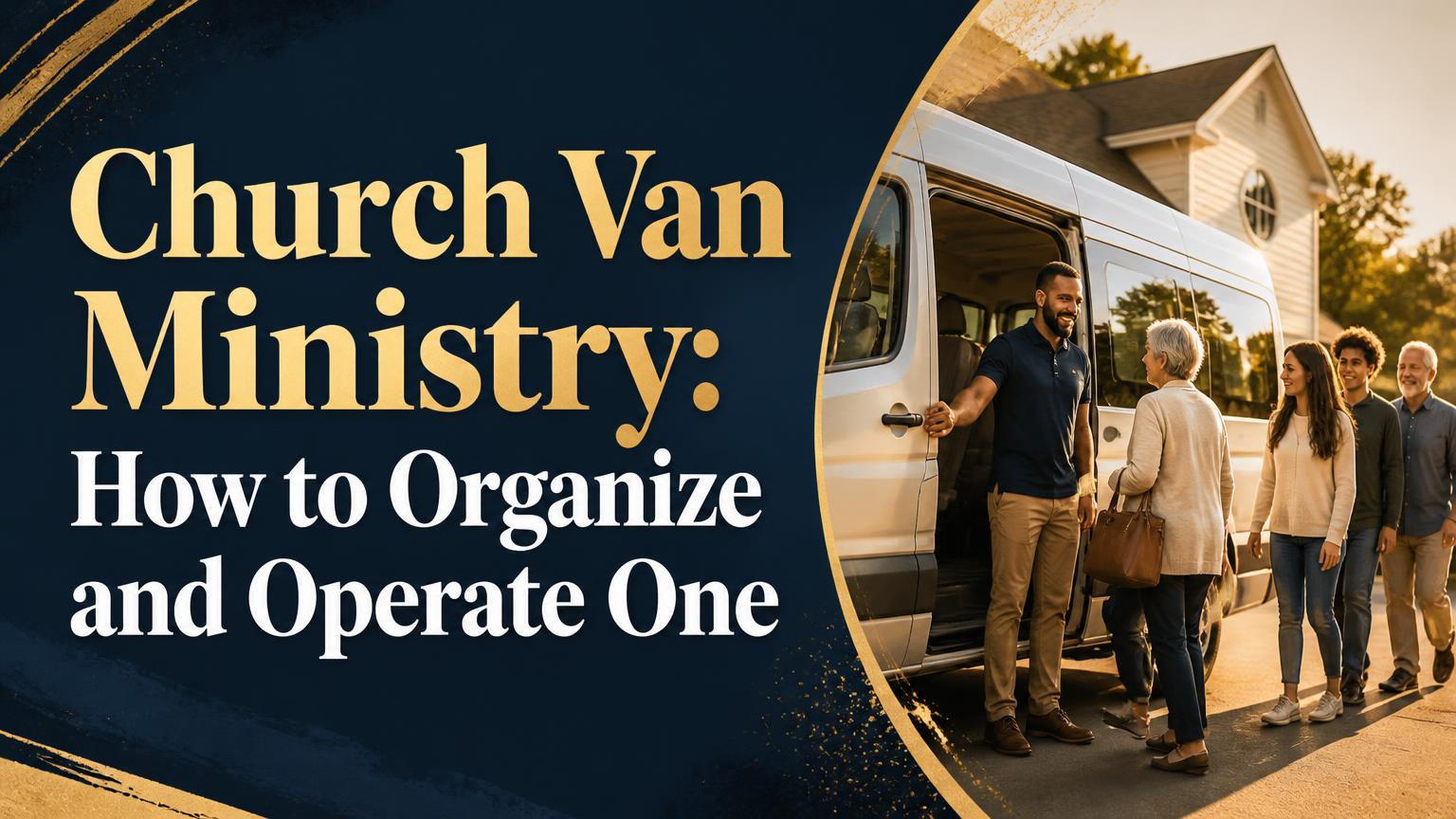
A church van ministry provides dependable transportation for people who might otherwise struggle to attend worship, discipleship, youth activities, outreach events, or community programs. A successful ministry is more than purchasing a van and recruiting a driver. It requires a clear mission, responsible leadership, safe vehicles, trained drivers, consistent scheduling, passenger safeguards, adequate insurance, and a process for reviewing whether the service is meeting real needs. The goal is reliable access to church life while protecting passengers, volunteers, and the congregation.
Church Van Ministry: How to Organize and Operate One
A church van ministry works best when transportation is treated as a structured ministry rather than an informal favor. Church leaders should define whom the ministry serves, what trips it provides, who supervises it, and which safety standards apply. A written plan prevents confusion when demand increases, volunteers change, or an incident occurs.
Define the Ministry’s Mission and Scope
Begin by identifying the ministry’s primary purpose. It may serve older adults who no longer drive, families without reliable transportation, people with disabilities, children and teenagers attending church programs, or neighbors being invited to worship. Some churches also use vans for retreats, mission projects, funerals, and community outreach.
The scope should be specific. Decide whether the ministry provides scheduled Sunday transportation, advance-reservation rides, emergency transportation, or only church-related trips. Avoid promising on-demand service unless the church has enough drivers, vehicles, funding, and administrative capacity to provide it consistently. Clear boundaries protect volunteers from unrealistic expectations and help passengers know what to expect.
Establish Leadership and Accountability
Assign one ministry coordinator, even if several people share the work. The coordinator typically manages reservations, routes, driver schedules, vehicle records, communication, and incident reporting. A pastor, elder, deacon, or ministry committee should provide oversight rather than leaving the entire operation to one volunteer.
Create written policies for eligibility, reservations, cancellations, late passengers, child transportation, mobility devices, service animals, weather cancellations, and emergencies. The policy should also identify who may approve drivers, who may use the vehicle, and who has authority to suspend operations when conditions are unsafe. Accountability is especially important because transportation involves physical safety and direct contact with vulnerable people.
Choose the Right Vehicle and Equipment
The right vehicle depends on passenger volume, route length, road conditions, parking limitations, and accessibility needs. A smaller passenger van may be economical for a modest ministry, while a larger shuttle may be appropriate for regular high-volume service. The church should not choose a vehicle solely because it is inexpensive to purchase; fuel use, maintenance, insurance, accessibility, and replacement costs affect the total expense.
Before purchasing or leasing, evaluate:
- Seating capacity and seat-belt availability
- Step height and ease of entry
- Space for wheelchairs, walkers, car seats, or other mobility equipment
- Climate control and passenger comfort
- Visibility, mirrors, cameras, and emergency equipment
- Maintenance history and expected operating costs
- Storage for first-aid supplies, forms, and communication equipment
A vehicle that technically holds many passengers may still be unsuitable if older adults cannot enter comfortably or if mobility devices cannot be secured safely. Accessibility should be planned from the beginning rather than added only after a passenger requests it.
Recruit, Screen, and Train Drivers
Drivers need more than a valid license. Recruit people who are patient, dependable, attentive, emotionally mature, and willing to follow ministry policies. The church should verify driving records, confirm that each driver meets applicable licensing requirements, and complete background screening when drivers transport minors or vulnerable adults. Insurance requirements may impose additional standards.
Training should cover defensive driving, passenger assistance, loading and unloading, use of lifts and restraints, vehicle inspections, emergency procedures, communication, and boundaries with passengers. Drivers should never be pressured to drive when tired, ill, distracted, impaired, or uncomfortable with road conditions. A short orientation is not a substitute for practical training with the actual vehicle.
Build a Reliable Reservation and Route System
A consistent route system makes the ministry manageable. Collect the passenger’s name, contact information, pickup location, destination, mobility needs, emergency contact, and any information necessary to transport children safely. Store this information securely and limit access to people who need it for ministry operations.
For recurring worship services, create pickup windows rather than promising an exact minute. Group nearby passengers into efficient routes and allow enough time for boarding, seat-belt use, traffic, and unexpected delays. A dispatcher or coordinator should know which passengers are expected on every trip. Drivers should never leave a scheduled passenger without following the church’s missed-pickup procedure.
A typical operating sequence is:
- Receive and confirm the ride request.
- Assign the passenger to a route and driver.
- Review special needs and passenger information.
- Inspect the vehicle before departure.
- Pick up passengers using safe loading procedures.
- Confirm that every passenger is seated and secured.
- Complete the route and supervised drop-off.
- Record mileage, issues, delays, and incidents.
Connect Transportation With Pastoral Care
Transportation can remove a practical barrier, but it should not become a vehicle for pressuring people into church participation. Drivers should welcome passengers respectfully, protect confidentiality, and avoid using the ride to make promises about financial help, medical care, or other services they cannot provide.
The ministry coordinator should maintain relationships with church leaders, children’s ministry staff, disability ministry leaders, and community partners. This coordination helps the church respond appropriately when a passenger needs pastoral support, food assistance, medical attention, or another service. Drivers should know how to refer concerns without attempting to diagnose, counsel, or personally manage serious problems.
Safety, Compliance, and Risk Management
Transportation creates risks that ordinary church programs may not face. The church should consult its insurer and confirm all applicable local requirements before beginning service. Rules may differ according to vehicle size, passenger capacity, driver licensing, commercial or nonprofit use, interstate travel, and transportation of children. A church should not assume that its general liability policy automatically covers every van operation.
Verify Legal and Insurance Requirements
Confirm registration, inspection, licensing, insurance, maintenance, and passenger-restraint requirements with the relevant authorities and the church’s insurance provider. Ask specifically whether the policy covers volunteer drivers, non-owned vehicles, rented vehicles, youth transportation, out-of-state trips, and transporting people for a fee or donation.
Keep copies of required documents in the vehicle and administrative records. Review coverage whenever the church changes vehicles, begins serving minors, expands its service area, or allows outside groups to use the van. Legal compliance is not merely administrative; it determines whether the church is prepared to protect passengers and respond responsibly after a collision.
Use Consistent Vehicle and Passenger Safety Procedures
Conduct a pre-trip inspection before every route. Check tires, lights, mirrors, brakes, fluid levels, fuel, seat belts, doors, windows, emergency equipment, and accessibility components. Record defects and remove the vehicle from service when a safety problem could affect operation. Preventive maintenance should follow the manufacturer’s schedule and be documented.
Every passenger should use the available restraint correctly, subject to applicable law and the person’s physical needs. Children require age- and size-appropriate restraints where required. The driver should avoid mobile-phone use, eating, unnecessary conversation, and any other distraction. Passengers should board and exit only when the vehicle is fully stopped in a reasonably safe location.
Safeguard Children and Vulnerable Adults
Youth transportation requires a child-protection policy coordinated with the church’s broader safeguarding procedures. Screening, supervision, authorized pickup and drop-off, communication with guardians, and rules about one-on-one situations should be defined in advance. A driver should not improvise custody decisions at the curb.
For vulnerable adults, respect privacy and independence while providing appropriate assistance. Obtain consent before helping someone transfer, carry belongings, or handle mobility equipment. Drivers should report injuries, boundary concerns, missing passengers, or suspected abuse through the church’s established process. They should not promise secrecy or conduct their own investigation.
Funding, Scheduling, and Day-to-Day Operations
A ministry becomes sustainable when leaders budget for the entire operating cycle rather than focusing only on acquisition. The first year may include unusually high costs for purchase, modifications, training, registration, and insurance. Later costs may shift toward fuel, tires, repairs, inspections, cleaning, and replacement reserves.
Prepare a Full Operating Budget
Include vehicle payments or leasing, insurance, fuel, maintenance, repairs, tires, registration, inspections, accessibility equipment, cleaning supplies, driver training, background checks, communication tools, and eventual replacement. A reserve fund is particularly important because a single major repair can interrupt service.
Churches may fund the ministry through the general budget, designated gifts, grants, special offerings, or partnerships. If the church accepts donations from passengers, communicate clearly that donations are voluntary and do not guarantee service. Financial support should never cause the ministry to ignore safety or serve beyond its capacity.
Create a Driver and Vehicle Schedule
Maintain a rotation with primary and backup drivers. Avoid scheduling the same volunteer for every service; dependence on one person makes the ministry fragile and increases fatigue. The schedule should show the route, vehicle, pickup window, expected passengers, driver, backup contact, and special requirements.
Use a central communication method such as a designated phone, secure scheduling system, or controlled group messaging process. Passengers should know whom to contact for reservations and cancellations. Drivers should receive route information before departure, not while driving. If the church cannot staff a route safely, it should cancel or modify the trip rather than rely on an unqualified substitute.
Plan for Weather and Emergencies
Create written procedures for severe weather, mechanical breakdowns, collisions, medical emergencies, passenger falls, lost children, and missed pickups. Drivers should know when to stop service and whom to contact. Emergency information should include the church’s address, leadership contacts, passenger emergency contacts where appropriate, and instructions for calling emergency services.
After an incident, first protect people and obtain emergency help. Then notify church leadership and the insurer according to policy, document what happened promptly, preserve relevant records, and avoid assigning blame at the scene. A calm, consistent response reduces confusion and helps the church learn from the event.
Measuring Whether the Ministry Is Working
A church van ministry should be evaluated by reliability, safety, accessibility, and ministry usefulness—not simply by the number of miles driven. Track completed trips, missed pickups, passenger counts, cancellations, maintenance issues, incidents, volunteer coverage, and recurring demand. These records help leaders identify whether routes are efficient or whether the service is being stretched beyond its design.
Seek feedback from passengers, caregivers, drivers, and ministry leaders. Ask whether pickup times are dependable, boarding is accessible, communication is clear, and passengers feel respected. A route with many riders may still need redesign if it routinely runs late or cannot accommodate mobility equipment safely.
Review the ministry at least annually and after any significant incident. Adjust routes, policies, training, vehicle capacity, and staffing based on actual experience. Sometimes the most responsible decision is to narrow the service area, add reservations, partner with another church, or pause operations until adequate safeguards and volunteers are available. Growth is beneficial only when quality and safety remain intact.
Conclusion
A well-run church van ministry combines hospitality with disciplined transportation management. Its effectiveness depends on a defined mission, accountable leadership, suitable equipment, screened and trained drivers, reliable routes, safeguarding procedures, legal compliance, adequate insurance, and honest evaluation. The ministry should remove transportation barriers without creating avoidable risks or promises the church cannot keep. When leaders build the service around dignity, consistency, and safety, the van becomes more than a vehicle: it becomes a dependable way for people to participate in worship, fellowship, care, and service.