
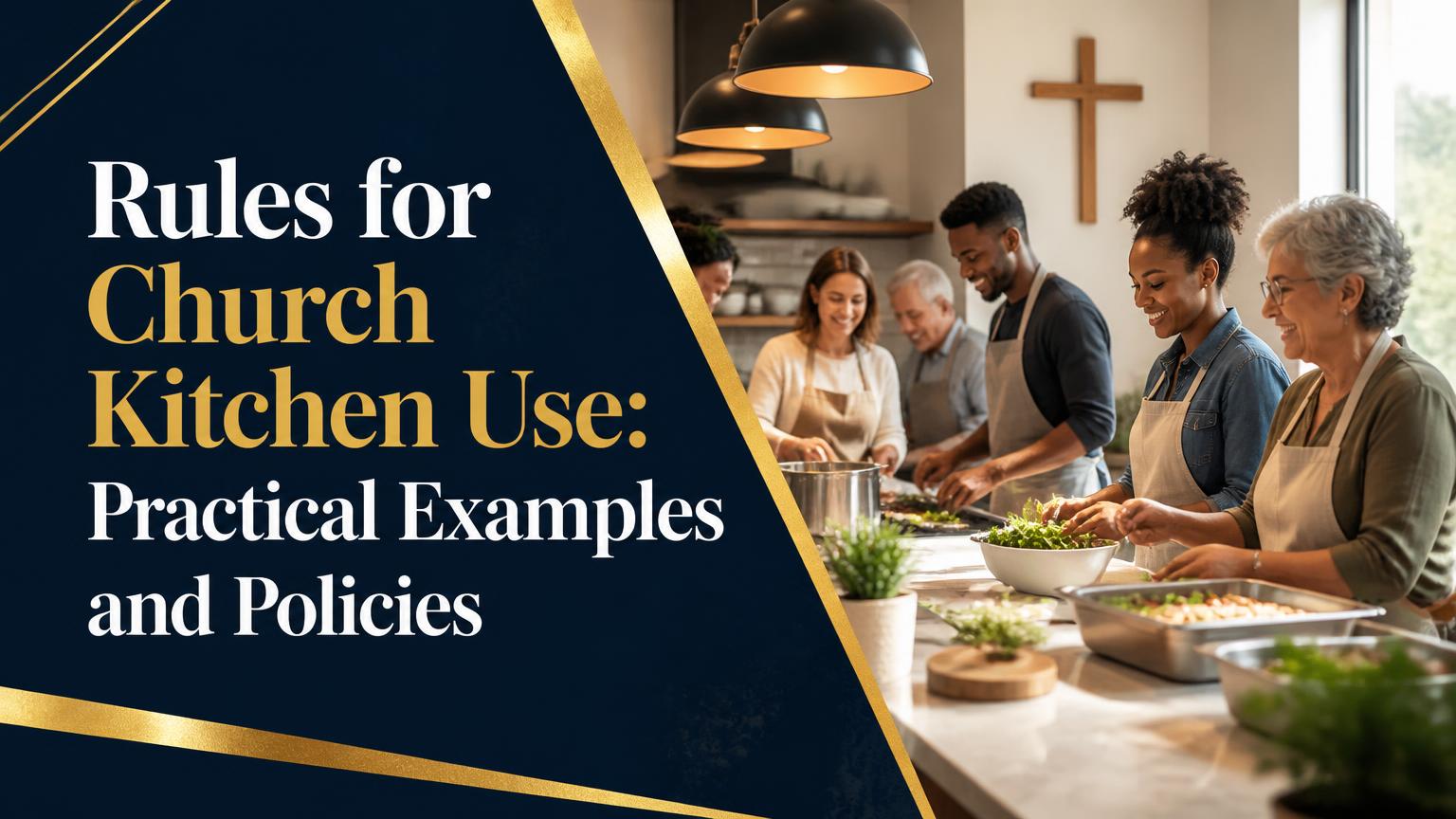
Church kitchens support shared meals, children’s programs, fundraisers, classes, and community events, but shared use creates predictable risks. Clear rules protect people from foodborne illness, reduce fires and equipment damage, prevent allergen cross-contact, and make responsibility clear when several groups use the same space. A good policy should be practical enough for volunteers to follow, specific enough to guide special events, and flexible enough to comply with local health, fire, building, and insurance requirements.
Rules for Church Kitchen Use
The following rules provide a practical foundation for most church kitchens. They should be adjusted to the kitchen’s equipment, the types of food prepared, and the requirements of the local authority having jurisdiction.
Set Clear Access and Responsibility Rules
Only approved individuals, ministries, staff members, or scheduled groups should use the kitchen. Each group should reserve the space in advance, identify a responsible adult, and follow the church’s sign-in and key-access procedures. The responsible person should remain accountable for food safety, supervision, cleanup, equipment shutdown, and reporting damage.
Churches should decide whether outside organizations may use the kitchen and whether they must sign an agreement, provide proof of insurance, pay a deposit, or complete an orientation. Users should not lend keys, allow unscheduled access, or permit untrained people to operate ovens, mixers, slicers, fryers, or other potentially hazardous equipment.
Follow Food Safety and Personal Hygiene Practices
Anyone handling food should wash their hands before preparation, after using the restroom, after touching raw meat, after handling waste, and whenever contamination may have occurred. Food handlers should wear clean clothing, keep hair controlled, cover cuts, and avoid preparing food while experiencing vomiting, diarrhea, fever with a sore throat, or other symptoms that could spread illness.
Raw meat, poultry, seafood, eggs, and unwashed produce should be kept separate from ready-to-eat food. Use clean utensils for cooked food, sanitize food-contact surfaces, and use a food thermometer rather than relying on appearance alone. Temperature standards and holding times should follow the applicable local food code. In the United States, many jurisdictions use 41°F (5°C) or colder for refrigerated foods and 135°F (57°C) or hotter for hot holding, but local requirements may differ.
Operate Appliances and Cooking Equipment Safely
Users should operate equipment only after receiving appropriate instruction. Cooking should never be left unattended, especially when using stovetops, ovens, broilers, grills, pressure cookers, or deep fryers. Keep towels, paper products, packaging, and other combustible materials away from heat sources, and do not use appliances with damaged cords or exposed wiring.
A grease fire must never be extinguished with water, because water can spread burning oil. If a small pan fire occurs and it is safe to act, turn off the heat and cover the pan with a proper lid; do not move it. Otherwise, evacuate, close the door if possible, and call emergency services. Commercial cooking equipment may require a correctly rated fire-suppression system and Class K extinguisher.
Store Food, Chemicals, and Supplies Correctly
All food stored in the church kitchen should be covered or sealed and labeled with its contents, the date, and the responsible group when necessary. Refrigerated and frozen foods should be placed promptly into functioning equipment rather than left on counters. Older food should be used first, and spoiled, unlabeled, or questionable food should be discarded rather than passed to another ministry.
Cleaning chemicals must remain in their original labeled containers or clearly marked secondary containers. Store chemicals away from food, dishes, utensils, and food-preparation surfaces. Never mix bleach, ammonia, or other cleaning products. Personal food should not occupy shared storage unless the church has designated space and clear labeling rules.
Prevent Allergen Cross-Contact
A food allergy is different from a food preference. A small amount of an allergen can cause a serious reaction, and cooking does not reliably make an allergen safe. Groups should identify common allergens in prepared foods, keep ingredient labels available, and avoid promising that a food is “allergen-free” unless the church has procedures and facilities capable of supporting that claim.
Use clean equipment and utensils when preparing food for someone with an allergy. Shared cutting boards, mixers, toasters, fryers, serving utensils, and improperly cleaned counters can transfer allergenic proteins. When a group cannot safely control cross-contact, it should clearly communicate that limitation instead of offering false assurance.
Clean, Inspect, and Secure the Kitchen
Users should clean as they work and complete a full closing routine before leaving. Wash, rinse, and sanitize dishes and food-contact surfaces according to the product instructions. Wipe appliance interiors when needed, sweep and mop the floor, remove trash, return supplies, and leave counters and sinks ready for the next group.
The closing person should verify that burners, ovens, small appliances, faucets, and lights are off; refrigerators and freezers are fully closed; doors and windows are secured; and any alarm or access procedure is completed. Broken equipment, pests, plumbing problems, missing supplies, spills, burns, injuries, and suspected food contamination should be reported promptly rather than hidden or left for the next user.
Supervise Children and Untrained Volunteers
Children may participate in appropriate food activities, but they should not have unsupervised access to knives, hot surfaces, cleaning chemicals, mixers, slicers, or commercial equipment. Adults should keep young children out of active cooking areas and establish safe waiting or serving zones during crowded events.
Volunteers also need supervision when they are unfamiliar with the kitchen. A brief orientation should explain emergency exits, fire extinguishers, first-aid supplies, handwashing, food storage, equipment restrictions, and the closing procedure. A willing volunteer is not automatically a trained food handler or qualified equipment operator.
A Written Church Kitchen Policy Should Define
A posted list of rules is useful, but a complete policy should explain who may use the kitchen, what activities are allowed, and how the church will manage safety and accountability. The policy should apply to ministries, members, guests, renters, caterers, and community groups where appropriate.
Define the Scope and Types of Use
State whether the kitchen may be used for private meals, ministry gatherings, food preparation, cooking classes, food sales, catering, weddings, funerals, or outside rentals. Preparation and serving may involve different risks from cooking for the public or selling packaged food. The policy should identify activities that require advance approval.
It should also state whether the kitchen is intended for domestic, institutional, or commercial use. A church’s charitable or religious status does not automatically exempt it from health, fire, building, accessibility, employment, or food-sale requirements.
Assign a Kitchen Coordinator
Name the person or team responsible for reservations, orientation, supply management, inspections, maintenance reports, and policy enforcement. The coordinator should keep an equipment inventory, document known hazards, and maintain emergency contact information.
Each event should also have an identified leader. That leader is responsible for ensuring that participants follow the rules, food is labeled and stored safely, children are supervised, and the kitchen is returned in acceptable condition. Clear assignment prevents the common problem in which everyone assumes someone else handled cleanup or shutdown.
Require Orientation for Higher-Risk Activities
Basic users may need only a short kitchen briefing, while anyone operating commercial equipment, preparing food for large groups, using frying equipment, or supervising volunteers may need more detailed training. Orientation should cover handwashing, cross-contamination, temperature control, allergen communication, chemical storage, fire response, injury reporting, and emergency exits.
Training requirements should reflect the actual activity. Preparing coffee and packaged snacks does not present the same risks as cooking poultry for several hundred people or operating a commercial slicer. The church should follow applicable local rules when a food handler card, certified manager, permit, or other credential is required.
Establish Scheduling, Cleanup, and Enforcement Procedures
Reservations should include setup and cleanup time, not just the time food is served. The policy can require users to bring their own ingredients and disposables, identify restricted equipment, document damage, and replace supplies they consume. A checklist, closing inspection, or refundable deposit can improve compliance without creating unnecessary administrative work.
The church should explain what happens after a violation. Minor problems may require a reminder or retraining; repeated unsafe conduct may result in suspended access. Immediate restrictions are appropriate when someone creates a serious fire, food-safety, injury, or property risk. Rules work best when they are applied consistently to staff, volunteers, members, and outside groups.
Local Requirements and Special Events
Church kitchen rules are internal operating standards, not a substitute for legal compliance. Requirements vary according to location, kitchen design, food type, number of people served, whether food is sold, and whether the event is open to the public. A congregation may need to contact its local health department, fire authority, building official, or insurance provider before beginning a new type of food service.
Extra review is particularly sensible for public fundraisers, temporary food booths, commercial catering, meal distribution, home-prepared food, alcohol service, deep frying, propane equipment, and large events. The church should confirm whether permits, inspections, certified food personnel, grease-management procedures, fire-suppression systems, or additional insurance are required. Written church rules should refer users to these requirements rather than implying that permission to use the kitchen overrides them.
A Short Church Kitchen Rules Poster
A concise poster can reinforce the full policy at the point of use:
- Use the kitchen only when scheduled and approved.
- Wash hands before handling food and whenever contamination may occur.
- Do not prepare food while sick with potentially contagious symptoms.
- Keep raw and ready-to-eat foods separate.
- Label and date stored food; discard unsafe or unidentified items.
- Report allergens and prevent cross-contact with clean equipment.
- Never leave cooking unattended.
- Keep flammable materials away from heat and never use water on a grease fire.
- Keep children away from hazards and supervise all inexperienced users.
- Clean, sanitize, remove trash, turn off equipment, and secure the kitchen before leaving.
- Report injuries, damage, pests, spills, and equipment problems immediately.
- Follow all applicable health, fire, building, and insurance requirements.
The poster should be placed near the main entrance, sinks, cooking equipment, and closing checklist. It should support—not replace—the longer policy and any equipment-specific instructions.
Conclusion
Effective rules for church kitchen use combine permission controls, food safety, equipment protection, fire prevention, allergen awareness, supervision, cleaning, and clear accountability. The strongest policy does not rely on vague directions such as “leave the kitchen clean.” It identifies who may use the space, what users must do before and after food preparation, which activities require training or approval, and how hazards are reported.
Churches should tailor these rules to their equipment, ministries, building, and local regulations. A short posted checklist makes expectations visible, while a written policy and basic orientation provide the detail needed for larger meals, public events, rentals, and higher-risk cooking.