
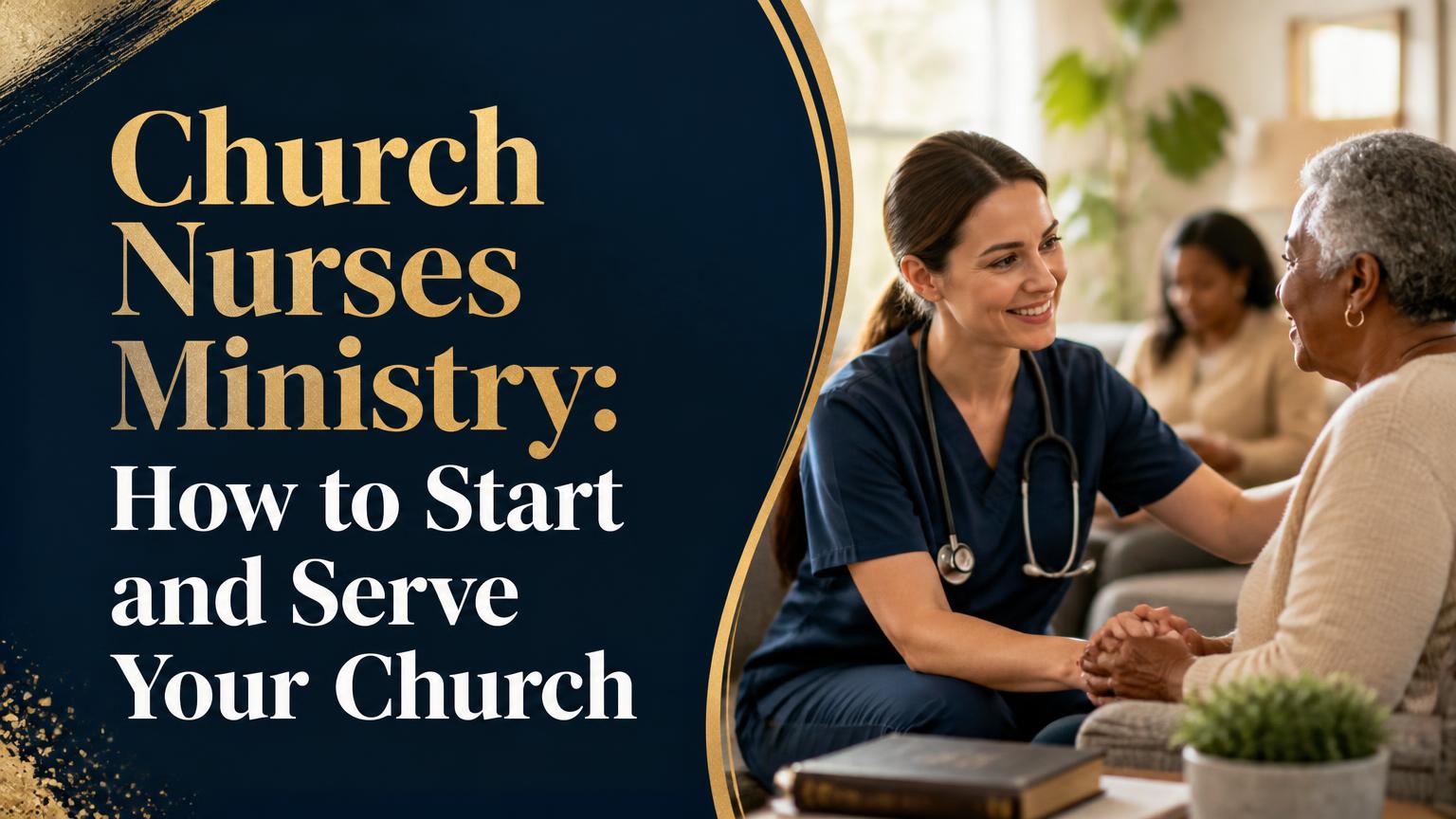
Church nurses ministry is a church-based service that supports the physical, emotional, and spiritual well-being of a congregation and its wider community. Depending on the church, it may involve licensed nurses, nursing students, trained health volunteers, or a coordinated team that provides health education, first aid, visitation, referrals, and practical care. A strong ministry combines compassion with clear boundaries: it serves people faithfully without replacing physicians, emergency services, counselors, or public-health systems.
What Is Church Nurses Ministry?
The Purpose of the Ministry
Church nurses ministry helps a congregation respond to health-related needs with organized care rather than improvised assistance. Its purpose may include promoting healthy living, supporting members during illness, noticing unmet needs, assisting at church events, and connecting people with appropriate medical or social services.
The ministry also expresses Christian compassion. Jesus consistently treated people as whole persons, responding to physical suffering alongside spiritual and emotional needs. Passages such as Luke 10:25–37, Romans 12:13, and James 2:15–17 emphasize mercy expressed through practical action. A church nurse does not need to turn every interaction into a sermon; attentive presence, respectful help, and wise referral can themselves demonstrate Christlike love.
What Church Nurses Actually Do
The exact role depends on the church’s resources, local laws, and the qualifications of its volunteers. Common responsibilities include:
- Maintaining a first-aid station or health information area
- Responding to minor injuries or sudden illness during services and events
- Coordinating emergency procedures and contacting emergency medical services
- Offering health screenings or educational sessions within an appropriate scope
- Visiting members in hospitals, nursing homes, or homes
- Supporting people managing chronic conditions through encouragement and referrals
- Identifying practical needs such as transportation, food, mobility assistance, or prescription access
- Helping the church prepare for heat, severe weather, infectious disease, or other health risks
- Connecting individuals with qualified clinicians, mental-health professionals, social services, or community programs
A church nurse should not diagnose conditions, prescribe medication, perform procedures without proper authorization, or promise outcomes beyond the person’s competence and legal scope.
Who Can Serve in the Ministry?
A church nurses ministry may include registered nurses, licensed practical or vocational nurses, nursing students, physicians, emergency medical technicians, allied health professionals, and trained nonclinical volunteers. Licensed professionals can contribute clinical knowledge, but they do not automatically have authority to practice outside their legal scope simply because they are serving at church.
Nonlicensed volunteers can perform valuable work through hospitality, transportation coordination, health education support, registration, visitation, prayer, supply management, and emergency communication. The church should describe roles accurately. Calling every volunteer a “nurse” may create confusion about qualifications and legal responsibility, particularly when someone appears to be offering professional medical care.
What the Ministry Is Not
Church nurses ministry is not a substitute for an emergency department, primary-care practice, home-health agency, licensed counselor, or public-health department. It should never delay emergency treatment, pressure someone to reject medical care, or treat prayer and professional care as competing choices.
It is also not a channel for gossip. Health information shared in confidence should be handled carefully, with disclosure limited to what is necessary for care, safety, legal compliance, or the person’s explicit permission. Churches should establish safeguards for children, older adults, people with disabilities, and anyone vulnerable to neglect, abuse, exploitation, or coercion.
How to Start a Church Nurses Ministry
Assess the Church’s Actual Needs
Begin with listening rather than assuming. Church leaders can review the congregation’s age distribution, transportation challenges, common chronic conditions, emergency risks, homebound members, and existing care ministries. Conversations with members should focus on broad needs rather than collecting unnecessary private diagnoses.
The assessment should also identify what the church already does well. A nurses ministry may strengthen an existing visitation, hospitality, benevolence, or safety team instead of creating a separate structure. Define the ministry’s first purpose narrowly—for example, event safety and health education—then expand only when volunteers, training, and oversight are sufficient.
Establish Leadership, Scope, and Policies
The ministry needs a designated leader and a clear reporting relationship to the pastor, church board, or another recognized ministry authority. Written policies should explain who may serve, what services are offered, how emergencies are handled, how records are protected, and when a person must be referred elsewhere.
Important policies commonly address consent, confidentiality, documentation, incident reporting, medication handling, transportation, home visits, background checks, child protection, infection prevention, and volunteer supervision. Requirements differ by jurisdiction and activity, so the church should obtain appropriate legal, insurance, and professional guidance before offering clinical services or screenings.
Recruit and Screen the Team
Recruit for character, reliability, maturity, and teachability—not only credentials. A compassionate licensed nurse may be valuable, but a dependable volunteer who knows how to welcome people, make a call, record an incident, or remain calm during an emergency also fills an essential role.
Screening should match the risk of the assignment. People conducting home visits, transporting members, working with children, or handling confidential information may need background checks, references, orientation, and supervised service. Every volunteer should understand the difference between personal opinion and professional advice and should know when to involve the ministry leader.
Provide Practical Training
At minimum, volunteers should know the church’s emergency plan, how to summon emergency services, where first-aid supplies are located, how to report incidents, and how to protect private information. Designated responders should maintain current training appropriate to their responsibilities, such as basic first aid, cardiopulmonary resuscitation, or automated external defibrillator use.
Training should also cover boundaries. Volunteers need practice responding to symptoms without diagnosing, declining unsafe requests respectfully, documenting facts rather than speculation, and recognizing possible abuse, neglect, mental-health crisis, or domestic violence. The ministry should maintain a referral list for local clinics, hospitals, crisis services, transportation programs, food assistance, and other community resources.
Create an Operating Plan
A simple operating plan turns good intentions into dependable service. Decide when the team is present, how members can request a visit, where supplies are stored, who carries the emergency phone, and how the ministry communicates with church leadership. For large events, assign specific responsibilities instead of expecting one person to manage every need.
The plan should include an emergency flow: recognize the problem, call emergency services when indicated, provide only appropriate assistance, direct someone to meet responders, preserve privacy, and document what occurred. After an incident, review what worked and what should change. Regular evaluation prevents the ministry from depending on memory or individual heroics.
How Church Nurses Can Serve Well
Combine Health Care With Spiritual Care
Spiritual care should be offered, not imposed. A church nurse can ask whether a person would like prayer, pastoral contact, or help communicating with the church, while still respecting people who prefer medical assistance without religious conversation. Prayer does not replace competent treatment, and accepting professional treatment does not indicate weak faith.
Romans 12:15 calls believers to “weep with those who weep,” which points to presence and empathy rather than quick explanations. In practice, this may mean listening without minimizing fear, helping a family understand the next practical step, or arranging a meal and transportation after a hospitalization.
Protect Dignity and Independence
Effective service supports people without taking control of their lives. Ask permission before touching someone, entering a home, sharing information, or contacting relatives. Speak directly to the person receiving care rather than assuming that a family member should answer every question. Respect cultural practices, disability-related needs, personal choices, and the right to decline assistance.
A church should be especially careful with benevolence and health-related requests. Assistance should address genuine needs without creating dependency, exposing private information, or treating people as projects. Whenever possible, offer choices and involve the person in planning the next step.
Use Referrals Instead of Overstepping
A referral is not a failure of ministry; it is often the most responsible form of care. Serious symptoms, worsening conditions, medication questions, suicidal thoughts, suspected abuse, and situations beyond a volunteer’s training require qualified professional help. In an emergency, call the local emergency number rather than attempting to manage the situation privately.
The ministry can make referrals more effective by helping with practical barriers. Volunteers might provide a list of clinics, help arrange transportation, accompany someone with permission, or follow up to ask whether additional church support is needed. They should not pressure a person to disclose more health information than necessary.
Serve Through Prevention and Education
Church nurses can contribute significantly before a crisis occurs. Useful programs might address fall prevention, nutrition, blood-pressure awareness, medication organization, grief, caregiver fatigue, emergency preparedness, or navigating local health services. Educational content should be accurate, understandable, and presented as general information rather than individualized diagnosis.
Programs should also be accessible. Consider hearing assistance, language needs, large-print materials, seating, transportation, and scheduling. A health seminar has limited value if the people most likely to benefit cannot participate or if the content assumes resources they do not have.
Common Mistakes to Avoid
A ministry can become unsafe when enthusiasm outruns structure. Common problems include allowing untrained volunteers to provide clinical advice, storing medical information in unsecured files, conducting unsupervised home visits, using expired supplies, failing to document incidents, or assuming that church liability insurance covers every activity.
Another mistake is defining the ministry only around emergencies. Crisis response matters, but consistent visitation, health education, caregiver support, and practical referrals often produce more lasting benefit. The opposite error is offering screenings or treatments without considering consent, follow-up, privacy, equipment accuracy, and professional oversight.
Finally, avoid building the ministry around one highly capable person. Shared procedures, cross-training, regular review, and succession planning protect both the volunteers and the congregation. A ministry should remain dependable when its founding nurse is traveling, ill, or no longer able to serve.
Measuring Whether the Ministry Is Helping
Evaluation should examine service quality, safety, reach, and faithfulness to the ministry’s stated purpose. Useful questions include:
- Are volunteers serving within their training and legal scope?
- Do members know how to request assistance?
- Are emergencies handled promptly and appropriately?
- Are referrals completed when people need outside care?
- Are confidential records protected?
- Do homebound and underserved members receive attention?
- Are volunteers supported rather than overwhelmed?
- Have incidents or near misses led to improvements?
Numbers alone cannot measure compassionate ministry, but simple records can reveal patterns. Track activities without collecting unnecessary personal details: visits completed, educational sessions held, referrals made, supplies checked, and training dates. Combine those records with feedback from recipients and volunteers. Evaluation should improve service, not turn vulnerable people into statistics.
Conclusion
Church nurses ministry is most effective when it joins Christian compassion with professional humility and responsible organization. Its central task is not to make the church a medical facility, but to help people receive timely, respectful care while strengthening the congregation’s ability to notice and respond to practical needs. Start with a realistic assessment, define clear boundaries, recruit suitable volunteers, train for emergencies and confidentiality, and build reliable referral pathways. When nurses and other caregivers serve within their competence, protect dignity, and offer spiritual support without coercion, the ministry becomes a credible expression of mercy in action.