
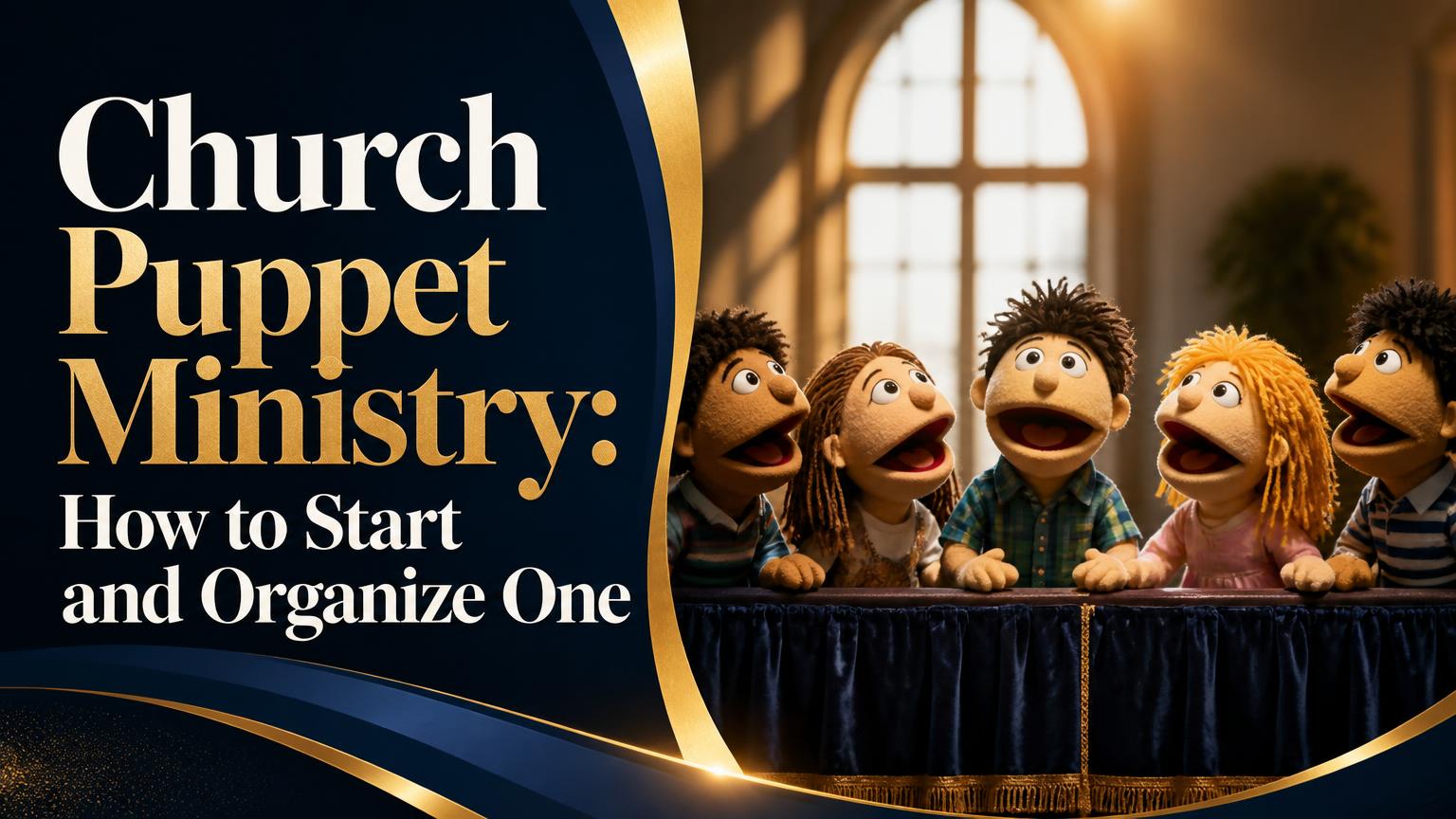
Church puppet ministry can help a church teach biblical truth, engage children, support worship, and create welcoming opportunities for families to participate. Its success, however, depends on more than acquiring puppets and writing amusing scripts. A healthy ministry needs a clear spiritual purpose, trained volunteers, age-appropriate communication, reliable organization, safeguarding procedures, and consistent evaluation. The goal is not to make puppets the center of attention, but to use them thoughtfully so that children hear, understand, and respond to the message of the gospel.
Church Puppet Ministry: How to Start and Organize One
Starting a church puppet ministry usually involves six connected decisions: define its purpose, identify the audience, recruit and train a team, obtain suitable equipment, prepare meaningful material, and establish a dependable operating pattern. Beginning with a small, well-prepared team is generally wiser than launching a large program without clear leadership or standards.
Define the Ministry’s Purpose and Audience
Begin by deciding what the ministry is expected to accomplish. It might support children’s worship, present short lessons during Sunday school, assist vacation Bible school, participate in outreach events, or provide object lessons during family services. A ministry with too many undefined purposes can become inconsistent; a ministry with one clear mission is easier to lead and evaluate.
Identify the primary age group as well. Preschool children, elementary-age children, teenagers, and families respond to different vocabulary, humor, pacing, and biblical applications. A script for preschoolers may use repetition and simple choices, while older children can engage more directly with questions about peer pressure, forgiveness, honesty, or serving others. The purpose should remain ministry-focused rather than treating children as an audience to entertain.
A church can ground this work in principles such as Jesus welcoming children in Mark 10:14 and Paul’s instruction to teach truth in ways that build up the church in Ephesians 4:12. Scripture does not command churches to use puppets, so puppetry is a method, not the ministry’s message. That distinction protects the team from confusing popularity with spiritual fruit.
Build a Trained, Reliable Team
A puppet ministry needs more than performers. Depending on the format, useful roles include a ministry coordinator, puppet operators, narrators or actors, scriptwriters, sound and technical helpers, set builders, costume or prop managers, and people responsible for prayer and follow-up. One person may fill several roles in a small church, but responsibilities should still be assigned clearly.
Recruit volunteers who are spiritually mature, teachable, dependable, and comfortable working with children. A naturally entertaining person is not automatically a good ministry leader. Operators need concentration, humility, and willingness to rehearse repeatedly. Leaders should also determine whether children or teenagers will participate and what supervision, training, and parental permissions are required.
Training should cover basic manipulation, voice control, synchronization, stage movement, script interpretation, microphone use, and respectful teamwork. Volunteers should understand that preparation is part of serving. Colossians 3:23 describes wholehearted work offered to the Lord; in practical terms, that includes arriving on time, learning lines, caring for equipment, and treating fellow volunteers with patience.
Establish Safeguarding and Ministry Standards
Because puppet ministry often involves children, safeguarding procedures must be established before public activity begins. Follow the church’s policies for volunteer screening, training, supervision, transportation, photography, digital recording, and communication with minors. Avoid private, unsupervised contact between an adult volunteer and a child, and make sure rehearsals and events take place in approved settings.
Create a written code of conduct that addresses appropriate language, physical contact, online communication, backstage access, and reporting concerns. The puppet booth should not become an unmonitored space simply because performers are hidden from the audience. Leaders should know who is present, who is responsible for children, and how an incident will be documented and escalated.
Standards for content matter as well. Avoid frightening scenes, humiliating jokes, stereotypes, manipulative altar appeals, or humor that depends on mocking a child or audience member. A puppet character may make a mistake to create a teaching moment, but the resolution should model truth, repentance, wisdom, and grace rather than normalizing cruelty or confusion.
Choose the Format, Space, and Equipment
The ministry’s format should match its purpose and available resources. Common options include a traditional puppet stage, tabletop puppets, hand puppets used in an open setting, glove puppets, shadow puppets, or a combination of live actors and puppets. A permanent stage is not essential. A portable frame, curtain, table, or folding backdrop may serve a small church effectively.
Start with equipment that supports clear communication rather than visual excess. Basic needs may include appropriately sized puppets, a stable stage or screen, microphones, speakers, lighting, storage containers, simple props, and scripts. The right equipment depends on room size and performance style. A small classroom may need only hand puppets and a portable backdrop, while a large sanctuary may require amplified sound and stronger lighting.
Test sightlines before an event. Children should be able to see the puppet’s face, and operators should have enough room to move without bumping one another. Store puppets cleanly, keep them away from moisture and excessive heat, label props, and inspect seams and moving parts. A modest ministry that functions reliably will usually serve better than an elaborate one that is difficult to transport or maintain.
Create Biblical, Age-Appropriate Programs
A strong program normally has one central idea, one clear biblical connection, and one practical response. The script should answer questions such as: What truth should children remember? What misunderstanding must be corrected? What should they do differently after hearing the lesson? Avoid combining several unrelated morals into one short presentation.
Puppets work particularly well when a character faces a recognizable problem: refusing to tell the truth, excluding someone, being anxious about change, misusing words, or struggling to forgive. The dialogue can reveal the character’s mistaken belief, allow another character or narrator to provide biblical perspective, and end with a realistic step of obedience. The application should be concrete rather than merely saying, “Be good.”
Use humor to open attention, not to replace meaning. Read scripts aloud and remove lines that are too complicated, preachy, frightening, or culturally confusing for the intended age group. Biblical content should be accurate and handled with context. When a verse is used, explain what it means rather than presenting a disconnected quotation as a slogan. The message should point beyond the puppet characters to God’s character, human responsibility, and the hope of the gospel where appropriate.
Set a Rehearsal and Performance System
Create a predictable weekly or monthly rhythm. A rehearsal may include prayer, a brief review of the lesson’s purpose, vocal and movement warmups, blocking, technical checks, several complete run-throughs, and a final discussion of adjustments. Rehearse transitions as carefully as the dialogue; awkward entrances, microphone failures, and uncertain endings can distract from an otherwise good lesson.
Puppet operators should keep the puppet’s mouth moving in time with the spoken words, maintain a consistent height, avoid unnecessary motion, and focus the puppet toward the character speaking. Operators should not let the puppet stare at the floor, bounce without purpose, or turn away during important lines. These skills improve through repetition, observation, and constructive feedback.
Use a written run sheet that lists the order of scenes, sound cues, entrances, props, lighting changes, and responsibilities. Keep a substitute plan for illness or absence. After each presentation, ask what children understood, where attention dropped, whether the sound was clear, and whether the practical application was remembered. Evaluation should improve service, not encourage performance pride.
What a Church Puppet Ministry Is—and Is Not
A church puppet ministry is a teaching and communication ministry that uses puppetry as one method of presenting biblical truth. It can make an abstract idea visible, give children a memorable character through whom they can examine a problem, and create an inviting bridge into a lesson or conversation. It may also help children who are hesitant to speak publicly engage with the church through backstage work, writing, music, or technical service.
It is not a substitute for sound teaching, pastoral care, parental involvement, or relationships with mature Christian adults. A funny character may hold attention, but attention alone does not equal understanding or discipleship. The ministry should cooperate with parents, children’s leaders, worship leaders, and pastors so that its themes reinforce the church’s broader teaching rather than functioning as an isolated show.
How to Organize the Ministry for Long-Term Stability
A written ministry plan prevents the program from depending entirely on one enthusiastic person. The plan can state the mission, age range, leadership structure, meeting schedule, approval process for scripts, equipment inventory, safeguarding expectations, annual calendar, and budget. It should also explain how new volunteers are trained and how decisions are made when content, scheduling, or participation creates disagreement.
Schedule programs according to the church calendar and the team’s actual capacity. A monthly presentation may be more sustainable than a weekly production. Allow additional preparation time for Christmas programs, outreach events, or vacation Bible school. Keep a library of approved scripts, lesson ideas, music cues, and performance notes so that future teams can build on previous work rather than starting over.
Budget for replacement puppets, repairs, storage, batteries, microphones, fabric, printing, and training. Fundraising can involve the wider congregation, but the ministry should communicate specifically what it needs and why. Financial stewardship includes purchasing durable equipment, avoiding unnecessary duplication, and caring for resources already entrusted to the church.
Common Problems and How to Avoid Them
The most common weakness is treating puppetry as entertainment with a Bible verse added at the end. Prevent this by writing the lesson objective before writing jokes or dialogue. Another problem is inconsistent rehearsal. Even gifted volunteers need practice to coordinate voices, movements, sound, and transitions.
A ministry can also become dependent on one operator, one writer, or one coordinator. Cross-train volunteers and document procedures so that illness, relocation, or schedule changes do not end the program. Avoid recruiting people merely to fill a roster; a smaller reliable team is safer and more effective than a large team that frequently cancels.
Finally, do not assume that children automatically understand symbolism. A puppet character may represent a child’s struggle, but the leader should still explain the lesson plainly and invite appropriate discussion. Listen to children, parents, and church leaders. Their feedback can reveal whether the material is understandable, culturally suitable, spiritually responsible, and genuinely helping the church serve families.
Measuring Whether the Ministry Is Serving Well
Success should be measured by more than audience size or applause. Consider whether children can state the lesson in their own words, whether the program encourages biblical reflection and wise action, whether families feel welcomed, and whether volunteers are growing in skill and character. A smaller presentation that leads to a meaningful conversation may accomplish more than a spectacular production that children remember only for its jokes.
Review the ministry periodically with church leadership. Examine attendance patterns, volunteer health, safety compliance, equipment condition, budget use, and the balance between entertainment and teaching. Ask whether the ministry still fits the church’s mission and whether its format serves the current audience. Evaluation may lead to expansion, simplification, a change of age group, or an intentional pause for retraining.
Conclusion
A church puppet ministry is most effective when it treats puppetry as a practical tool for biblical communication rather than as an attraction in itself. Start with a defined purpose, a suitable audience, trained and screened volunteers, safe procedures, clear teaching objectives, and a rehearsal system that respects both children and the message. Keep the equipment manageable and the content truthful, understandable, and connected to real life. With prayerful leadership and steady organization, even a small team can use puppets to support worship, teach Scripture, welcome families, and help children take meaningful steps toward faith and wise Christian living.