
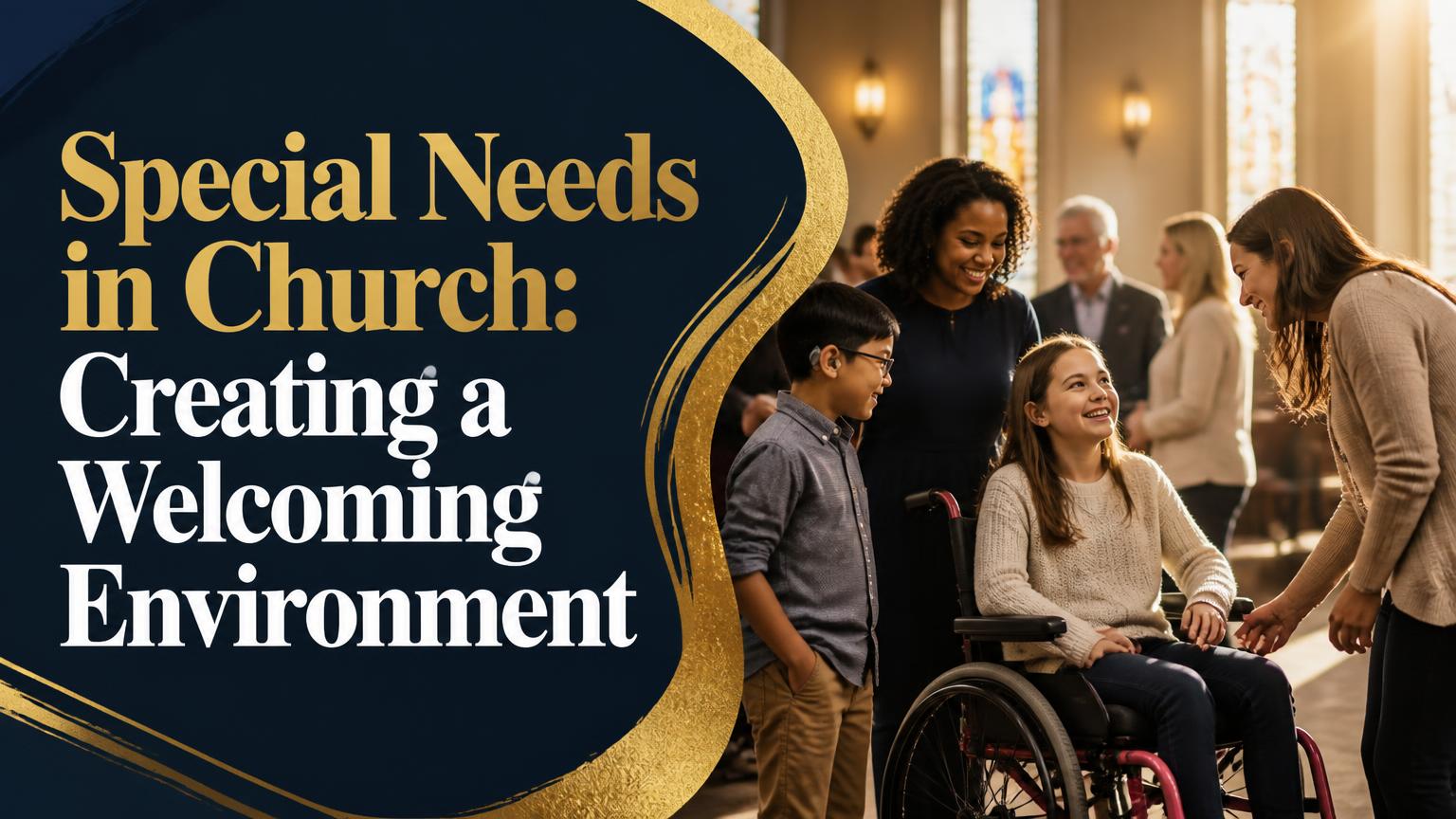
A church welcoming people with disabilities or other special needs does more than open its doors. It removes avoidable barriers, respects each person’s dignity, supports families, and creates real opportunities for worship, friendship, discipleship, and service. Biblical hospitality is not passive politeness; it is a shared way of life in which every member is treated as part of Christ’s body. Creating that environment requires both theological conviction and practical changes to buildings, communication, ministry programs, leadership, and congregational attitudes.
Special Needs in Church: What Genuine Inclusion Requires
A welcoming church understands that people with disabilities, developmental differences, chronic illnesses, mental-health conditions, and sensory or communication needs are not projects to manage. They are people made in God’s image and members of the church community. Inclusion therefore involves more than offering a separate program. It means asking whether the congregation’s ordinary worship and relationships allow people to participate with dignity.
See Every Person as an Image-Bearer
Christian inclusion begins with the belief that every person possesses God-given dignity. Genesis 1:27 grounds human worth in being made in God’s image, not in intelligence, independence, communication ability, productivity, or physical strength. First Corinthians 12:22 makes a related point about the church: members who may seem weaker are indispensable.
This changes the question a church asks. Instead of treating a person’s disability as the defining fact about that individual, leaders should ask what gifts, preferences, relationships, and forms of participation are present. A person who communicates without speech may contribute through art, prayer, technology, hospitality, or quiet companionship. A child who needs one-to-one support still belongs to the congregation, rather than merely attending a children’s program as a visitor.
Remove Physical, Sensory, and Communication Barriers
Many people are excluded by barriers that a church can identify and change. These may include steps without an accessible entrance, narrow aisles, difficult parking, inaccessible restrooms, poor lighting, loud music, crowded rooms, or a lack of seating options. Accessibility also includes information: websites, registration forms, announcements, and printed materials should be understandable and available in formats people can use.
Sensory and communication accommodations may include a quiet room, visual schedules, captioning, large-print materials, predictable service routines, hearing assistance, lower-volume worship options, and permission to move or use supportive equipment. These changes benefit others as well, including older adults, people recovering from illness, parents with young children, and visitors unfamiliar with the church. The goal is not to make every experience identical but to make meaningful participation possible.
Build Belonging, Not Mere Attendance
Attendance does not automatically mean inclusion. A person may sit in a service every week and still have no friendships, responsibility, voice, or sense of being known. Genuine belonging develops when people are welcomed by name, included in ordinary conversations, invited to appropriate activities, and treated as contributors rather than recipients of care.
Jesus’ teaching about the body of Christ challenges a ministry model in which some people always serve and others always receive. A church should provide support without assuming that people with disabilities have nothing to offer. Depending on their interests and abilities, they may welcome others, help prepare communion, participate in worship, assist with technology, serve in prayer ministries, or contribute to outreach. Participation should be shaped with the person, not imposed upon the person.
Support Families Without Replacing Them
Families of people with special needs often carry significant practical, emotional, financial, and spiritual responsibilities. They may worry about safety, judgment, disruptive behavior, inaccessible programs, or what will happen to their loved one in the future. A church can become a source of strength when it listens carefully and responds consistently.
Support may involve trained volunteers, flexible children’s ministry policies, respite opportunities, clear emergency procedures, accessible transportation, or a trusted contact person. Leaders should ask parents and caregivers what works rather than assuming they know best. At the same time, families should not be expected to provide every accommodation themselves. When parents must remain beside a child throughout every service because no support exists, the church has transferred its responsibility rather than creating inclusion.
Give People Voice and Meaningful Leadership
The people most affected by ministry decisions should help shape them. Churches can invite people with disabilities, family members, caregivers, and relevant professionals to review facilities, worship practices, communication, and programming. Consultation should occur before decisions are finalized, not after a program has already failed.
Leadership does not require every person to hold a formal title. It does require that their preferences and experiences be taken seriously. A church that listens to disabled members will often discover barriers that able-bodied leaders never notice. Romans 12:4–8 describes different gifts within one body; inclusion becomes credible when people are encouraged to exercise their gifts rather than being confined to the role of “person receiving ministry.”
How Churches Can Put Inclusion Into Practice
Good intentions need an organized process. A church does not have to solve every barrier at once, but it should identify priorities, assign responsibility, and review progress. The following areas provide a practical starting point.
Begin With Listening and an Access Review
Invite people with disabilities and caregivers to describe their experience from arrival through departure. Examine parking, entrances, restrooms, seating, children’s rooms, signage, registration, emergency exits, and transportation. Then review less visible barriers: noise, lighting, service length, language, social expectations, volunteer attitudes, and the availability of quiet or alternative spaces.
Separate urgent safety concerns from improvements that can be scheduled over time. A small church may not immediately be able to renovate its entire building, but it can provide clearer information, relocate a class, adjust service practices, recruit trained support, or communicate honestly about current limitations. Transparency is more respectful than promising access that does not exist.
Adapt Worship Without Losing Its Purpose
Worship can remain reverent while becoming more accessible. Leaders might provide sermon notes in advance, explain unfamiliar rituals, use captioning, offer visual and verbal instructions, include multiple forms of music, and allow appropriate movement or alternative seating. A shorter service or a quieter gathering may help some people participate more fully, but it should not become the only option offered to them.
Predictability often reduces anxiety. Publishing a simple service outline, explaining changes beforehand, and preparing volunteers to respond calmly can make a major difference for people with autism, cognitive disabilities, dementia, or anxiety. Accommodation is not a lowering of spiritual expectations. It is a way of removing unnecessary obstacles so that people can engage in prayer, Scripture, fellowship, and teaching.
Train Volunteers in Support and Safeguarding
Volunteers need more than goodwill. Training should cover respectful language, communication differences, mobility assistance, sensory overload, personal boundaries, emergency procedures, and when to seek help. They should know how to support a person without grabbing, speaking for them, making assumptions, or treating an adult like a child.
Safeguarding is especially important when a person depends on others for mobility, communication, medication reminders, or personal care. Churches should follow appropriate child-protection and vulnerable-adult policies, use accountable supervision, protect confidentiality, and obtain consent before sharing personal information. Support must preserve dignity and safety rather than creating unnecessary dependence or exposure.
Create Clear, Consistent Communication
People are more likely to attend when they know what to expect. Church websites and invitations should state practical details such as accessible entrances, parking, restroom availability, children’s support, service length, noise levels, and whom to contact with questions. Avoid vague claims such as “everyone is welcome” if the church cannot explain how it accommodates different needs.
Communication should also work during the service. Use plain language when possible, offer written or visual instructions, repeat important announcements, and provide more than one way to respond. Some people communicate through speech, writing, sign language, devices, gestures, or trusted supporters. The church should not treat one communication method as the measure of a person’s understanding or faith.
Language, Attitudes, and Common Mistakes
The phrase “special needs” is widely used, but it does not suit everyone. Some people prefer “disabled person,” “person with a disability,” “neurodivergent person,” or another description. Preferences vary by individual, culture, age, and community. Ask respectfully when the choice matters, and avoid language that portrays disability as shameful, inspirational merely because someone exists, or evidence of spiritual failure.
Churches should also avoid assuming that disability results from personal sin or that healing prayer must produce physical change to be considered successful. The Gospels show Jesus caring for people who were sick and disabled, but they do not authorize Christians to pressure someone, blame them for not being healed, or define their spiritual worth by an outcome. Prayer, medical care, practical support, and acceptance should not be presented as competing responses.
Another mistake is creating a segregated ministry without considering participation in the wider congregation. Specialized groups can be valuable when they meet a genuine need, provide focused support, or offer a comfortable setting. They become harmful when they communicate that disabled people do not belong in ordinary worship, fellowship, leadership, or discipleship. The strongest approach often combines targeted support with real integration.
A Sustainable Model for an Inclusive Church
Inclusion works best when it becomes part of congregational culture rather than the responsibility of one enthusiastic volunteer. Church leaders can appoint a small accessibility or inclusion team, establish a realistic plan, set aside funds, and include access questions in ministry evaluations. Progress should be measured by more than attendance. Ask whether people feel safe, known, consulted, spiritually nourished, and able to contribute.
Partnership also matters. Churches may learn from disability ministries, local organizations, therapists, educators, caregivers, and members with lived experience. Outside advice can be useful, but it should not replace listening to the people directly affected. The purpose of partnership is to improve competence while preserving personal dignity and congregational relationships.
A sustainable church also prepares for changing needs. A person may acquire a disability, a child may mature into new support requirements, or an older member may need assistance after illness. Regular review prevents accessibility from being treated as a one-time building project. As Philippians 2:3–4 teaches, considering the needs of others requires attention, humility, and practical action.
Conclusion
Special needs in church should be understood as a question of belonging, discipleship, justice, and shared responsibility—not simply as a matter of offering a separate service. A genuinely welcoming congregation recognizes the image of God in every person, removes physical and social barriers, supports families, protects vulnerable people, and invites disabled members to use their gifts. The most effective changes often begin with listening: ask what prevents participation, act on what can be changed, and review whether the result creates real belonging. When a church makes room for every member to worship and serve with dignity, it reflects the interdependence and grace of Christ’s body.