
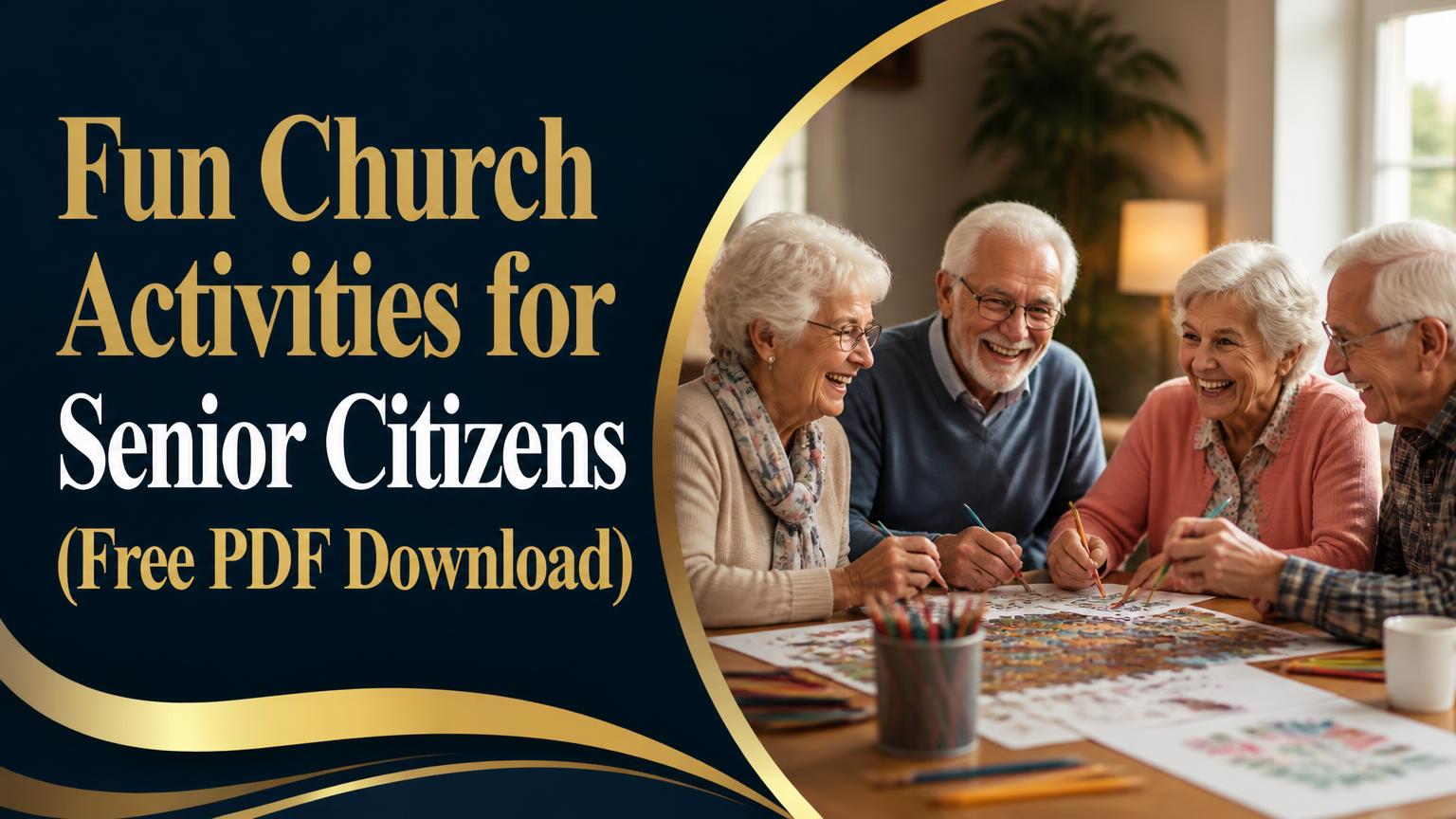
Church activities for senior citizens should combine fellowship, meaningful participation, spiritual encouragement, and appropriate levels of movement or challenge. The best programs do not treat older adults as passive recipients of entertainment. Instead, they invite them to share memories, use their gifts, build relationships, serve others, and enjoy Christian community in ways that respect different abilities and life experiences. The guide below provides practical activities, planning advice, and a free PDF-ready activity sheet that a church can print or save as a PDF.
Fun Church Activities for Senior Citizens PDF: Printable Ideas for Fellowship and Ministry
The following activities work well for senior adult ministries, church luncheons, Sunday school groups, assisted-living outreach, and intergenerational gatherings. Most can be adapted for people with limited mobility, hearing or vision loss, memory challenges, or varying levels of Bible knowledge.
Bible Trivia and Scripture Memory Games
Prepare questions about Bible characters, well-known stories, hymns, places, and teachings of Jesus. Keep the questions varied so that participants can answer from general knowledge rather than needing advanced theological training. Teams often work better than individual competition because they encourage conversation and reduce pressure.
Examples include identifying a Bible character from three clues, completing a familiar verse, matching people with events, or naming a hymn from a short lyric. Use large-print question cards and read each question aloud. The purpose is fellowship and encouragement, not determining who knows the most.
Hymn Sing-Along and Faith Story Circle
Choose familiar hymns and worship songs, provide large-print lyric sheets, and invite participants to share why a particular song matters to them. A hymn may remind someone of a parent, a wedding, military service, a season of grief, or a turning point in faith. These memories often create deeper conversation than a simple sing-along.
A leader can introduce each song with a brief Scripture passage or theme, such as hope, gratitude, forgiveness, or God’s faithfulness. Participants who cannot sing comfortably can read lyrics, listen, clap gently, or share a memory. Keep the sound level comfortable and provide microphones when necessary.
Encouragement Card Ministry
Give participants blank cards, stamps, stickers, large-print Bible verses, and colored pens. The group can create cards for homebound church members, people recovering from illness, missionaries, caregivers, new parents, or those experiencing bereavement. This activity turns a social gathering into a practical ministry opportunity.
Provide suggested messages for anyone who finds writing difficult, but leave room for personal notes. Volunteers can write down a participant’s words if hand strength, vision, or arthritis makes writing challenging. Before mailing cards, follow the church’s privacy practices and confirm appropriate names and addresses.
Intergenerational Game Afternoon
Invite children, teenagers, or young adults to join older adults for games that encourage cooperation rather than speed. Suitable options include Bible-themed bingo, dominoes, checkers, card games, word puzzles, simple board games, and “finish the hymn lyric.” Mixed-age teams allow people to contribute different kinds of knowledge.
Avoid games that depend heavily on quick movement, complicated instructions, or strong eyesight. Explain the rules slowly, demonstrate a sample round, and allow participants to opt out of competitive scoring. The strongest intergenerational activities create conversation between age groups instead of separating them into competing teams.
Church History Memory Wall
Ask participants to bring photographs, bulletins, old programs, certificates, or written memories connected with the congregation. Display copies on a bulletin board or arrange them on tables. Invite the group to identify people, places, and events while a volunteer records the stories shared.
This activity honors the congregation’s history and gives older members an opportunity to contribute knowledge that may otherwise be lost. Obtain permission before displaying personal photographs or names. The display can later become a temporary exhibit, a church anniversary project, or material for a congregational history booklet.
Gentle Movement, Stretching, and Prayer
A short chair-based movement session can support circulation, flexibility, and alertness without requiring participants to stand. Use slow shoulder rolls, ankle movements, hand stretches, breathing exercises, and gentle seated marches. Connect each movement to a prayer theme, such as gratitude for the body, strength for caregivers, or peace during difficulty.
Movement should never be presented as a test of fitness. Participants should remain within their comfort level and avoid any exercise that causes pain, dizziness, or shortness of breath. If the group includes people with significant health concerns, use a qualified instructor or obtain appropriate professional guidance.
Seasonal Crafts With a Ministry Purpose
Simple crafts can include decorating bookmarks with Scripture, assembling small flower arrangements, making Christmas ornaments for shut-in members, or creating thank-you cards for church volunteers. Select projects with large pieces, easy-to-hold tools, and limited steps so that participants with reduced dexterity can participate.
Explain the ministry purpose before beginning. For example, bookmarks may be given to children in a church program, while flower arrangements may brighten a nursing-home resident’s room. The finished item matters less than the opportunity to create, talk, pray, and serve together.
“Then and Now” Conversation Cards
Prepare cards with prompts such as “What food reminds you of home?”, “Which invention changed your daily life?”, “What advice would you give a younger believer?”, or “What church tradition do you remember fondly?” Participants may answer in pairs or in a larger circle.
Leaders should avoid pressuring anyone to discuss painful memories. Offer light and serious prompts, allow people to pass, and prevent one person from dominating the discussion. When younger guests participate, the activity can become a respectful exchange of wisdom rather than an interview focused only on the past.
Service Project Assembly Line
Choose a manageable project such as assembling hygiene kits, preparing snack bags, packaging school supplies, sorting donated clothing, or making welcome packets for new church families. Divide the work into stations so people can contribute by counting, folding, labeling, checking, or praying over the items.
A service project gives senior adults a visible way to use their abilities for others. It also supports people who prefer doing something practical rather than participating in extended conversation. Keep lifting light, provide seated workstations, and assign volunteers to handle transportation or heavier boxes.
Free PDF-Ready Activity Sheet
The following menu can be copied into a document, printed as a handout, or saved as a PDF using the print function on a computer or mobile device. Include the church name, meeting date, contact information, and any accessibility instructions before distributing it.
Senior Adult Church Activity Menu
- Bible trivia teams
- Hymn sing-along and testimony time
- Encouragement card ministry
- Bible bingo
- Church history memory wall
- Chair-based stretching and prayer
- Seasonal craft for homebound members
- Intergenerational board-game afternoon
- Scripture bookmark project
- “Then and Now” conversation circle
- Service project assembly line
- Prayer gathering with large-print Scripture
- Photo and story-sharing afternoon
- Guest presentation from a church ministry
- Christian book or devotional discussion
Simple Meeting Plan
- Welcome and opening prayer — 10 minutes
- Refreshments and fellowship — 15 minutes
- Main activity — 30 to 45 minutes
- Devotional thought or Scripture reading — 10 minutes
- Closing prayer and announcements — 10 minutes
A printable handout should use large, readable type, strong contrast, generous spacing, and short instructions. Avoid placing too much information on one page. If the document will be used by people with low vision, test the printout in the actual room where the activity will occur.
How to Choose the Right Activity
The most successful activity is not necessarily the most elaborate one. It is the activity that matches the group’s abilities, interests, energy level, and spiritual purpose. A church with many active members may manage a service project or walking tour, while a group with limited mobility may benefit more from music, storytelling, prayer, or a seated craft.
Consider Ability Without Making Assumptions
Older adults are not a single group. Some may be highly active, while others may use wheelchairs, have hearing aids, live with arthritis, or experience memory loss. Offer choices whenever possible: sitting or standing, writing or dictating, individual or team participation, quiet conversation or group discussion.
Use accessible routes, stable chairs, clear walkways, good lighting, and nearby restrooms. Speak clearly while facing the group, reduce background noise, and provide written instructions. These adjustments help nearly everyone and do not single out participants who need accommodations.
Give Each Gathering a Clear Purpose
An activity can serve several purposes, but leaders should know its primary goal. Fellowship activities emphasize conversation and belonging. Discipleship activities encourage Bible learning and prayer. Outreach activities connect the church with neighbors. Service activities allow participants to meet concrete needs.
A clear purpose shapes the design. For example, a Bible trivia event should include questions and discussion, while a service project should include preparation, assigned roles, and a plan for distributing the finished items. Without a clear purpose, a meeting can become busy without feeling meaningful.
Plan for Different Energy Levels
Many senior gatherings work best when the schedule alternates activity with rest. A 90-minute meeting might include refreshments, a seated main activity, a brief devotional, and unstructured conversation. Avoid packing the program with several demanding activities simply because the group meets infrequently.
Build in flexibility. Some participants may leave early, need medication or rest, or become tired by extended concentration. A welcoming leader treats flexibility as part of good planning rather than as an interruption.
Practical Guidelines for Safe and Welcoming Gatherings
Safety involves more than preventing falls. It also includes emotional comfort, transportation, food awareness, privacy, and respectful communication. Ask participants about allergies before serving refreshments, label common ingredients, and avoid assuming that every person can eat the same foods. Keep emergency contacts available according to the church’s established procedures.
Transportation deserves early attention. A worthwhile activity is inaccessible if participants cannot reach it safely. Churches may coordinate volunteer drivers, provide clear pickup times, arrange accessible parking, or partner with an existing senior transportation service. Confirm return plans before the event ends, especially when darkness or poor weather may affect travel.
Use respectful language and avoid treating older adults as children. Do not assume that someone is lonely, confused, technologically inexperienced, or unable to learn. Ask before helping with mobility equipment or personal tasks. When a participant has memory impairment, maintain dignity by offering gentle prompts and focusing on inclusion rather than publicly correcting mistakes.
Making Activities Spiritually Meaningful
Church activities do not need to become formal worship services to support Christian growth. A short Scripture reading, prayer, testimony, or discussion prompt can connect ordinary fellowship with faith. For example, a card-writing ministry can reflect on Galatians 6:2 and the call to bear one another’s burdens. A hospitality gathering can connect with Romans 12:13, which encourages believers to practice hospitality.
The spiritual element should fit the activity rather than interrupt it. A leader might ask, “Where have you seen God’s faithfulness in an ordinary season?” after a memory-sharing exercise, or pray for the people who will receive completed service-project items. These connections help participants see that fellowship, creativity, remembrance, and service can all express Christian love.
The goal is participation, not performance. Some people will contribute through conversation, others through prayer, music, practical work, humor, listening, or quiet presence. A well-planned senior ministry recognizes these different forms of service and gives each person a meaningful place.
Conclusion
Fun church activities for senior citizens are most effective when they combine enjoyment with belonging, purpose, and dignity. Bible games, hymn singing, storytelling, crafts, gentle movement, intergenerational events, and service projects can all strengthen relationships when they are adapted to the group’s abilities and interests. A free PDF-ready activity sheet makes planning easier, but the quality of the gathering depends on thoughtful leadership, accessible arrangements, and genuine attention to each participant. The best program gives older adults opportunities to receive encouragement, share wisdom, use their gifts, and serve others as valued members of the church.