
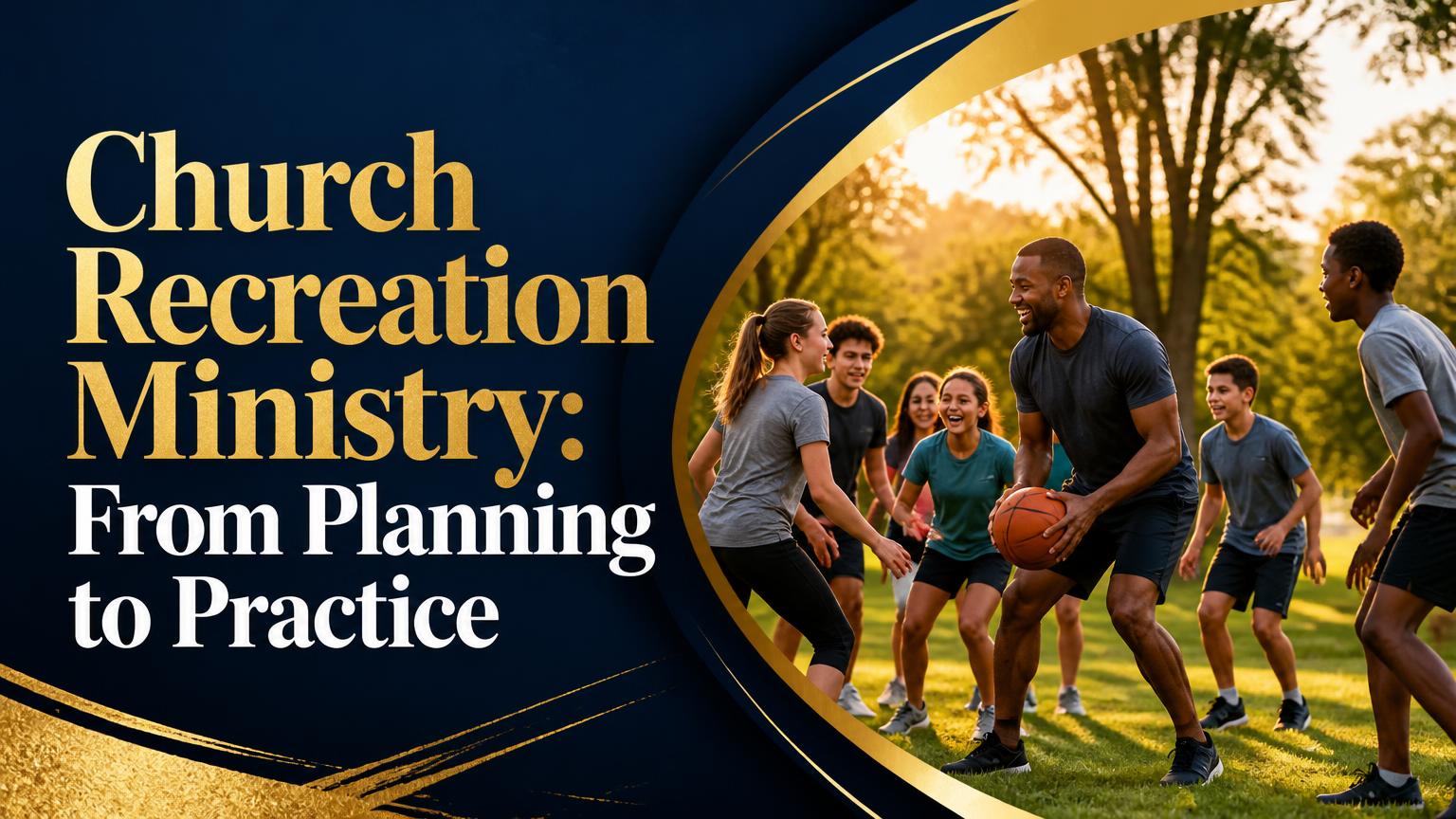
Church recreation ministry uses sports, games, outdoor activities, fitness, arts, and shared leisure to build relationships and support the mission of a local church. It is more than filling a calendar with activities. When thoughtfully designed, recreation creates accessible settings where children, youth, adults, families, and neighbors can experience belonging, develop trust, practice service, and encounter the character of Christ. Effective ministry requires clear purpose, capable leadership, appropriate safety standards, inclusion, and a deliberate connection between activity and spiritual formation.
What Is Church Recreation Ministry?
What Church Recreation Ministry Is and Why It Matters
Church recreation ministry is the organized use of physical activity, play, competition, hobbies, and leisure gatherings to serve people and strengthen the church community. Examples include sports leagues, camps, walking groups, family game nights, outdoor trips, fitness classes, dance programs, and recreational events for the wider neighborhood.
The activity itself is not the ministry’s entire purpose. Recreation becomes ministry when leaders use it to express hospitality, create healthy relationships, welcome people who may not attend a worship service, and provide opportunities for encouragement and service. A basketball league, for example, can offer athletic instruction while also teaching respect, inviting families into community, and connecting participants with caring adults.
The Bible does not prescribe a specific “recreation ministry” department. Its foundation comes from broader biblical principles: believers are called to care for the body, practice hospitality, encourage one another, serve their neighbors, and pursue life together. Physical training has limited but real value, Paul writes in 1 Timothy 4:8, while Christian maturity remains the greater aim. This balance prevents recreation from becoming either an idol or an afterthought.
How Recreation Supports Discipleship and Community
Recreation supports discipleship primarily through repeated relationships and shared experiences. People often become more open to conversation while walking, practicing a skill, playing on a team, or serving at an event. Trust grows through consistency, especially when leaders demonstrate patience, fairness, humility, and genuine interest in participants’ lives.
These settings also reveal character. Competition can expose pride, frustration, favoritism, or poor self-control, giving leaders opportunities to model repentance, forgiveness, and respect. A coach who corrects without humiliating a player demonstrates a distinctly Christian form of authority. A team that welcomes a less-skilled participant practices the biblical concern for people who might otherwise be overlooked.
Recreation should not be treated as a manipulative substitute for proclamation or discipleship. Participants should not be pressured to pretend that an athletic program is something it is not. Instead, the ministry should be honest about its Christian identity and allow relationships, teaching, prayer, service, and consistent conduct to work together naturally.
Common Forms and Ministry Settings
Church recreation ministry can be organized for different ages, abilities, and levels of participation. Common forms include:
- Youth and children’s programs: sports leagues, camps, playground activities, martial arts, and after-school recreation.
- Adult and family programs: walking clubs, pickleball, fitness groups, retreats, game nights, and family tournaments.
- Outdoor ministries: hiking, camping, cycling, kayaking, fishing, and nature-based events.
- Skill-based activities: music-related recreation, crafts, cooking groups, dance, and creative workshops.
- Community outreach: open gym, neighborhood festivals, free sports clinics, and facility partnerships.
- Service-oriented recreation: building access for adaptive sports, hosting community teams, or organizing activities for underserved groups.
A church does not need a gymnasium or a large budget to begin. A park, school facility, public trail, fellowship hall, or member’s backyard may provide an appropriate setting. The best format depends on the congregation’s people, facilities, leadership capacity, local needs, and safeguarding requirements.
Principles for Healthy Program Design
A strong program should reflect several principles.
Purpose comes before activity. Leaders should identify whether the primary goal is fellowship, discipleship, outreach, physical wellness, family support, leadership development, or service. One event may serve several purposes, but unclear goals make evaluation and decision-making difficult.
Participation matters more than performance. Competitive excellence can be appropriate, but programs should not communicate that athletic ability determines a person’s value. Rules, team formation, coaching, and recognition should make room for beginners and participants with disabilities.
Relationships require continuity. A single event may create contact, but recurring programs create trust. Consistent schedules, familiar leaders, and intentional follow-up are more effective for community-building than a series of disconnected activities.
Excellence should serve people. Good planning, punctuality, clean facilities, trained volunteers, and well-maintained equipment communicate respect. Excellence does not require expensive production; it requires responsible preparation.
Planning a Church Recreation Ministry
Assess the Congregation and Community
Begin with listening rather than selecting a fashionable activity. Review the ages, interests, abilities, schedules, and cultural backgrounds represented in the congregation. Speak with parents, young adults, older members, ministry leaders, and people who live near the church. Ask what opportunities already exist locally and which groups face barriers to participation.
Assessment should also identify practical limitations. A church may have enthusiastic volunteers but no suitable indoor space, or it may have excellent facilities but insufficient supervision. Consider transportation, registration fees, equipment, weather, accessibility, language, and the needs of people who cannot participate in conventional sports.
A brief written assessment helps leaders distinguish genuine ministry opportunity from personal preference. It can also reveal whether the church should start one modest program rather than launch several activities that cannot be staffed well.
Establish a Mission, Structure, and Calendar
Write a short ministry purpose statement that explains whom the program serves and how it supports the church’s mission. For example: “We provide safe, welcoming recreation that builds relationships, develops servant leaders, and connects families with the life of the church.” Such a statement guides choices about activities, fees, partnerships, and communication.
Then define responsibility. A recreation director or coordinator may oversee the ministry, while individual coaches and event leaders manage specific programs. Establish a calendar that accounts for school schedules, worship services, holidays, seasonal demand, facility availability, and volunteer capacity. A sustainable rhythm is better than an ambitious schedule that leads to exhaustion.
Recruit and Train the Right Leaders
Recruit leaders for character, reliability, teachability, and relational maturity—not merely athletic expertise. A talented coach who humiliates participants or ignores safety concerns can damage the ministry more than a novice who is willing to learn.
Training should cover the activity itself, age-appropriate instruction, conflict management, emergency procedures, communication with parents, inclusion, boundaries, and the church’s policies for working with minors. Leaders should know when to handle a problem themselves and when to refer it to a pastor, safeguarding officer, or emergency professional.
The church should use appropriate screening and supervision procedures for anyone working with children or vulnerable adults. At least two screened adults should generally be present in settings involving minors, with clear rules regarding transportation, private communication, restroom supervision, and one-on-one contact.
Plan the Budget, Facilities, and Equipment
A responsible budget includes more than balls or uniforms. Account for facility rental, insurance considerations, first-aid supplies, background checks where applicable, maintenance, transportation, communication, scholarships, accessibility needs, and replacement equipment. Fees should not quietly exclude families with limited income; churches can use scholarships, sponsors, or a tiered model when appropriate.
Inspect facilities before use. Check floors, lighting, exits, weather conditions, restrooms, drinking water, storage, accessibility, and emergency access. Equipment should match participants’ ages and abilities, and leaders should remove damaged items rather than assume someone else will address the problem.
Putting Church Recreation Ministry Into Practice
Design Activities That Welcome People
Programs should be easy to understand and enter. Clear registration, published costs, simple schedules, and a named contact reduce uncertainty for newcomers. Offer beginner options, loaner equipment, flexible participation, and reasonable accommodations where possible.
Avoid designing every program around the most skilled or confident participants. Small-sided games, rotating teams, cooperative challenges, and skill stations often create more meaningful participation than highly selective competition. Leaders can preserve appropriate competition while limiting excessive specialization and sideline behavior that makes families feel unwelcome.
Hospitality also includes what happens before and after the activity. Greeters, introductions, refreshments, seating for observers, and follow-up communication can turn an event into a community rather than a transaction.
Connect Recreation With Spiritual Formation
Spiritual formation should be intentional but proportionate to the setting. A coach might begin practice with a brief prayer and a thought about courage, integrity, or serving others. A camp can include worship, small-group discussion, and service alongside recreation. A walking group may combine exercise with prayer for local needs.
The connection should arise from the activity’s real experiences. A disagreement can lead to a conversation about forgiveness; an injury can prompt care and patience; a team victory can become an opportunity to discuss humility. Romans 12:13 links hospitality with active care for others, and Hebrews 10:24–25 emphasizes encouraging one another through committed gathering. Recreation can embody these principles when leaders create space for them.
Make Safety and Dignity Nonnegotiable
Safety includes physical, emotional, spiritual, and relational concerns. Establish procedures for injuries, severe weather, heat, hydration, allergies, medication, transportation, and emergency communication. For children, obtain required consent and health information, maintain attendance records, and communicate clearly with parents or guardians.
Leaders must address bullying, harassment, hazing, discriminatory language, unsafe aggression, and inappropriate conduct promptly. Competitive intensity never justifies humiliation or preventable danger. Programs serving people with disabilities should consider accessible spaces, modified rules, adaptive equipment, and trained support rather than treating inclusion as an afterthought.
Safeguarding policies should be written, taught, consistently enforced, and reviewed. A ministry’s Christian witness is weakened when leaders speak about care while tolerating conduct that places participants at risk.
Evaluate More Than Attendance
Attendance is useful but incomplete. Evaluation should ask whether participants feel welcomed, whether relationships are forming, whether volunteers are healthy, whether newcomers receive follow-up, and whether the program serves the stated mission. Leaders can use brief surveys, parent conversations, volunteer debriefs, incident reviews, and participation patterns.
Also examine who is absent. If only highly athletic teenagers participate, the program may need beginner formats. If families with limited transportation cannot attend, the church may need a different location or schedule. If volunteers are carrying too much responsibility, reducing the calendar may be wiser than recruiting people into burnout.
Evaluation is not a demand for measurable spiritual results from every game. It is a way to practice stewardship, notice harm, and improve service.
Common Challenges and Wise Responses
Avoiding the Entertainment Trap
A church can gradually measure success by excitement, crowd size, or competitive achievement rather than faithfulness to its purpose. Recreation is valuable, but it should not replace worship, pastoral care, Christian teaching, or service. Leaders can prevent drift by reviewing the mission regularly and asking whether the program reflects the church’s values in its treatment of people.
Balancing Outreach and Congregational Care
Programs open to the public may attract neighbors who have no church connection, while members may need affordable fellowship and wellness opportunities of their own. These aims can coexist, but leaders should state which activities are primarily outreach, internal care, leadership development, or a combination. Clarity prevents members from feeling neglected and prevents visitors from feeling used merely as attendance numbers.
Managing Competition, Cost, and Volunteer Capacity
Competition can motivate effort and teach perseverance, but poorly managed competition encourages exclusion, anger, and identity based on winning. Use age-appropriate rules, fair playing time where the program’s purpose allows it, and leaders who model composure.
Likewise, a program that depends on one overworked volunteer is fragile. Build teams, document procedures, rotate responsibilities, and set seasonal limits. A smaller ministry that remains safe, welcoming, and sustainable will usually serve people better than a large program that cannot maintain quality.
Conclusion
Church recreation ministry is a practical way for a congregation to express hospitality, develop relationships, care for bodies, welcome neighbors, and cultivate Christian character. Its effectiveness does not depend on expensive facilities or professional-level competition. It depends on clear purpose, trustworthy leaders, thoughtful design, safe practices, and genuine attention to people.
The central distinction is that recreation is the setting, while ministry is the way the church uses that setting to serve and form people. When activities are planned around participation rather than status, relationships rather than statistics, and faithful care rather than entertainment alone, a sports league, walking group, camp, or game night can become a meaningful part of the church’s witness and shared life.