
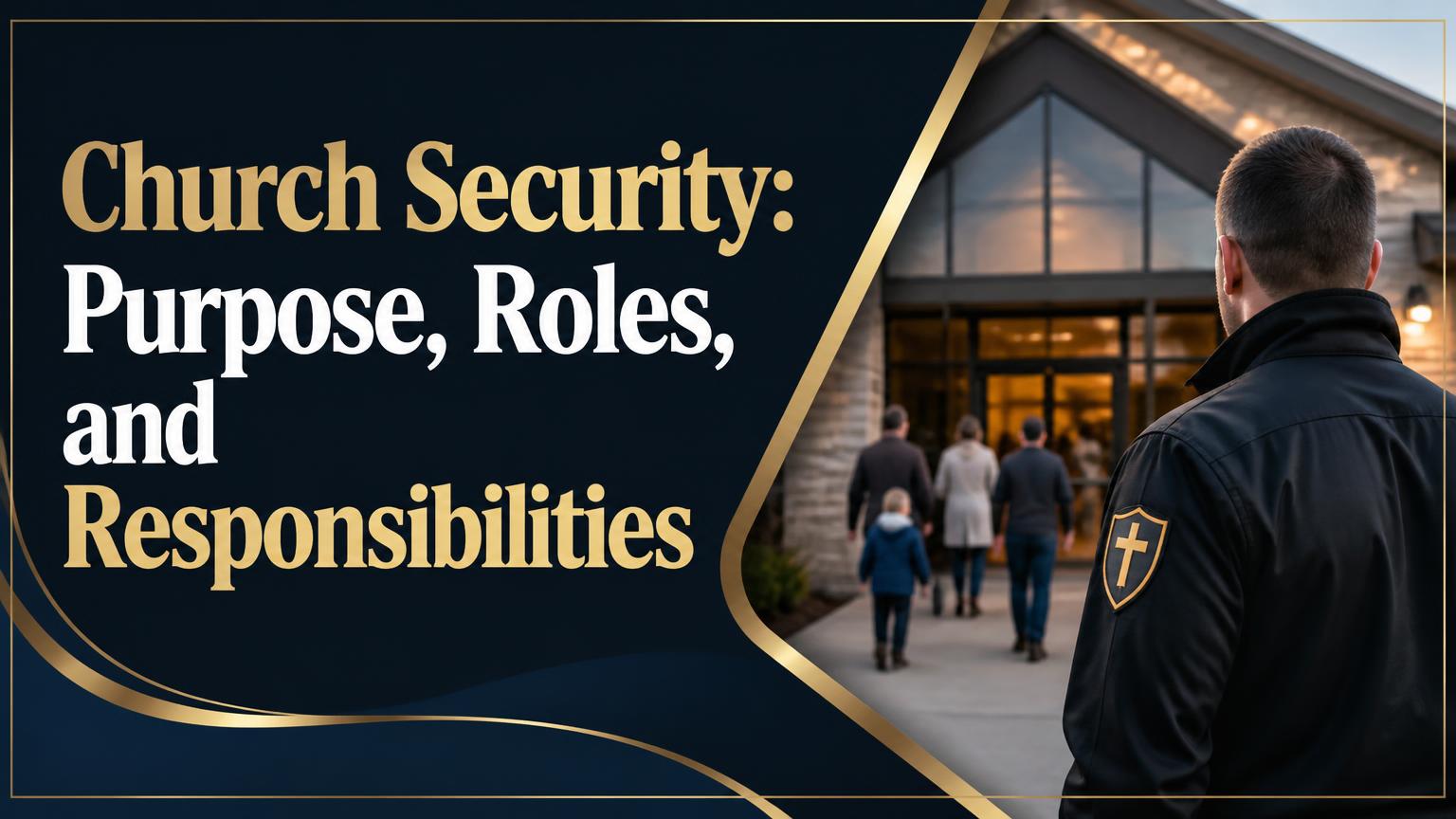
Church security is the organized effort to protect worshipers, staff, volunteers, children, property, and the church’s mission from preventable harm. It includes much more than guards or weapons. Effective church security combines risk assessment, trained people, clear procedures, safeguarding, emergency response, facility management, and cooperation with public safety agencies. The goal is not to create fear or turn worship into a checkpoint. It is to reduce hazards while preserving a welcoming environment in which people can worship, serve, and gather safely.
Church Security: Purpose, Roles, and Responsibilities
What Church Security Is Designed to Do
The primary purpose of church security is to identify foreseeable risks, reduce opportunities for harm, and respond effectively when an incident occurs. Those risks may include medical emergencies, fires, severe weather, missing children, unauthorized access, domestic conflicts, theft, vandalism, or acts of violence. A church may also face risks connected to transportation, construction, kitchen operations, large events, or inadequate building maintenance.
Security is therefore a protection system rather than a single activity. It includes prevention, preparation, response, and recovery:
- Prevention reduces hazards before an incident occurs.
- Preparation establishes plans, training, communication methods, and supplies.
- Response helps people act quickly and appropriately during an emergency.
- Recovery addresses medical, emotional, operational, legal, and pastoral needs afterward.
A sound program also recognizes that churches are unusually open institutions. They welcome visitors, provide ministry to vulnerable people, host community events, and often operate with volunteers. Those strengths should not be treated as weaknesses, but they require thoughtful procedures that protect people without making hospitality impossible.
Core Responsibilities of a Church Security Team
A church security team supports the congregation and leadership; it does not replace law enforcement, fire services, emergency medical personnel, licensed security professionals, or qualified child-protection staff. Its responsibilities should be defined in writing and approved by church leadership.
Common responsibilities include:
- Observing and reporting hazards such as blocked exits, unsafe entrances, suspicious behavior, broken lighting, or unsecured areas.
- Supporting orderly emergency procedures, including evacuation, sheltering, reunification, and communication.
- Coordinating with ushers, greeters, children’s workers, facilities staff, and ministry leaders so that concerns are recognized early.
- Calling emergency services promptly when a situation exceeds the team’s training or authority.
- Protecting children and vulnerable adults through approved check-in, release, supervision, reporting, and volunteer-screening procedures.
- Documenting incidents accurately, using objective observations rather than assumptions or inflammatory descriptions.
- Helping preserve the scene after a serious incident and cooperating with official investigations.
Team members should understand the limits of their role. They should not conduct unauthorized searches, interrogations, surveillance, or physical interventions simply because they are concerned. Any use of force, detention, carrying of weapons, or security screening must comply with applicable law, church policy, insurance requirements, and documented training.
How a Layered Church Security Plan Works
The strongest church security plans use multiple protective layers rather than relying on one person or one piece of equipment. If one layer fails, another can reduce the consequences. A typical plan may include:
- Leadership and policy: Clear authority, written procedures, incident reporting, and designated decision-makers.
- People and supervision: Trained greeters, ushers, children’s workers, facilities personnel, and security volunteers who know what to watch for and how to communicate.
- Facility measures: Adequate lighting, functioning locks, visible entrances, maintained fire protection, clear exits, safe parking areas, and controlled access to children’s spaces.
- Communication: Radios, phones, emergency contact lists, public-address capability, and backup methods if normal communication fails.
- Emergency procedures: Plans for fire, medical incidents, severe weather, missing children, disruptive behavior, hazardous materials, and violent threats.
- Outside coordination: Familiarity with local emergency services and, where appropriate, advance communication with police, fire, emergency medical providers, or neighboring organizations.
Layering does not mean making every door inaccessible or monitoring every person suspiciously. It means matching safeguards to actual risks. For example, a church serving many children may need stronger child-release controls, while a congregation in a region affected by severe storms may need a detailed weather-shelter plan. Security should be proportionate, practical, and reviewed when the building, schedule, ministries, or local conditions change.
Why Security Must Include Care, Safeguarding, and Hospitality
Church security is closely related to safeguarding, but the two terms are not identical. Security generally addresses threats, hazards, and emergency protection. Safeguarding focuses especially on preventing abuse, exploitation, neglect, and inappropriate conduct involving children or vulnerable adults. Both belong in the church’s overall protection framework.
A security-minded church does not assume that danger always comes from an unknown visitor. Safeguarding procedures must address conduct within ministries, including supervision standards, appropriate boundaries, two-adult practices where applicable, background-screening policies, reporting duties, and controlled child release. These measures protect people while also protecting workers from false accusations and unclear expectations.
Hospitality matters because an atmosphere of suspicion can damage ministry and discourage people from seeking help. Greeters and ushers can provide both welcome and observation. A team can respond to concerning behavior without profiling people based on race, disability, clothing, economic status, mental-health symptoms, or religious background. The relevant question is behavior and risk, not whether someone merely appears different.
Who Is Responsible for Church Security?
Church security is ultimately a leadership responsibility, even when daily tasks are delegated to a security team. Elders, pastors, boards, trustees, or other governing bodies should approve policies, assign authority, provide resources, and ensure that the program reflects the church’s legal and ethical obligations. Leaders should also know who can make decisions during an emergency if the senior pastor or primary administrator is absent.
The Role of Church Leaders
Leaders establish the purpose and boundaries of the program. They should approve written policies for emergencies, children’s protection, incident reporting, weapons, visitors, access control, media communication, and cooperation with public agencies. They also need to consider insurance, employment rules, privacy, disability access, and local laws.
Leadership should avoid creating a team that operates independently or informally. A volunteer’s good intentions do not establish authority, and a military, law-enforcement, or security background does not automatically qualify someone to design a church-wide program. Selection should consider judgment, reliability, communication, emotional maturity, confidentiality, and willingness to follow policy.
The Role of Security Volunteers and Staff
Security personnel observe, communicate, assist, and escalate. They may check facilities before services, monitor entrances, help direct people during an evacuation, coordinate with emergency responders, or provide basic first aid if trained. Their effectiveness depends more on preparation and judgment than on an intimidating presence.
Every team member should know whom to contact, what information to report, when to call emergency services, and what actions are prohibited. A simple report should identify what was observed, where it occurred, when it occurred, who may be affected, and what immediate danger exists. Speculation should be separated from direct observation.
The Role of the Wider Congregation
The congregation also contributes to safety, but members should not be encouraged to confront suspicious people or investigate threats themselves. They can keep exits clear, follow staff instructions, report hazards, supervise children appropriately, and call for help when necessary.
Churches should explain emergency expectations before an incident occurs. Short announcements, volunteer orientation, posted instructions, and periodic reminders can help people recognize evacuation routes, severe-weather procedures, child-reunification locations, and accessibility accommodations. Clear communication reduces confusion without making worshipers feel constantly threatened.
Building an Effective Church Security Plan
Begin With a Practical Risk Assessment
A risk assessment asks what could happen, how likely it is, who could be harmed, and how serious the consequences might be. It should examine the building, grounds, ministries, events, transportation, staffing, local environment, and previous incidents. Reviewing actual conditions is more useful than copying a generic checklist.
The assessment should include people who understand different parts of church life: leadership, facilities, children’s ministry, hospitality, accessibility needs, and emergency response. It should look for ordinary hazards as well as dramatic threats. Poor lighting, confusing signage, propped-open doors, inadequate supervision, and unreliable communication can create more frequent danger than rare criminal events.
Write Emergency Action Plans
An emergency plan should state who makes decisions, how people are notified, where they go, and how the church accounts for those needing assistance. Plans may address fire, medical emergencies, severe weather, missing children, disruptive behavior, hazardous materials, power loss, and violent incidents.
Plans should be concise enough to use under stress. They should include emergency numbers, building information, utility shutoffs where appropriate, accessible evacuation arrangements, child-reunification procedures, and instructions for contacting families or the wider congregation. Sensitive operational details should be shared only with people who need them.
The plan must also account for people with disabilities, young children, older adults, language barriers, and visitors unfamiliar with the building. A procedure that works only for fast-moving adults is not a complete church plan.
Train, Practice, and Review
Training should match each person’s responsibilities. Useful subjects may include emergency communication, first aid and cardiopulmonary resuscitation, de-escalation, fire response, child protection, recognizing abuse, severe-weather procedures, evacuation assistance, and incident documentation. Armed roles, if a church permits them, require separate legal review, specialized training, strict policy, and continuing qualification.
Practice reveals weaknesses that written plans conceal. Churches can conduct tabletop discussions, communications tests, evacuation drills, or focused exercises without frightening children or creating unnecessary disruption. After each exercise or real incident, leaders should ask what worked, what failed, and what must change.
Common Church Security Mistakes
Treating Security as a Weapon-Centered Program
Weapons may be part of some churches’ policies, but they are not a complete security strategy. A weapon does not correct poor access control, inadequate child protection, unclear authority, weak communication, or a lack of medical preparation. Introducing armed personnel also creates legal, training, insurance, identification, storage, and escalation concerns.
Churches should make decisions based on documented risk and professional legal guidance rather than fear, imitation, or personal preference. If weapons are permitted, the policy must define authorization, storage, identification, training, response expectations, and accountability. If those issues cannot be managed responsibly, the church should not treat armed volunteers as a substitute for a broader plan.
Relying on One Person or Informal Knowledge
A plan known only to a pastor or a single security volunteer will fail when that person is absent, injured, or overwhelmed. Responsibilities need to be distributed, documented, and practiced. At the same time, sensitive information should not be published broadly in ways that expose vulnerabilities.
Succession matters. Churches should identify alternates for key roles, maintain current contact lists, and ensure that new volunteers receive orientation before taking responsibility. Regular review is especially important after renovations, staff changes, new ministries, changes in service times, or incidents at the church.
Responding to Appearance Instead of Behavior
Unfocused suspicion can lead to discrimination, unnecessary confrontation, and loss of trust. Security decisions should be based on observable conduct, credible information, access violations, threats, or specific safety concerns. A person who is unfamiliar is not automatically dangerous, and a familiar person is not automatically safe.
De-escalation should be the default when immediate harm is not occurring. Calm communication, distance, calling appropriate support, and moving vulnerable people away from a developing conflict are often safer than arguing or physically intervening. Immediate threats require prompt emergency assistance rather than improvised heroics.
Conclusion
Church security is a ministry-support function grounded in stewardship, preparation, and care for people. Its purpose is to reduce foreseeable harm and help the congregation respond wisely when emergencies occur—not to create fear, exclude unfamiliar people, or turn volunteers into unaccountable enforcers. The most reliable approach combines leadership oversight, risk-based planning, safeguarding, trained personnel, sound facilities, clear communication, emergency-service coordination, and regular review.
A church can remain welcoming while taking safety seriously. The key distinction is between visible control and responsible protection: effective security may sometimes be noticeable, but it is measured by whether people are safer, vulnerable individuals are protected, emergencies are handled competently, and the church’s hospitality remains consistent with wisdom and accountability.