
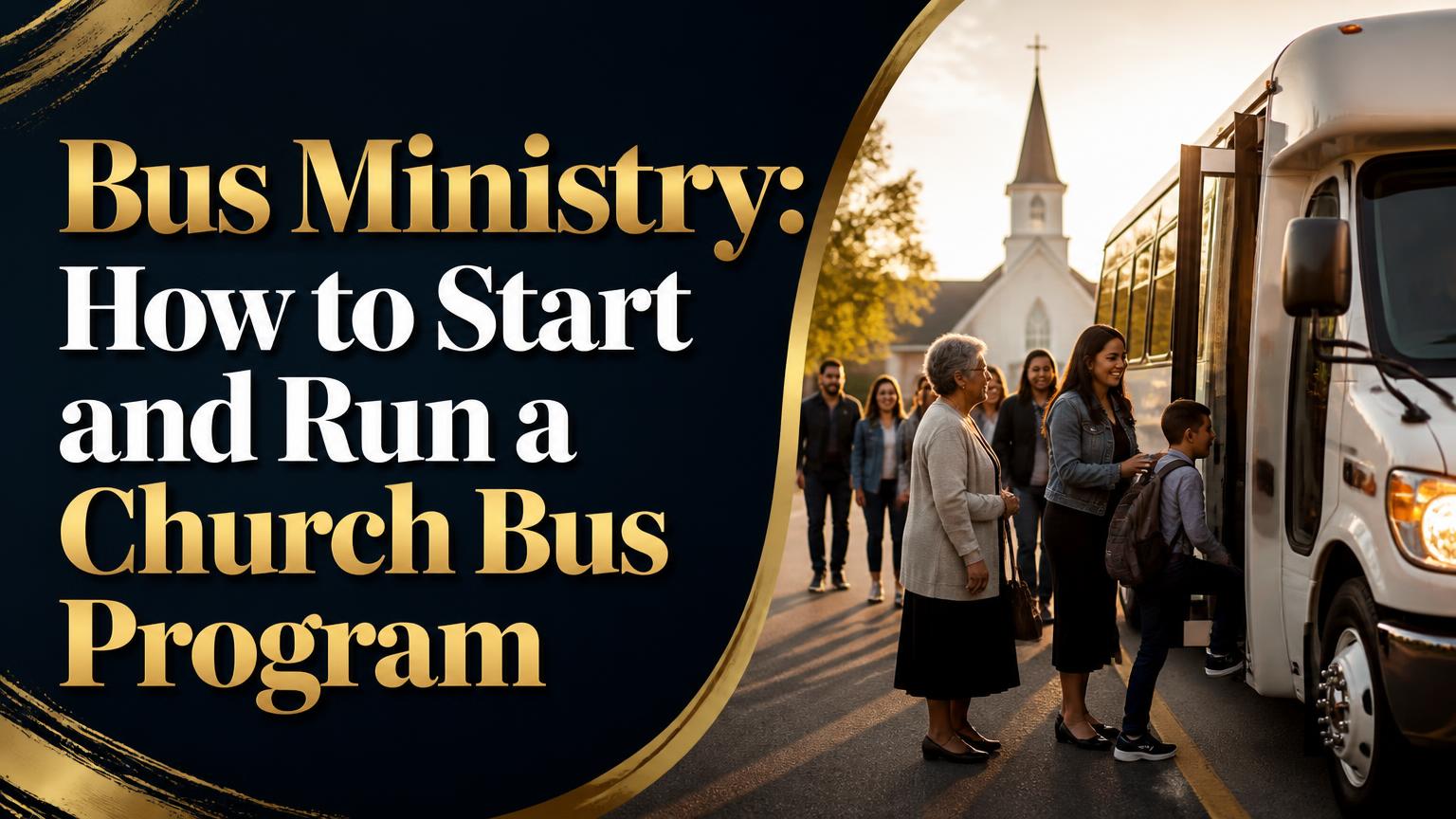
A bus ministry is a church transportation program that brings children, teenagers, families, older adults, or people with mobility limitations to worship services and other church activities. Its purpose is larger than providing a ride: it removes transportation barriers, creates a dependable connection with the congregation, and gives church members a structured way to serve. A healthy program combines outreach, pastoral care, safe transportation, family communication, and consistent follow-up.
How to Start and Run a Bus Ministry
Define the Ministry’s Mission and Scope
Begin by deciding whom the church intends to serve and which activities the program will support. A church might transport children to Sunday school, teenagers to youth meetings, adults to worship, seniors to special events, or residents of a particular neighborhood. Trying to serve every group immediately can overwhelm volunteers and produce unreliable service.
Write a short mission statement that connects transportation with discipleship and care. For example: “The bus ministry helps people participate in worship and Christian community by providing safe, respectful, and dependable transportation.” This keeps the program from becoming merely a vehicle operation. Acts 2:42 describes believers gathering for teaching, fellowship, breaking bread, and prayer; transportation can help people who would otherwise be excluded from that shared life.
Set practical boundaries at the beginning. Determine the service area, number of routes, pickup times, eligible riders, frequency of service, and events included. A limited program that operates consistently is usually more effective than an ambitious program that frequently cancels or arrives late.
Assess Community Need and Church Capacity
Before purchasing or leasing a vehicle, learn whether transportation is genuinely limiting participation. Talk with families, community organizations, church members, schools where appropriate, and local residents. Ask where prospective riders live, what times work, whether they need child seats or accessibility accommodations, and why they have not attended previously.
The church should also assess its own capacity. A bus ministry requires trained drivers, adult supervisors, route coordinators, maintenance oversight, communication systems, and funds for fuel, insurance, repairs, registration, and replacement vehicles. A congregation may have enough money for a bus but not enough volunteers to operate it responsibly.
A simple pilot program can reveal demand without creating an unsustainable commitment. One route on Sunday morning, operated for several months, can show actual ridership, travel time, volunteer workload, and follow-up needs. Use that experience to revise the plan before expanding.
Choose the Right Vehicle and Funding Model
The right vehicle depends on rider numbers, route length, road conditions, accessibility needs, and local regulations. Options may include a passenger van, a small bus, a used church bus, or a contract with a licensed transportation provider. Capacity should not be the only consideration. A smaller vehicle may be safer and less expensive if it fits the actual ministry need.
Inspect used vehicles carefully and budget for more than the purchase price. Mechanical condition, tires, brakes, seat belts, emergency equipment, wheelchair access, heating and air conditioning, and maintenance records all affect suitability. A low-cost vehicle that frequently breaks down can damage trust and cost more over time.
Prepare an annual operating budget that includes:
- Fuel and routine maintenance
- Repairs and inspections
- Commercial or appropriate vehicle insurance
- Registration and licensing
- Driver training and screening
- Child-safety equipment and first-aid supplies
- Communication and administrative costs
- A reserve for unexpected repairs or replacement
Funding may come from the church budget, designated gifts, fundraising, grants, or partnerships with other congregations. Fundraising should support the ministry without implying that riders must pay for access.
Build a Safety, Compliance, and Child-Protection System
Safety must be designed into the program before the first rider is transported. Requirements vary by country, state, province, and vehicle type, so the church should confirm applicable rules with transportation authorities, its insurer, and qualified legal or safety professionals. Depending on the circumstances, requirements may concern driver qualifications, commercial licenses, passenger capacity, inspections, seat belts, insurance, accessibility, and child restraints.
Every driver should have an appropriate license, a satisfactory driving record, training for the vehicle being used, and a clear understanding of church policies. Screening should also reflect the population served. When children or vulnerable adults ride, churches commonly use background checks, reference checks, abuse-prevention training, two-adult procedures, attendance records, and rules against isolated contact.
Create written procedures for:
- Rider registration and parent or guardian permission
- Pickup and drop-off verification
- Seating and behavior expectations
- Late or absent riders
- Medical information and medication
- Accidents, injuries, missing children, and severe weather
- Communication with parents and church leaders
- Vehicle evacuation and emergency contacts
A safety policy is useful only when volunteers understand and follow it. Review it regularly, document incidents, and correct weaknesses without hiding problems. Dependability also forms part of safety: rushed routes, overcrowding, poorly maintained vehicles, and unclear supervision create preventable risks.
Recruit, Train, and Organize Volunteers
A bus ministry needs more than drivers. Useful roles include a ministry coordinator, route planners, drivers, adult monitors, check-in volunteers, family follow-up workers, mechanics or maintenance contacts, and prayer supporters. Clear role descriptions prevent every responsibility from falling on one enthusiastic person.
Recruit people for patience, reliability, emotional maturity, and respect for families—not merely for driving ability. Train volunteers in defensive driving, loading and unloading, child protection, conflict management, disability awareness, emergency procedures, confidentiality, and the church’s theological and behavioral expectations.
Use a dependable schedule with substitutes. If the program depends on one driver or one vehicle, a sickness or mechanical problem can cancel the entire ministry. Volunteers should know whom to contact when they cannot serve and should receive schedules far enough in advance to plan responsibly.
How a Bus Ministry Becomes a Real Ministry
Make the Ride Welcoming and Respectful
The ride is often a person’s first experience with the church. Volunteers should greet riders by name, explain what will happen, and avoid treating children or families as projects. Loud entertainment, forced religious participation, public correction, or jokes about a rider’s home situation can undermine trust.
Establish simple expectations: remain seated, use seat belts when provided, speak respectfully, keep hands to oneself, and follow the driver’s instructions. Correct behavior calmly and privately when possible. Children should not be excluded casually because they are difficult; however, serious or repeated safety violations require a documented response and communication with guardians.
A welcoming atmosphere does not require expensive programming. Consistent greetings, clean vehicles, prepared volunteers, age-appropriate activities, and reliable arrival times communicate dignity and care.
Connect Transportation With Discipleship and Family Care
Transportation alone does not create lasting participation. When riders arrive, someone should welcome them, help them find the correct class or service, and introduce them to trusted adults. After the gathering, follow up with families rather than assuming that a first visit means the ministry has succeeded.
For children, coordinate the bus schedule with check-in, classroom leaders, attendance records, and parent communication. For adults, provide clear information about worship times, accessibility, and return arrangements. If a rider misses several weeks, contact the family appropriately and ask whether the schedule, route, or experience created a problem.
The ministry should respect parental authority and privacy. Obtain permission before adding families to communication lists, publishing photographs, or transporting a child to an activity outside the agreed program. The goal is a trustworthy relationship, not simply a larger attendance number.
Design Routes for Reliability
Route planning should balance geographic efficiency with human realities. A route that looks short on a map may become impractical because of traffic, apartment access, difficult turns, railroad crossings, or lengthy loading times. Build in reasonable margin rather than scheduling every stop at the absolute limit.
Maintain a current rider list with addresses, contact information, special needs, and authorized pickup details. Avoid announcing sensitive information publicly. Families should know the expected pickup window and whom to contact if the vehicle is delayed.
Review routes periodically. Growing ridership may require another vehicle, a second route, or a waiting list rather than continued overcrowding. Declining ridership may indicate that the church should change its service area or communicate more effectively—not automatically that the ministry has failed.
Common Problems and Better Practices
Avoid Measuring Success Only by Ridership
Attendance matters, but it is only one measure. A bus ministry may be succeeding when it helps a previously isolated older adult participate in worship, enables a child to join a stable Christian community, or reconnects a family with pastoral care. Track attendance alongside repeat participation, family contacts, volunteer reliability, safety incidents, costs, and personal stories.
Numbers should guide decisions rather than determine a person’s value. High ridership with poor supervision is not success, while a small, safe, and relational program may be laying a strong foundation.
Do Not Launch Without Long-Term Funding
Churches sometimes purchase a vehicle after a successful fundraising campaign but underestimate recurring costs. Fuel, repairs, insurance, inspections, and replacement planning continue every year. Set aside operating funds before launch and establish who can authorize repairs or suspend service when the vehicle is unsafe.
A written replacement plan is especially important for older vehicles. The church should know the vehicle’s expected service life, major maintenance risks, and the financial threshold at which replacement makes more sense than repair.
Do Not Treat Safety as an Administrative Detail
Informal practices may seem acceptable when the program is small, but they become dangerous as participation grows. Avoid unapproved drivers, overloaded vehicles, undocumented riders, inconsistent pickup procedures, and exceptions made for convenience. Church leaders should review insurance coverage and policies before service begins, not after an incident.
Safety rules also protect volunteers. When expectations are written and consistently applied, a driver or monitor does not have to improvise under pressure.
Maintain Spiritual and Organizational Accountability
A bus ministry should operate under clear church oversight. Identify the pastor, elder, ministry director, or committee responsible for policy, budget, volunteer approval, and incident review. Keep appropriate records, protect confidential information, and evaluate the program on a regular schedule.
Galatians 5:13 describes Christian freedom as an opportunity to serve one another in love. That principle applies to volunteers and leaders alike: service should be generous, but it should also be wise. Preventing burnout, respecting boundaries, and sharing responsibility help the ministry remain an expression of love rather than a burden carried by a few people.
A Practical Launch Sequence
A church can organize the program through a staged process:
- Identify the need. Map likely riders, transportation barriers, and suitable service times.
- Gain leadership approval. Confirm the mission, oversight, budget, and risk-management expectations.
- Verify requirements. Review licensing, insurance, inspection, accessibility, child-protection, and employment or volunteer rules.
- Select the vehicle. Choose capacity and equipment based on actual need, not appearance or fundraising success.
- Write policies. Cover registration, supervision, emergencies, behavior, communication, maintenance, and incident reporting.
- Recruit and train volunteers. Build a team with drivers, monitors, coordinators, substitutes, and follow-up workers.
- Pilot one route. Operate consistently long enough to identify practical problems.
- Evaluate and improve. Review safety, cost, timing, rider experience, family feedback, and volunteer workload.
- Expand carefully. Add routes or riders only when personnel, funding, and oversight can support them.
This sequence prevents enthusiasm from outrunning preparation. It also gives church leaders evidence for responsible decisions instead of relying on assumptions about demand.
Conclusion
A bus ministry is most effective when transportation, safety, hospitality, and discipleship work together. Starting well requires a clearly defined mission, realistic community assessment, appropriate vehicles, sustainable funding, trained volunteers, and policies that protect every rider. Running well requires dependable routes, respectful relationships, communication with families, and regular evaluation.
The central measure is not simply how many people ride the bus. It is whether the program helps people participate in the life of the church with dignity and genuine care. A modest ministry that operates safely and consistently can become a lasting bridge between the congregation and people who otherwise face a practical barrier to worship, fellowship, and spiritual growth.