
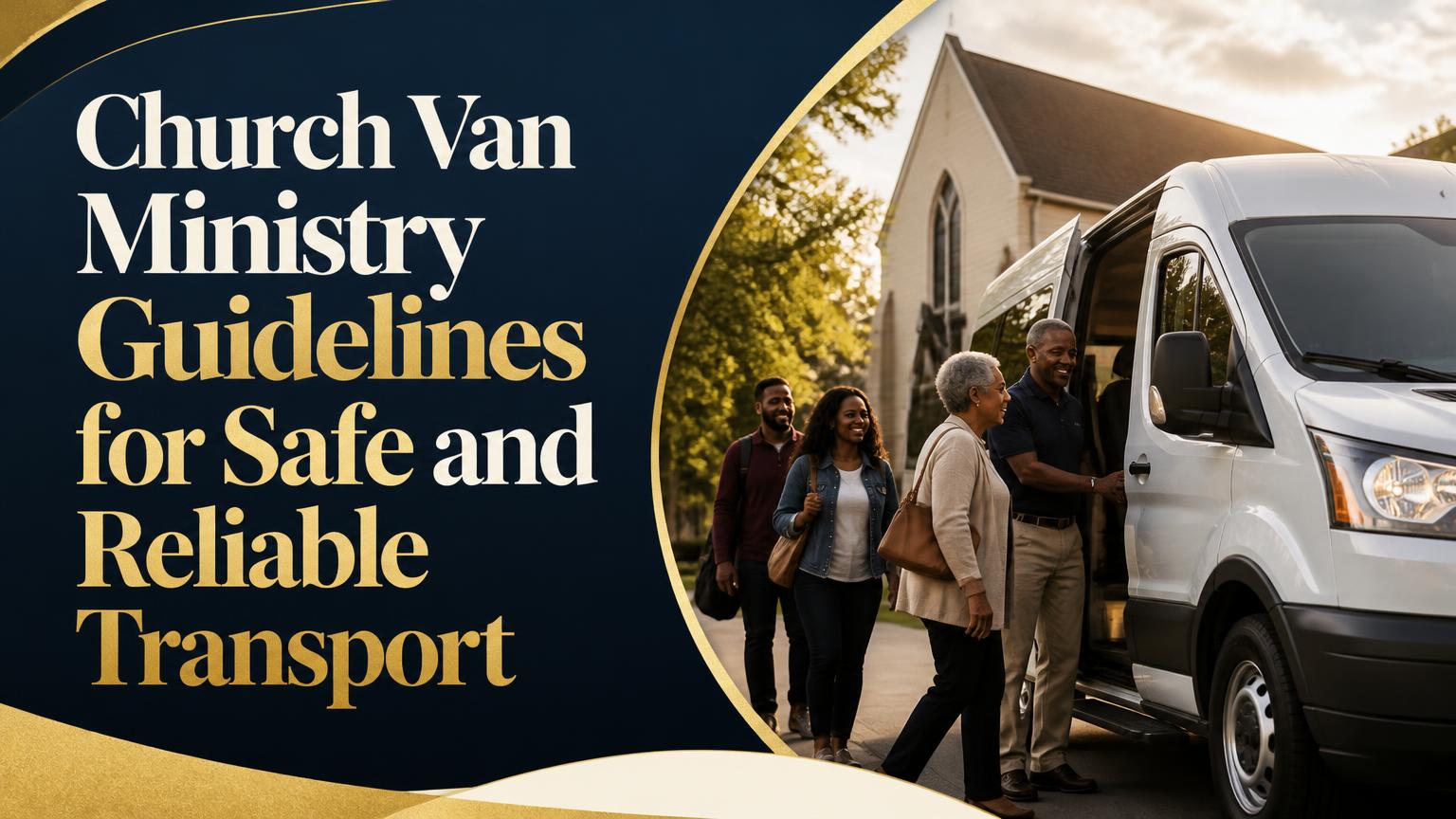
Church van ministry guidelines should treat transportation as both a safety responsibility and an extension of pastoral care. A church van carries children, older adults, visitors, members with disabilities, and people who may depend on the congregation for access to worship or community programs. Reliable ministry transport therefore requires more than a vehicle and a willing driver. It needs clear policies, qualified operators, maintained equipment, safeguarding procedures, emergency planning, and respect for applicable transportation laws and insurance requirements.
Church Van Ministry Guidelines
A strong church van ministry combines sound administration with a service-minded culture. The following guidelines provide a practical framework, but churches should also verify requirements with their insurer, vehicle manufacturer, state or provincial transportation authorities, and legal advisers. Rules for driver licensing, passenger capacity, child transportation, accessibility, background checks, and commercial use vary by location and vehicle type.
Define the Ministry’s Purpose and Responsibility
Church leaders should state what the van ministry exists to accomplish. Its purpose might include transporting people to worship, taking youth to approved activities, serving older adults, supporting outreach, or providing rides to church programs. A written purpose helps leaders decide which trips are appropriate, how vehicles may be used, and which risks require additional controls.
Assign responsibility to a named ministry coordinator or committee rather than leaving decisions to whoever happens to have the keys. That person should oversee driver approval, vehicle scheduling, maintenance records, incident reporting, training, and policy updates. The church should also identify who can cancel a trip because of weather, mechanical concerns, insufficient staffing, or an unsafe passenger-to-adult ratio.
Screen, Approve, and Train Drivers
A driver should meet the legal licensing requirements for the specific vehicle and passenger capacity, but a valid license alone is not enough. The church should establish minimum standards for driving history, age, experience, physical ability, substance-free driving, and familiarity with the van. Screening may include a driving-record check, appropriate background screening, reference checks, and a review of any restrictions required by law or the church’s insurer.
Training should cover defensive driving, backing procedures, passenger loading, seat-belt enforcement, distracted-driving rules, emergency equipment, and handling difficult situations calmly. Drivers should know that they may refuse to operate an unsafe vehicle or make an unsafe trip without fear of criticism. Refresher training is useful after an incident, a policy change, a long period without driving, or the acquisition of a different vehicle.
Select and Maintain the Right Vehicle
The safest vehicle is not necessarily the largest one. Churches should choose a van that matches the number and needs of passengers, the type of roads traveled, parking conditions, accessibility requirements, and the congregation’s capacity to maintain it. Never exceed the manufacturer’s seating, weight, or luggage limits, and do not use improvised seating or carry passengers in cargo areas.
A written maintenance schedule should address tires, brakes, lights, fluids, windshield condition, wipers, mirrors, seat belts, doors, steps, lifts, and safety equipment. A qualified mechanic should inspect the vehicle at appropriate intervals, not only after a problem appears. Keep service records with the vehicle’s registration and insurance information. Any unresolved safety defect should remove the van from service until it is corrected.
Plan Trips and Control Passenger Loading
Every trip should have a basic itinerary, a designated driver, passenger information when appropriate, emergency contacts, and a realistic departure and return time. The coordinator should consider route conditions, traffic, weather, fuel, parking, rest stops, and whether the driver has enough time to operate without rushing. Long or demanding trips may require two approved drivers and planned breaks.
Passengers should board and leave the vehicle from a safe location, away from moving traffic whenever possible. The driver or an assigned adult should confirm that everyone is seated, buckled, and accounted for before departure. Children should use legally required restraints, and passengers should not change seats, stand, distract the driver, or block aisles while the vehicle is moving. A final walk-through should check for sleeping children, personal belongings, and anyone left behind.
Protect Children and Vulnerable Adults
Transportation is part of the church’s safeguarding environment, not an exception to it. The church should apply its child-protection and vulnerable-adult policies inside vehicles, including rules about adult-to-child ratios, approved personnel, one-on-one contact, communication, discipline, and reporting concerns. Whenever practical, use at least two screened adults or follow the church’s established supervision standard rather than placing one adult alone with a child.
Maintain an attendance list or manifest for organized trips, including departure and return checks. Obtain required permissions, medical information, medication instructions, and emergency contacts in a secure manner. Do not publish passenger details unnecessarily or allow unapproved adults to enter the vehicle. Drivers and chaperones should understand that transportation creates opportunities for both accidental harm and misconduct, so boundaries must be clear before the trip begins.
Prepare for Emergencies and Incidents
The van should carry a first-aid kit, reflective equipment, a flashlight, basic tools appropriate to the vehicle, emergency contact information, and any legally required equipment. Depending on the ministry’s setting, a fire extinguisher and communication device may also be appropriate. Passengers with medical, mobility, or communication needs should have an individualized plan that respects privacy while giving responsible adults the information needed in an emergency.
Written procedures should explain what to do after a collision, medical event, breakdown, severe weather warning, missing-passenger incident, or unsafe-driver report. The first priorities are stopping in a safe location, contacting emergency services when necessary, protecting passengers from further danger, and providing accurate information. Afterward, notify church leadership and the appropriate guardians or contacts, preserve relevant records, and complete an incident report. Do not promise confidentiality when a safeguarding report may be required.
Make Transportation Accessible and Dignified
Accessibility involves more than whether a wheelchair lift is installed. The ministry should ask what passengers need to board, transfer, sit safely, communicate, manage medication, or use the restroom during a trip. Mobility devices must be secured according to the equipment manufacturer’s instructions, and lifts or ramps should be operated only by people who have been trained.
Treat assistance as a normal part of hospitality rather than an inconvenience. Allow additional boarding time, explain procedures clearly, and avoid making assumptions about a person’s ability or preferred assistance. If the current vehicle cannot safely accommodate a passenger, leaders should seek a reasonable alternative instead of excluding the person without discussion. Accessibility planning also benefits older adults, people recovering from injury, parents with young children, and passengers carrying equipment.
Manage Scheduling, Records, and Costs
A shared calendar should show who has reserved the vehicle, the destination, the driver, the expected passengers, and the responsible ministry. Keys should be controlled, and drivers should report mileage, fuel, damage, maintenance concerns, and unusual events. These records help prevent scheduling conflicts and reveal patterns such as repeated overuse, rising repair costs, or trips that require a different vehicle.
Budget for fuel, tires, inspections, repairs, cleaning, insurance, registration, accessibility equipment, and eventual replacement. A ministry that depends on emergency repairs or unpaid personal favors may appear inexpensive while becoming unreliable and inequitable. If the church charges for trips or accepts donations, leaders should confirm that the arrangement is consistent with local rules, insurance coverage, and the ministry’s stated purpose.
Review the Program and Improve It
A safe ministry is evaluated after incidents, near misses, complaints, major trips, and policy changes. Near misses deserve attention even when nobody was injured; a driver who nearly backed into a person, a passenger who repeatedly unbuckled, or a vehicle that developed a recurring fault may reveal a system problem.
At least annually, leaders should review driver approvals, maintenance records, insurance, emergency contacts, safeguarding procedures, accessibility performance, and passenger feedback. Ask practical questions: Were trips canceled when conditions were unsafe? Did passengers understand the rules? Were records complete? Did the vehicle meet the needs of the people served? Improvement should address causes, not merely blame an individual after something goes wrong.
Legal, Insurance, and Policy Considerations
Church transportation policies should be checked against the law where the vehicle operates. Requirements may differ according to vehicle seating capacity, vehicle weight, whether the church receives payment, whether passengers are children, and whether the trip crosses jurisdictional boundaries. Licensing or passenger-endorsement rules that apply to one van may not apply to another, so leaders should not rely on informal assumptions.
Insurance must specifically address the church’s use of the vehicle and the people who drive it. Confirm coverage for owned vehicles, borrowed or rented vehicles, volunteers, passengers, accidents, property damage, and approved ministry activities. An insurer may impose requirements involving driver age, driving records, training, maintenance, or passenger capacity. Written church policy should align with the actual insurance contract rather than promise protections the policy does not provide.
A useful policy should address at least these matters:
- Who may drive and how drivers are approved
- Which activities and passengers the ministry serves
- Seat-belt, child-restraint, phone-use, and substance-use rules
- Vehicle inspection, cleaning, fueling, and maintenance
- Passenger supervision and safeguarding
- Accessibility and medical-information procedures
- Weather, road-condition, and cancellation decisions
- Accident, breakdown, injury, and incident reporting
- Key control, scheduling, mileage, and record retention
- Review authority and consequences for policy violations
A Practical Pre-Trip and Post-Trip Checklist
Before departure, the driver should walk around the vehicle and check tires, lights, mirrors, windows, doors, visible leaks, and obvious body damage. Inside, confirm that seat belts function, aisles and exits are clear, emergency supplies are present, and the passenger list or attendance process is ready. Adjust mirrors and the driver’s seat before moving, not while traveling. The driver should also know the route and avoid relying on a phone held in the hand.
Once passengers board, count them, confirm seating and restraints, and make sure luggage or mobility equipment is secured. During the trip, obey speed limits and adapt to weather, traffic, road design, and the vehicle’s handling. On arrival, supervise unloading away from traffic and account for every passenger. Afterward, remove personal items, report damage or mechanical concerns, record mileage if required, and complete a final walk-through.
Common Mistakes That Weaken Van Ministries
One common mistake is treating volunteers as automatically qualified. A person may be generous, experienced, and well known in the congregation while still lacking the licensing, judgment, physical ability, or training required for passenger transport. Another mistake is allowing informal exceptions: a passenger rides without a seat belt, a child is added without updating the attendance list, or a driver uses a personal phone because the trip is running late. Small exceptions can become normal practice and make accountability difficult.
Churches also create risk by postponing maintenance, failing to document incidents, ignoring accessibility needs, or assuming that a general liability policy covers every transportation activity. Reliability depends on systems that function when the usual coordinator is absent. Clear authority, written procedures, trained backup drivers, and accurate records make it easier to serve people consistently without placing unreasonable responsibility on one volunteer.
Conclusion
Effective church van ministry guidelines connect transportation with stewardship, safeguarding, hospitality, and operational discipline. The essential practices are straightforward: approve capable drivers, maintain the right vehicle, enforce safe passenger procedures, protect children and vulnerable adults, plan for emergencies, provide accessible service, and keep accurate records. Because legal and insurance requirements vary, each church must adapt these principles to its jurisdiction and coverage rather than copying a policy without review.
The goal is not merely to complete trips. It is to transport people predictably, respectfully, and safely so that the ministry supports worship, community, and care instead of creating preventable harm. A church that reviews its procedures regularly can respond to changing needs while preserving both practical reliability and the trust placed in it by passengers and families.