
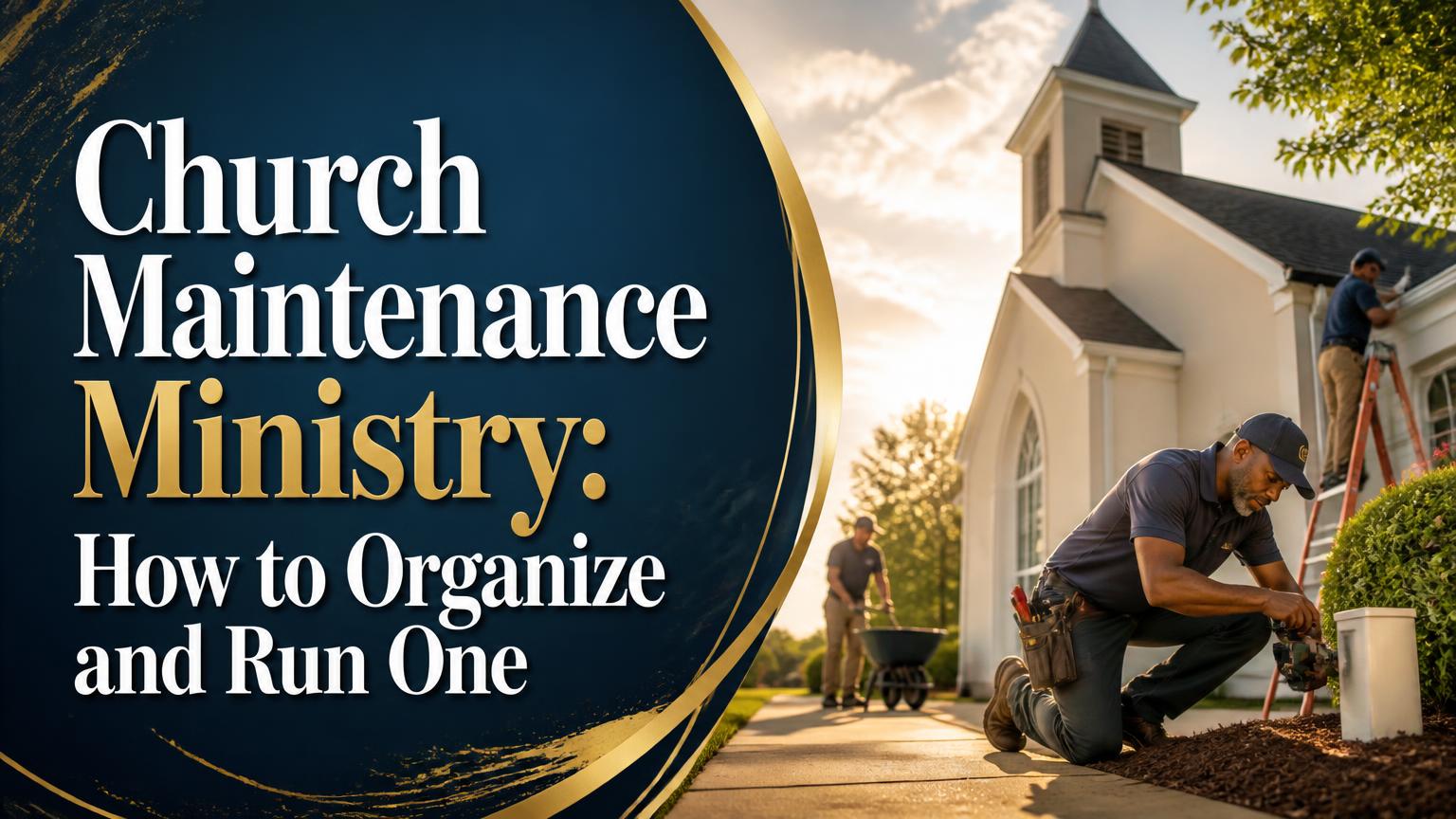
A church maintenance ministry organizes the people, schedules, funds, and procedures needed to keep a church’s buildings, grounds, equipment, and ministry spaces safe, clean, functional, and welcoming. It may include routine cleaning, preventive inspections, minor repairs, grounds care, room setup, contractor coordination, and emergency response. A well-run ministry does more than react to broken equipment: it protects the congregation, reduces avoidable costs, supports worship and outreach, and treats church property as a stewardship responsibility.
What Is a Church Maintenance Ministry?
A church maintenance ministry is a coordinated service ministry responsible for the ongoing care of church facilities and property. Its work can range from replacing light bulbs and checking restrooms to maintaining heating and cooling systems, preparing rooms for events, monitoring safety concerns, and arranging qualified help for specialized repairs.
The ministry should operate with a clear purpose: to support the church’s spiritual mission by providing spaces that are safe, usable, orderly, and ready for ministry. Maintenance does not replace pastoral leadership, administrative oversight, professional building services, or congregational responsibility. Instead, it gives those responsibilities a dependable structure.
The Purpose and Scope of the Ministry
The central purpose is prevention and stewardship. A maintenance team identifies problems before they become expensive failures or safety hazards. For example, repairing a small roof leak promptly may prevent structural damage, mold, damaged electrical systems, or the loss of a room needed for ministry.
The scope normally includes the church building, classrooms, offices, kitchens, restrooms, worship areas, storage rooms, parking areas, landscaping, playgrounds, signs, furniture, and basic equipment. The exact scope depends on the property, available volunteers, insurance requirements, local regulations, and the skills represented on the team.
Core Responsibilities
A church maintenance ministry commonly handles five connected areas:
- Routine care: Cleaning, waste removal, light replacement, touch-up painting, room resets, and grounds care.
- Preventive maintenance: Scheduled inspections and servicing of roofs, gutters, HVAC systems, plumbing, electrical components, doors, windows, fire extinguishers, and other building systems.
- Repairs: Minor work that the team is qualified and authorized to perform, along with the identification of problems requiring a professional.
- Facility readiness: Preparing rooms for worship services, classes, weddings, funerals, meetings, meals, and community events.
- Coordination and records: Scheduling contractors, tracking expenses, documenting completed work, maintaining warranties, and keeping emergency information current.
The team should not assume that every task belongs to volunteers. Electrical work, gas systems, structural repairs, roofing, pest control, elevator service, major plumbing, fire protection, and other regulated or hazardous work may require licensed professionals.
Maintenance Is a Ministry of Stewardship
Church maintenance is practical service, but it also expresses theological values. First Corinthians 14:40 connects orderly practice with the life of the church, while First Peter 4:10 describes believers as stewards of the gifts entrusted to them. These principles do not turn every repair into a spiritual performance; they explain why faithful care, reliability, and responsible use of resources matter.
A maintained facility can help people worship, learn, receive pastoral care, and serve their neighbors without unnecessary distraction or preventable danger. At the same time, maintenance should not become an obsession with appearances or property preservation. The building exists to serve people and the church’s mission. Good stewardship balances care for the facility with generosity, accessibility, safety, and wise spending.
The Difference Between Maintenance and Facilities Management
The terms overlap, but they are not identical. Maintenance usually refers to preserving and repairing the property. Facilities management is broader and may include space planning, security, utilities, leases, event logistics, compliance, accessibility, purchasing, and long-term capital planning.
A small congregation may place both functions under one committee or ministry leader. A larger church may separate routine maintenance, custodial services, building operations, and capital projects. The important issue is not the title but clarity: someone must know who approves work, who performs it, who pays for it, and who verifies that it was completed properly.
How to Organize a Church Maintenance Ministry
Organization begins with defined responsibility rather than a general appeal for “anyone who can help.” Without a leader, written priorities, and a simple reporting system, maintenance becomes reactive. The same volunteers receive every request, small issues are forgotten, and major expenses appear unexpectedly.
Appoint a Leader With Clear Authority
Choose a coordinator who is dependable, organized, available enough to respond, and able to communicate with both church leaders and volunteers. The coordinator does not need to be the most technically skilled person. The role is to assess needs, assign work, maintain records, recommend spending, and escalate issues that exceed the ministry’s authority.
The church should define this authority in writing. Clarify which expenses the coordinator may approve, which require a pastor, board, or finance committee, how emergencies are handled, and who may hire contractors. A written role description prevents confusion and protects volunteers from being held responsible for decisions they were not authorized to make.
Inspect the Property and Establish Priorities
Begin with a complete walk-through of the property. Record the condition of major systems, visible defects, recurring problems, safety concerns, equipment ages, warranty information, and upcoming service needs. Photographs can make the record easier to understand and useful for future leaders.
Then rank the findings by risk and consequence:
- Immediate threats to life, safety, or legal compliance
- Problems that could cause significant property damage
- Failures that interrupt essential ministry functions
- Routine improvements and appearance-related projects
This ranking prevents a cosmetic project from receiving attention while a leaking roof, defective exit light, or unsafe playground remains unresolved.
Build Roles Around Skills and Availability
A practical team may include a ministry coordinator, facilities or building lead, custodial coordinator, grounds volunteers, event setup helpers, and people with specialized trades experience. One person may fill several roles in a small church, but the responsibilities should still be identified.
Use a skills and availability list rather than relying on memory. Record who can help with painting, carpentry, landscaping, cleaning, technology, transportation, administration, or project supervision. Never assume that a volunteer’s professional experience automatically means the person is willing, insured, or authorized to perform that work for the church.
Use a Work-Request and Scheduling System
Create one central way to report maintenance needs, such as a paper form, shared digital form, email address, or church management system. Each request should include the location, description of the problem, urgency, photographs when useful, and the name of the person reporting it.
The coordinator can then classify the request as emergency, urgent, scheduled, or nonessential. A simple log should show the date reported, assigned person or contractor, estimated cost, approval status, completion date, and any follow-up required. This prevents requests from disappearing in conversations and gives church leadership a factual basis for budgeting.
How to Run the Ministry Safely and Reliably
A dependable maintenance ministry combines preventive care, trained people, documented procedures, and financial discipline. Volunteers are valuable, but enthusiasm cannot replace competence where a task involves serious risk. The church’s responsibility is to match each job with the right level of skill and oversight.
Create a Preventive Maintenance Calendar
A calendar should identify tasks by frequency rather than waiting for failure. Monthly checks may include visible leaks, lighting, restrooms, doors, trip hazards, fire exits, and exterior conditions. Seasonal tasks may include HVAC servicing, gutter cleaning, winter preparation, landscaping, and inspection of outdoor equipment.
Annual or professionally scheduled work may include fire protection systems, major mechanical equipment, pest control, roof inspections, backflow devices, elevators, and other regulated systems. The exact schedule depends on the building and local requirements. The goal is to preserve equipment, identify developing problems, and replace components before an emergency disrupts ministry.
Set Volunteer and Contractor Boundaries
Volunteers should receive basic orientation on tools, ladders, personal protective equipment, lifting, chemical handling, electrical hazards, and incident reporting. They should know which tasks they may perform and when to stop and request qualified assistance.
Use licensed or appropriately qualified contractors for work that requires specialized training, permits, inspections, or significant liability protection. Obtain written estimates for substantial projects, verify insurance when appropriate, define the work clearly, and retain invoices, warranties, permits, and inspection records. The cheapest proposal is not necessarily the least expensive option if poor work creates future repairs.
Make Safety and Accessibility Nonnegotiable
A maintenance ministry should regularly check clear exits, emergency lighting, handrails, stairs, flooring, restrooms, playgrounds, kitchen equipment, storage practices, and accessible routes. Keep chemicals labeled and secured, tools stored safely, and mechanical or electrical rooms restricted to authorized people.
Safety also includes safeguarding children and vulnerable adults. Limit unsupervised access to sensitive areas, follow the church’s background-check and supervision policies, and avoid assigning work in ways that create unnecessary safeguarding concerns. Requirements for accessibility, fire protection, occupancy, construction, and workplace safety vary by location, so church leadership should seek local professional or regulatory guidance when necessary.
Plan the Budget and Emergency Response
Separate routine operating costs from larger capital projects. Routine expenses include supplies, cleaning products, minor repairs, inspections, and service contracts. Capital needs may include roof replacement, HVAC installation, accessibility improvements, paving, major renovations, or structural work. A building reserve can reduce the pressure to fund predictable large expenses through emergency appeals.
Prepare an emergency contact sheet for water leaks, power failures, severe weather, fire, security incidents, heating or cooling failure, and other urgent conditions. The document should identify who shuts off utilities, who contacts emergency services, who informs church leadership, and where important records are stored. After an incident, document what happened and revise the procedure if the response exposed a weakness.
Common Mistakes to Avoid
The most common mistake is treating maintenance as a collection of isolated favors rather than as an operating system. When every issue depends on whoever happens to notice it, the church loses institutional memory. A simple property record, work log, calendar, and budget can correct much of this problem.
Another mistake is allowing maintenance decisions to be driven entirely by appearance. A freshly painted room may be desirable, but a failing water heater, damaged handrail, or blocked exit deserves priority. Conversely, a ministry can become so focused on repairs that it neglects hospitality, accessibility, cleanliness, or the actual needs of the people using the building.
Churches should also avoid overreliance on one gifted volunteer. That person may eventually move, become ill, or become unavailable, leaving the congregation without knowledge of its own systems. Cross-train volunteers, document procedures, preserve contractor information, and involve younger members or new participants in appropriate ways. Shared knowledge makes the ministry more resilient.
How to Measure a Healthy Maintenance Ministry
A healthy ministry is not measured by the number of projects completed alone. Useful indicators include fewer recurring failures, faster responses to urgent hazards, accurate records, predictable spending, completed inspections, safe event preparation, and a growing pool of trained volunteers.
Review the ministry at least annually with church leadership. Examine which systems repeatedly fail, whether the budget reflects actual needs, whether volunteers are overburdened, and whether any safety or accessibility concerns remain unresolved. The review should produce a short list of priorities for the coming year rather than an unmanageable collection of wishes.
The strongest sign of success is quiet reliability. Rooms are ready, hazards are addressed, expenses are explainable, contractors are supervised, and ministry leaders can plan without wondering whether the building will cooperate. Maintenance becomes nearly invisible—not because it is unimportant, but because it is organized well enough to prevent avoidable disruption.
Conclusion
A church maintenance ministry is best understood as an organized stewardship ministry, not simply a group of people who fix things when they break. Its foundation is clear authority, a property assessment, defined roles, preventive scheduling, safe volunteer practices, qualified contractors, accurate records, and responsible budgeting. The ministry should protect people and property while keeping the building subordinate to the church’s mission. When maintenance is planned rather than improvised, the congregation gains safer facilities, fewer emergency costs, more dependable ministry spaces, and a practical expression of faithful service.