
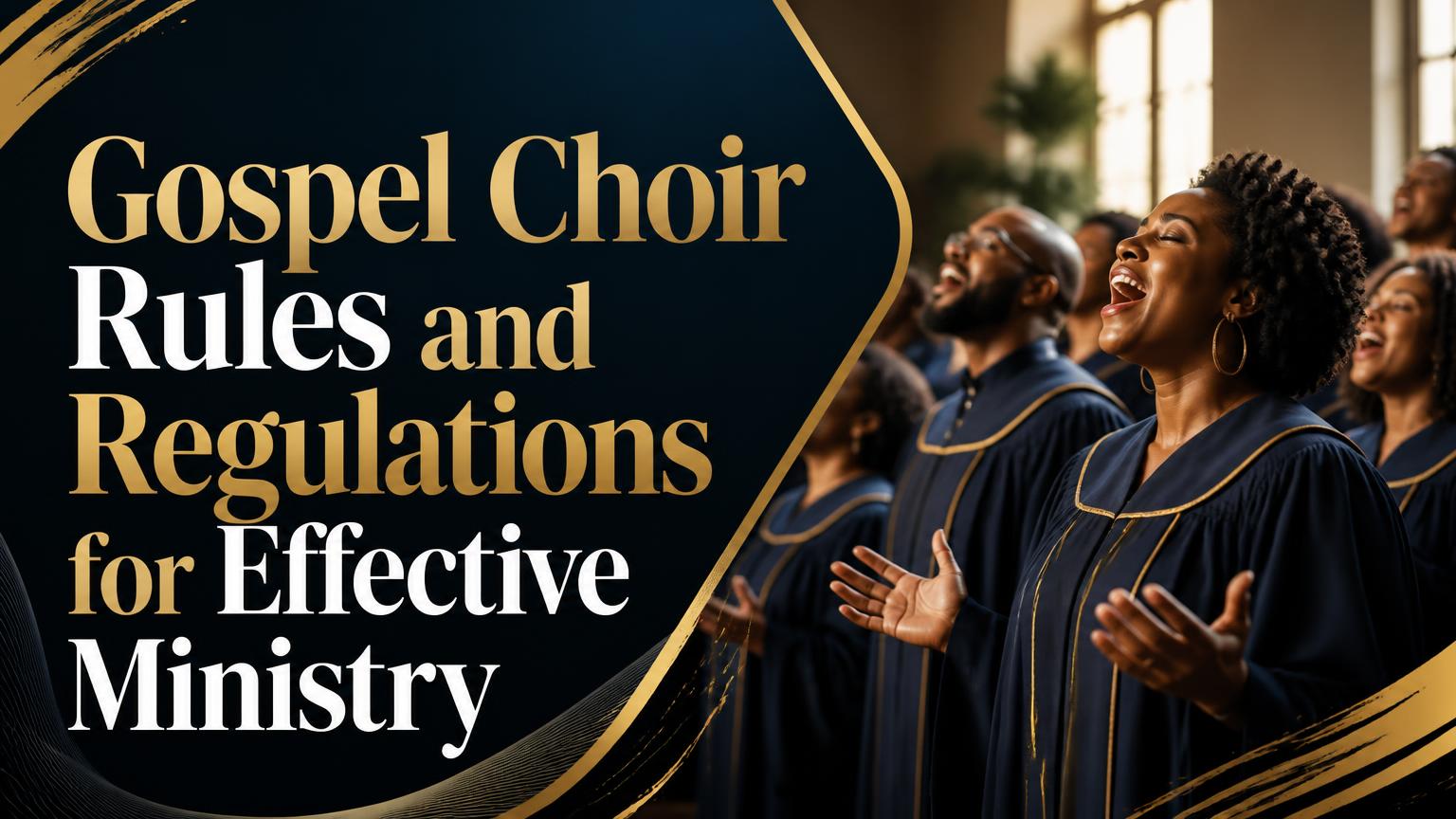
A gospel choir policy should protect three things at once: the church’s mission, the dignity and safety of its members, and the quality of its musical ministry. Gospel choir rules and regulations are most useful when they are written clearly, applied consistently, and connected to the choir’s purpose rather than used merely to control people.
There is no single universal rulebook for gospel choirs. Each church or ministry should adapt its standards to its doctrine, governance, local law, choir size, and whether members are volunteers, employees, or minors. The framework below can serve as the foundation for a church-approved choir handbook or membership covenant.
Gospel Choir Rules and Regulations
A strong policy explains who may serve, what conduct is expected, how rehearsals and worship services operate, how concerns are handled, and what happens when rules are violated. It should be approved by the appropriate church authority and given to every member before participation begins.
Define the Choir’s Mission and Authority
The policy should begin by stating the choir’s purpose. A gospel choir may exist to lead congregational worship, support evangelistic services, develop musical gifts, encourage fellowship, and help communicate biblical truth through song.
This purpose affects the rules that follow. Colossians 3:16 connects singing with teaching, encouragement, gratitude, and the message of Christ. That means a choir is more than a performance group; it is a ministry serving the congregation.
The policy should also identify who has authority over the choir, such as:
- The pastor or designated church leader
- The music minister or worship pastor
- The choir director
- Section leaders or appointed administrators
- A church board or ministry committee
Clear authority prevents confusion when musical, pastoral, or disciplinary decisions arise. The director may manage rehearsals, but serious matters involving safety, alleged misconduct, removal from ministry, or doctrinal disputes may require pastoral or board involvement.
State Membership and Eligibility Requirements
Eligibility standards should be specific, relevant, and consistent. A church may require members to:
- Complete a membership or ministry application
- Attend an orientation
- Agree with the church’s statement of faith and ministry expectations
- Demonstrate basic vocal ability or willingness to receive training
- Participate in an audition when appropriate
- Complete safeguarding requirements when working with children or vulnerable adults
- Provide emergency contact information
- Follow the church’s volunteer approval process
Churches differ on whether choir membership is limited to baptized members, active attendees, or anyone who sincerely wishes to serve. The policy should state the church’s position plainly rather than applying an unwritten standard differently to different people.
It is also useful to distinguish between spiritual qualifications, musical qualifications, and practical requirements. A person may have strong musical ability but not be ready for a visible ministry role because of unresolved conduct concerns. Conversely, a developing singer may be welcomed and trained even if the person is not yet ready for a featured part.
Establish Conduct and Spiritual Expectations
A choir covenant should describe conduct expected during rehearsals, services, travel, online communication, and public ministry. Common standards include:
- Treating members, leaders, musicians, and congregation members with respect
- Avoiding gossip, harassment, bullying, threats, and humiliating criticism
- Receiving musical correction without hostility
- Resolving disagreements through appropriate channels
- Dressing in a manner consistent with the church’s worship context
- Refraining from disruptive behavior during services
- Protecting confidential pastoral or personal information
- Representing the church responsibly in public and on social media
These expectations should not be used to demand artificial perfection or to suppress legitimate concerns. A ministry covenant is meant to establish accountability and mutual respect, not create an environment where members are afraid to report mistreatment.
The biblical principle in 1 Corinthians 14:40—doing things “decently and in order”—supports organized worship, but order should serve worship rather than become an excuse for authoritarian control. Leaders should explain the reason for standards and apply them impartially.
Set Attendance, Punctuality, and Communication Rules
Attendance policies should distinguish between rehearsals, worship services, special programs, and optional events. A practical policy may require members to:
- Attend scheduled rehearsals regularly
- Arrive early enough to warm up and receive instructions
- Notify the director promptly when absence is unavoidable
- Learn assigned music before rehearsal
- Attend required rehearsals before major services
- Avoid accepting a solo or featured assignment that cannot be prepared responsibly
A policy might state that repeated unexcused absences can result in temporary removal from a scheduled service or reassignment to a non-featured role. That is usually more proportionate than immediate permanent removal.
Attendance rules should also account for illness, family emergencies, employment schedules, transportation problems, disability, caregiving responsibilities, and other legitimate circumstances. A rigid percentage requirement may appear fair but produce unfair results if it ignores real barriers. The goal is dependable ministry, not punishment for circumstances beyond a member’s control.
Regulate Rehearsals and Worship Services
Choir rules should explain how members are expected to function during rehearsals and services. Useful standards include:
- Bring music, water, and any required materials
- Silence phones unless they are being used for approved music or communication
- Avoid side conversations while instructions are being given
- Follow the director’s starting, stopping, and dynamic instructions
- Remain attentive when another section is rehearsing
- Stand, sit, enter, and leave according to the service plan
- Avoid improvisation that conflicts with the musical arrangement
- Do not leave the choir area without notifying a leader when practical
- Participate in setup and cleanup when assigned
Gospel music often includes improvisation, movement, call-and-response, and expressive vocal traditions. Rules should preserve that character while maintaining unity. The issue is not whether a singer may express emotion; it is whether individual choices support the arrangement, the congregation, and the director’s plan.
A written policy should also clarify who approves changes to songs, keys, solos, choreography, microphones, and service order. Last-minute changes should be communicated through a designated channel rather than through conflicting instructions from several people.
Clarify Leadership, Musical Standards, and Roles
A choir operates more effectively when members understand the difference between leadership and participation. The director normally has responsibility for musical interpretation, rehearsal structure, repertoire preparation, and assigning parts. The pastor or worship leader may retain final authority over the worship service.
The policy can define roles such as:
- Choir director: directs rehearsals and musical execution
- Assistant director: supports instruction and substitutes when needed
- Section leader: helps singers learn parts and communicate information
- Pianist or bandleader: coordinates instrumental accompaniment
- Soloist: prepares assigned material and follows the approved arrangement
- Choir member: attends, prepares, participates, and supports the ministry
Musical standards might include pitch accuracy, memorization when required, blend, diction, microphone technique, and preparation. These standards should be taught before they are enforced. Correction should address the musical behavior—such as missed entrances or unprepared parts—rather than attack a person’s character.
Romans 12:6–8 describes different gifts within one body. Applied to a choir, this means leadership should make room for varied abilities while still assigning responsibilities according to readiness. Inclusion does not require placing every member in every role.
Include Safeguarding and Pastoral Care
Any choir involving children, teenagers, or vulnerable adults needs explicit safeguarding procedures. These may include:
- Background checks where required by law or church policy
- Two-adult or observable-room standards
- Rules against private, unmonitored messaging with minors
- Approved transportation procedures
- Sign-in and sign-out processes
- Clear reporting routes for suspected abuse or inappropriate conduct
- Restrictions on photographing or posting minors
- Training for leaders and volunteers
Allegations of abuse, exploitation, harassment, or threats should never be handled solely as an internal choir disagreement. The church must follow applicable reporting laws and its safeguarding procedures. Leaders should not promise secrecy when someone reports possible harm.
Pastoral care also matters when members experience grief, illness, conflict, or personal crisis. Choir leadership is not a substitute for qualified counseling or professional care, but leaders should know when to refer a concern to pastoral, safeguarding, medical, or emergency services.
Address Music Rights, Media, and Public Representation
Churches often assume that worship use automatically permits every form of copying, recording, livestreaming, or online distribution. That is not always true. The church should determine whether it has the necessary permissions for:
- Reproducing sheet music or lyrics
- Arranging or adapting copyrighted songs
- Recording live performances
- Livestreaming services
- Uploading choir videos
- Using music in promotional material
- Sharing rehearsal recordings with members
The policy should also state who may record rehearsals or services and whether members may post choir content on personal accounts. Written consent may be necessary for identifiable images or recordings, particularly for minors.
Members should not represent personal opinions as official church statements or use the choir’s name for unauthorized fundraising, performances, or commercial activity. Any outside invitation to perform should be reviewed by the designated church authority.
Establish Discipline, Restoration, and Appeals
Rules are credible only when members know how they will be enforced. A fair process normally includes:
- Clarifying the concern and giving the member an opportunity to respond
- Providing coaching or a warning when the issue is minor
- Creating a reasonable plan for correction
- Temporarily restricting participation when safety, disruption, or preparation requires it
- Escalating serious or repeated matters to pastoral or church leadership
- Providing a review or appeal process where appropriate
Serious misconduct may require immediate action, especially when there is a credible safety threat, abuse allegation, violence, harassment, intoxication during ministry, or misuse of church funds. Temporary removal from a ministry role is not necessarily a final judgment; it may protect people while facts are reviewed.
A restoration process should be distinguished from automatic reinstatement. Rejoining the choir may require an apology, completed training, pastoral guidance, demonstrated reliability, or other reasonable steps. The response should be proportionate to the conduct and consistent with the church’s broader disciplinary policies.
Principles for Writing Effective Choir Policies
The best regulations are understandable, relevant, and enforceable. Avoid vague commands such as “always act spiritually” unless the policy explains what conduct is expected. Replace them with observable standards: “Members will address disagreements privately through the choir director or designated pastor and will not use group messages to shame another member.”
A useful policy should also distinguish among three categories:
- Biblical or doctrinal convictions: standards the church believes are grounded in its faith and teaching
- Ministry requirements: expectations necessary for safety, reliability, preparation, or orderly worship
- Local preferences: choices about clothing, rehearsal format, musical style, or service presentation
This distinction helps leaders avoid presenting a local preference as though it were an absolute biblical command. It also makes the policy easier to review when the church’s circumstances change.
Rules should apply consistently but allow reasonable accommodation. A member with a disability, medical condition, pregnancy, caregiving obligation, or work constraint may need a different arrangement without receiving an unfair advantage. The church should address such situations respectfully and according to applicable law.
Sample Gospel Choir Covenant
A concise member covenant could read:
I will support the mission of the choir, attend faithfully, arrive prepared, and communicate promptly when I cannot participate. I will treat fellow members, leaders, musicians, and the congregation with respect. I will accept musical and ministry correction constructively, protect confidential information, follow safeguarding and media policies, and resolve disagreements through the proper leadership channel. I understand that continued participation depends on responsible conduct, preparation, and compliance with church policy.
This statement should supplement—not replace—a fuller handbook covering safeguarding, discipline, attendance, music permissions, and church governance.
Legal and Governance Review
Before adopting gospel choir rules and regulations, church leaders should review the document against applicable requirements involving child protection, employment, volunteers, disability accommodation, privacy, copyright, harassment, transportation, insurance, and financial controls. The specific requirements vary by country, state, province, and church structure.
The policy should identify its approval date, responsible authority, review schedule, and process for amendments. Annual review is especially useful after a safeguarding incident, a change in leadership, the introduction of livestreaming, or an expansion into youth or community programs.
Effective choir regulations do more than correct poor attendance or musical mistakes. They create a shared framework in which worship can be prepared carefully, people can serve safely, and leaders can exercise authority with accountability. The strongest policy combines spiritual purpose, practical expectations, fair procedures, and appropriate legal safeguards.