
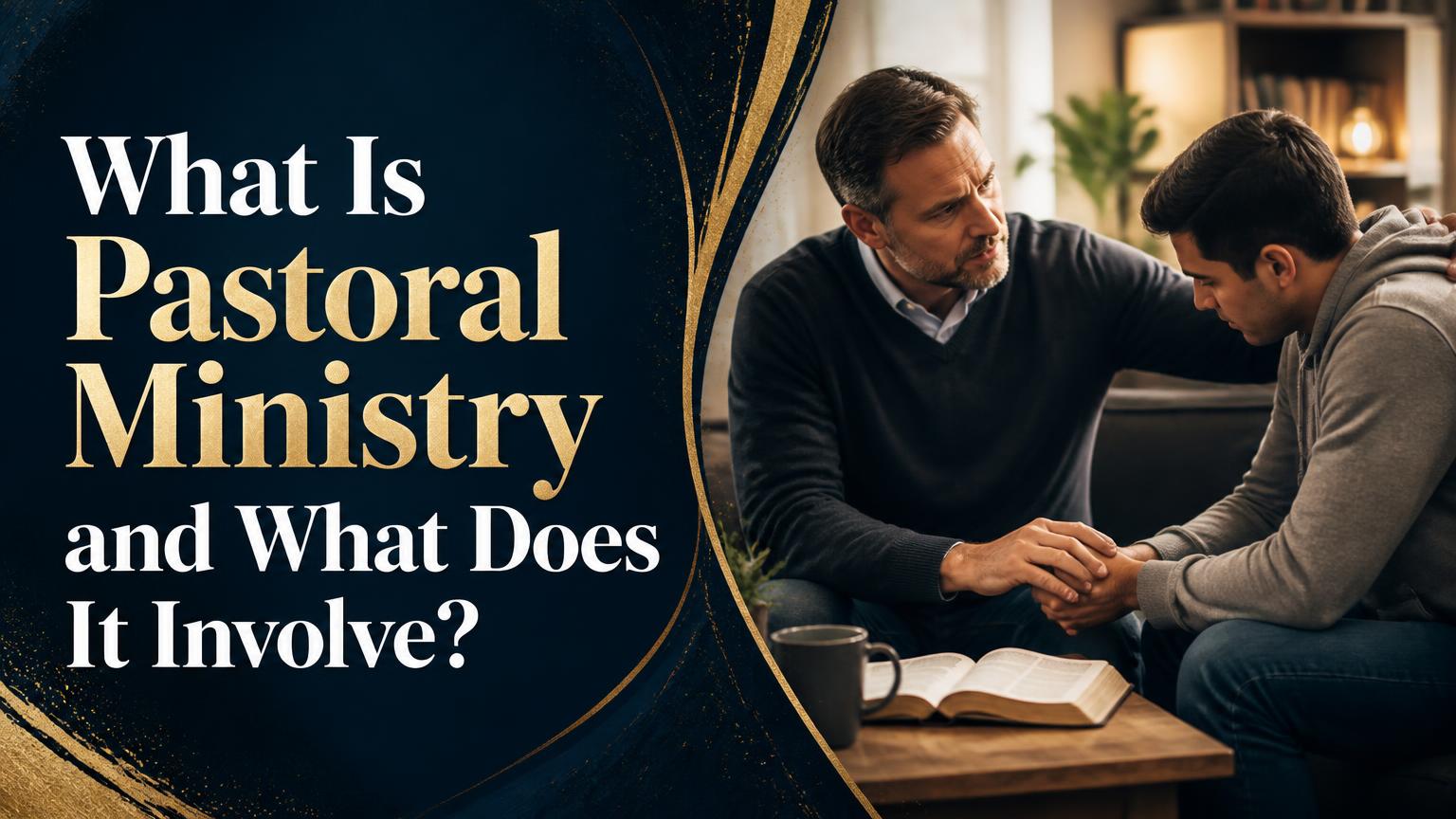
Pastoral ministry is the work of spiritually shepherding people through teaching, worship, prayer, spiritual care, leadership, discipleship, and service. It is more than leading church services or delivering sermons. A pastor helps a congregation understand and follow Christ, cares for people in times of joy and suffering, equips believers for ministry, and guides the church’s shared life and mission.
The details vary among Christian traditions, but the central purpose remains consistent: to care for God’s people faithfully under the authority of Jesus Christ.
What Is Pastoral Ministry?
Pastoral ministry is the Christ-centered responsibility of caring for, leading, teaching, and equipping a local church or Christian community. The word pastoral comes from the image of a shepherd. In Scripture, shepherding involves protection, guidance, provision, correction, presence, and personal knowledge of the flock.
Jesus presents Himself as the “good shepherd” who knows His sheep and lays down His life for them (John 10:11–15). Christian pastoral ministry follows that pattern without confusing human leaders with Christ. Pastors serve as under-shepherds: leaders who care for people on Christ’s behalf and remain accountable to Him.
The Purpose of Pastoral Ministry
The central purpose of pastoral ministry is to help people become mature followers of Jesus and to help the church live faithfully as His body.
This involves more than maintaining church programs. Pastoral ministry seeks to:
- Proclaim the gospel and teach the whole counsel of Scripture
- Help believers grow in faith, character, wisdom, and obedience
- Care for people through suffering, sin, conflict, illness, grief, and change
- Protect the church from destructive teaching and harmful leadership
- Equip Christians to serve according to their gifts
- Lead the congregation in worship, fellowship, mission, and practical service
Ephesians 4:11–13 connects pastoral and teaching leadership with the equipping of the saints for ministry. The pastor’s task is therefore not to perform every ministry personally. It is to prepare the whole church to participate in the work God has given it.
The Main Responsibilities of a Pastor
Pastoral ministry commonly includes several interconnected responsibilities.
Teaching and preaching. Pastors explain Scripture, proclaim the gospel, address the spiritual needs of the congregation, and apply biblical truth to ordinary life. Faithful preaching requires more than presenting information. It should help people understand what a passage means, how it points to God’s work, and what obedient response it calls for.
Prayer and spiritual oversight. Pastors pray for individuals and the congregation, seek God’s wisdom, and watch over the church’s spiritual health. Acts 6:4 identifies prayer and the ministry of the word as central apostolic priorities. Prayer does not replace action; it places pastoral action under dependence on God rather than personal confidence.
Shepherding and personal care. Pastors listen, encourage, counsel, visit, comfort, confront when necessary, and help people interpret difficult circumstances through the hope of the gospel. This care may include hospital visits, grief support, premarital preparation, crisis response, spiritual direction, and guidance through major decisions.
Leadership and direction. Pastors help establish priorities, make decisions, resolve disagreements, develop ministry structures, and guide the congregation’s public witness. Christian leadership is not domination. Jesus taught that greatness among His followers is expressed through service (Mark 10:42–45).
Equipping and developing others. Healthy pastoral ministry creates space for members, deacons, elders, ministry leaders, and volunteers to use their gifts. A pastor who must control every task may prevent the church from becoming mature and may create an unhealthy dependence on one personality.
Guarding doctrine and people. Pastors teach sound doctrine and respond to teaching or practices that distort the gospel. They also have a responsibility to address abuse, manipulation, exploitation, and other threats to the safety of the congregation. Protecting the flock includes moral courage, appropriate accountability, and cooperation with civil authorities when serious harm or criminal conduct is involved.
Pastoral Ministry Is Both Public and Personal
Public ministry includes preaching, leading worship, administering ordinances or sacraments according to the church’s tradition, teaching classes, and representing the congregation in the wider community. Personal ministry happens through conversations, prayer, visitation, counseling, mentoring, and presence during significant moments.
Neither dimension is sufficient by itself. Public teaching without personal care can become distant and impersonal. Personal care without sound teaching can leave people without a stable understanding of God’s truth. Pastoral ministry joins the two: the pastor teaches people personally and cares for them biblically.
How Pastoral Ministry Relates to Church Leadership
Christian traditions use terms such as pastor, elder, overseer, minister, and priest in different ways. In many Protestant churches, pastor refers to the primary or ordained shepherd of a congregation, while elders share spiritual oversight. In Catholic, Orthodox, Anglican, and some other traditions, pastoral ministry is connected to ordained priestly or episcopal ministry and sacramental responsibilities.
The New Testament uses shepherding, oversight, and elder language in closely related ways, though churches organize these responsibilities differently. For example, Acts 20:17, 28 describes elders who oversee the church and shepherd God’s people. First Peter 5:1–4 likewise urges elders to shepherd willingly and humbly under the authority of the Chief Shepherd, Christ.
The exact structure differs, but biblical pastoral leadership should be marked by service, accountability, spiritual maturity, and care rather than status.
What Scripture Teaches About Pastoral Ministry
The Bible presents pastoral ministry as a serious stewardship. Leaders are responsible for people entrusted to their care, but they do not own those people. The church belongs to Christ.
Pastors Teach and Equip the Church
Jesus gave leaders to the church “to equip the saints for the work of ministry” (Ephesians 4:11–12). This means pastoral leadership aims at multiplication. The congregation should become increasingly able to pray, serve, witness, encourage, teach, and care for one another.
Second Timothy 4:2 calls Timothy to preach the word with patience and persistence. Pastoral teaching must therefore include both encouragement and correction. It should address what people want to hear, but it must also address what they need to hear for faithful discipleship.
Pastors Lead Through Example
First Peter 5:2–3 instructs elders to shepherd willingly and not domineer over those in their care, but to be examples to the flock. A pastor’s character is part of the ministry’s message. Integrity in private life, honesty with money, sexual faithfulness, humility, and willingness to repent all affect whether public teaching can be trusted.
This does not mean pastors are flawless. It means they must be teachable, accountable, and consistent in pursuing holiness. A leader who demands spiritual maturity from others while resisting correction undermines the very ministry he or she claims to provide.
Pastors Watch Over Souls With Humility
Hebrews 13:17 describes church leaders as people who keep watch over others and will give an account. This image emphasizes both responsibility and limitation. Pastors should take spiritual care seriously, but they cannot control another person’s faith or replace the work of the Holy Spirit.
Pastoral authority is therefore stewardship, not ownership. It should be exercised through Scripture, prayer, wisdom, persuasion, and service rather than coercion or personal influence.
What Does Pastoral Ministry Involve in Practice?
A pastor’s week may combine spiritual leadership, administration, teaching, pastoral care, and unexpected crises. The balance depends on the congregation’s size, tradition, staffing, location, and needs.
Common activities include:
- Preparing sermons, Bible studies, and discipleship resources
- Leading worship or coordinating those who do
- Praying with and for church members
- Visiting people in homes, hospitals, care facilities, or prisons
- Counseling individuals and couples within appropriate boundaries
- Conducting baptisms, communion, weddings, funerals, or other ordinances and rites
- Training ministry leaders and volunteers
- Meeting with elders, deacons, staff, or governing boards
- Mediating conflict and pursuing reconciliation
- Supporting missions and community service
- Participating in evangelism and membership formation
- Handling administrative responsibilities that support the church’s mission
Not every pastor performs all these tasks in the same way. A large church may distribute them among specialized staff, while a small congregation may expect one pastor to handle many of them. In either setting, wise ministry requires recognizing limits. Pastors are not substitutes for licensed medical professionals, mental-health clinicians, social workers, lawyers, or emergency services. Referring people to qualified help is often an expression of responsible care rather than pastoral failure.
What Qualifications Should a Pastor Have?
First Timothy 3:1–7 and Titus 1:5–9 emphasize character, relationships, self-control, hospitality, spiritual maturity, and the ability to teach. These passages give greater attention to a leader’s life than to charisma, popularity, platform, or organizational talent.
Important qualifications include:
- Faithfulness to Christ and sound understanding of Christian teaching
- A life that is credible within the church and wider community
- Emotional and moral self-control
- Humility and willingness to receive correction
- Ability to teach clearly and handle Scripture responsibly
- Faithfulness in family and personal relationships
- Hospitality and concern for others
- Freedom from greed, manipulation, and a desire for power
- Capacity to lead without harshness or domination
- Evidence of spiritual maturity over time
Different denominations also require formal theological education, examination, ordination, supervised ministry, or recognition by a church body. These requirements can help prepare and protect both leaders and congregations, but credentials alone do not create a faithful pastor. Training must be joined to character, calling, competence, and accountable service.
How Is Pastoral Ministry Different From Other Christian Service?
Every Christian is called to serve, encourage, pray, and make disciples, but pastoral ministry generally involves recognized responsibility for the spiritual care and oversight of a congregation or defined community.
A pastor may share many activities with other leaders:
- Evangelists focus especially on proclaiming the gospel to those who do not believe.
- Missionaries serve across cultural or geographic boundaries, though they may also exercise pastoral responsibilities.
- Chaplains provide spiritual care in institutions such as hospitals, prisons, the military, schools, or hospices.
- Counselors address emotional, relational, or mental-health concerns through specialized professional methods.
- Youth or children’s ministers focus on particular age groups and their families.
- Deacons and ministry leaders often oversee practical service and specific areas of church life.
These roles can overlap, and titles vary by denomination. The key distinction is the scope and nature of responsibility. Pastoral ministry normally combines teaching, shepherding, oversight, and care for a gathered Christian community.
Common Challenges in Pastoral Ministry
Pastoral work carries emotional and spiritual pressures. Leaders may face loneliness, criticism, conflict, compassion fatigue, financial strain, unrealistic expectations, and the difficulty of separating ministry from personal life. Because pastors often serve in close relationships, boundary problems can develop if they attempt to meet every need personally.
Faithful pastoral practice requires shared leadership, rest, honest friendships, supervision or accountability, continuing learning, and clear ethical boundaries. It also requires resisting the idea that ministry success is measured only by attendance, visibility, or numerical growth. A small act of patient care, a truthful sermon, or the restoration of a damaged relationship may bear lasting fruit that cannot be measured quickly.
The congregation also has responsibilities. Churches should pray for their leaders, provide appropriate support, respect healthy boundaries, establish accountability, and avoid treating a pastor as either an employee who exists to satisfy every demand or a spiritual celebrity beyond correction.
Pastoral ministry is the faithful shepherding of people toward Jesus through Scripture, prayer, care, leadership, protection, and equipping. Its authority comes from Christ, its standard is shaped by Scripture, and its credibility depends heavily on the character of the person who serves. A pastor does not replace the congregation’s ministry; a faithful pastor helps the congregation become a mature, serving, worshiping people who live under the care and lordship of the Chief Shepherd.