
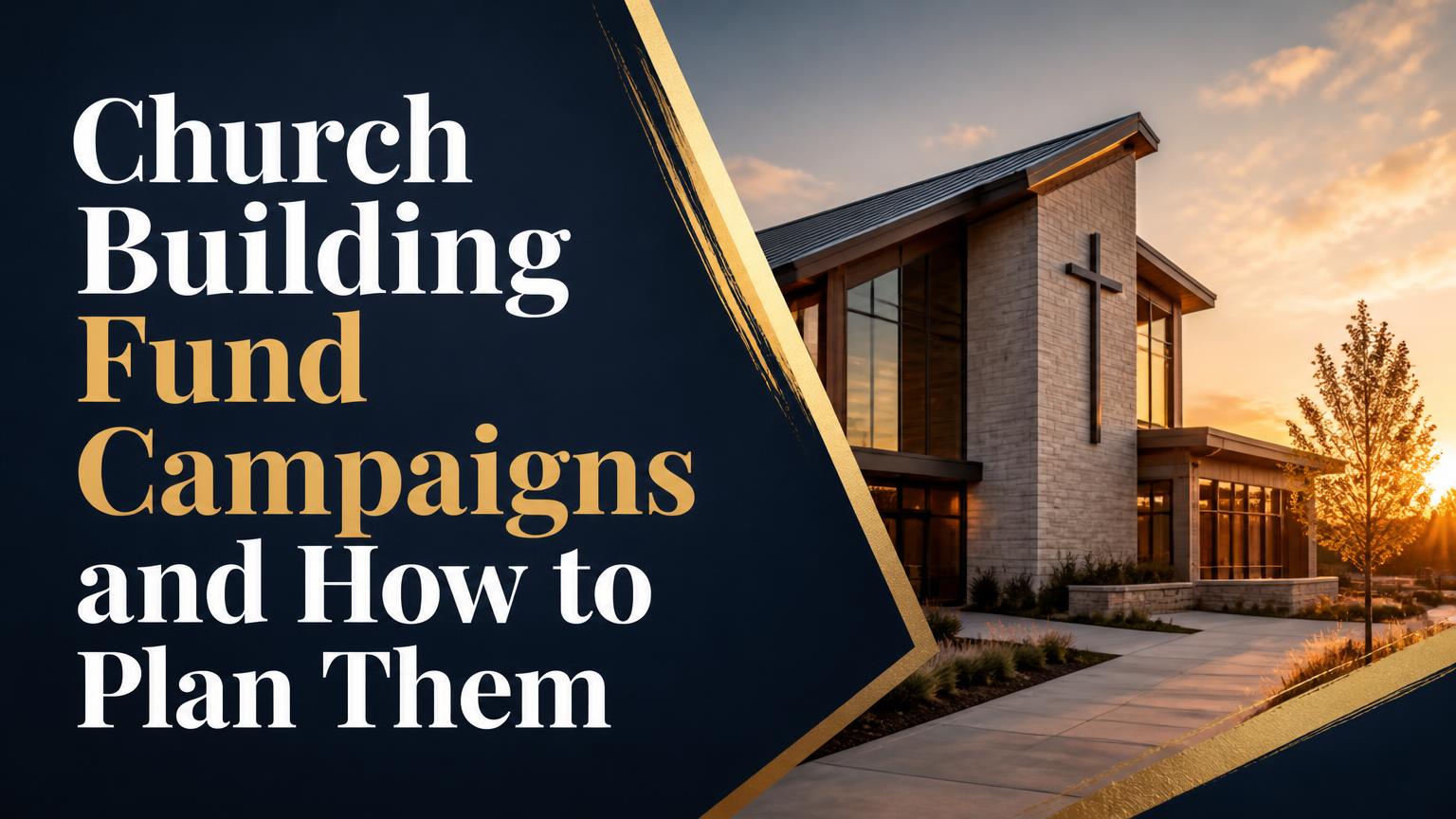
Church building fund campaigns raise designated money for a major capital need, such as constructing a facility, purchasing property, renovating existing space, expanding ministry capacity, or retiring building debt. A successful campaign connects a clearly defined project with the church’s mission, a realistic financial plan, responsible leadership, and respectful opportunities for people to participate.
The campaign is more than a series of donation requests. It is a process for discerning what the church should undertake, determining what it can responsibly afford, communicating the need clearly, inviting sacrificial generosity without pressure, and managing funds with transparency.
Church Building Fund Campaigns: How They Work and What They Require
A church building fund campaign normally has four parts: a defined capital project, a fundraising goal, a plan for inviting commitments, and systems for managing gifts and construction or acquisition costs.
What a Church Building Fund Campaign Covers
The campaign may support:
- Buying land or an existing building
- Constructing a worship center, classrooms, offices, or ministry space
- Renovating or expanding current facilities
- Improving accessibility, safety, or building systems
- Paying architectural, engineering, permitting, and project-management costs
- Establishing necessary reserves
- Reducing or retiring debt connected to a building project
A building fund is not the same as the church’s operating budget. Operating funds pay recurring expenses such as salaries, utilities, missions, ministry programs, and routine maintenance. Building campaign gifts are generally designated for a specific capital purpose and should be accounted for separately.
The distinction matters because using restricted building gifts for unrelated operating expenses can violate donor expectations and create legal, ethical, and financial problems. The church should define the fund’s purpose in writing before soliciting contributions.
How to Set a Responsible Campaign Goal
The goal should reflect the project’s complete financial reality, not merely the construction contract. A useful preliminary budget may include:
- Property acquisition
- Design and architectural services
- Surveys, engineering, and soil testing
- Permits, inspections, and professional fees
- Construction or renovation
- Furniture, fixtures, technology, and signage
- Accessibility and safety improvements
- Moving and temporary worship arrangements
- Financing costs
- Contingency reserves
- Initial maintenance or operating reserves
A church should also calculate the project’s future financial effect. A larger building may require higher utility bills, insurance premiums, cleaning costs, repairs, staffing, and technology expenses. A campaign that successfully pays for construction but leaves the church unable to maintain the facility has not solved the underlying problem.
The fundraising goal should be based on realistic commitments rather than hopeful attendance or membership assumptions. Churches often receive a substantial portion of campaign funding from a relatively small number of major gifts, but leaders should not treat that pattern as a guaranteed formula. A confidential feasibility process can help identify likely support, concerns, leadership gifts, and the difference between verbal enthusiasm and actual financial capacity.
The Main Campaign Phases
Most effective campaigns move through several overlapping phases:
- Discernment and project definition: Leaders identify the ministry need, evaluate alternatives, and determine whether the project fits the church’s mission and capacity.
- Preparation: The church develops plans, preliminary costs, governance procedures, communication materials, and a gift-recording system.
- Leadership commitments: Pastors, elders, board members, campaign leaders, and influential members consider their own participation before asking the wider congregation to respond.
- Quiet or initial phase: The church approaches key potential donors and ministry partners privately or in small settings. This helps test the goal and establish early momentum.
- Congregational campaign: The church explains the project publicly, shares the case for support, invites prayer and commitments, and provides multiple ways to participate.
- Follow-through: Leaders report progress, receive pledges and gifts, adjust plans when necessary, and continue communicating until the project and financial obligations are completed.
The campaign should not end when the public appeal ends. Pledge reminders, construction updates, financial reporting, donor acknowledgment, and pastoral care are part of responsible completion.
How to Invite Giving Without Manipulation
A persuasive campaign explains the need honestly rather than manufacturing urgency. People should understand:
- What problem the project addresses
- Why the project is needed now
- What alternatives were considered
- How the project advances the church’s ministry
- What the total cost includes
- What the church will do if the goal is not reached
- Whether commitments are expected over time
- How gifts will be handled and reported
A church may invite sacrificial generosity, but it should not equate a person’s faithfulness with giving a particular amount. Publicly comparing donors, using shame, implying that God guarantees a financial return, or pressuring financially vulnerable people undermines both trust and Christian stewardship.
People should be free to give anonymously, contribute in smaller amounts, offer noncash gifts through appropriate review, or participate through prayer and service rather than money. A campaign is healthier when participation is broad but never coerced.
Prepare the Church Before Launching the Campaign
The strongest campaigns settle major questions before asking people for money. Fundraising cannot compensate for an unclear project, weak governance, or unresolved disagreement among leaders.
Establish the Ministry Case
The ministry case explains why the project matters. “We need a larger building” is less compelling than a specific explanation such as, “Our current classrooms cannot safely accommodate existing children’s ministries, and the proposed expansion will provide accessible teaching space without eliminating community use of the facility.”
The case should connect the building to ministry rather than treating the facility as the ministry itself. A new building may support worship, discipleship, hospitality, outreach, counseling, education, or community service. It does not automatically produce spiritual growth. The church should explain what people and ministries the space is intended to serve.
A useful case statement answers:
- What need exists?
- Whom does it affect?
- What solution is being proposed?
- Why is this solution preferable to renovation, renting, relocating, or delaying?
- What risks and limitations remain?
- How will the church measure whether the project serves its purpose?
Confirm Readiness and Congregational Alignment
Leaders should evaluate whether the church has sufficient stability to undertake a major project. Relevant questions include:
- Are attendance, membership, and ministry needs being assessed realistically?
- Is the operating budget healthy enough to support new facility costs?
- Are leaders substantially united about the project?
- Has the congregation had a meaningful opportunity to ask questions?
- Does the church have people capable of overseeing finance, construction, and administration?
- Are property, zoning, accessibility, and permitting issues understood?
- Can the church continue essential ministry if costs rise or pledges arrive slowly?
A feasibility study, listening process, or series of congregational meetings can reveal concerns that a public campaign might otherwise expose too late. Feedback should be treated as information, not as an obstacle to silence.
Create Governance and Financial Controls
Before receiving campaign gifts, establish who has authority to approve expenditures, sign contracts, change the project scope, and communicate financial results. Written procedures should address:
- Separate accounting for campaign funds
- Gift receipting and donor records
- Approval thresholds for expenditures
- Dual authorization for significant payments
- Conflict-of-interest disclosure
- Competitive bidding or contractor review
- Change-order approval
- Periodic financial reporting
- Treatment of gifts that exceed or fall short of the goal
- The process for modifying the project if circumstances change
The church should also decide how it will handle gifts restricted to a particular feature. A donor may want to fund classrooms, equipment, or a named space, but individual restrictions can become difficult if plans change. Gift agreements should clearly describe the intended use and provide a lawful, ethically appropriate alternative if that use becomes impractical. Churches should obtain qualified legal and tax advice for their jurisdiction rather than relying on informal assumptions.
Build a Practical Campaign Plan
Once the project and controls are in place, the church can develop the fundraising strategy.
Organize Campaign Leadership
A campaign typically needs more than one enthusiastic organizer. Responsibilities may include:
- A governing body that retains final authority
- A campaign chair or coordinating team
- A finance and gift-recording team
- A communications team
- Pastoral and congregational-care leaders
- Property, construction, or facilities advisers
- Volunteers who host conversations and follow up with participants
The pastor may provide spiritual and relational leadership, but concentrating every financial, construction, and communication decision in one person creates unnecessary risk. Clear roles protect both the church and its leaders.
Segment Communication by Relationship, Not Just Wealth
Different groups need different forms of communication. Longstanding members may need clarity about the project’s history. Newer attendees may need an explanation of the church’s mission and financial practices. Major prospective donors may require private conversations about feasibility, timing, and reporting. Community partners may be interested in shared-use benefits.
This does not mean treating people merely as sources of money. It means recognizing that trust develops through relevant information and personal conversation. Campaign materials should include a concise case statement, a realistic budget, a giving timeline, answers to common questions, and contact information for someone who can provide further explanation.
Manage Pledges as Carefully as Gifts
A pledge is a promise, not cash in hand. The church should plan cash flow using conservative assumptions and avoid committing every anticipated pledge before funds arrive. Pledge forms or digital records should state:
- The amount or intended schedule
- The campaign purpose
- Whether the commitment is conditional
- How donors may update their commitment
- How the church will communicate about changes
- What happens if the project is completed with funds remaining
Regular, courteous reminders are appropriate. They should communicate gratitude and provide convenient payment options, not imply moral failure when a person’s circumstances change.
Report Progress With Honesty
Regular reports should show more than a fundraising thermometer. They can explain:
- Amount pledged and amount received
- Major expenditures
- Remaining obligations
- Construction or acquisition progress
- Changes in scope or cost
- Updated timelines
- Decisions requiring congregational awareness
If the campaign faces a shortfall, leaders should communicate it promptly and describe the available choices: extending the campaign, revising the scope, using reserves, refinancing, delaying work, or reconsidering the project. Transparency is especially important when the news is unfavorable.
Apply Biblical and Ethical Principles
Christian building campaigns should reflect stewardship, truthfulness, voluntary generosity, and concern for people rather than institutional ambition.
Jesus’ teaching in Luke 14:28–30 uses the image of counting the cost before beginning construction. The principle applies directly: faith does not eliminate the responsibility to plan, estimate, and consider whether a project can be completed. Prayer and prudence belong together.
Second Corinthians 9:7 emphasizes that giving should be willing rather than compelled. That does not prohibit a church from presenting a serious need or inviting sacrificial commitment. It does prohibit treating pressure as a substitute for conviction.
The temple offerings described in 1 Chronicles 29 also show the value of leaders giving openly and willingly. Leadership participation can demonstrate credibility, but it should not become a public contest or imply that every person must match a leader’s gift.
A church should ask whether its building plans express hospitality and service or primarily prestige. A modest project that meets real ministry needs may be more faithful than an impressive project that creates unsustainable debt. Stewardship includes care for donors, staff, neighbors, contractors, future generations, and the church’s ongoing mission.
Common Problems and How to Avoid Them
Several recurring mistakes weaken church building fund campaigns:
- Starting with a building design instead of a ministry need: Define the mission problem before choosing the architectural solution.
- Underestimating the complete cost: Include professional fees, equipment, financing, contingencies, and future operating expenses.
- Announcing a goal before testing its feasibility: Gather confidential feedback and assess likely commitments first.
- Relying on one or two donors: Build broad participation while recognizing that gift amounts will differ.
- Treating pledges as guaranteed income: Use conservative cash-flow projections.
- Changing the project without explaining why: Report cost increases, delays, and scope changes promptly.
- Mixing restricted and unrestricted funds: Maintain separate records and honor stated purposes.
- Using spiritual pressure: Invite generosity without shame, fear, or promises of financial reward.
- Neglecting the post-campaign period: Continue reporting, thanking donors, and evaluating whether the project is achieving its ministry purpose.
Conclusion
Church building fund campaigns are most responsible when they unite spiritual discernment with careful project planning. The church should define a genuine ministry need, establish the full cost, test congregational readiness, create strong financial controls, invite voluntary participation, and communicate honestly throughout the project. A successful campaign is therefore measured by more than money raised: it should leave the church better prepared to serve, financially capable of maintaining the facility, and more deeply grounded in trust and shared mission.