
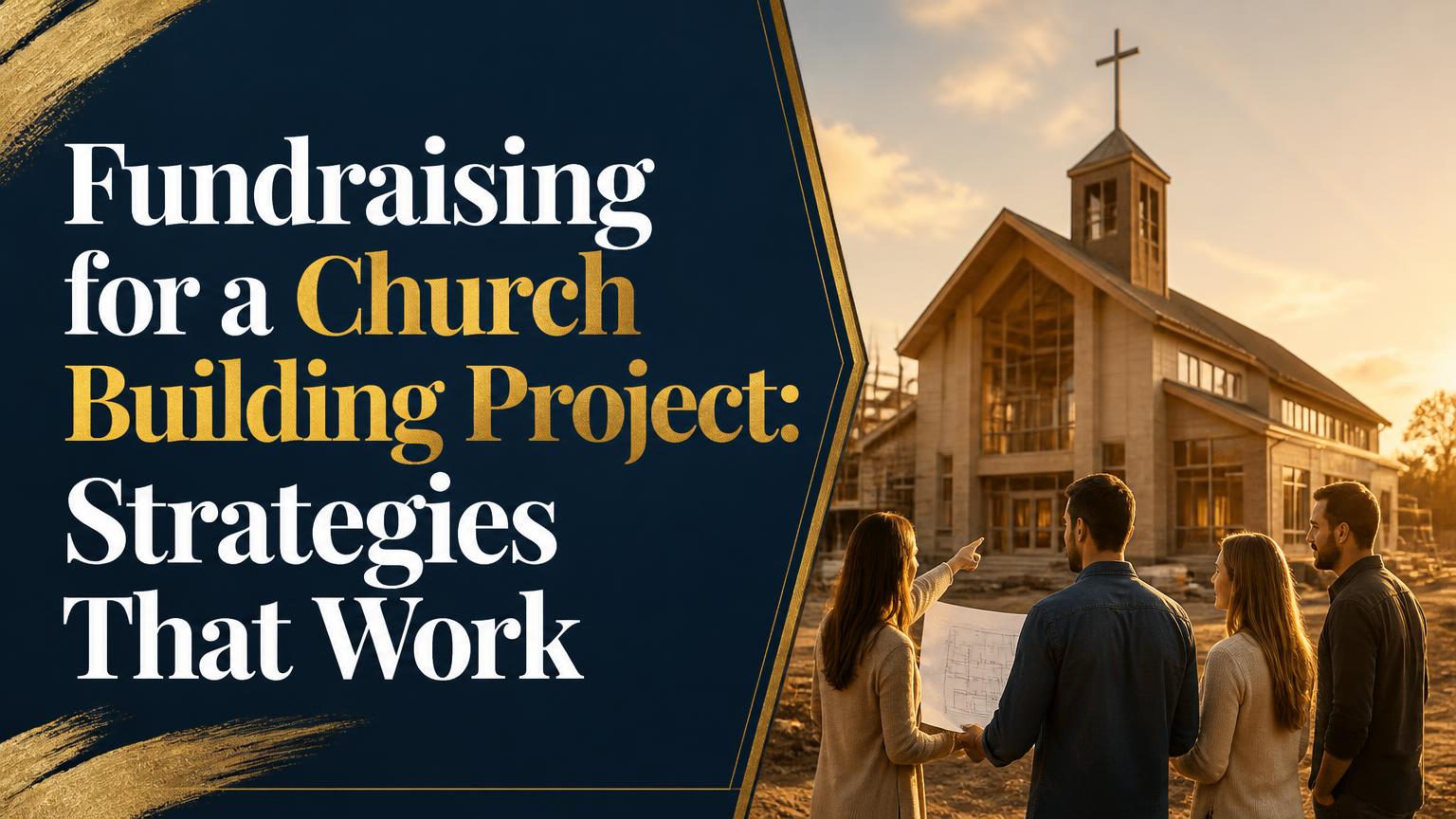
A successful church building project depends on more than asking people for money. It requires a credible plan, prayerful leadership, transparent finances, a realistic funding target, and repeated opportunities for people to participate according to their means. The strongest campaigns connect the building to the church’s ministry—such as worship, discipleship, children’s programs, outreach, or community service—rather than presenting construction as an end in itself.
Fundraising for a Church Building Project
Church building fundraising works best as a structured capital campaign: the church defines the project, determines its true cost, secures early commitments, invites broader participation, and reports progress honestly throughout the process.
Establish the Project Before Asking for Money
Before launching a public appeal, the church should know what it is raising money for. A preliminary plan should address:
- The building’s purpose and expected ministry use
- Land, design, construction, furniture, technology, and equipment costs
- Professional fees, permits, insurance, and financing costs
- A contingency reserve for unforeseen expenses
- The amount already available
- The amount that must be raised
- The proposed timeline
- Ongoing maintenance and operating costs after completion
A building budget that includes only construction can create serious problems later. Costs such as site preparation, accessibility improvements, sound systems, parking, furnishings, landscaping, and utility connections may be substantial. The church should also consider whether the new facility will increase staffing, utilities, cleaning, security, or insurance expenses.
A feasibility review is equally important. Leaders should test whether the project fits the congregation’s giving capacity, not merely its aspirations. A smaller project completed responsibly is generally healthier than an ambitious project that leaves the church with unsustainable debt.
Present a Ministry-Focused Case for Support
People are more likely to support a clear ministry vision than a vague construction goal. The church’s case for support should explain:
- What need the project addresses
- Who will benefit
- What ministries the space will make possible
- Why the project is needed now
- What the project will cost
- How the church will use gifts responsibly
For example, “We need a larger building” is less compelling than “Our current classrooms cannot safely accommodate children’s discipleship programs, and the proposed expansion will provide dedicated, accessible spaces for children, families, and community outreach.”
The message should be truthful and specific. Avoid implying that giving guarantees a particular spiritual or financial outcome. A building can support ministry, but it does not create spiritual health by itself. The church’s mission, people, and stewardship remain more important than the structure.
Combine Several Fundraising Methods
No single method is suitable for every congregation. A balanced campaign may include:
- Regular member giving
- Special capital-campaign pledges
- Major gifts
- Matching gifts
- Fundraising events
- Grants from denominational or charitable bodies
- Gifts from former members and friends of the church
- In-kind donations of materials, labor, or professional services
- Appropriate borrowing, if repayment is realistic
Regular offerings and building gifts should be clearly distinguished in communication and accounting. Members need to understand whether a contribution supports general ministry, debt repayment, or the building project.
Events can build enthusiasm and fellowship, but they rarely replace substantial personal giving. A dinner, auction, concert, or community sale may raise money while increasing awareness, yet the campaign should not depend on events that require extensive volunteer labor for modest financial returns.
Develop a Pledge Campaign Without Pressuring People
A pledge campaign allows the church to estimate future income and plan responsibly. Pledges may be made over one to several years, depending on the project and the congregation’s circumstances. They are planning commitments, not guaranteed cash, so the budget should include a margin for delayed or reduced giving.
Effective pledge campaigns provide:
- A clear total goal
- A specific pledge period
- Simple instructions for giving
- Multiple payment options
- Confidential handling of personal information
- Regular but respectful reminders
- A process for revising a pledge if circumstances change
Giving should be voluntary. The New Testament presents generosity as a willing response rather than something extracted through guilt. Second Corinthians 9:7 emphasizes giving freely and cheerfully, while 1 Corinthians 16:2 reflects the value of regular, intentional preparation. These principles support clear invitations and disciplined stewardship without manipulation.
Approach Major Donors Personally and Ethically
A small number of substantial gifts may significantly affect a building campaign. Leaders can invite individuals or families to consider major gifts, but the process should be relational, confidential, and free from favoritism.
A responsible major-gift process includes:
- Identifying people with a genuine connection to the church’s mission
- Asking permission for a conversation rather than assuming a gift
- Explaining the project and its financial controls
- Allowing time for prayer and consideration
- Accepting a “no” without embarrassment or pressure
- Avoiding promises of influence, ownership, or special treatment
The church should not allow one donor to control ministry decisions simply because that person contributes a large amount. Gifts with conditions should be reviewed carefully by the governing body, and potentially harmful restrictions should be declined.
Build Trust Before and During the Campaign
Trust is one of the most valuable assets in church fundraising. Members are more likely to give when they believe leaders are competent, honest, and accountable.
Use Transparent Financial Controls
The church should establish written procedures for receiving, recording, approving, and reporting gifts. Depending on its size and legal structure, useful safeguards may include:
- Separate accounting for building funds
- More than one person involved in counting offerings
- Approval requirements for major expenditures
- Regular financial reports to the congregation
- Independent review or audit when appropriate
- Documented conflict-of-interest policies
- Written authorization for contracts and borrowing
- Secure handling of donor information
Financial transparency does not require publishing every person’s gift. It means reporting totals, expenses, commitments, debt, progress, and significant changes accurately. Confidentiality and accountability should operate together.
Report Progress Consistently
Communication should continue after the initial appeal. Periodic updates can show:
- Amount received and amount pledged
- Construction or design progress
- Changes in cost or schedule
- Specific prayer needs
- Stories of ministry connected to the project
- Upcoming decisions and opportunities to participate
Reports should include setbacks as well as successes. If costs rise or the timeline changes, explain why and describe the available options. Concealing bad news usually damages trust more than the problem itself.
Organize the Campaign Around Clear Stages
A church building campaign benefits from deliberate sequencing rather than constant requests for money.
Stage 1: Prayer, Vision, and Feasibility
Church leaders should pray, listen to members, study attendance and ministry needs, and evaluate the congregation’s financial capacity. This stage may reveal that renovation, shared facilities, phased construction, or relocation is more appropriate than a new building.
Stage 2: Planning and Quiet Commitments
Complete preliminary designs, cost estimates, legal reviews, and financing analysis. Then speak with key leaders and potential major donors before making a broad public announcement. Early commitments can indicate whether the project is realistic and may provide initial momentum.
Stage 3: Congregational Campaign
Present the plan clearly through worship services, meetings, printed materials, small groups, and personal conversations. Give people time to understand the project and decide how they can participate. A campaign should invite everyone to contribute—not assume that only wealthy members matter.
Stage 4: Construction and Ongoing Stewardship
Continue reporting during construction and maintain the same financial discipline used during fundraising. If the project is phased, define the conditions for moving from one phase to the next. Do not begin an expensive phase solely because enthusiasm is high if the funding required to finish it is uncertain.
Consider Alternatives to a Large Building Campaign
Fundraising is not the only way to address space limitations. The church might compare the proposed project with:
- Renovating existing rooms
- Adding accessibility improvements
- Sharing space with another congregation
- Renting facilities during peak periods
- Using multiple worship services
- Building in phases
- Purchasing an existing structure
- Expanding online or small-group ministry where appropriate
These options are not automatically better, but comparing them prevents the campaign from treating one design as inevitable. The right question is not simply, “How can we fund this building?” It is also, “What facility or arrangement best supports the church’s mission at a sustainable cost?”
Common Mistakes to Avoid
Several patterns frequently weaken church building projects.
Starting construction before funding is credible. Excitement is not the same as financial capacity. A church should understand how much is available, how much is pledged, and how much debt can reasonably be serviced.
Underestimating the total cost. Omitting site work, professional fees, furnishings, technology, permits, or contingency funds can produce a funding shortfall.
Relying too heavily on fundraising events. Events may supplement a campaign, but they often require significant labor and produce inconsistent revenue.
Using guilt or spiritual pressure. Statements suggesting that faithful Christians must give a particular amount can damage relationships and distort biblical stewardship.
Failing to plan for debt. A loan payment affects future staffing, missions, maintenance, and ministry budgets. Debt should be evaluated under less favorable conditions, not only under optimistic giving assumptions.
Ignoring future maintenance. A new facility creates long-term obligations for repairs, cleaning, utilities, insurance, and replacement of equipment.
Allowing unclear leadership authority. The congregation should know who approves contracts, manages funds, communicates changes, and makes decisions when costs or plans shift.
A Practical Standard for a Healthy Campaign
A responsible campaign should be able to answer five questions plainly:
- What ministry need does the project address?
- What will the entire project cost, including related expenses?
- How much can the church reasonably raise and repay?
- What safeguards protect the money and the congregation?
- What will happen if the campaign receives less than expected?
Luke 14:28 uses the image of counting the cost before beginning a building project. In its biblical context, the passage addresses the seriousness of discipleship, not a fundraising formula. Still, its underlying principle applies: major commitments should be considered honestly before they are undertaken.
Fundraising for a church building project is healthiest when generosity, planning, accountability, and mission remain connected. The objective is not simply to complete a structure. It is to provide a sustainable setting for worship and service without compromising the church’s financial integrity or its responsibility to care for people.