
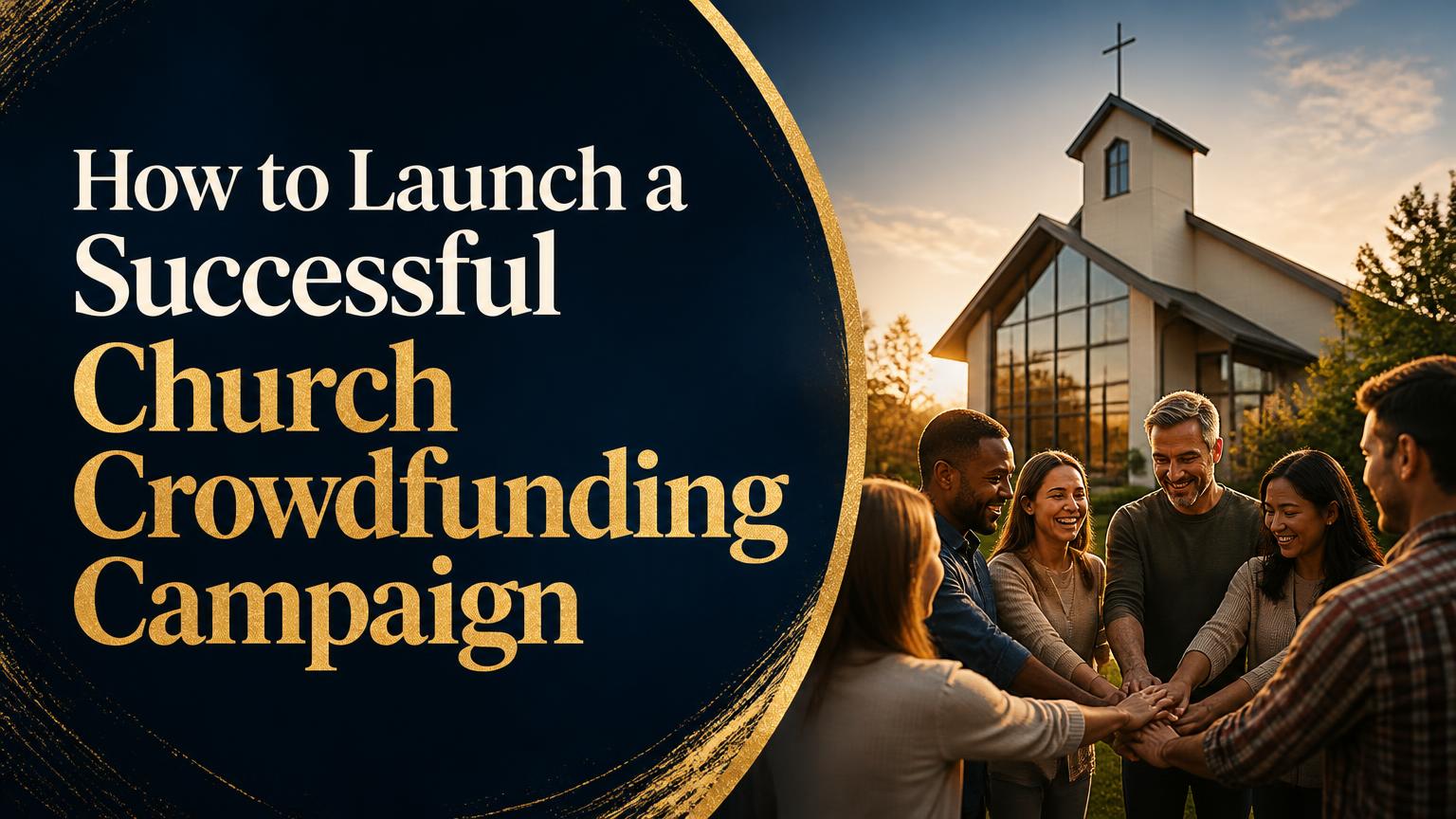
Church crowdfunding is an online way for a church or ministry to collect many relatively small gifts for a clearly defined need, such as a building project, missions trip, benevolence fund, community outreach, emergency repair, or new ministry initiative. A successful campaign depends less on reaching strangers than on communicating a credible purpose to people who already care about the church’s work.
The strongest campaigns combine a specific goal, transparent financial information, a trustworthy donation process, consistent communication, and a plan for using the funds responsibly.
Church Crowdfunding
Church crowdfunding works best when it turns a broad need into a concrete, understandable opportunity to participate. “Support our ministry” is difficult for donors to evaluate. “Raise $18,000 to repair the church roof before winter” gives them a clear objective, deadline, and reason for acting now.
Start With a Specific, Verifiable Goal
Define exactly what the campaign will fund and why the need matters. A useful campaign goal answers five questions:
- What is needed?
- Who will benefit?
- How much will it cost?
- When are the funds needed?
- What will happen if the church raises more or less than the goal?
For example, a campaign for a community food pantry could explain that $7,500 will purchase shelving, refrigeration, and initial food supplies, allowing the church to serve a specific number of local households each month. The explanation gives donors more than an emotional appeal; it shows how their gifts will produce a practical result.
Use documentation where appropriate, such as contractor estimates, project budgets, photographs, ministry plans, or a brief description of the community need. Sensitive information should be protected, especially when a campaign involves individuals receiving benevolence.
A campaign should also state whether the goal is:
- All-or-nothing: the project proceeds only if the full target is reached.
- Flexible: the church uses whatever amount it raises, possibly in stages.
- Part of a larger budget: crowdfunding supplies one portion while the church provides other funds.
This distinction prevents donors from assuming that partial funding will accomplish more than it actually can.
Set a Realistic Funding Target
The public goal should include the true cost of the project, not merely the amount the church hopes to receive. Account for:
- Platform and payment-processing fees
- Shipping, construction, or installation costs
- Permits or professional services
- Taxes or administrative expenses where applicable
- A reasonable contingency for unexpected costs
- Any matching-gift requirements
If the project requires $10,000 but fees and contingency costs may add $1,000, setting a $10,000 goal can leave the church short. Explain the calculation plainly rather than hiding costs in fine print.
Break a large target into meaningful milestones. A $40,000 campaign may feel unreachable, while four explained stages of $10,000 can show progress without misleading donors. Milestones should represent real project steps, not arbitrary numbers designed only to create excitement.
Choose the Right Crowdfunding Model and Platform
Church crowdfunding generally uses one of three models:
- Donation-based crowdfunding: People give without receiving goods or services in return. This is usually the most appropriate model for church ministry and charitable projects.
- Reward-based crowdfunding: Supporters receive something, such as a book, event ticket, meal, or handmade item. The church must account for the value and fulfillment of those rewards.
- Peer-to-peer fundraising: Members create personal fundraising pages and ask their own networks to support the church campaign. This can expand reach, but it requires consistent messaging and oversight.
Select a platform based on more than its popularity. Review:
- Total fees and how they are calculated
- Payment methods and transfer schedules
- Recurring-gift capability
- Donor receipt and reporting features
- Refund and chargeback procedures
- Data ownership and donor privacy
- Integration with the church’s accounting or donor-management system
- Restrictions on religious or charitable campaigns
- Whether donors can cover platform fees voluntarily
Fee structures change, so confirm current terms before launching. A platform that appears inexpensive may charge separate processing, withdrawal, currency-conversion, or optional-service fees.
The church should control the official account rather than placing campaign funds in a staff member’s or volunteer’s personal account. Use more than one authorized administrator, enable strong account security, and preserve transaction records for the church’s financial files.
Build a Campaign Page That Answers Donor Questions
A campaign page should allow someone unfamiliar with the project to understand it within a few minutes. Include:
- A direct campaign title
- The specific need and its human or ministry impact
- The total target and deadline
- A simple budget
- Relevant photographs or a short video
- The church’s name and contact information
- The identity of the campaign administrator
- The intended use of excess funds
- A clear donation button
- Information about receipts and donor questions
The opening should state the need immediately. For example:
“Our church is raising $12,000 to replace the failing furnace in the community hall, which hosts worship services, a food pantry, and weekly youth programs.”
That sentence identifies the project, amount, and beneficiaries without requiring the reader to interpret vague language.
Visual material should be honest and relevant. Show the room, equipment, project, or ministry being funded. Avoid using identifiable images of children, vulnerable families, or people receiving aid without appropriate permission.
A short video can help donors connect with the campaign, but it should not replace basic written information. Speak naturally, explain the need, state the goal, and describe what donations will make possible. Excessive production quality is less valuable than clarity and credibility.
Promote the Campaign Through Relationships
Crowdfunding rarely succeeds through a campaign page alone. Early support usually comes from the church’s existing relationships: members, regular attendees, former members, volunteers, partner congregations, ministry participants, and community supporters.
Use a coordinated communication plan:
- Announce the campaign during services and small-group meetings.
- Send a concise email explaining the need and linking to the campaign.
- Provide shareable messages for members.
- Use social media updates that show genuine progress.
- Ask ministry leaders and volunteers to share the campaign personally.
- Contact potential major or matching donors before the public launch.
- Send reminders near meaningful milestones rather than posting repetitive appeals.
Personal invitations often work better than generic mass messages. A member who explains why the project matters to them can communicate significance more effectively than a series of impersonal advertisements.
A launch can benefit from initial commitments. If donors see no activity, they may question whether the campaign is credible or achievable. Securing early gifts or a matching pledge can establish momentum, but progress must be represented accurately. Never imply that funds have been raised if pledges are conditional or not yet received.
Steward Gifts and Report Results
Good stewardship continues after the donation button is clicked. Thank donors promptly, maintain accurate records, and provide updates even when progress is slower than expected.
A useful communication rhythm might include:
- A launch announcement
- A mid-campaign progress report
- A response to delays or changed circumstances
- A final update when the target is reached
- A project-completion report
- A statement of any remaining balance
Reports should explain what happened, not merely say “thank you.” Include photographs, invoices or budget summaries when appropriate, completed milestones, and a description of the project’s next stage. Protect confidential donor and beneficiary information.
If the church raises more or less than expected, follow the policy stated on the campaign page. For example:
- If the campaign is underfunded, explain whether the church will scale the project, seek other funding, or return gifts where possible.
- If it exceeds the goal, use the surplus only as disclosed or obtain donor consent for a substantially different purpose.
- If the original project becomes impossible, communicate promptly and describe the proposed alternative.
Trust is damaged less by an honest setback than by silence or unexplained changes.
How to Plan a Church Crowdfunding Campaign
Campaign planning should begin with internal decisions, not the creation of a donation page. Church leadership, finance personnel, and relevant ministry leaders should agree on the purpose, budget, authority, and reporting process.
Create a short written plan covering:
- Purpose: What ministry or project will the money support?
- Oversight: Who approves expenses and monitors the campaign?
- Budget: What will each portion of the funds pay for?
- Timeline: When will the campaign open, close, and report results?
- Communications: Who will write updates and answer donor questions?
- Contingencies: What happens if the goal is missed, exceeded, or no longer needed?
- Accounting: How will donations, fees, restricted funds, and expenses be recorded?
Distinguish crowdfunding from ordinary church offerings. A general offering may support the church’s broad mission, while a campaign may create donor expectations that money will be used for a stated purpose. If gifts are restricted, the church needs a reliable process for tracking and honoring that restriction.
The campaign should also fit the church’s theology and culture. Scripture presents generosity as willing participation rather than forced giving. Paul’s teaching that people should give willingly and not under compulsion (2 Corinthians 9:7) supports an approach that informs and invites without manipulating. Emotional stories may communicate real need, but pressure, shame, exaggerated urgency, and promises of spiritual or financial reward undermine ethical fundraising.
Legal, Tax, and Financial Considerations
Tax and charitable-fundraising rules vary by country and sometimes by state or province. In the United States, a church may qualify for tax-exempt treatment, but a donation made through a crowdfunding page is not automatically tax-deductible merely because the page uses charitable language.
Before launch, confirm:
- Which legal entity receives the funds
- Whether the church can issue appropriate donation acknowledgments
- How platform-generated receipts describe the gift
- Whether donors receive goods, services, meals, tickets, or other benefits
- Whether charitable-solicitation registration requirements apply
- How restricted gifts will be recorded
- How refunds, failed payments, and chargebacks will be handled
A donor who receives something of value may not be able to treat the entire payment as a charitable contribution. Likewise, money sent to an individual’s personal crowdfunding page may be treated differently from a gift made directly to a qualified charitable organization.
Church leaders should consult a qualified accountant or attorney when the campaign involves substantial funds, international donations, paid rewards, construction work, benevolence to individuals, or complex restrictions. Keep financial and donor records according to the church’s normal retention policies.
Common Church Crowdfunding Mistakes
Several problems repeatedly weaken otherwise worthwhile campaigns:
- Vague purpose: Donors cannot tell what their gifts will accomplish.
- Unrealistic target: The goal ignores fees, project costs, or likely reach.
- Weak internal approval: The campaign launches before leadership agrees on fund use.
- One-time promotion: The church announces the campaign once and expects continuous results.
- Overreliance on emotion: Strong feelings replace facts, budget information, and accountability.
- Personal payment accounts: Funds become difficult to reconcile and create governance concerns.
- Unclear excess-fund policy: Donors do not know what happens if the campaign exceeds its goal.
- No completion report: The church receives money but never shows the outcome.
- Privacy failures: Photos or stories expose vulnerable people without proper consent.
Avoid making every post an appeal for money. Alternate requests with progress, stories of service, project updates, and specific explanations of what remains to be done.
When Crowdfunding Is the Right Tool
Crowdfunding is especially useful when a project has a visible outcome, a defined target, a clear deadline, and a community willing to share the appeal. It may be less suitable for ongoing salaries, routine operating expenses, confidential pastoral care, or needs that cannot be explained publicly.
For recurring ministry costs, regular giving, designated offerings, grants, major gifts, or a planned capital campaign may provide more stable support. Crowdfunding can supplement those methods, but it should not disguise a structural budget deficit or replace financial planning.
Conclusion
A successful church crowdfunding campaign is a focused exercise in communication and stewardship. Define one credible need, calculate the full cost, use a secure and accountable platform, invite people without pressure, and report faithfully on the results. The campaign should make participation easier while preserving the church’s responsibility to handle gifts transparently, honor their stated purpose, and care for donors and beneficiaries with dignity.