
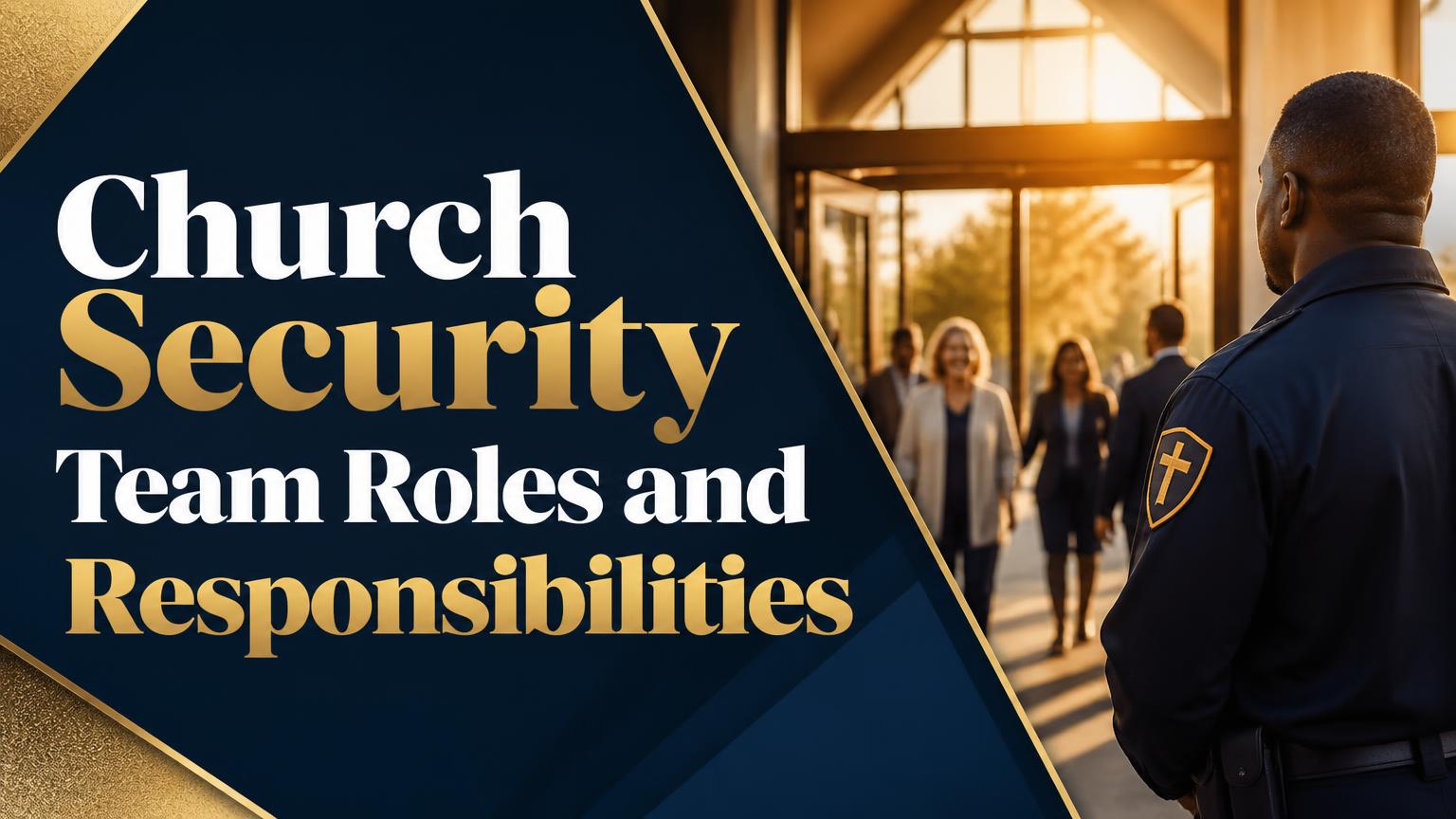
Church security is primarily a ministry of protection, preparedness, and wise care—not a display of force. A well-organized church security team helps create a safe environment for worship, discipleship, children’s ministry, and community gatherings while respecting the dignity of every person. Its responsibilities may include prevention, observation, access management, emergency communication, first aid coordination, child protection, and cooperation with public safety agencies. Clear role definitions prevent confusion, reduce overreaction, and help volunteers respond consistently when an incident occurs.
Church Security Team Roles and Responsibilities
A church security team works best when responsibilities are assigned before an emergency occurs. The team should operate under written policies approved by church leadership, with duties matched to each person’s training, temperament, legal authority, and availability. The following roles may be combined in a small congregation or assigned to separate people in a larger church.
Security Team Leader or Coordinator
The team leader organizes the ministry and serves as the primary point of contact between the security team, pastors, administrators, facility managers, and emergency services. Responsibilities commonly include recruiting and screening volunteers, scheduling coverage, maintaining procedures, coordinating training, reviewing incidents, and recommending improvements to the church’s safety plan.
The coordinator should not function as an independent authority. Church leadership must define the team’s scope, reporting structure, and limits. The leader also needs to know when to transfer control to police, fire, emergency medical personnel, or another legally authorized agency. A mature coordinator values calm judgment and accountability more than aggressive behavior or personal control.
Access, Perimeter, and Facility Safety
Some team members monitor entrances, parking areas, hallways, restricted rooms, and other parts of the property. Their work includes identifying hazards, noticing unusual conditions, checking that doors and exits function properly, and ensuring that restricted areas remain accessible only to authorized people. They may also help manage traffic and keep emergency routes clear.
This role is preventive rather than confrontational. A team member might notice a blocked exit, an unattended bag, a propped-open children’s ministry door, or a person who needs assistance. The appropriate response may be correcting the hazard, notifying a supervisor, or contacting emergency services—not automatically confronting someone. Access procedures should remain welcoming and should account for members, guests, contractors, people with disabilities, and regular community users of the building.
Ushers, Greeters, and Congregational Observation
Greeters and ushers often provide the church’s earliest layer of awareness because they interact naturally with people entering and moving through the building. Their responsibilities can include welcoming guests, identifying confusing situations, observing crowd conditions, helping people find rooms, and reporting concerns through established communication channels.
They should never be expected to profile people based on appearance, race, age, disability, clothing, homelessness, or mental-health assumptions. Observation should focus on behavior and circumstances: threats, attempts to enter restricted areas, visible distress, dangerous objects, escalating conflict, or requests for urgent help. Because these volunteers are highly visible, they also need training in respectful communication and de-escalation.
Medical and Emergency Response
A church may designate trained individuals to coordinate first aid until emergency medical personnel arrive. Depending on local requirements and the person’s qualifications, this can include maintaining first-aid supplies, knowing the locations of automated external defibrillators, calling emergency services, directing responders to the correct entrance, and supporting evacuation or shelter procedures.
Medical responders must work within their training and local law. They should not make diagnoses or provide treatment beyond their competence. The broader team should preserve privacy, keep crowds back, record essential facts, and avoid moving an injured person unless remaining in place creates a greater danger. Churches should also plan for ordinary emergencies such as falls, allergic reactions, severe weather, fires, utility failures, and missing children—not only acts of violence.
Child Protection and Vulnerable-Person Safety
Child protection is a specialized responsibility that overlaps with security but should not be reduced to guarding doors. Procedures should address approved pickup, restroom assistance, classroom access, custody concerns, suspected abuse, missing children, and communication with parents or guardians. Volunteers need to understand the church’s safeguarding policy and know exactly whom to notify when a concern arises.
The same principle applies to older adults, people with disabilities, and anyone experiencing a medical, emotional, or cognitive crisis. Safety procedures should preserve dignity and avoid unnecessary restraint or public embarrassment. Background screening, two-adult practices where appropriate, accurate attendance records, controlled check-in systems, and clear escalation procedures can reduce risk while keeping ministry accessible.
Communications and Incident Documentation
A designated communications role ensures that concerns reach the right person quickly without creating rumors or panic. Churches may use radios, phones, text groups, public-address systems, or another method, but every system needs plain language, backup options, and a defined chain of communication. Volunteers should know who contacts emergency services, who meets responders, who informs church leadership, and who communicates with the congregation.
After an incident, accurate documentation helps leadership, insurers, families, and public authorities understand what happened. Records should distinguish observed facts from assumptions and include times, locations, actions taken, witnesses, injuries, property damage, and notifications. Sensitive information should be shared only with people who have a legitimate need to know. Social-media posting by volunteers should be prohibited or tightly controlled during and after an emergency.
How Church Security Roles Work Together
Security responsibilities are most effective when they form a coordinated system rather than a collection of isolated jobs. A greeter may notice a concern, a coordinator may assess which policy applies, a communications volunteer may call for help, and a medical responder may assist an injured person. No individual should be expected to manage every part of an emergency alone.
Before an Incident: Prevention and Preparation
Before services begin, assigned volunteers should inspect relevant areas, confirm communication methods, check that exits and access routes are usable, review scheduled events, and identify unusual circumstances such as construction, large crowds, visiting speakers, or severe weather. The team should also confirm who is present and which responsibilities each person holds.
Preparation includes more than a checklist. Teams should conduct realistic but controlled exercises for evacuation, sheltering, missing children, medical emergencies, disruptive behavior, and communication failures. Exercises should avoid frightening the congregation and should be reviewed afterward. The goal is to reveal confusion before a real event exposes it.
During an Incident: Protect, Communicate, and Coordinate
When a concern arises, the first priorities are preserving life, communicating accurate information, and preventing unnecessary escalation. Team members should use the church’s approved response plan, contact emergency services when appropriate, guide people away from danger, and provide only the assistance for which they are trained. They should avoid spreading unverified descriptions or issuing contradictory instructions.
A security team is not a substitute for police, firefighters, or emergency medical professionals. If a situation involves a weapon, serious violence, fire, a hazardous substance, or an immediate threat to life, emergency services should be contacted without waiting for internal permission unless a specific local protocol says otherwise. Volunteers should follow lawful instructions from responding agencies and avoid interfering with their work.
After an Incident: Care, Accountability, and Recovery
The response continues after the immediate danger ends. Church leaders may need to account for members, arrange medical or pastoral care, preserve relevant information, notify families, cooperate with authorities, and determine whether the building can safely reopen. People affected by an incident may experience fear, grief, confusion, or delayed emotional reactions, so follow-up should include appropriate pastoral and professional support.
A post-incident review should ask what happened, which procedures worked, where communication failed, and what needs to change. The purpose is improvement rather than blame. Serious incidents may require legal, insurance, safeguarding, or regulatory reporting. Documentation should be retained according to the church’s policies and applicable law.
Training and Policies a Church Security Team Needs
Training should reflect the actual responsibilities assigned to volunteers. Basic topics often include emergency communication, first aid and CPR where qualified instruction is available, fire and severe-weather procedures, evacuation and sheltering, child protection, disability awareness, de-escalation, confidentiality, incident reporting, and recognizing when to call emergency services. Training should be refreshed periodically rather than treated as a one-time orientation.
Written policies should define who may serve, how screening is conducted, what equipment may be used, how complaints are handled, and when a volunteer must step aside because of illness, impairment, conflict of interest, or inadequate training. If a church permits armed personnel or other specialized security measures, it must address local legal requirements, training standards, storage, identification, use-of-force limits, insurance, and coordination with law enforcement. These decisions should receive careful legal and organizational review.
The team should also build relationships with local emergency responders when appropriate. Familiarity with the building, addresses, entrances, room numbering, access barriers, and gathering areas can reduce confusion during a response. Churches should never publish sensitive security details broadly or rely on secrecy as their only protection; instead, they should protect operational information while ensuring that those with responsibilities understand the plan.
De-Escalation, Hospitality, and Ethical Boundaries
Many church safety situations involve confusion, distress, interpersonal conflict, or a request for help rather than criminal intent. De-escalation usually begins with a calm voice, respectful distance, active listening, simple choices, and enough space for the person to regain control. A volunteer should avoid insults, sudden movements, crowding, unnecessary physical contact, or arguments about personal beliefs.
The church’s mission also shapes how security is practiced. A welcoming environment cannot mean ignoring genuine danger, but security should not turn every unfamiliar person into a suspect. Consistent procedures, behavior-based observation, disability awareness, and transparent expectations help protect people without creating a culture of fear. Volunteers should never use their position to settle personal disputes, enforce theological preferences, intimidate guests, or investigate matters beyond their authority.
Common Mistakes in Church Security Planning
One frequent mistake is assigning security responsibilities to the most confident or physically imposing volunteers without evaluating judgment, communication skills, reliability, and emotional control. Another is creating a plan that exists only in a binder. If volunteers do not know who leads, how to communicate, where to direct people, or when to call for outside help, a written policy provides little protection.
Churches also sometimes focus narrowly on dramatic violence while neglecting common risks: unsecured children’s areas, medical emergencies, slips and falls, domestic disputes, severe weather, missing people, overcrowded rooms, and poorly maintained exits. A balanced plan addresses the full range of foreseeable hazards.
Finally, security should not be measured by how visible or forceful the team appears. A team that quietly prevents hazards, responds respectfully, documents accurately, and summons the right help may be performing its responsibilities better than one that creates an intimidating presence.
Conclusion
Church security team roles and responsibilities should be organized around protection, prevention, service, and accountability. The strongest teams assign clear duties for leadership, access awareness, observation, medical coordination, child protection, communication, and recovery while recognizing the limits of volunteer authority. Their members respond to behavior and risk rather than appearances, use de-escalation whenever possible, and involve emergency professionals when circumstances exceed their training. Good church security does not compete with hospitality or ministry; it supports both by helping people worship and gather in an environment prepared to care for them wisely.