
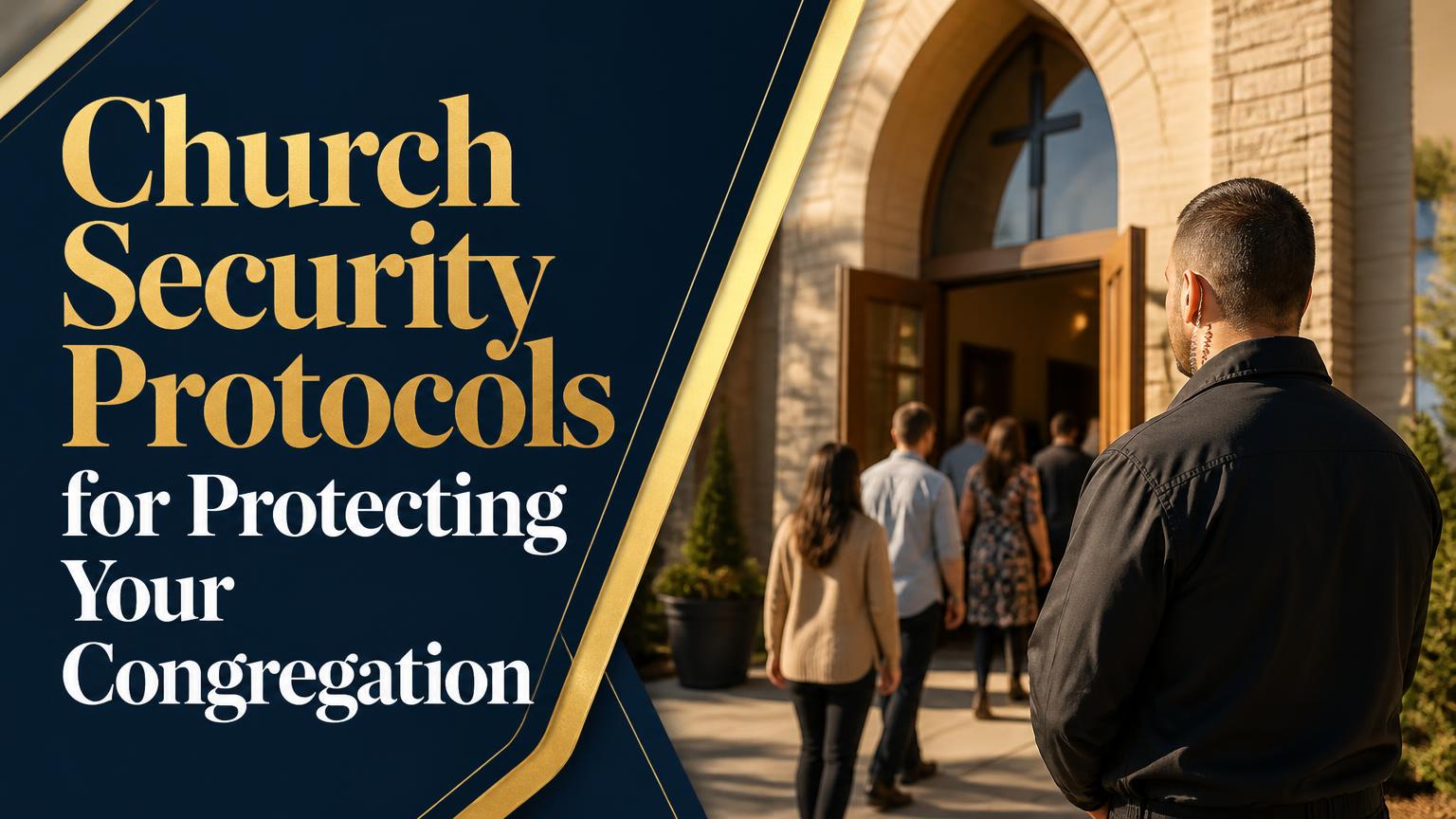
A church security plan should protect people without turning worship into a fortress. Effective church security protocols combine prevention, trained leadership, clear communication, emergency response, child protection, and post-incident care. The goal is not to predict every danger or encourage unnecessary confrontation. It is to identify realistic risks, reduce avoidable vulnerabilities, respond calmly when an incident occurs, and help the congregation recover afterward. A good plan also respects accessibility, privacy, hospitality, local law, and the different needs of children, older adults, people with disabilities, visitors, staff, and volunteers.
Church Security Protocols
Church security protocols work best as a coordinated safety system rather than a collection of locked doors, cameras, or armed personnel. The system should establish who makes decisions, how concerns are reported, how emergencies are communicated, and what volunteers should do before professional responders arrive.
Begin With a Congregational Risk Assessment
A risk assessment identifies credible hazards specific to the church’s facilities, activities, location, and congregation. Leaders should examine entrances, parking areas, children’s spaces, classrooms, offices, kitchens, utility areas, and rooms used by outside groups. They should also review risks such as medical emergencies, fire, severe weather, missing children, domestic disputes, threatening behavior, theft, and unauthorized access.
The assessment should consider both likelihood and potential harm. A rural church may need a different plan from an urban congregation, while a church operating a preschool, food pantry, or weekday school will have risks beyond those present during worship. Review the plan after renovations, changes in programming, serious incidents, or changes in local conditions. Avoid creating a plan based only on dramatic but unlikely scenarios while overlooking common hazards such as blocked exits or poor communication.
Assign Clear Roles and Decision Authority
Every response plan needs defined responsibilities. A designated safety or security coordinator can maintain the plan, organize training, and serve as the primary contact for emergency services. An incident leader should coordinate the immediate response, while ministry leaders, ushers, children’s workers, facilities staff, and greeters carry out role-specific duties.
Responsibilities should be written in plain language. For example, one person may call emergency services, another may meet responders at the entrance, another may account for children, and another may communicate with pastors or family members. Staff and volunteers should know who has authority to evacuate, shelter, close an entrance, pause an event, or request professional assistance.
This structure prevents conflicting instructions. It also avoids placing all responsibility on a single pastor or volunteer who may be absent, overwhelmed, or directly involved in the incident. Backup personnel are essential, especially for churches that rely heavily on rotating volunteers.
Control Access Without Creating an Unwelcoming Environment
Access control should be practical, consistent, and proportionate. During services, churches may designate a primary public entrance while keeping other doors monitored or secured according to fire and building requirements. Doors must never be locked in a way that prevents lawful emergency exit. Fire codes, accessibility standards, and occupancy rules take priority over informal security preferences.
Children’s ministries require additional safeguards. Common measures include controlled check-in and check-out, authorized-pickup records, age-appropriate identification procedures, background screening where legally appropriate, and clear rules for restroom assistance and one-on-one contact. These procedures protect children and volunteers alike. They should be applied consistently rather than selectively based on familiarity.
Visitors should receive a welcoming explanation of any registration or identification process. Security becomes less effective when it feels secretive, humiliating, or arbitrary. Greeters can be trained to notice unusual behavior and report concerns without profiling people based on appearance, disability, race, age, religion, or personal style.
Create Communication and Emergency Response Procedures
A church should maintain several ways to communicate because one method may fail during an emergency. Depending on the size and layout of the congregation, useful tools may include mobile phones, two-way radios, public-address systems, text alerts, designated messengers, and posted instructions. Communication should be brief, factual, and directed toward action.
The plan should identify procedures for major scenarios:
- Medical emergencies: Call emergency services, provide the exact location, send someone to guide responders, and use an automated external defibrillator or first-aid equipment only when trained.
- Fire or smoke: Activate the alarm, call emergency services, evacuate through safe routes, and move people to an established assembly area.
- Severe weather: Direct people to designated shelter areas away from windows and unsecured objects.
- Missing or endangered children: Secure accurate information, notify the appropriate leaders, monitor exits without creating panic, and contact emergency services when circumstances warrant.
- Threatening behavior or violence: Prioritize immediate life safety, create distance, follow evacuation or shelter instructions, and contact law enforcement. Untrained volunteers should not pursue or confront a dangerous person.
Emergency instructions should account for people who may need assistance, including children, wheelchair users, older adults, people with hearing or vision impairments, and those unfamiliar with the building. Plans should also identify accessible evacuation routes and backup options.
Train, Practice, and Update the Plan
A written policy is not enough if volunteers cannot remember it under pressure. Training should cover recognizing hazards, reporting concerns, emergency communication, first aid boundaries, child protection, de-escalation, evacuation, sheltering, and interaction with emergency responders. It should explain what volunteers must not do, such as making unsupported announcements, spreading rumors, blocking responders, or attempting a dangerous intervention.
Practice should be proportionate and carefully managed. A church can begin with tabletop discussions, walkthroughs, fire drills, radio checks, and scenario-based exercises that do not frighten children or create unnecessary alarm. Leaders should notify participants when appropriate, protect confidential details, and evaluate what worked afterward. Update contact lists, floor plans, assembly locations, and procedures when the building or ministry changes.
Plan for Recovery After an Incident
Security includes the period after immediate danger ends. Leaders should preserve relevant information, cooperate with emergency services, document what occurred, and avoid public speculation. A designated spokesperson can reduce confusion by sharing only confirmed information and respecting privacy.
People may experience fear, grief, anger, or delayed stress after an emergency. Pastoral care, professional mental-health support, practical assistance, and clear follow-up communication can help the congregation recover. Review the response without assigning blame prematurely. The purpose of an after-action review is to identify failures, recognize effective decisions, and improve the plan while memories and records are still available.
Build a Security Team Around Service and Accountability
A church security team should support the congregation’s mission rather than operate as a separate authority. Team members need appropriate screening, written expectations, training, supervision, and a clear process for complaints or discipline. Selection should consider judgment, emotional maturity, reliability, communication skills, and the ability to remain calm—not merely physical strength or interest in weapons.
The team should coordinate with pastors, ministry directors, facilities leaders, and local emergency professionals. Depending on local law and church policy, some members may receive specialized training in first aid, CPR, de-escalation, emergency management, or other relevant skills. Any armed-security decision requires careful consideration of legal requirements, insurance, training standards, storage, identification, and the risk of mistaken identity. An armed presence is not a substitute for a complete safety plan.
The team should also protect boundaries. Members should not conduct unauthorized surveillance, interrogate visitors, collect unnecessary personal information, or use force beyond what law and training permit. A church’s safety culture depends on trust. Accountability makes it less likely that security responsibilities will become an informal source of power or intimidation.
Strengthen the Building and Daily Safety Culture
Physical measures are useful when they solve identified problems. Good lighting, visible address numbers, maintained locks, clear emergency exits, trimmed landscaping, functioning alarms, secure storage of hazardous materials, and working first-aid equipment can reduce risk without changing the character of worship. Cameras may help with documentation and awareness, but they do not replace attentive people, access procedures, or emergency training.
Daily culture matters just as much as equipment. Encourage staff and volunteers to report hazards, concerning messages, damaged doors, suspicious behavior, harassment, or policy violations through a known channel. Reports should be taken seriously without treating every unusual person as a threat. Leaders should distinguish between a safety concern, a policy violation, a mental-health crisis, a personal dispute, and an imminent danger because each may require a different response.
Post emergency maps and instructions where they are useful, but do not publish sensitive details such as camera blind spots, access codes, or the precise location of security equipment. Keep confidential operational information limited to people who need it for their responsibilities.
Use De-Escalation and Professional Partnerships
Many incidents can be reduced when trained people recognize rising tension early. De-escalation generally involves maintaining a calm tone, allowing physical space, listening without making promises, setting clear boundaries, and involving an appropriate leader. A person who is distressed may need pastoral care, medical assistance, or family support rather than a security confrontation. Volunteers should avoid arguing, crowding, threatening, or attempting to diagnose someone.
De-escalation has limits. If there is an immediate threat of violence, a weapon, serious property danger, or a medical crisis, call emergency services and follow the established response plan. Do not assume that a familiar person is safe or that an unfamiliar person is dangerous.
Church leaders should build relationships with local fire, medical, and law-enforcement professionals before an emergency occurs. They can help confirm building access, responder meeting points, evacuation routes, emergency contacts, and the church’s legal responsibilities. Professional partners may also identify hazards that volunteers overlook, but the church remains responsible for adapting advice to its own facilities and policies.
Protect Privacy, Dignity, and Legal Compliance
Security procedures must respect people as well as property. Collect only the personal information needed for a defined safety purpose, protect records from unnecessary access, and establish how long information will be retained. Background checks, incident reports, camera footage, health information, and child-pickup records may involve privacy and employment considerations that vary by jurisdiction.
Policies should also address discrimination, accessibility, harassment, mandated reporting, consent, and the use of force. Churches should obtain qualified legal and insurance advice for questions involving firearms, volunteers, minors, surveillance, employment, trespass, and reporting obligations. A general protocol cannot replace local requirements.
A useful standard is necessity and proportionality: use the least restrictive measure that reasonably protects people, while taking stronger action when the danger is immediate and serious. This approach helps preserve hospitality without treating hospitality as a reason to ignore credible risk.
Conclusion
Effective church security protocols are organized around people, not gadgets. They begin with a realistic risk assessment and continue through clear authority, child-protection procedures, controlled access, emergency communication, trained volunteers, professional partnerships, and post-incident care. The strongest plans also recognize their limits: volunteers are not substitutes for firefighters, paramedics, mental-health professionals, or law enforcement, and security should never depend on profiling or unnecessary confrontation. A congregation is best protected when safety responsibilities are written, practiced, reviewed, and carried out with calm judgment, respect for dignity, and a consistent commitment to preserving life.