
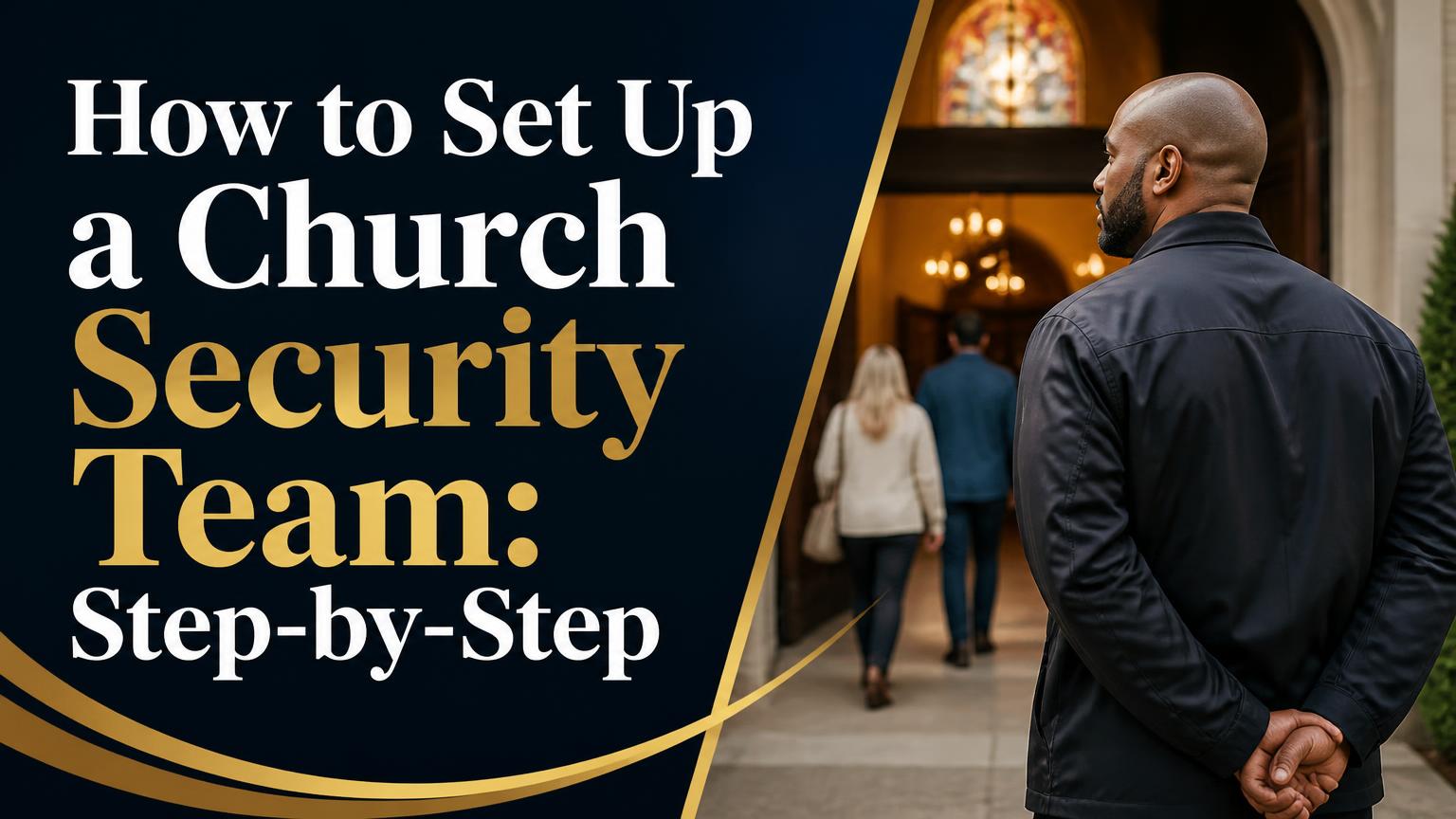
A church security team is a trained group responsible for reducing preventable risks, coordinating during emergencies, protecting vulnerable people, and helping the congregation respond calmly when problems occur. Setting one up requires more than recruiting physically capable volunteers or placing someone at the entrance. A sound program combines risk assessment, carefully defined authority, background screening, written procedures, practical training, communication systems, and regular review. The goal is a safer environment—not an intimidating or force-centered one.
How to Set Up a Church Security Team
A church security team should be organized as part of the church’s broader safety and care ministry. Its work may include prevention, observation, communication, emergency response, evacuation support, medical assistance, and coordination with public safety agencies. The following steps provide a practical framework.
Define the Team’s Mission and Authority
Begin with a written mission approved by the church’s governing leadership. State that the team exists to protect people, support orderly emergency response, identify hazards, and summon appropriate professional help. This prevents the group from becoming an informal enforcement body operating according to individual judgment.
Define what team members may and may not do. Policies should address observation, reporting, de-escalation, emergency notifications, access to restricted areas, evacuation assistance, incident documentation, and interaction with children. Volunteers generally should not search people, detain individuals, use force, carry weapons, or conduct investigations unless applicable law, church policy, training, and insurance clearly permit it. Ambiguous authority creates unnecessary legal and safety risks.
Conduct a Church-Specific Risk Assessment
Walk through the facility and grounds at different times, including worship services, children’s programs, evening events, and periods when the building is mostly empty. Examine entrances, parking areas, classrooms, nurseries, offices, restrooms, kitchens, stages, storage rooms, and emergency exits. Consider visibility, lighting, door hardware, communication gaps, visitor flow, and areas where one person could become isolated.
The assessment should consider a range of events rather than focusing only on violent attacks. Relevant risks may include medical emergencies, fires, severe weather, missing children, domestic disputes, disruptive behavior, suspicious packages, utility failures, unauthorized access, and traffic incidents. Rank risks by likelihood and potential harm, then address practical weaknesses first. Better lighting, clear signage, working radios, and unobstructed exits may reduce more danger than expensive equipment.
Recruit and Screen the Right People
Recruit for judgment, reliability, emotional maturity, confidentiality, and a service-oriented attitude—not simply for size, confidence, military experience, or enthusiasm about security. Team members may need to reassure frightened people, communicate under pressure, respect boundaries, and follow instructions when their personal instincts point elsewhere.
Use a consistent application and interview process. Depending on local law and the responsibilities involved, screening may include identity verification, criminal background checks, references, driving records, and role-specific qualifications. Establish standards for conduct, substance use, conflicts of interest, confidentiality, and interactions with minors. A background check is only one part of screening; it does not replace interviews, supervision, training, or ongoing accountability.
Write Practical Policies and Emergency Plans
Create concise procedures for the situations the assessment identifies. A useful plan should explain who receives an initial report, who contacts emergency services, who leads the team, how information is shared, where people evacuate or shelter, how children are protected, and who communicates with church leaders and families.
Use plain language and assign roles by function rather than relying on one person. Plans may include emergency calling, medical response, fire evacuation, severe-weather sheltering, missing-child procedures, disruptive-person response, reunification, and post-incident care. Include accessible procedures for older adults, children, people with disabilities, and people who do not speak the primary language.
Plans should also address information control. Team members should know what can be communicated over radios, what belongs in a written incident report, and who may speak publicly. Avoid broadcasting sensitive personal information or unverified claims. Every plan should identify when the team’s role ends and professional responders take command.
Establish Communication and Reporting Systems
Reliable communication often matters more than specialized equipment. Choose a method appropriate to the building and team size, such as radios, designated phone contacts, or a structured notification system. Establish plain-language terms and require members to identify themselves clearly. Avoid codes that confuse substitute volunteers or emergency responders.
Create a simple incident-report form recording the date, time, location, people involved, observed facts, actions taken, witnesses, notifications, injuries, and follow-up needs. Reports should distinguish direct observations from assumptions. Store them securely and limit access according to privacy, safeguarding, insurance, and legal requirements. Accurate reporting helps identify repeated hazards and protects both the congregation and the volunteers.
Train for Prevention, De-Escalation, and Response
Every member should receive orientation before serving and periodic refresher training afterward. Core subjects commonly include emergency communication, first aid, CPR and AED use, fire and evacuation procedures, severe-weather response, child protection, confidentiality, conflict de-escalation, accessibility, and incident documentation.
Training should emphasize calm behavior and early intervention. A team member who notices rising tension, offers a respectful conversation, creates space, and summons help may prevent a situation from becoming dangerous. Physical intervention should never be treated as a badge of courage. If the church permits armed personnel or other high-risk responsibilities, those roles require separate legal review, qualified instruction, strict policies, secure storage or carry requirements where applicable, and ongoing competency standards. Many churches choose a non-armed model and rely on law enforcement for threats involving weapons.
Coordinate With Emergency Services and Practice Carefully
Introduce the team to local police, fire, emergency medical services, and relevant community responders when appropriate. Share the building layout, access points, address information, alarm procedures, and any concerns about children, mobility limitations, or large gatherings. Confirm how responders can identify the church and where they should enter during an emergency.
Practice plans through walk-throughs, tabletop discussions, and limited drills. Tell staff, volunteers, and parents what a drill will involve, especially when children or trauma survivors are present. Avoid surprise exercises that create panic or imitate violence unnecessarily. After each exercise or real incident, conduct a review: What worked? Where did communication fail? Were roles clear? Did any procedure create an accessibility or safeguarding problem? Revise the plan rather than treating it as permanent.
Keep Security, Safety, and Safeguarding Connected
Church security should not operate separately from other ministries that protect people. Facilities staff may identify faulty locks or blocked exits, children’s ministry leaders may manage authorized pickup and missing-child procedures, ushers may notice distress or unusual behavior, and pastors may provide pastoral care after an incident. A coordinated program gives each group defined responsibilities without requiring every volunteer to become a security specialist.
Safeguarding deserves particular attention because children and vulnerable adults may face risks unrelated to trespassers or public emergencies. Use authorized-pickup procedures, two-adult practices where appropriate, secure classroom access, incident-reporting rules, and clear boundaries for one-on-one contact. Security personnel should not override child-protection policies in the name of convenience. The safest response usually combines visibility, accountability, supervision, and careful documentation.
Set Legal, Insurance, and Governance Requirements
Before the team begins, church leadership should review applicable laws and insurance requirements. Rules may govern private security work, firearms, concealed carry, background checks, surveillance cameras, recording, data retention, emergency medical care, employment status, and the use of force. Requirements can differ substantially by jurisdiction, so the church should obtain qualified local legal and insurance advice rather than relying on policies copied from another congregation.
The governing body should approve the team’s budget, equipment standards, training requirements, complaint process, and authority to suspend a member. Insurance representatives may identify activities that require notification or special coverage. Written governance matters because it establishes who is accountable when a volunteer makes a mistake, a visitor files a complaint, or an incident requires formal investigation.
Avoid Common Church Security Mistakes
One common mistake is building the program around fear. Highly visible weapons, aggressive questioning, unnecessary searches, or intimidating behavior can make visitors feel unwelcome and may escalate ordinary misunderstandings. Security should be noticeable enough to function but integrated enough that the congregation experiences care, order, and readiness rather than suspicion.
Another mistake is relying on a few heroic volunteers without documentation or succession planning. People become unavailable, procedures are forgotten, and the church loses capability when one coordinator moves away. Use written role descriptions, a duty schedule, backups for key positions, regular training, and a clear process for complaints or removal. Do not deploy volunteers who are impaired, emotionally agitated, untrained for the assignment, or unwilling to follow the church’s policies.
Review and Improve the Program Over Time
A church security team is not complete when its members receive badges or radios. Review the program at least annually and after significant changes, such as a building renovation, new children’s programs, changes in attendance, a serious incident, or updated legal requirements. Reassess lighting, access control, emergency contacts, evacuation routes, communication coverage, and the needs of people with disabilities.
Invite feedback from pastors, staff, ushers, parents, volunteers, visitors, and emergency professionals. Look for near misses and recurring weaknesses, not just dramatic incidents. A door that is routinely propped open, a radio that fails in one part of the building, or a confusing child-release procedure may reveal more actionable risk than a rare crisis. Improvement should be measured by clearer coordination and fewer preventable hazards, not by how often the team uses force.
Conclusion
Setting up a church security team begins with a clear purpose: protect people, reduce preventable risks, and support a calm, coordinated response when emergencies occur. The strongest programs select trustworthy volunteers, define authority, assess the actual facility, document procedures, train in communication and de-escalation, coordinate with emergency services, and protect children and vulnerable adults through established safeguarding practices.
Security is most effective when it strengthens the church’s ministry rather than competing with it. A disciplined team does not act like a private police force or depend on individual heroics. It serves within clear limits, recognizes when professional responders must take over, learns from every incident, and continually improves the congregation’s ability to care for one another safely.