
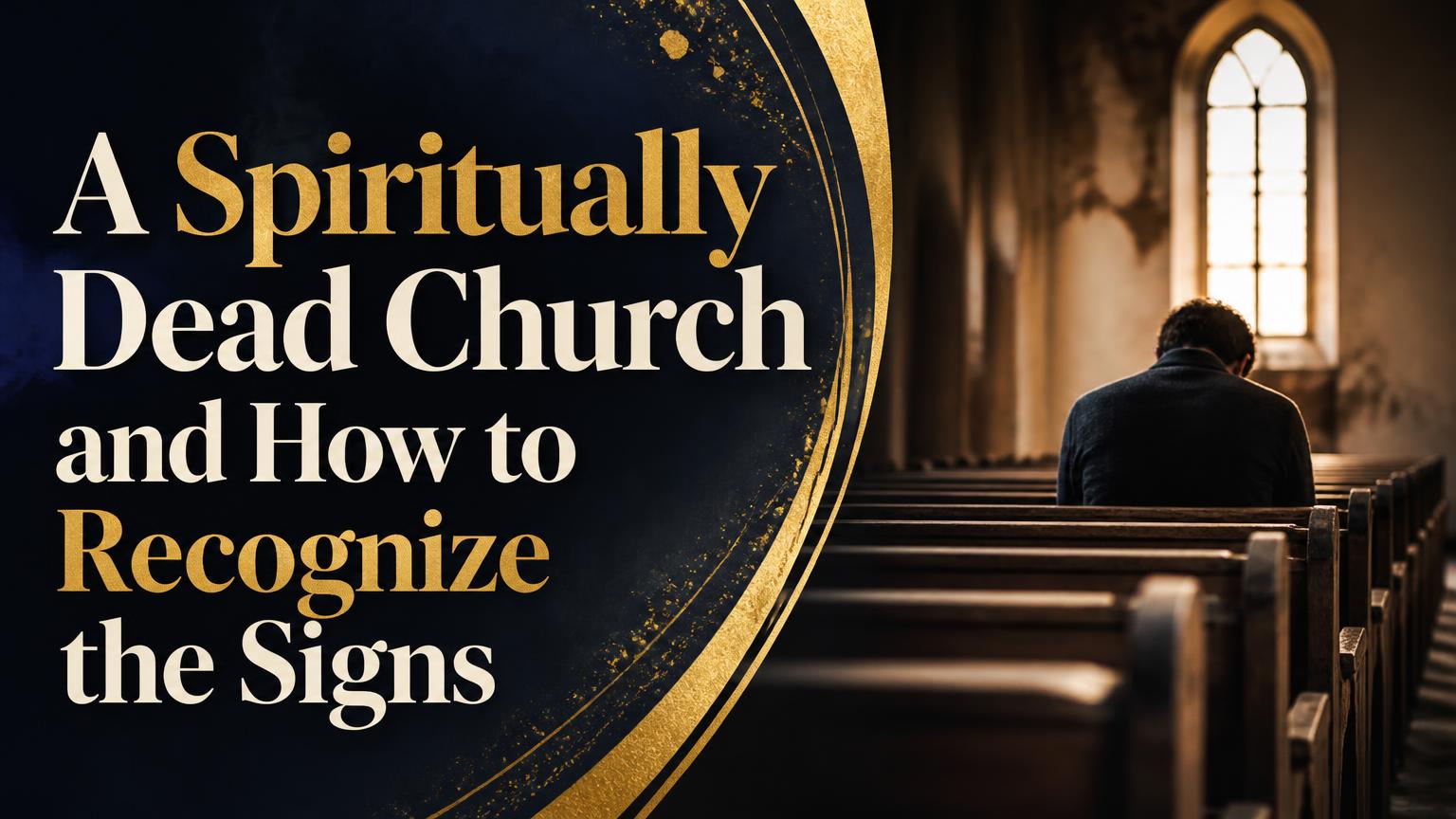
A spiritually dead church may still have services, programs, preaching, music, and a respected public reputation. In biblical terms, however, spiritual life is measured by a church’s relationship with Christ, obedience to His Word, love for God and people, repentance, and dependence on the Holy Spirit—not by activity or appearance alone.
The clearest biblical picture is Jesus’ message to the church in Sardis: “You have a reputation for being alive, but you are dead” (Revelation 3:1). His warning shows that a church can look healthy externally while lacking spiritual vitality internally. Recognizing the signs requires humility, careful biblical discernment, and a willingness to pursue repentance rather than merely criticize others.
A Spiritually Dead Church
What Spiritual Death Means in the Bible
The Bible uses “death” to describe separation from the life of God. Ephesians 2:1 describes unbelievers as “dead in trespasses and sins,” meaning that sin has alienated them from God and left them unable to produce spiritual life through their own effort.
When the language is applied to a church, it functions as a warning about a congregation that bears the name of Christ but has become disconnected from living faith, obedience, love, and the Spirit’s transforming work. This does not necessarily mean that every individual member is unconverted. A church may contain faithful believers while its corporate life, leadership, worship, or mission has become spiritually lifeless.
Jesus’ words to Sardis are especially significant because the church had a reputation for being alive. Its public image and visible identity did not match its spiritual condition. The problem was not simply low attendance or organizational weakness; it was a failure to live faithfully before God.
Common Signs of a Spiritually Dead Church
No single symptom proves that a congregation is spiritually dead. Churches experience seasons of grief, conflict, decline, or exhaustion without losing their spiritual life. The concern arises when several patterns become established and remain resistant to correction.
Christian Activity Without Dependence on Christ
A spiritually dead church may remain highly organized and busy. It can hold services, operate ministries, produce media, and maintain traditions while prayer becomes superficial and dependence on God disappears.
The issue is not activity itself. Healthy churches should serve, teach, evangelize, and care for people. The question is whether these activities flow from faith and obedience or function mainly as institutional maintenance. Jesus described the necessity of abiding in Him through the image of branches connected to a vine: “Apart from me you can do nothing” (John 15:5). A church can accomplish tasks without producing the spiritual fruit that comes from remaining in Christ.
Preaching That Avoids Repentance and Truth
A spiritually lifeless church may still preach regularly, but its teaching rarely confronts sin, calls for repentance, explains the gospel, or forms people into obedient disciples. Messages may focus continually on self-improvement, success, politics, controversy, or personal comfort while neglecting the character of God and the demands of following Jesus.
Biblical preaching does more than provide religious information. It exposes falsehood, announces God’s grace, and calls people to trust and obey Him. “All Scripture is breathed out by God” and is useful for teaching, correction, and training in righteousness (2 Timothy 3:16). When Scripture is used only to support preexisting preferences, it loses its formative authority within the church.
External Religion Without Inner Transformation
Jesus repeatedly warned against religious appearance without inward righteousness. In Matthew 23, He compared such people to whitewashed tombs: impressive on the outside but full of death within.
A dead church may emphasize reputation, proper language, denominational identity, or outward respectability while tolerating pride, dishonesty, abuse, racism, sexual immorality, greed, or persistent bitterness. This does not mean a healthy church will be sinless. It means that healthy churches bring sin into the light, practice accountability, and pursue restoration. Spiritual death becomes evident when image protection matters more than truth and repentance.
Loss of Love for God and Neighbor
Orthodox beliefs and religious routines are not substitutes for love. Jesus identified wholehearted love for God and love for one’s neighbor as the great commandments (Matthew 22:37–40). Paul likewise taught that even impressive spiritual gifts and sacrifices are empty without love (1 Corinthians 13:1–3).
A church may defend correct doctrine while becoming harsh, proud, factional, or indifferent to suffering. Truth and love must remain together. Love does not abandon biblical conviction, and biblical conviction does not excuse cruelty. When a congregation consistently treats people as problems, threats, numbers, or tools rather than as neighbors made in God’s image, its spiritual health is in question.
Little Concern for Mission or the Vulnerable
The New Testament presents the church as a people sent to make disciples, proclaim the gospel, care for the needy, and welcome those who are overlooked. James 1:27 connects genuine devotion to God with care for orphans and widows in distress and with moral purity.
A spiritually dead church may turn inward, protecting its preferences while showing little concern for unbelievers, the poor, the lonely, immigrants, prisoners, children, or victims of injustice. Evangelism and mercy do not earn salvation, but their persistent absence can reveal that a church has forgotten the outward-moving character of God’s love.
Resistance to Correction and Repentance
Perhaps the strongest sign is not that a church has problems, but that it refuses to acknowledge them. Sardis was told to wake up, strengthen what remained, remember what it had received, obey it, and repent (Revelation 3:2–3).
Spiritual life responds to conviction. A dead congregation may explain away every concern, blame outsiders, silence critics, punish honest questions, or treat calls for accountability as attacks on the church. Where there is no confession, correction, or change, spiritual decline becomes entrenched.
Why a Church Can Become Spiritually Dead
Spiritual death usually develops gradually rather than appearing overnight. A church may begin by neglecting prayer, then reduce dependence on Scripture, protect familiar traditions, avoid difficult obedience, and eventually measure success by visibility rather than faithfulness.
Several forces commonly contribute:
- Pride: Leaders or members become more concerned with being right, respected, or influential than with being holy.
- Comfort: The church avoids costly discipleship and chooses messages or practices that demand little sacrifice.
- Unresolved sin: Hidden misconduct, bitterness, favoritism, or corruption weakens trust and hardens consciences.
- Institutional preservation: Protecting buildings, programs, positions, or traditions becomes more important than obeying Christ.
- Neglected prayer: The congregation plans and acts as though human skill is sufficient.
- Doctrinal separation from discipleship: Correct statements are maintained, but they no longer shape conduct, relationships, or mission.
These causes often reinforce one another. A church that fears losing members may avoid difficult truth; avoiding difficult truth permits sin; unresolved sin damages relationships; damaged relationships make prayer and mission more difficult.
What a Spiritually Dead Church Is Not
A spiritually dead church is not simply a small church, an aging church, a financially struggling church, or a congregation in a difficult season. Numbers can describe circumstances, but they cannot by themselves measure spiritual vitality. Jesus’ ministry included seasons when crowds left, and the early church experienced persecution, conflict, and material hardship.
Nor is every imperfect church spiritually dead. Healthy churches still make mistakes, experience disagreements, and need correction. The decisive issue is how they respond. A living church can confess failure, receive biblical correction, reconcile, and change. A dead church may continue defending its appearance while rejecting the repentance that could restore it.
Spiritual dryness in an individual believer also requires careful distinction. A Christian may pass through grief, depression, doubt, exhaustion, or a season in which God feels distant. Those experiences should not be casually labeled rebellion or spiritual death. Discernment should consider a person’s circumstances, long-term direction, response to truth, and willingness to seek help.
How to Respond to a Spiritually Dead Church
Jesus’ message to Sardis was not merely a condemnation. It was an invitation to wake up. He told the church to remember, hold fast, repent, and strengthen what remained. That pattern provides a practical response.
Begin With Honest Self-Examination
Members should first examine their own lives rather than using the diagnosis to condemn others. Jesus warned against focusing on another person’s speck while ignoring one’s own log (Matthew 7:3–5). Questions worth asking include:
- Is my faith centered on Christ or merely on church activity?
- Am I willing to obey Scripture when obedience costs me?
- Do I pray with dependence or only perform religious routines?
- Have I contributed to division, gossip, pride, or indifference?
- Do I love people who cannot advance my interests?
Personal repentance cannot solve every institutional problem, but renewal rarely begins with everyone waiting for someone else to change.
Restore the Foundations of Christian Life
Jesus’ instructions to Sardis point back to what the church had received. Renewal therefore involves recovering ordinary Christian foundations: faithful biblical teaching, sincere prayer, confession, worship, the Lord’s Supper, mutual care, evangelism, and practical service.
These practices are not techniques for manufacturing revival. They are ways a church receives and responds to God’s grace. A congregation becomes healthier when its practices direct attention away from performance and back toward Christ.
Practice Truthful Accountability
If serious misconduct or abuse exists, spiritual language must not be used to conceal it. Leaders should be subject to biblical standards, transparent processes, and appropriate legal or professional accountability. Forgiveness does not eliminate the need for protection, justice, consequences, or wisdom.
Church discipline, when practiced biblically, aims at restoration rather than humiliation. Matthew 18:15–17 describes a process that takes sin seriously while providing opportunities for truth and repentance. In cases involving danger or criminal conduct, protecting victims and reporting wrongdoing take priority over preserving an institution’s reputation.
Strengthen What Remains Faithful
Jesus told Sardis that some people had not soiled their garments (Revelation 3:4). Even in a compromised church, faithful believers may remain. They should encourage one another, serve without seeking control, support truthful leadership, and cultivate genuine fellowship.
If persistent unrepentance makes faithful ministry impossible, leaving may eventually be appropriate. Such a decision should be made prayerfully and carefully, not as an excuse to avoid every difficult relationship or imperfect congregation. The aim is faithfulness to Christ, not personal comfort or superiority.
Can a Spiritually Dead Church Become Alive Again?
Yes. The warning to Sardis assumes that repentance and renewal are possible. Jesus did not tell the church to invent a new identity; He called it to wake up, remember the truth it had received, obey it, and repent.
Renewal begins when a church stops confusing reputation with reality. It acknowledges its condition, returns to the authority of Scripture, seeks God in prayer, addresses sin honestly, restores love and mission, and accepts the cost of obedience. Recovery may be slow, and it may require leadership changes or structural reform, but spiritual life is ultimately God’s work rather than a product of marketing or management.
A spiritually dead church is recognized not by low visibility but by a persistent separation between Christian appearance and Christ-centered life. The biblical response is sober discernment joined with hope: wake up, return to the gospel, repent of tolerated sin, and strengthen whatever remains faithful.