
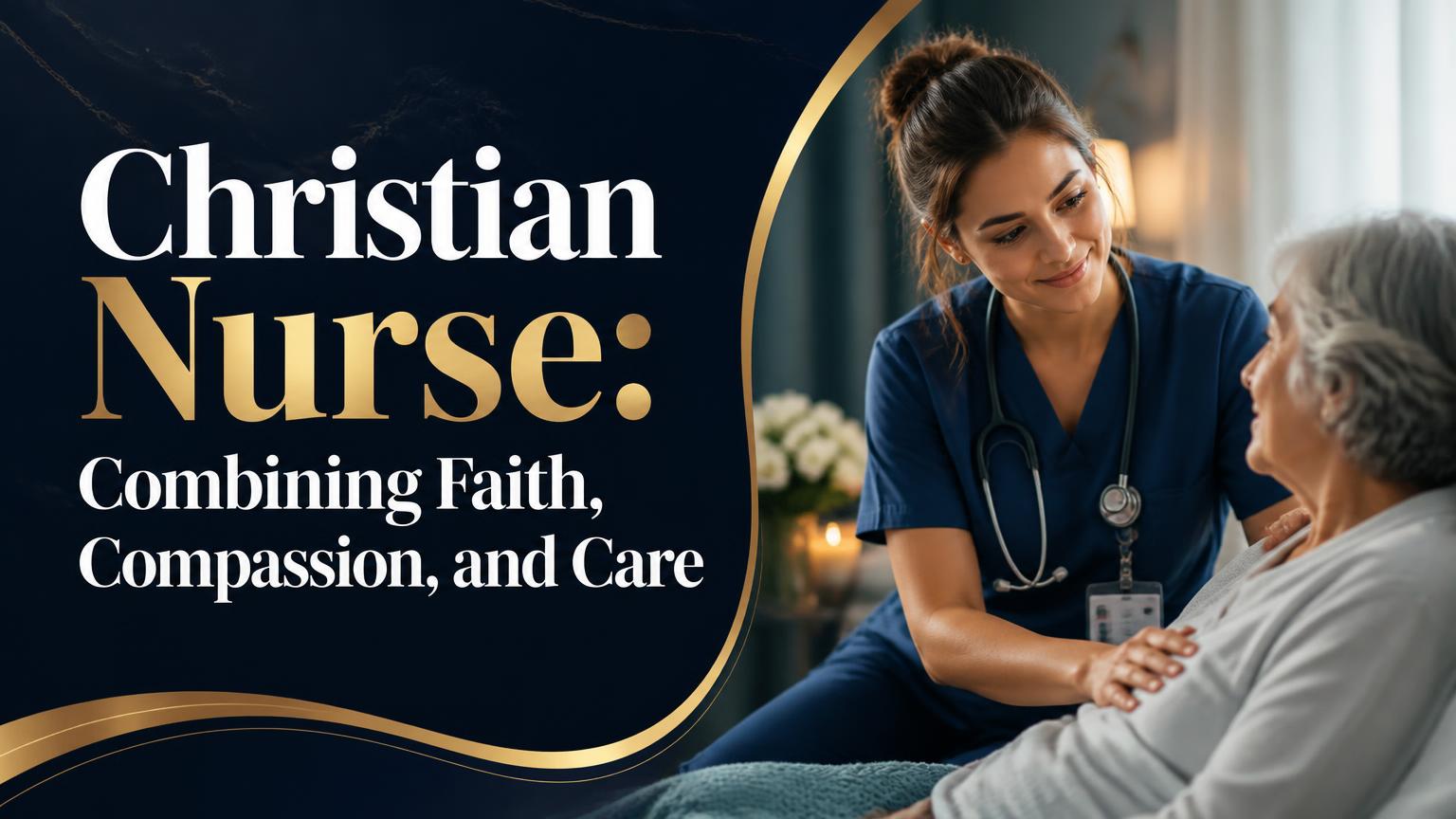
Nursing combines scientific knowledge, technical skill, emotional presence, and ethical responsibility. A Christian nurse brings those professional obligations into a faith-informed understanding of human dignity, suffering, service, and hope. This does not mean providing different clinical treatment to Christian patients or using healthcare as a platform for religious persuasion. It means practicing excellent nursing while allowing Christian convictions—such as love of neighbor, humility, honesty, mercy, and respect for each person—to shape conduct. A Christian nurse may work in a secular hospital, faith-based facility, clinic, school, community program, or mission setting.
What Is a Christian Nurse?
A Christian nurse is a professionally educated and licensed nurse who understands nursing as both a career and an opportunity to serve others in ways consistent with Christian faith. Christian identity does not replace nursing standards, evidence-based practice, informed consent, or professional accountability. Instead, faith influences the nurse’s motivation, character, treatment of patients, response to suffering, and understanding of service.
The most credible Christian nursing is expressed through competent care rather than religious language alone. A nurse’s reliability, respect, patience, confidentiality, and willingness to care for vulnerable people often communicate Christian values more effectively than unsolicited explanations.
Christian Nursing as a Vocation
Many Christian nurses view nursing as a vocation, meaning a form of work through which they serve God and their neighbors. This perspective can give ordinary responsibilities—monitoring vital signs, assisting with mobility, educating families, managing medications, or sitting with a frightened patient moral and spiritual significance.
The idea of vocation does not imply that nursing is spiritually superior to other occupations or that every Christian must become a nurse. It means that a nurse can understand professional work as an arena for faithful service. Colossians 3:23 encourages believers to work wholeheartedly, and in nursing that commitment includes careful documentation, alert assessment, continued learning, and dependable follow-through—not merely kind intentions.
Faith Does Not Replace Clinical Competence
Christian compassion must operate alongside clinical competence. A nurse who prays for a patient but overlooks a medication error is not practicing faithful nursing. Safe care requires education, licensure, clinical judgment, infection prevention, accurate communication, evidence-based interventions, and recognition of one’s limits.
Faith may strengthen a nurse’s motivation to pursue excellence, but it does not justify rejecting sound medical treatment or presenting personal religious beliefs as clinical facts. Christian nurses should distinguish spiritual support from medical advice and refer patients to appropriate clinicians, chaplains, social workers, or mental-health professionals when needs exceed their role.
Caring for Patients Across Beliefs
A Christian nurse serves people whose beliefs, practices, identities, and levels of religious commitment may differ significantly. Respecting a patient does not require agreeing with every belief; it requires recognizing the patient’s dignity and right to make informed decisions about care.
This includes using the patient’s name and pronouns appropriately, protecting privacy, accommodating religious practices when clinically possible, asking about dietary or modesty concerns, and avoiding assumptions about faith. A Muslim patient may need time for prayer, a Jewish patient may have Sabbath-related concerns, and a nonreligious patient may prefer no spiritual discussion. Cultural humility helps the nurse ask rather than presume.
Christian Nurse Versus Nurse in a Christian Setting
A Christian nurse does not have to work for a Christian hospital. Faith is a personal and professional identity, while a Christian healthcare institution is an organizational setting with particular policies, mission statements, and expectations. Nurses in secular facilities can practice Christian virtues while fully following the institution’s standards and applicable law.
Conversely, working in a faith-based facility does not automatically make someone a Christian nurse. The distinction matters because Christian nursing concerns the nurse’s personal convictions and conduct, whereas a Christian institution concerns the organization’s mission. In either setting, patient safety, professional ethics, and respect for patient rights remain essential.
Biblical Foundations for Christian Nursing
The Bible does not provide a modern nursing manual, but it offers principles that can shape how Christian nurses understand people and service. These principles must be applied carefully. Scripture can guide character and moral reflection without being used to override clinical evidence, professional duties, or a patient’s freedom of conscience.
Compassion and Neighbor Love
Jesus’ teaching about the Good Samaritan in Luke 10:25–37 presents neighbor love as active mercy toward a vulnerable person, including someone outside one’s own social or religious group. The Samaritan notices suffering, provides practical assistance, accepts personal cost, and ensures continued care. That pattern closely resembles the moral posture required in nursing.
Compassion in this sense is more than feeling sympathy. It involves attention, action, and willingness to remain engaged with a person’s real needs. A Christian nurse may express it by managing pain promptly, explaining a procedure clearly, including a confused family member in appropriate communication, or treating an overlooked patient with the same care given to everyone else.
Dignity, Justice, and Truthfulness
Christian teaching grounds human worth in the fact that people are created in the image of God (Genesis 1:26–27). For nursing, this means a patient’s dignity does not depend on health, age, intelligence, income, productivity, behavior, or prognosis. The unconscious patient, incarcerated patient, dying patient, and demanding patient all remain worthy of careful and respectful treatment.
Justice also requires fairness. A Christian nurse should not give preferential treatment because of wealth, social status, shared beliefs, or personal admiration. Truthfulness matters as well: patients need understandable information, honest communication about uncertainty, and accurate records. Compassion should not become false reassurance or concealment of clinically important facts.
Humility, Presence, and Hope
Jesus’ washing of his disciples’ feet in John 13:1–17 portrays leadership through humble service. Nursing frequently involves intimate, repetitive, and physically demanding tasks that society may overlook. Performing them carefully can reflect respect rather than superiority.
Christian hope also affects how a nurse approaches suffering and death. Hope does not require denying grief, promising miraculous recovery, or using religious language to silence fear. It can mean remaining present, listening honestly, supporting appropriate comfort measures, helping families reconcile with reality, and honoring a patient’s spiritual concerns. Hope is most credible when joined to truth and compassionate presence.
How Christian Nurses Practice Faith in Patient Care
Faith is generally expressed in nursing through habits of character and patterns of service. Direct religious conversation may sometimes be appropriate, but it should respond to the patient’s wishes rather than the nurse’s desire to speak. The patient’s vulnerability creates a power imbalance, so even a well-intended comment can feel coercive.
Respect Patient Autonomy and Consent
Patient autonomy means that capable patients have the right to receive relevant information, ask questions, accept or refuse treatment, and make decisions according to their own values. A Christian nurse can hold strong beliefs about health, suffering, or moral responsibility while still respecting a patient who chooses differently.
Respect does not require passive agreement with every decision. Nurses should provide accurate education, identify risks, communicate concerns, and involve the appropriate healthcare team. After a patient makes an informed decision, however, the nurse should not shame, threaten, manipulate, or repeatedly pressure that person. Respectful care protects both conscience and clinical safety.
Offer Prayer Without Pressure
Prayer can be meaningful when a patient requests it or clearly welcomes it. A nurse might ask, “Would you like support from a chaplain or spiritual-care provider?” or, where appropriate, “Would you like me to pray with you?” The patient should be free to decline without embarrassment or a change in care.
Prayer should never replace assessment, treatment, emergency intervention, or referral. Nurses must also follow workplace policies, professional boundaries, and the patient’s expressed preferences. In many situations, arranging access to a chaplain or the patient’s own faith leader is more appropriate than taking the lead personally.
Integrate Compassion Into Ordinary Tasks
Most Christian nursing is not dramatic. It appears in punctual medication administration, careful hand hygiene, protecting a patient’s modesty, explaining delays, reducing unnecessary fear, and speaking respectfully about people who are not present. Small actions matter because illness often makes patients dependent and uncertain.
A nurse can also practice attentive presence. Sitting briefly with a dying patient, listening without rushing, acknowledging a family’s distress, or asking what matters most to the patient can improve the experience of care even when the disease cannot be cured. These actions do not require theological discussion; they express the Christian conviction that people should never be treated as tasks or diagnoses.
Handle Ethical Tensions Wisely
Christian nurses may encounter conflicts involving abortion, reproductive care, end-of-life decisions, assisted dying, genetic testing, gender-related care, or treatment refusal. Christian traditions do not always interpret every issue identically, so a nurse should avoid claiming that one personal conclusion represents all Christians.
Ethical reflection should include Scripture, prayer, conscience, professional codes, institutional policy, applicable law, clinical facts, and consultation with qualified supervisors or ethics professionals. If a nurse has a conscientious objection, the responsible response is to follow established procedures, communicate early, avoid abandoning the patient, and help ensure safe continuity of care. Personal conviction should not become retaliation or discriminatory treatment.
Strengths and Challenges of Christian Nursing
Christian faith can provide a durable moral framework for nursing, but it does not make a nurse automatically compassionate, unbiased, or emotionally resilient. Character requires continual formation, self-examination, supervision, and correction. Christian language can also be misused if it excuses poor boundaries or assumes that religious intention guarantees good practice.
Strengths Faith Can Cultivate
A Christian understanding of service may help nurses approach overlooked work with seriousness and patients with patience. Belief in human dignity can reinforce equal treatment, while teachings about mercy can encourage attention to people who are poor, isolated, stigmatized, or difficult to care for.
Faith communities may also provide emotional and practical support during grief, moral distress, and demanding periods of work. Practices such as prayer, confession, worship, reflection, and participation in supportive community can help nurses process suffering. These resources are beneficial when they complement—not replace—professional counseling, rest, organizational support, and appropriate mental-health care.
Limits and Risks to Guard Against
A nurse may unintentionally confuse compassion with rescuing, assume that illness reflects weak faith, or interpret a patient’s refusal of treatment as a moral failure. Such attitudes can damage trust and may cause patients to conceal concerns. Christian nurses must actively guard against judgment, paternalism, spiritual shortcuts, and favoritism toward patients who share their beliefs.
Another risk is using religious language to avoid uncertainty. A statement such as “Everything will be fine” may sound comforting but can be inaccurate and dismissive. More honest care acknowledges what is known, what is uncertain, and what support is available. Humility requires the nurse to recognize that faith does not eliminate the need to listen, learn, apologize, or change.
Resilience, Grief, and Professional Boundaries
Nursing exposes people to suffering, death, family conflict, and repeated loss. Christian belief may give nurses a framework for lament and hope, but spiritual conviction does not remove grief or prevent burnout. Nurses still need adequate rest, peer support, debriefing, counseling when necessary, and workplaces that address unsafe staffing or moral injury.
Professional boundaries remain essential. A nurse can care deeply without becoming a patient’s personal savior, sharing excessive private information, accepting inappropriate gifts, or making promises about spiritual outcomes. Healthy boundaries protect the patient, preserve professional judgment, and make compassionate care sustainable over time.
Preparing for a Career as a Christian Nurse
Becoming a Christian nurse requires the same formal preparation as becoming any other registered or licensed nurse: an approved nursing education, supervised clinical experience, successful completion of required examinations, and compliance with the licensing rules of the relevant jurisdiction. Students should develop competence in anatomy, pharmacology, assessment, communication, ethics, evidence-based practice, and patient safety.
Christian formation can develop alongside professional education through a local church, Christian nursing fellowship, spiritual mentor, chaplaincy experience, or disciplined personal study. Useful questions include: Am I serving patients or seeking admiration? Do I respect people who disagree with me? Can I distinguish spiritual care from clinical care? How do I respond when a patient’s choices conflict with my convictions? Honest reflection prepares nurses to practice faith with maturity rather than impulse.
Employment decisions should also be evaluated carefully. A nurse may consider a hospital’s mission, expectations regarding religious expression, approach to conscientious objection, patient population, staffing conditions, and support for ethical consultation. A faith-based workplace may offer spiritual community, but it does not remove the need to assess whether its clinical and organizational practices support safe, respectful nursing.
Conclusion
A Christian nurse combines professional nursing competence with a faith-shaped commitment to serve people with dignity, mercy, truthfulness, and humility. Christian nursing is not defined by working in a religious hospital or by speaking frequently about religion. It is demonstrated through safe care, respect for autonomy, equitable treatment, thoughtful spiritual support, and faithful presence in ordinary and difficult moments.
The central discipline is holding conviction and respect together. A Christian nurse can remain faithful to biblical principles without coercing patients, replacing medicine with prayer, or treating personal beliefs as universal clinical rules. When faith produces greater competence, compassion, honesty, and humility, it strengthens nursing practice and honors the vulnerable people entrusted to the nurse’s care.