
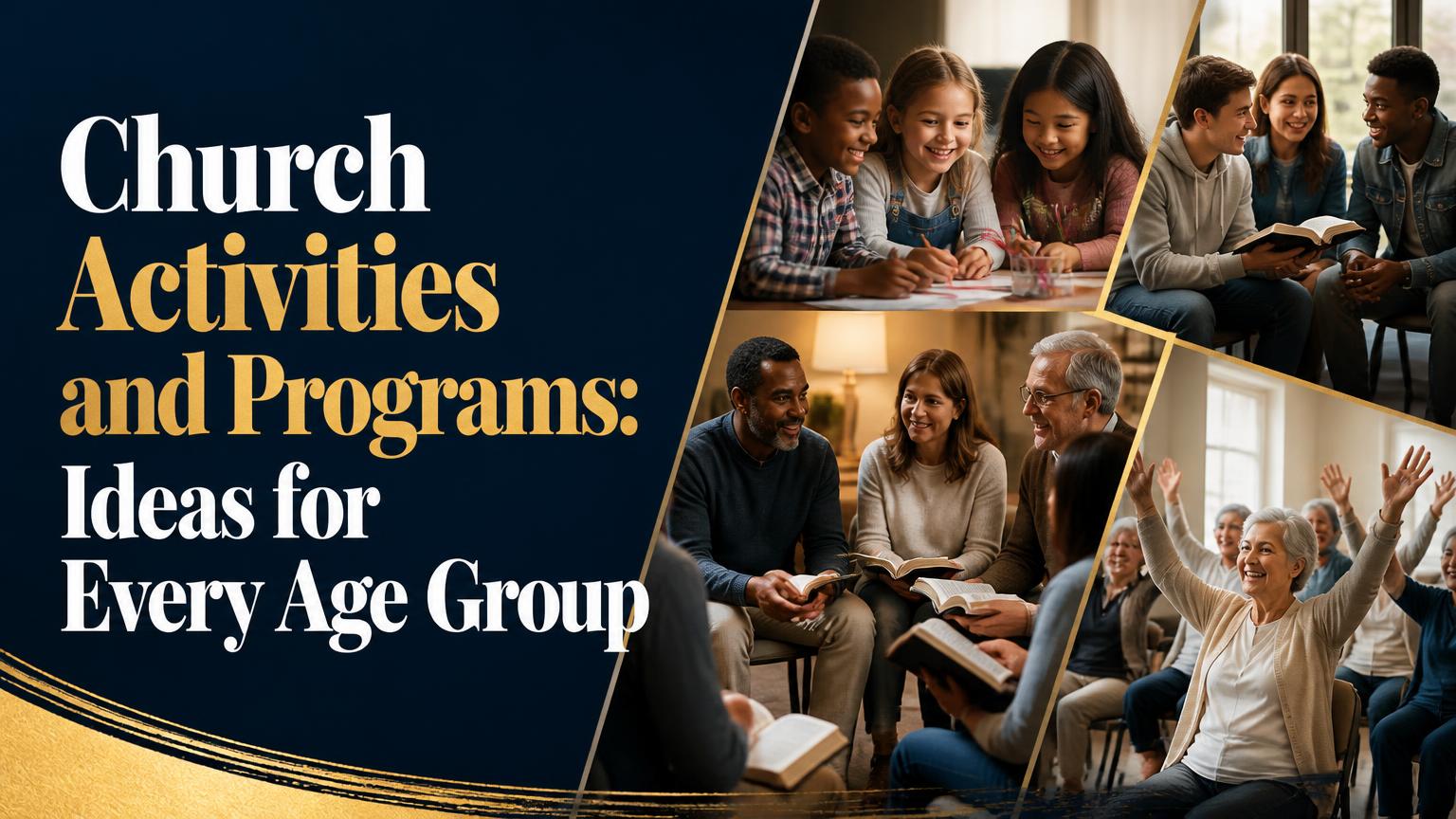
Church activities and programs help a congregation grow in faith, build relationships, serve its community, and make room for people at different stages of life. The strongest programs are not simply busy events on a calendar; they are purposeful ways to encourage worship, discipleship, fellowship, service, and pastoral care. A balanced church ministry may include age-specific activities, intergenerational experiences, outreach opportunities, small groups, educational programs, and practical support for families and neighbors.
Church Activities and Programs
Effective church activities and programs connect a clear purpose with the needs of particular people. Children may need safe, engaging ways to learn biblical truth. Teenagers often need belonging, guidance, and meaningful responsibility. Adults may seek fellowship, spiritual formation, or practical support. Older members may value connection, service, and opportunities to share wisdom. The following ideas can be adapted to a church’s size, theological tradition, facilities, volunteer capacity, and local community.
Children’s Church Activities
Children’s programs should combine biblical teaching with age-appropriate participation, creativity, movement, and relationship-building. A children’s ministry might include Bible lessons, music, crafts, drama, games, Scripture memory, prayer activities, and supervised small groups. Lessons are more likely to be remembered when children can see how biblical principles apply to friendship, honesty, forgiveness, courage, and kindness.
Other useful activities include vacation Bible school, children’s choir, family worship workshops, service projects, holiday presentations, book clubs, and ministry participation days. A food collection can teach generosity, while making encouragement cards can connect children with homebound members. Children should be treated as participants in the church community rather than merely as an audience. Programs must also include appropriate background checks, supervision, sign-in procedures, emergency plans, and clear communication with parents or guardians.
Youth and Teen Church Programs
Teenagers often need a church environment where they can ask honest questions, develop Christian convictions, form healthy friendships, and contribute to real ministry. Youth programs may include Bible studies, discussion groups, retreats, mission trips, worship nights, leadership teams, sports activities, creative arts, and gatherings focused on life issues such as identity, relationships, anxiety, digital habits, and decision-making.
A strong youth ministry balances fun with substance. Social events can attract participation, but discipleship requires trusted adults, consistent teaching, prayer, mentoring, and opportunities to serve. Teenagers can help lead worship, assist with children’s programs, organize a food drive, or plan part of a community outreach event. Giving them meaningful responsibility communicates that they are members of the church now, not merely future members. Adult leaders should maintain appropriate boundaries, follow safeguarding policies, and avoid making one personality or event the entire foundation of the ministry.
Adult Fellowship and Growth Programs
Adult activities can address spiritual development, relationships, practical needs, and community life. Churches may offer small groups, Sunday school classes, marriage enrichment, parenting discussions, men’s or women’s gatherings, book studies, financial stewardship classes, and seminars on grief, caregiving, or mental health. The purpose should be clear: a class may focus on biblical understanding, while a fellowship gathering may primarily create space for friendship and mutual encouragement.
Adult programs work best when they recognize different schedules and life circumstances. Some people can attend weekly meetings; others may participate in a monthly breakfast, an online study, a lunchtime group, or a short seasonal course. Hospitality matters as much as programming. Newcomers should know where to go, what to expect, and how to participate without already having established friendships. Romans 12:13 connects Christian hospitality with sharing with others and pursuing fellowship, making welcome a ministry practice rather than a merely social courtesy.
Senior Adult Activities
Senior adults bring experience, spiritual maturity, skills, and historical memory to congregational life. Useful programs include Bible fellowships, prayer groups, hymn gatherings, luncheons, day trips, craft circles, technology assistance, caregiving support, and visits to members who are ill or homebound. Churches can also create opportunities for older adults to tell their testimonies, teach practical skills, mentor younger members, or preserve stories about the congregation’s history.
Accessibility should shape planning. Consider transportation, mobility limitations, hearing or vision needs, suitable meeting times, and the physical layout of the building. A program designed for older adults should not assume that every participant has the same health, energy, income, or family support. Some may prefer active service, while others need quiet companionship. Meaningful inclusion means adapting activities without treating older members as passive recipients of care.
Intergenerational Church Activities
Intergenerational programs bring children, teenagers, adults, and older adults together around a shared purpose. Examples include church picnics, service days, community gardens, hymn sings, testimony evenings, family game nights, intergenerational choirs, prayer partnerships, and seasonal celebrations. A congregation might pair younger members with older adults for oral-history interviews, technology help, letter writing, or regular prayer.
These activities matter because age groups often remain separated by normal church schedules. Shared service and worship allow people to know one another beyond their usual ministries. However, intergenerational planning should not simply place everyone in the same room and assume connection will happen. Activities need roles suited to different abilities, clear instructions, and enough structure to encourage conversation. The goal is mutual participation: younger people contribute energy and creativity, while older people offer perspective, patience, testimony, and wisdom.
Service and Community Outreach Programs
Service programs turn congregational concern into practical action. Churches can organize food pantries, clothing distributions, neighborhood cleanups, disaster-response teams, tutoring, job-search assistance, hospital visitation, prison ministry, refugee support, blood drives, or partnerships with local charities. Some programs meet immediate needs; others address longer-term challenges through mentoring, education, transportation, or consistent relationships.
Outreach should be shaped by listening rather than assumption. Before launching a program, church leaders can speak with residents, schools, community organizations, and people who may use the service. This helps the church respond to actual needs and avoid duplicating existing work. Christian service should protect dignity, respect privacy, and avoid treating vulnerable people as projects. Jesus’ teaching in Matthew 25:35–40 connects care for people in need with faithfulness to him, but faithful service still requires wisdom, training, accountability, and appropriate boundaries.
Prayer, Worship, and Discipleship Programs
Churches can create regular opportunities for spiritual formation beyond the main worship service. These may include prayer gatherings, Scripture-reading groups, membership classes, baptism preparation, devotional workshops, worship nights, spiritual retreats, discipleship partnerships, and courses on Christian beliefs. A prayer walk through the neighborhood can combine intercession with awareness of local needs, while a Scripture group can help participants move from reading a passage to understanding and applying it.
Programs should lead toward deeper obedience and love rather than merely increasing attendance. James 1:22 warns against hearing the word without putting it into practice. That principle suggests a useful pattern: teach biblical truth, discuss its meaning, pray about its implications, and identify a concrete response. A discipleship program might therefore include serving someone, reconciling a relationship, developing a habit of prayer, or supporting a person in crisis. The aim is transformed character and faithful community life, not simply completion of a curriculum.
How to Choose Church Activities That Serve People Well
A church does not need the largest possible calendar. It needs activities that fit its mission and genuinely help people. Begin by asking what the congregation and surrounding community actually need. Are families looking for safe childcare and support? Are teenagers disconnected? Are older adults isolated? Do new members lack relationships? Is the neighborhood facing food insecurity, loneliness, unemployment, or educational barriers? Answers to these questions should shape priorities more than imitation of another church’s programs.
Each proposed activity should have a defined purpose, a responsible leader, an intended audience, realistic resources, and a way to evaluate its fruit. Attendance is useful information, but it is not the only measure. A small prayer group may have profound spiritual value, while a large event may produce little lasting connection. Review whether participants are growing in faith, forming healthy relationships, serving others, welcoming newcomers, or receiving needed support. If a program consistently drains volunteers without serving people well, changing or ending it can be an act of stewardship rather than failure.
How to Plan Safe, Inclusive, and Sustainable Programs
Good planning protects both participants and volunteers. Children’s and youth ministries require clear safeguarding policies, trained workers, appropriate supervision, transportation procedures, emergency contacts, and rules for communication with minors. Programs involving food, transportation, physical activity, or vulnerable adults may require additional preparation. Leaders should know who is responsible for decisions, how incidents will be reported, and what accommodations participants may need.
Sustainability also depends on limiting unnecessary complexity. A church can begin with a pilot event or short seasonal program before committing to a year-round schedule. Shared leadership prevents burnout and develops new volunteers. Written plans, simple budgets, registration information, supply lists, and follow-up procedures make activities easier to repeat. Accessibility should be considered from the beginning through language support, mobility access, hearing assistance, affordable participation, and welcoming communication. Inclusion is more effective when it is built into the design rather than added after someone encounters a barrier.
A Practical Framework for Building a Church Calendar
A balanced church calendar usually includes several kinds of ministry rather than many versions of the same event. One recurring activity can support worship and discipleship, such as a Bible study or prayer gathering. Another can build fellowship, such as a shared meal or small group. A third can serve the community, such as tutoring or a food distribution. Age-specific programs can then be added where there is a clear need, while intergenerational events help prevent the congregation from becoming divided into disconnected age brackets.
Plan in seasons instead of scheduling everything indefinitely. For example, a church might use one season for a discipleship course, another for a community service emphasis, and a summer period for family activities and youth outreach. After each program, gather brief feedback from participants and volunteers: What helped? What created obstacles? Who was missing? What should change? This cycle of planning, practice, evaluation, and adjustment produces healthier ministries than relying on tradition alone.
Conclusion
Church activities and programs are most effective when they serve clear spiritual and relational purposes. Children need safe opportunities to learn and participate; teenagers need belonging, guidance, and responsibility; adults need fellowship and growth; seniors need connection and meaningful service; and the whole congregation benefits from worship, prayer, discipleship, and outreach. The best program is not necessarily the largest or most entertaining. It is the one that faithfully meets real needs, reflects Christian love, protects people, develops volunteers, and helps the church become a community where people grow and serve together.