
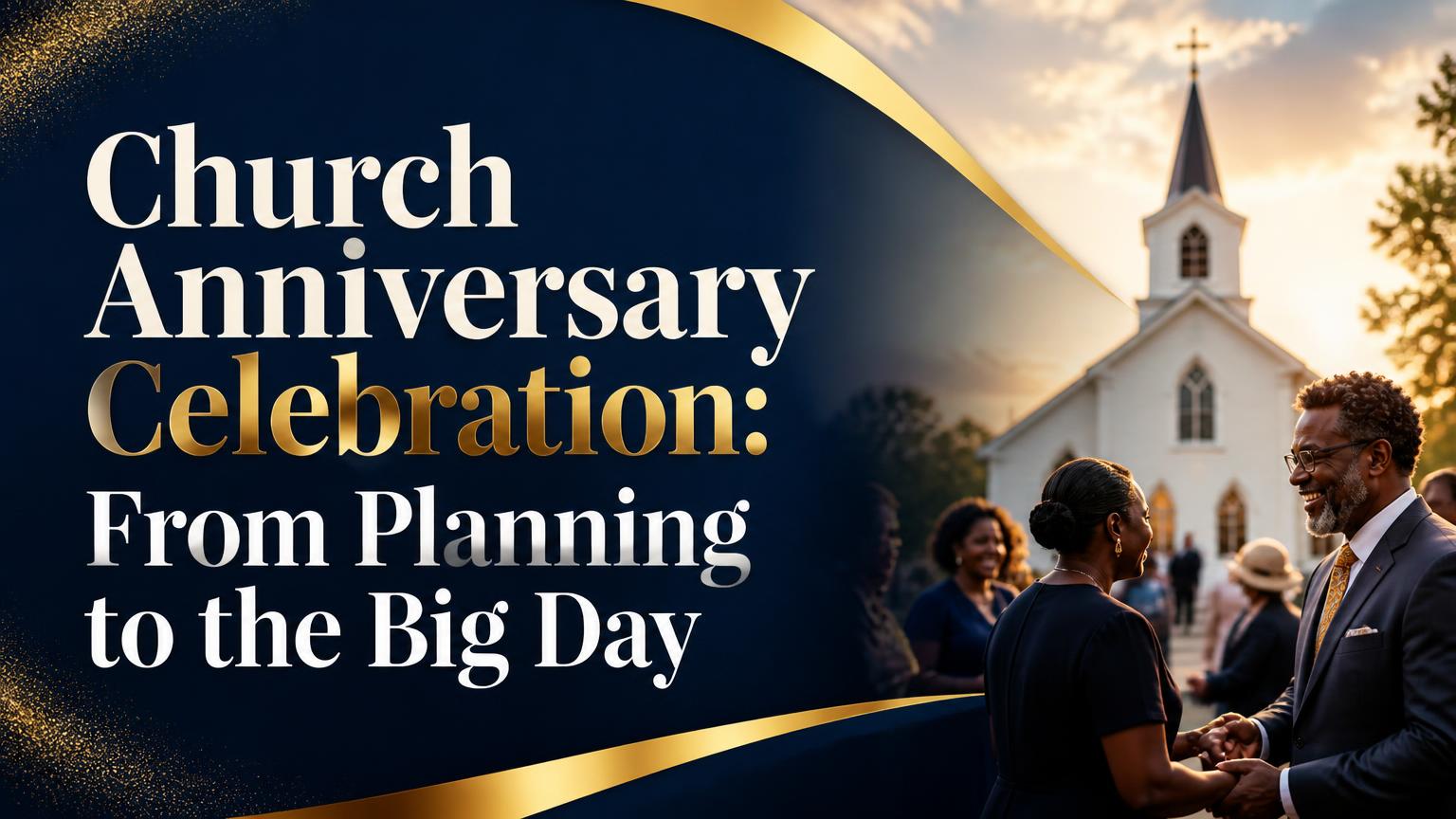
A church anniversary celebration marks more than the passage of time. It gives a congregation an opportunity to remember God’s faithfulness, honor the people who served, strengthen relationships, and renew its mission. The strongest celebrations balance worship, history, gratitude, fellowship, and forward-looking vision. They are planned carefully enough to serve people well, yet centered spiritually enough that the event does not become merely a banquet, concert, or institutional birthday party.
Church Anniversary Celebration: Plan the Event Around Its Purpose
Begin by deciding what the anniversary should accomplish. A church may be commemorating its founding, the dedication of a building, a significant season of ministry, a denominational milestone, or several decades of congregational life. That decision should shape the theme, program, guest list, budget, and tone of the day. A meaningful celebration helps people see how the church’s history connects to its present obedience and future calling.
Clarify What the Church Is Celebrating
The planning team should write a short purpose statement before choosing decorations or activities. For example: “We will give thanks for God’s faithfulness over 50 years, honor those who served, and invite the next generation to continue the church’s mission.” This statement prevents the event from becoming a collection of unrelated activities.
It also helps leaders handle sensitive questions. If the anniversary includes recognition of a founding pastor, former leaders, or longtime members, the church can honor their service without implying that the congregation’s life depends on one individual. Psalm 90:1 presents God as the dwelling place of His people across generations, while human leaders serve within that larger story.
Choose a Theme That Connects Past, Present, and Future
A strong anniversary theme is more than a slogan printed on a banner. It gives the service, testimonies, music, preaching, and outreach a shared direction. Themes such as “Remembering God’s Faithfulness,” “Rooted in Christ, Reaching the Community,” or “Generations Serving God Together” can connect history with ongoing mission.
Choose a theme that reflects the church’s actual story rather than making an exaggerated claim. Lamentations 3:22–23 can support a focus on God’s continuing mercy, while Philippians 1:3–6 offers language for gratitude and confidence in God’s work. The theme should also be understandable to visitors and younger members, not only to people familiar with the church’s history.
Build a Program That Blends Worship and Fellowship
A church anniversary program commonly includes congregational singing, prayer, Scripture reading, a sermon or devotional message, historical reflections, testimonies, recognition, fellowship, and a meal or reception. The order should serve the purpose of the gathering. A long sequence of speeches can exhaust the congregation, while a purely entertainment-focused schedule can weaken the worshipful character of the occasion.
Use different forms of participation without allowing the service to become overcrowded. A brief video, photo display, choir presentation, or interview with longtime members may communicate history effectively. Testimonies should be selected for spiritual value and kept within clear time limits. If the church observes Communion, baptisms, or another significant ordinance during the anniversary, plan carefully according to the congregation’s theology and usual practice.
Assign Responsibilities and Create a Realistic Timeline
A successful celebration requires more than one enthusiastic organizer. Form a planning team with defined areas of responsibility, such as worship, historical materials, hospitality, food service, communication, children’s activities, technology, transportation, and follow-up. One person should coordinate the teams and maintain a shared schedule, but important decisions should not remain locked in one person’s memory.
Begin several months in advance for a major anniversary, especially when the event involves former pastors, distant guests, printed histories, fundraising, or facility changes. Set deadlines for confirming speakers, collecting photographs, approving the budget, ordering materials, arranging food, rehearsing participants, and communicating schedule changes. Build in extra time for delayed responses and technical problems.
Set the Budget and Plan Guest Care
The budget should reflect the event’s purpose rather than pressure the congregation to create an impressive appearance. Account for food, printing, decorations, audiovisual equipment, honoraria where appropriate, transportation, accessibility needs, child care, insurance or permits, and contingency expenses. A modest celebration can be deeply meaningful when it is hospitable and well organized.
Guest care begins before people arrive. Provide clear directions, parking information, accessible seating, restroom guidance, name tags when useful, and a welcoming point of contact. If former members or pastors are invited, ask about mobility, dietary requirements, travel arrangements, and the way their participation should be introduced. Hospitality should preserve dignity and avoid making visitors feel like displays in the church’s history.
Make Worship the Center Rather Than the Background
The anniversary should visibly point beyond the congregation’s accomplishments. Historical photographs, buildings, ministries, and records matter because they show how people have served, but the service should interpret those memories through worship and gratitude. Psalm 103:2 calls God’s people to remember His benefits; this kind of remembrance is active, helping the congregation recognize grace rather than simply admire its past.
The sermon or devotional message should connect the anniversary to biblical faithfulness, humility, stewardship, and mission. Leaders can acknowledge difficulties honestly, including seasons of decline, conflict, financial strain, or transition. Presenting only a flawless history may sound impressive but will not help the church learn. A truthful account can show how prayer, repentance, wise leadership, and perseverance shaped the congregation.
Music should support the theme and include the congregation wherever possible. A choir, worship team, children’s group, or musicians from the church’s history may contribute, but performances should not displace congregational participation. The goal is not to reproduce every memorable event from the past; it is to help people worship God together in the present.
Tell the Church’s History With Accuracy and Care
Historical preparation often becomes one of the most valuable parts of an anniversary. Collect founding documents, dated photographs, ministry records, building information, newsletters, and firsthand memories. Compare recollections with available records because personal memories can be sincere while still differing about dates, sequence, or causes. When details remain uncertain, label them as recollections rather than presenting them as verified fact.
Include more than prominent leaders. A complete history may mention pastors and major decisions, but it should also recognize teachers, musicians, caregivers, volunteers, prayer groups, children, families, and community partners. This broader account reflects how churches actually function: through many forms of service and spiritual gifts. First Peter 4:10 describes believers as stewards of God’s varied grace, which provides a useful framework for honoring less visible work.
Handle painful or contested history with discretion. An anniversary is not the proper setting to expose private failures or reopen unresolved disputes, yet it should not require dishonesty. Leaders can acknowledge that the church has faced challenges and has needed wisdom, forgiveness, and renewal without turning the celebration into a public investigation. Obtain permission before displaying personal photographs, sharing testimonies, or publishing sensitive stories.
Prepare the Congregation for Participation
Communication should explain both the schedule and the meaning of the event. Announce the anniversary early through worship services, printed materials, email, social media, and personal invitations. Tell members how they can contribute photographs, recipes, memories, transportation, musical gifts, historical information, or financial support. Clear instructions prevent a small planning group from carrying every responsibility.
Invite participation across generations. Children and young adults might help with music, interviews, hospitality, historical displays, setup, or digital media. Older members may provide memories, documents, and perspective. This shared work does more than fill program slots: it helps the congregation experience itself as one body rather than as separate age groups. Leaders should also ensure that participation is voluntary and that people who prefer quiet service are not overlooked.
Prepare volunteers with written instructions, arrival times, contact information, emergency procedures, and clear handoffs between teams. Rehearse elements that affect the entire service, including microphones, processions, videos, special music, transitions, and meal dismissal. A detailed run sheet allows the congregation to experience an orderly event without making the celebration feel rigid.
Avoid Common Church Anniversary Mistakes
The most common mistake is allowing the anniversary to become centered on institutional pride or a single personality. Honoring founders and former pastors can be appropriate, but the language should distinguish gratitude for their service from worship of their influence. Another problem is overloading the schedule. Too many speakers, tributes, songs, videos, and announcements can prevent the central message from being heard.
Poor planning can also exclude people unintentionally. An expensive meal may burden families, a crowded schedule may be difficult for older adults, and a program designed only for longtime members may leave visitors confused. Consider accessibility, translation, dietary needs, transportation, child participation, and the experience of people who have no personal connection to the church’s earlier decades.
Finally, do not treat the anniversary as a substitute for mission. Fundraising may be included when its purpose is transparent and consistent with the church’s calling, but emotional pressure and unclear financial goals damage trust. If the event supports a building project, benevolence effort, or community ministry, explain the need, the intended use of funds, and the forms of participation available.
Turn the Anniversary Into a Forward-Looking Commitment
The final portion of the celebration should answer a practical question: What will the church do with what it has remembered? A congregation might renew its commitment to local outreach, discipleship, children’s ministry, prayer, missions, care for older members, or service to vulnerable neighbors. The next step should be specific enough to guide action rather than remaining a general promise to “do more.”
Consider recording the service, preserving historical materials, creating a digital or printed archive, and writing a brief anniversary report. These records help future leaders understand the congregation’s development, but preservation should follow appropriate consent and privacy practices. A follow-up gathering can also evaluate what worked, what created unnecessary expense, and what should change at the next milestone.
The celebration should continue through relationships and ministry, not through decorations left in place. Thank volunteers personally, contact visitors, deliver promised materials, and communicate any new commitments made during the event. If the anniversary raised funds or launched a ministry, report progress honestly. Follow-through demonstrates that the celebration was an act of stewardship rather than a one-day performance.
Conclusion
A church anniversary celebration is strongest when it remembers the past truthfully, worships God gratefully, serves people thoughtfully, and looks toward the future with humility. Begin with a clear purpose, choose a theme grounded in Scripture and the church’s actual story, organize responsibilities early, and design a program that gives worship greater weight than ceremony. Honor the many people who served, care for guests and members with practical wisdom, and turn the congregation’s gratitude into renewed faithfulness. The event then becomes more than a milestone: it becomes a shared act of remembrance, fellowship, and mission.