
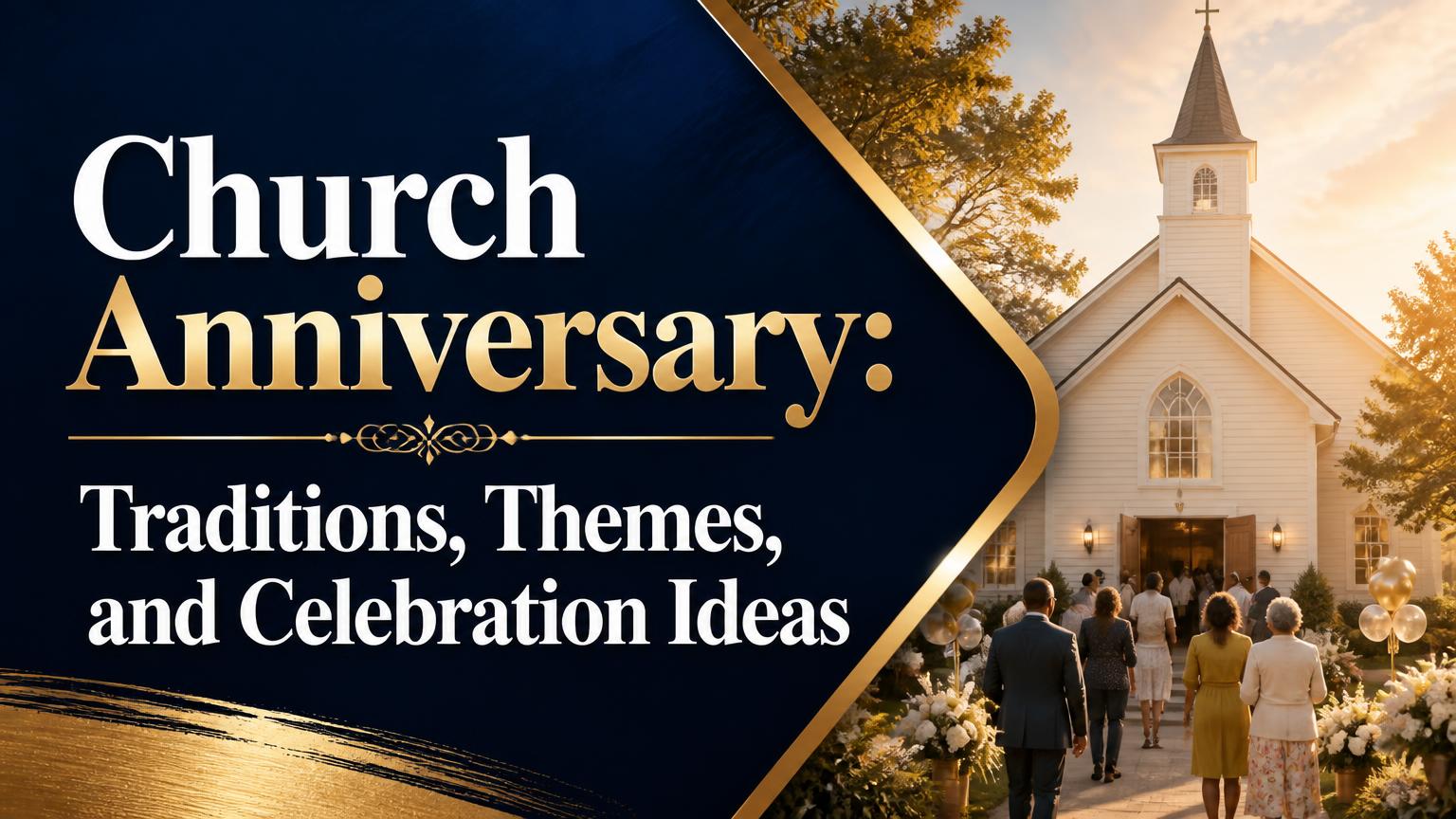
A church anniversary is a time for a congregation to remember its history, thank God for His faithfulness, honor people who have served, and renew its commitment to the church’s mission. Although Scripture does not require churches to observe an annual anniversary, the practice can encourage gratitude, unity, stewardship, and hope when it focuses on God’s work rather than institutional pride. A meaningful celebration combines worship, testimony, fellowship, historical remembrance, and practical service.
Church Anniversary: Meaning, Traditions, Themes, and Celebration Ideas
What Is a Church Anniversary?
A church anniversary marks a significant milestone in the life of a local congregation. Most churches celebrate the date they were founded, organized, chartered, dedicated, or established in a particular community. Some congregations also observe the anniversary of a major relocation, building dedication, merger, or ministry transition.
The central purpose is not simply to celebrate how long the church has existed. It is to recognize God’s faithfulness through changing circumstances, remember the people who helped establish and sustain the congregation, and consider how the church should serve in the future. The anniversary may be a single worship service, a weekend of events, or a broader season of reflection.
A church anniversary should also be distinguished from pastor appreciation. A pastor may be honored during an anniversary, but the anniversary belongs to the congregation as a whole. Similarly, a “church birthday” is an informal expression; the event usually commemorates the history of a local body of believers rather than the beginning of the universal church described in Acts 2.
Common Church Anniversary Traditions
Churches use different traditions according to their history, denomination, culture, and available resources. Common elements include:
- Anniversary worship service: A special service may include preaching, music, Scripture reading, prayer, and recognition of the congregation’s milestone.
- Guest preacher or former pastor: A respected minister may be invited to connect the church’s past with its present calling.
- Historical presentation: Members may display photographs, documents, building plans, ministry records, or a written timeline.
- Testimonies: Longstanding members can describe how the church served families, supported missions, responded to hardship, or affected the community.
- Founders’ or heritage recognition: Churches may honor founding members, former leaders, elders, deacons, missionaries, musicians, teachers, and volunteers.
- Anniversary banquet or fellowship meal: Shared meals provide space for conversation across generations.
- Special offering: A church may receive an offering for missions, building maintenance, debt reduction, benevolence, or a clearly defined community project.
- Community service: Members may serve local residents through food distribution, neighborhood cleanup, visitation, practical assistance, or support for another ministry.
Traditions are most valuable when they reinforce the anniversary’s purpose. A large event without reflection or service may entertain people but leave little spiritual or communal benefit.
How to Choose a Church Anniversary Theme
A strong theme expresses what the congregation wants to remember and pursue. It should be brief enough to repeat, specific enough to guide the program, and rooted in the church’s actual history or mission. Themes often emphasize God’s faithfulness, gratitude for the past, unity in the present, or hope for future ministry.
Possible themes include:
- “Remembering God’s Faithfulness, Embracing the Future”
- “Celebrating Grace Through the Generations”
- “Rooted in Christ, Serving Our Community”
- “Built by Faith, Sustained by Grace”
- “One Body, Many Generations, One Mission”
- “Giving Thanks for the Past, Growing in the Future”
- “Faithful Then, Faithful Now, Faithful Forward”
A theme should not promise what the church is unwilling to practice. For example, a congregation using a theme about community service should include an actual service project rather than limiting the idea to printed materials. Scripture can provide the foundation: Psalm 78:4 encourages one generation to tell the next about God’s works, while Philippians 1:3–5 connects gratitude with shared participation in the gospel.
Church Anniversary Celebration Ideas
A meaningful celebration balances worship, remembrance, fellowship, and mission. Churches do not need an expensive or elaborate program; well-chosen activities often create more value than a crowded schedule.
Consider these ideas:
-
Create a church history timeline. Display important dates, pastoral transitions, buildings, ministries, outreach efforts, and community changes. Explain the significance of each milestone rather than listing dates alone.
-
Invite several generations to participate. Children, teenagers, adults, and older members can read Scripture, sing, share testimonies, or describe their hopes for the church. This shows that the congregation’s story is larger than any one generation.
-
Record oral histories. Interview founding members and longtime participants about the church’s beginnings, challenges, answered prayers, and memorable ministries. These interviews can become a private archive or a presentation for the celebration.
-
Hold a heritage worship service. Use hymns, prayers, Scripture readings, or musical traditions connected to the congregation’s history while ensuring that the service remains understandable and welcoming to newer members.
-
Organize a community service project. Choose a measurable need, such as preparing meals, supporting a shelter, visiting isolated residents, collecting school supplies, or improving a shared neighborhood space.
-
Prepare a commemorative booklet or digital presentation. Include a concise history, photographs, testimonies, ministry milestones, and a statement of future priorities. Obtain permission before publishing personal stories or images.
-
Host a fellowship meal or cultural celebration. Shared food can reflect the congregation’s cultural diversity and create opportunities for members who do not normally interact.
-
Establish a forward-looking ministry goal. The church might begin a mentoring program, strengthen children’s ministry, expand benevolence, support missionaries, or develop a plan for welcoming new residents.
The best ideas connect directly to the church’s identity. A congregation known for music might present a historical concert; a church with a strong missions tradition might focus on outreach; a small congregation might prioritize personal testimonies and intergenerational fellowship over a formal banquet.
How to Plan a Church Anniversary
Planning should begin with the purpose, not the decorations. A small committee can first answer four questions: What milestone are we marking? What do we want people to remember? Who should participate? What lasting result should come from the celebration?
A practical planning sequence includes:
- Confirm the anniversary date and the historical milestone it represents.
- Establish a theme, Scripture, budget, and planning team.
- Decide whether the event will be a service, a weekend, or a longer emphasis.
- Assign responsibility for worship, music, hospitality, history, communications, finances, and community service.
- Contact former pastors, founding members, missionaries, and other appropriate participants.
- Gather accurate records and verify names, dates, and photographs.
- Communicate expectations clearly, including dress, meals, offerings, transportation, and accessibility.
- Rehearse presentations and keep the worship service within a reasonable length.
- Evaluate the event afterward and record lessons for future anniversaries.
The budget should reflect the church’s priorities. A congregation should not create financial pressure merely to appear successful. Transparent planning, responsible fundraising, and a clearly explained anniversary offering protect trust and allow the celebration to express good stewardship.
Biblical Principles for a Meaningful Church Anniversary
The Bible does not establish a required annual anniversary for local churches, so congregations should not treat the observance as a command or a test of spiritual faithfulness. It is better understood as a voluntary practice that can serve biblical purposes when it directs attention to God, strengthens the body, and supports ministry.
Remembering is a recurring biblical discipline. Moses told Israel to remember the way God had led them (Deuteronomy 8:2), and the psalms repeatedly recount God’s works so that later generations will not forget them. A church anniversary can apply this principle by preserving testimony and history without idealizing the past. Honest remembrance includes hardship, conflict, sacrifice, change, and the grace that enabled the congregation to continue.
The New Testament also presents the church as a people who share a mission rather than merely an organization with a long record. Acts 2:42–47 describes believers devoted to teaching, fellowship, prayer, worship, and generous care for one another. Therefore, the strongest anniversary celebrations ask how the church’s history equips it to practice those commitments now. The event should produce gratitude and renewed service, not self-congratulation.
How to Keep a Church Anniversary Christ-Centered
A church anniversary becomes Christ-centered when Jesus, the gospel, and the church’s calling remain more prominent than personalities, buildings, or institutional age. Leaders can accomplish this by selecting Scripture that interprets the occasion, framing testimonies around God’s grace, and thanking servants without suggesting that human effort deserves ultimate credit.
Recognition should be generous but balanced. Founders, pastors, musicians, teachers, staff members, and volunteers may deserve public appreciation, yet the service should avoid creating a hierarchy in which visible leaders receive all attention. First Corinthians 12 describes the church as one body with many members, and that principle supports honoring both public and behind-the-scenes service.
The anniversary should also welcome newer members. If the event focuses exclusively on the past, people who joined recently may feel like spectators in someone else’s story. Give them opportunities to participate and explain how the congregation’s heritage shapes its present mission. A church honors its history best when it invites the next generation to receive, examine, and continue its faithful work.
Church Anniversary Service Order
A simple service order can provide structure without making the event feel mechanical. One possible format is:
- Welcome and explanation of the anniversary’s purpose
- Opening Scripture and prayer
- Congregational worship
- Brief historical presentation
- Testimonies from different generations
- Special music or ministry presentation
- Anniversary sermon
- Prayer of thanksgiving and recommitment
- Recognition of faithful service
- Offering for a stated ministry purpose
- Closing blessing and fellowship
The sermon should interpret the anniversary rather than merely mention it. Appropriate themes include God’s faithfulness, the church as Christ’s body, stewardship across generations, unity in service, or the responsibility to reach the surrounding community. The historical presentation should also remain concise; lengthy speeches and too many individual recognitions can reduce attention and weaken the worship focus.
Common Mistakes to Avoid
One common mistake is treating the anniversary as a competition involving the largest attendance, most expensive decorations, or greatest financial offering. Those measures may describe an event, but they do not determine spiritual value. Another mistake is presenting an unverified history. Incorrect dates, omitted contributors, or exaggerated claims can create unnecessary hurt, especially in congregations with long memories.
Churches should also avoid combining too many unrelated purposes. An anniversary, pastor appreciation, building campaign, leadership transition, and fundraising drive may all be legitimate, but placing them in one event can confuse the congregation. If several emphases must coincide, explain how they relate and identify the specific purpose of every offering or appeal.
Finally, do not let nostalgia replace mission. Remembering former ministries can encourage faith, but the celebration should ask what faithful obedience requires under present conditions. The community may have changed, the congregation may have new needs, and younger members may bring different gifts. A healthy anniversary looks backward with gratitude and forward with responsibility.
Conclusion
A church anniversary is most meaningful when it remembers God’s faithfulness, honors the shared work of the congregation, and renews commitment to Christ’s mission. Traditions such as worship services, testimonies, historical displays, fellowship meals, and community projects can serve that purpose when they are chosen thoughtfully. The Bible does not require an annual anniversary, so churches should observe one freely and responsibly rather than mechanically. The lasting measure of a celebration is not its size or expense, but whether it produces gratitude, unity, faithful stewardship, and a clearer willingness to serve the next generation.