
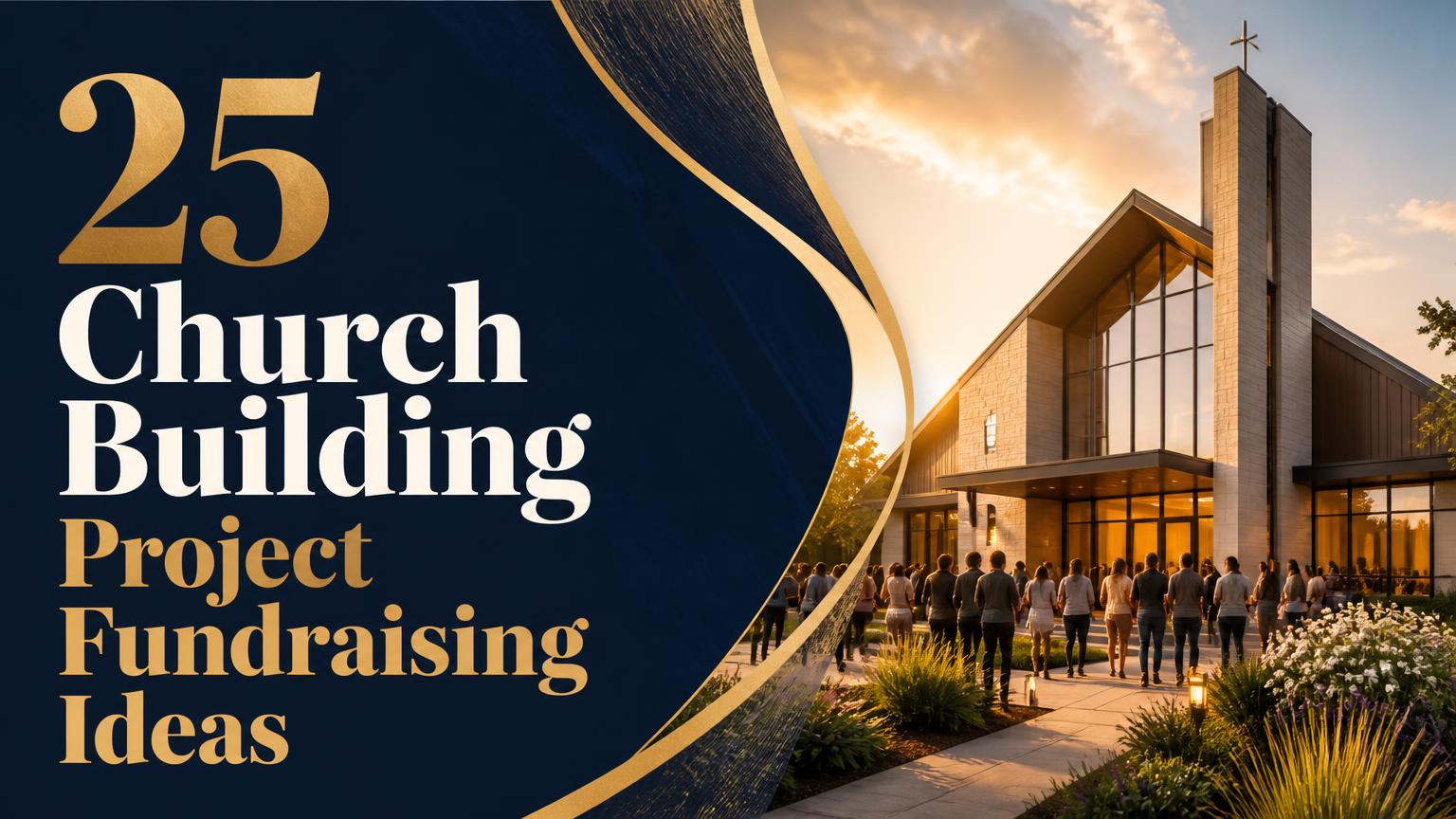
A church building project usually requires more than a single offering. The strongest campaigns combine major gifts, recurring commitments, special events, donated resources, and careful communication. The goal is not simply to raise money, but to invite people into a clearly explained ministry vision while protecting trust, financial accountability, and voluntary giving.
Church Building Project Fundraising Ideas
These ideas work best when matched to the church’s size, congregation, community, timeline, and financial capacity. A capital campaign can include several of them rather than relying on one event.
1. Launch a Vision-Based Pledge Campaign
Present the project’s purpose, expected cost, timeline, and ministry benefits, then invite members and supporters to make commitments over 12 to 36 months. Pledges help the church estimate dependable income and allow households to participate according to their circumstances.
A strong campaign explains what the building will make possible—such as additional worship space, classrooms, accessibility improvements, or community programs—rather than focusing only on construction.
2. Secure Lead Gifts
Meet privately with long-term members, major donors, and families who may be able to make substantial early gifts. Lead gifts can provide momentum and demonstrate that the campaign has meaningful support before it is presented publicly.
These conversations should be invitations, not pressure. The church should never imply that a person’s spiritual commitment is measured by the size of a donation.
3. Create a Matching-Gift Challenge
A donor or group of donors can pledge to match new gifts up to a specified amount. For example, a matching fund might double the impact of gifts received during a launch month.
State the terms clearly, including the deadline, matching limit, and whether gifts qualify only if they are new commitments. Transparency prevents confusion and protects donor confidence.
4. Take a Special Building Offering
A designated offering during worship services gives the whole congregation a simple way to participate. The church can schedule one offering or several throughout the year.
The offering should be clearly separated in the church’s accounting records and used only for the stated purpose unless donors are informed otherwise. Explain how designated funds will be handled if the project changes or the target is exceeded.
5. Invite Sacrificial Giving Commitments
Some members may choose to make a temporary sacrifice—such as reducing discretionary spending or redirecting a portion of an annual bonus—to support the project. This approach emphasizes shared participation rather than competition.
Christian teaching on giving, including Paul’s instruction in 2 Corinthians 9:7, presents generosity as a willing act rather than something extracted through guilt. A church should leave room for people to give freely and wisely.
6. Establish Recurring Digital Giving
Offer weekly or monthly giving options through the church’s existing payment or donation system. Recurring gifts can make a large commitment manageable for households that cannot give a substantial one-time amount.
Provide clear information about processing fees, recurring payment changes, receipts, and how donors can cancel or modify their commitments.
7. Form a Building Project Giving Circle
Invite donors to join a voluntary group that commits a certain amount each month or quarter. A giving circle can create accountability and fellowship without ranking members publicly by their contributions.
The emphasis should remain on shared purpose. Avoid publishing individual giving totals or creating tiers that make smaller donors feel unimportant.
8. Ask Businesses for Sponsorships
Local businesses may contribute cash, construction services, equipment, advertising support, or materials. In return, the church might offer appropriate public recognition, such as inclusion in an event program or project acknowledgment.
Any sponsorship arrangement should respect the church’s values, avoid implying endorsement of unrelated products, and comply with applicable tax and charitable rules.
9. Apply for Suitable Grants
Some foundations, community funds, and denominational programs support accessibility improvements, historic preservation, social services, food programs, or community facilities. Eligibility often depends on the project’s purpose; grants for worship-space construction may be restricted.
Assign someone to track deadlines, prepare a consistent project description, and document how the proposed work benefits the wider community.
10. Use a Crowdfunding Campaign
An online campaign can reach former members, extended families, friends, and supporters beyond the local congregation. It works best when the church presents a specific, understandable goal rather than asking vaguely for help with “building costs.”
Use photographs, a short project video, regular updates, and a visible progress target. Crowdfunding should supplement—not replace—careful internal fundraising.
11. Organize Peer-to-Peer Fundraising
Members can create personal fundraising pages and invite their networks to support the project. This approach is useful for congregations with strong community relationships or members spread across different regions.
Provide approved language, accurate project information, and guidance on handling questions. Personal appeals should represent the church honestly and avoid exaggerated promises.
12. Host a Capital Campaign Dinner
A dinner can introduce the project to members, community leaders, and prospective supporters. The program might include a project presentation, testimonies, architectural plans, and a clear invitation to participate.
Keep the event focused. Excessive expense undermines the message if too much money is spent on food, entertainment, or decorations instead of the building fund.
13. Hold a Benefit Auction
Members and local businesses can donate goods, services, experiences, or handmade items for a live or silent auction. Examples include professional services, vacation stays, catered meals, artwork, lessons, or specialty products.
Set donation values and auction terms clearly, and record proceeds and expenses accurately. An auction is most effective when donated items keep costs low.
14. Present a Benefit Concert or Talent Event
A concert, choir performance, drama, or community talent show can raise money while strengthening relationships. Invite musicians from the church and wider community to participate without requiring costly production arrangements.
Sell tickets or accept donations, but explain that attendance or giving is voluntary. Secure permission for any copyrighted music or recorded material when necessary.
15. Organize a Walk, Run, or Service Challenge
Participants can collect pledges for completing a walk, run, bike ride, cleanup project, or other measurable challenge. This creates a visible public expression of support and can involve children, youth, and community members.
Choose an activity appropriate for different abilities, and budget carefully for permits, insurance, water, safety, and event supplies.
16. Run a Community Meal Fundraiser
A breakfast, soup supper, barbecue, or international food night can raise funds and introduce neighbors to the church. Volunteers may donate food, preparation time, or serving assistance.
Price the event realistically, disclose whether tickets represent a donation, and follow local food-safety requirements. The community-building value may be as important as the proceeds.
17. Hold a Craft, Bake, or Produce Sale
Congregants can donate baked goods, crafts, preserves, plants, artwork, or seasonal products. These sales are particularly effective when the church already has people with relevant skills and a reliable local audience.
Set quality and labeling guidelines, especially for food products. Keep operating costs low so the event produces meaningful net revenue.
18. Sell Project Merchandise
T-shirts, mugs, calendars, devotional materials, or artwork can help supporters identify with the project. Merchandise should use a simple, respectful design and be offered at a price that covers costs while generating a reasonable contribution.
Avoid ordering large quantities before testing demand. Preorders can reduce waste and protect the building fund from unsold inventory.
19. Request Donated Building Materials
Contractors, suppliers, manufacturers, and members may donate lumber, fixtures, appliances, furniture, landscaping materials, or professional design services. In-kind gifts reduce the amount of cash the church must raise.
Obtain written descriptions and values for donated items, but do not assume every donation meets building codes or project specifications. The architect, contractor, or project manager should approve materials before they are accepted.
20. Coordinate Volunteer Construction and Service Days
Qualified volunteers may help with painting, landscaping, demolition, cleanup, moving, or other tasks. This can reduce labor costs and give members a practical role in the project.
Only appropriately trained people should perform specialized electrical, plumbing, structural, or mechanical work. The church should also address safety procedures, supervision, insurance, and liability.
21. Seek Employer Matching Gifts
Some employers match charitable donations made by their employees. Provide donors with the church’s legal name, registration information, and instructions for submitting a matching request.
Because employer policies differ, the church should verify whether gifts to a religious organization or a building fund qualify before counting a potential match in the campaign budget.
22. Encourage Legacy and Planned Gifts
Members may choose to include the church in a will, trust, retirement-account beneficiary designation, or life-insurance arrangement. These gifts often support long-term ministry rather than immediate construction expenses.
They should be presented as one option, not as a replacement for current giving. Donors should obtain independent legal and financial advice, and the church should document restrictions attached to any planned gift.
23. Accept Gifts of Property or Other Assets
A donor might contribute land, securities, equipment, a vehicle, or another valuable asset. The church may retain the asset, use it in the project, or sell it if appropriate.
Asset gifts require careful valuation, legal review, transfer documentation, and an assessment of potential costs. The church should not accept property without understanding environmental, maintenance, debt, or title issues.
24. Create a Youth or Small-Group Fundraising Challenge
Youth groups, Sunday school classes, home groups, or ministry teams can choose projects such as car washes, service days, sponsored challenges, or seasonal sales.
The purpose should be participation and education, not placing responsibility for a major capital project on children. Give each group a realistic goal and explain how its contribution fits into the larger plan.
25. Generate Revenue From Existing Facilities
If permitted by the church’s policies, zoning rules, insurance, and governing documents, the church may rent rooms, parking areas, kitchens, or event space to compatible community groups. It might also establish partnerships with nonprofits that use the facility for educational or service programs.
This is a revenue strategy rather than a traditional fundraiser. The church should evaluate staffing, maintenance, security, scheduling, and the effect on ministry before proceeding.
How to Choose the Right Fundraising Mix
Start With a Credible Project Budget
Before asking for money, establish realistic estimates for construction, design, permits, financing, furnishings, insurance, accessibility, technology, landscaping, and contingency costs. Separately identify money already available, expected pledges, restricted funds, donated materials, and cost reductions from volunteer labor.
A campaign target that omits predictable expenses may appear attractive initially but create a shortfall later.
Match the Method to the Congregation
A large congregation may benefit from lead gifts, recurring commitments, and professional grant writing. A smaller church may achieve more through a multi-year pledge campaign, community events, in-kind donations, and facility partnerships.
Consider age, income patterns, local businesses, member skills, online reach, and the amount of volunteer time available. The best idea is one the church can execute well and sustain without exhausting its members.
Communicate Progress and Restrictions
Report gifts received, expenses paid, construction milestones, remaining needs, and significant changes to the plan. If the project is delayed or redesigned, explain why and tell donors how their gifts will be handled.
A church should also establish who approves spending, how funds are counted, how conflicts of interest are managed, and what happens if the campaign falls short. Accountability is part of fundraising, not an administrative detail added afterward.
What Makes a Church Building Fundraiser Effective?
Effective campaigns combine a compelling ministry purpose with voluntary participation, realistic financial planning, and consistent reporting. Events can create enthusiasm, but pledges, major gifts, recurring donations, grants, and in-kind contributions usually provide the foundation for a large project.
The central question is not which fundraiser is most entertaining. It is which combination helps people understand the need, participate according to their ability, and trust that their gifts will be handled faithfully. A church building project succeeds financially when fundraising supports both the construction plan and the relationships that make the church a community.