
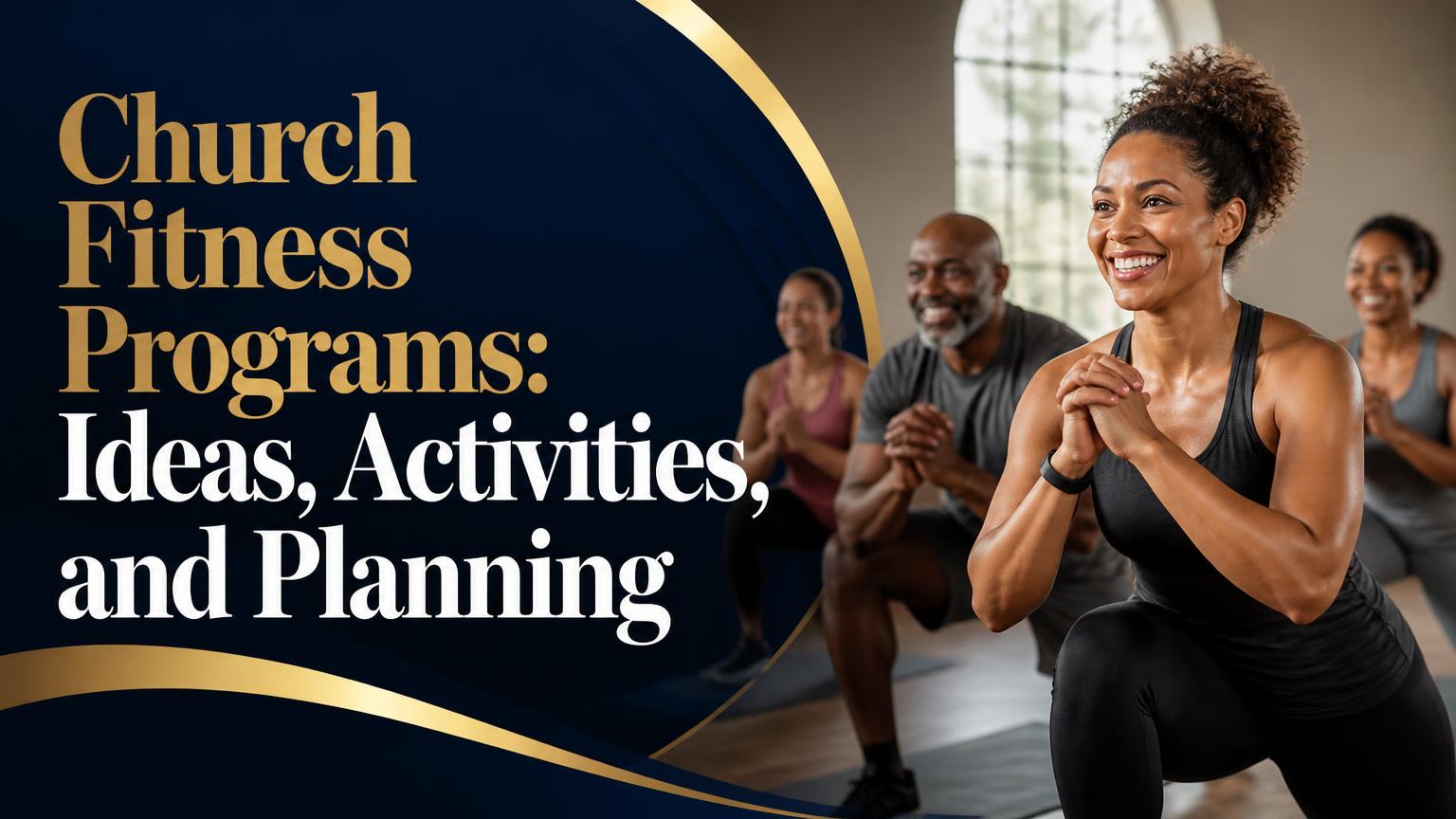
Church fitness programs can combine physical activity, fellowship, and practical care without turning exercise into a measure of spiritual maturity. Effective programs may include walking groups, strength or mobility classes, family recreation, sports leagues, and health-education sessions. The strongest models are welcoming, adaptable, safely organized, and designed around the actual needs of the congregation and surrounding community. They also recognize that people differ in age, ability, health history, finances, confidence, and interest in organized exercise.
Church Fitness Programs: Ideas, Activities, and Planning
Start With a Clear Ministry Purpose
A church fitness program should begin with a ministry purpose rather than a collection of exercise classes. The purpose might be to encourage healthy habits, create relationships across generations, provide accessible recreation, support emotional well-being, or offer a practical service to the neighborhood. A clear purpose helps leaders decide which activities belong in the program and which do not.
Church fitness should also be distinguished from a commercial gym or a weight-loss competition. Participants should not feel that their bodies are being judged or that losing weight is a requirement for belonging. Physical activity can support cardiovascular health, strength, balance, mobility, mood, and daily functioning, but it does not determine a person’s worth, faithfulness, or spiritual maturity.
Choose Activities for Different Ages and Abilities
A varied program gives more people a realistic way to participate. Useful options include:
- Walking groups: These are inexpensive, easy to scale, and suitable for different fitness levels when routes include rest opportunities.
- Low-impact exercise: Chair exercise, stretching, mobility, balance, and gentle aerobics can serve older adults and people returning to activity.
- Strength and conditioning: Body-weight movements, resistance bands, or light weights can be offered with careful instruction and modifications.
- Family recreation: Games, playground activities, cycling events, and family activity days encourage participation without requiring advanced fitness.
- Sports programs: Basketball, volleyball, soccer, pickleball, and similar activities can build fellowship, especially when competition remains secondary to inclusion.
- Youth movement programs: Age-appropriate games, skill development, and active play are generally more suitable for children than adult-style fitness or weight-focused instruction.
- Adaptive activities: Seated sports, accessible walking routes, and modified games allow people with disabilities or chronic conditions to participate meaningfully.
Activities should be described by function and accessibility rather than by promises of rapid physical transformation. A “mobility and balance class” communicates a clearer purpose than a vague “body makeover” program and is less likely to create unrealistic expectations.
Build a Practical Program Plan
Planning determines whether a promising idea becomes a dependable ministry. Begin with a short survey, listening session, or informal conversations that identify participants’ interests, schedules, barriers, and accessibility needs. Ask whether people need transportation, childcare, beginner options, translated communication, reduced fees, or activities at particular times of day.
A practical launch plan should address:
- Audience: Decide whether the program serves children, adults, older adults, families, the whole congregation, or the wider community.
- Format: Choose classes, drop-in activities, walking groups, leagues, workshops, or a combination.
- Leadership: Assign a coordinator and use instructors with suitable training and experience.
- Location: Check flooring, lighting, ventilation, restrooms, storage, accessibility, and emergency exits.
- Equipment: Start with equipment that is durable, inexpensive, and easy to maintain.
- Schedule: Use consistent times and publish cancellations, registration requirements, and participation expectations.
- Budget: Include instructor compensation, equipment, insurance considerations, maintenance, promotion, and financial assistance.
- Pilot period: Test the program for several weeks before committing to a permanent schedule.
Starting with one well-organized activity is usually wiser than launching too many programs at once. A weekly walking group or beginner mobility class can reveal demand, leadership capacity, and logistical problems before the church invests in a larger program.
Protect Safety, Privacy, and Dignity
Church leaders have a responsibility to create reasonable safety procedures. Participants should receive clear instructions, opportunities to modify movements, and information about when to stop exercising. People with significant medical conditions, recent injuries, pregnancy-related concerns, or major changes in health may need advice from a qualified health professional before beginning or changing an exercise routine.
Instructors should understand the activities they lead and, where appropriate, hold relevant training in exercise instruction, first aid, or cardiopulmonary resuscitation. The church should establish procedures for injuries, severe weather, emergency communication, supervision of minors, and use of an automated external defibrillator if one is available. Insurance, facility rules, waivers, and local legal requirements also deserve review rather than assumption.
Privacy matters as much as physical safety. Avoid public weigh-ins, forced disclosure of medical conditions, humiliating fitness tests, or language that labels bodies as failures. Nutrition education should remain evidence-based and should be led by appropriately qualified professionals when it involves medical diets, eating disorders, or disease management.
Make Participation Welcoming and Sustainable
A program becomes sustainable when people can attend consistently without excessive cost, embarrassment, or complexity. Offer beginner versions of activities, allow rest, explain that participants may work at different intensities, and provide alternatives for people who cannot stand, run, kneel, or lift. Clear descriptions help people choose a suitable activity without having to disclose personal health information publicly.
Sustainability also depends on leadership. Rotate volunteer responsibilities, document procedures, maintain equipment, and gather feedback before volunteers become exhausted. A modest participation fee may cover expenses, but scholarships or free options can prevent cost from excluding the people the ministry hopes to serve. Partnerships with qualified instructors, local recreation organizations, or health professionals may expand capacity, provided the church carefully evaluates credentials and responsibilities.
A Biblical Foundation for Church Fitness
Christian teaching supports responsible care for the body while refusing to make physical condition a measure of spiritual value. In 1 Timothy 4:8, Paul acknowledges that bodily training has some value while giving priority to godliness. The passage neither dismisses exercise nor treats it as the highest good. For a church program, that balance means physical activity may serve health, fellowship, discipline, and service, but it should remain within a broader vision of Christian life.
First Corinthians 6:19–20 describes the body as belonging to God, in a passage whose immediate context concerns sexual conduct. Applying its stewardship principle to health can be reasonable, but it should not be used as a simplistic slogan or a tool for body shaming. Romans 12:1 presents the body as part of a life offered to God; that points toward whole-person discipleship, not a command that every believer reach a particular fitness standard.
A church fitness program should therefore welcome people who are injured, disabled, elderly, chronically ill, recovering from disordered eating, or simply uninterested in intense exercise. Fellowship, compassion, and mutual encouragement are ministry outcomes in their own right. Prayer or a brief devotional may be offered when appropriate, but participation in exercise should not be tied to spiritual approval or pressured religious performance.
Ideas for Church Wellness Events
A church does not need a permanent class schedule to encourage active living. Occasional events can introduce the congregation to movement and help leaders learn what people value. Possibilities include a community walk, family activity day, recreational tournament, fall or spring fitness fair, or an educational evening about sleep, stress, mobility, or healthy aging.
Events work best when they provide a clear experience rather than a collection of booths with no follow-up. For example, a church could organize a short accessible walk, offer stretching before and after, provide water and rest points, and invite participants to join a weekly walking group afterward. A wellness event might also include blood-pressure screening or nutrition education, but those services should be provided by qualified professionals with appropriate privacy procedures.
Seasonal activities can reach people who would not attend a formal class. A neighborhood clean-up, charity walk, outdoor games day, or intergenerational recreation afternoon combines service and movement without presenting exercise as a test of athletic ability. Weather plans, accessible routes, supervision, hydration, and emergency contacts should be established before publicizing the event.
How to Evaluate and Improve the Program
Evaluation should measure whether the program is serving its stated purpose. Useful indicators include attendance, repeat participation, representation across age groups, accessibility, participant satisfaction, volunteer workload, and whether people report stronger social connection or greater confidence in being active. Injury reports and repeated cancellations can reveal safety or scheduling problems that attendance figures alone would miss.
Avoid treating weight loss as the primary outcome. Body weight is affected by numerous biological, medical, behavioral, and social factors, and it does not adequately measure improved strength, balance, stamina, mobility, mood, or belonging. Anonymous feedback forms and occasional listening sessions can show whether participants feel respected and whether activities need modification. Leaders should use that feedback to adjust schedules, add beginner options, replace ineffective activities, or end programs that no longer serve the ministry’s purpose.
Conclusion
Church fitness programs are most effective when they treat movement as one expression of whole-person care rather than as a test of appearance, discipline, or faith. Walking groups, accessible classes, sports, family recreation, and wellness education can strengthen relationships while supporting healthier routines. The practical essentials are a clear purpose, activities suited to varied abilities, qualified leadership, safety procedures, realistic budgeting, and a welcoming culture.
A successful program does not have to be large or expensive. One consistent, inclusive activity may serve the church better than an ambitious schedule that volunteers cannot sustain. When planning is guided by stewardship, dignity, accessibility, and genuine fellowship, fitness becomes a useful ministry tool—without becoming a substitute for medical care or a standard by which people are judged.