
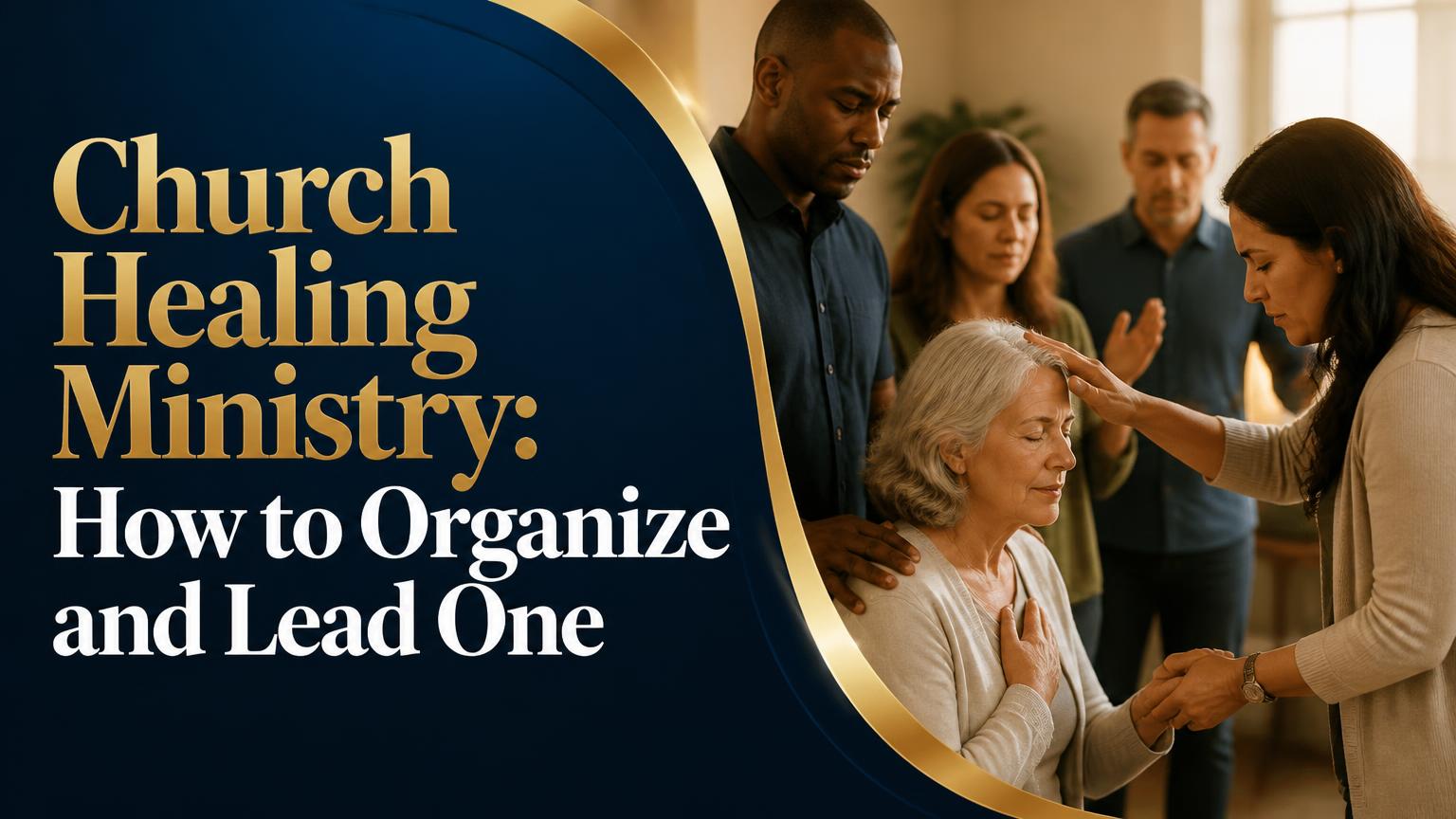
A church healing ministry is an organized way for a congregation to pray with and care for people who are sick, emotionally wounded, spiritually distressed, or facing serious life circumstances. A healthy ministry does not treat prayer as a guaranteed technique or a substitute for medical and mental-health care. It combines biblical faith, compassionate listening, responsible leadership, informed consent, confidentiality, and follow-up. The goal is to serve people faithfully while leaving the outcome to God rather than pressuring them to produce a particular result.
Church Healing Ministry: How to Organize and Lead One
A sustainable ministry needs more than sincere prayer. It requires a clear purpose, trained volunteers, pastoral oversight, a defined process, and safeguards that protect both those receiving ministry and those serving. The following framework can be adapted to a church service, prayer room, small-group ministry, hospital-visitation team, or scheduled pastoral-care appointment.
Define the Ministry’s Purpose and Theology
Begin by stating what the ministry is and what it is not. It may offer prayer for physical healing, emotional restoration, strength during illness, freedom from fear, and spiritual encouragement. It should not promise that every person will be healed immediately, claim special control over God’s action, or imply that sickness proves a person lacks faith.
A written ministry statement helps volunteers communicate consistently. It might affirm that healing is sought through prayer in the name of Jesus, that God may work through ordinary medical care and professional counseling, and that the ministry will treat every person with dignity regardless of the outcome. Churches should also explain their theological position on spiritual gifts. Christian traditions differ on whether miraculous gifts continue in the same form, but prayer for the sick, compassion, humility, and wise pastoral care can be practiced without pretending that every healing claim is certain.
Recruit and Train a Mature Team
Choose team members for character, emotional maturity, reliability, teachability, and respect for boundaries—not merely for enthusiasm or claims of spiritual power. Team members should understand the church’s theology, know how to listen without interrupting, and be able to pray without turning the conversation into a performance.
Training should cover:
- Asking permission before praying, touching, anointing with oil, or involving others
- Protecting confidential information
- Responding appropriately to trauma, grief, mental-health concerns, and abuse disclosures
- Avoiding diagnosis, manipulation, blame, and exaggerated claims
- Recognizing when a pastor, doctor, counselor, safeguarding officer, or emergency service is needed
- Praying with people whose beliefs, expectations, or medical situations differ from their own
Pair new volunteers with experienced leaders. Regular debriefing allows the team to discuss difficult situations without exposing unnecessary personal details. Leaders should also establish a process for removing a volunteer whose conduct becomes controlling, unsafe, dishonest, or persistently dismissive of professional care.
Create a Simple, Consent-Based Ministry Process
People should know what will happen before ministry begins. A consistent process might include welcoming the person, listening to the request, clarifying consent, praying briefly, asking how they are doing, and discussing appropriate next steps. The person receiving prayer should remain free to stop at any time, decline a particular form of prayer, or request another team member.
A practical sequence is:
- Listen: Ask what the person would like prayer for and what support they are seeking.
- Clarify: Check relevant boundaries, including whether the matter involves urgent symptoms, trauma, abuse, medication, or mental-health risk.
- Obtain consent: Explain whether others will join, whether touch or oil is being considered, and how information will be handled.
- Pray: Use clear, compassionate language rather than dramatic commands or prolonged pressure.
- Respond: Ask what the person experienced, without suggesting that a particular sensation proves healing.
- Follow up: Offer pastoral contact, practical support, professional referral, or continued prayer where appropriate.
This structure keeps ministry relational rather than theatrical. It also prevents volunteers from collecting unnecessary personal information or moving into counseling, deliverance, or medical advice without the training and authority to do so.
Pray for Healing Without Promising an Outcome
Christian prayer for healing should express confidence in God’s compassion while remaining honest about human limits. The New Testament contains both accounts of healing and examples of ongoing weakness, suffering, and unanswered prayer. James 5:14–16 connects prayer for the sick with the involvement of church elders, confession where appropriate, and care within the community. It does not provide a formula that makes a particular result automatic.
Leaders should avoid statements such as “You would be healed if you had enough faith” or “Stop taking your medication because you have been healed.” Such claims can create shame, delay necessary treatment, and place spiritual authority in the hands of a volunteer. A responsible prayer may ask God for healing, wisdom for clinicians, endurance, peace, and practical support, while acknowledging that the person’s worth and God’s care do not depend on an immediate physical improvement.
Provide Follow-Up, Confidentiality, and Referral
Healing ministry should not end when the prayer ends. A designated leader can ask whether the person would like follow-up, connect them with a pastor or small group, and make sure urgent concerns are directed to appropriate services. Follow-up is especially important when someone is grieving, isolated, chronically ill, experiencing suicidal thoughts, reporting abuse, or displaying signs of severe psychological distress.
Confidentiality must have clear limits. Volunteers should not share testimonies, names, diagnoses, photographs, or prayer requests publicly without informed permission. Confidentiality cannot mean concealing imminent danger, abuse of a child or vulnerable adult, or a serious threat to someone’s safety. The church should define in advance who receives sensitive information and how records are stored, accessed, and deleted.
Biblical Foundations for a Church Healing Ministry
Jesus’ ministry joined compassion, proclamation, and practical attention to suffering. The Gospels portray him responding to people as individuals rather than treating them as demonstrations of spiritual power. His actions also challenge churches to see sick and marginalized people as neighbors to be welcomed, not problems to be solved publicly.
Several passages provide principles for ministry. James 5:14–16 describes elders praying for the sick and anointing with oil. First Corinthians 12:4–11 presents gifts of healing within the wider work of the Holy Spirit, while verses 12–27 emphasize that the church is one body with different members. These passages support prayerful dependence on God, but they do not justify ranking Christians according to visible results or claiming that one leader controls healing. Romans 12:3 also warns against inflated self-estimation, which is particularly relevant where spiritual authority is involved.
Christian traditions interpret these texts differently. Some expect healing gifts to operate regularly; others emphasize prayer while remaining cautious about claims of miraculous intervention. A church can acknowledge this difference without allowing disagreement to produce fear or competition. Biblical leadership requires faith, humility, truthfulness, compassion, and care for the vulnerable.
Leadership, Safeguarding, and Accountability
Pastoral oversight should remain visible. The senior pastor, elders, or another recognized leadership body should approve the ministry’s purpose, appoint its leaders, review complaints, and determine how serious situations are escalated. Volunteers should never operate as independent spiritual authorities simply because they have been given a prayer-room role.
Safeguarding procedures should address children, vulnerable adults, suspected abuse, sexual misconduct, coercive control, and one-to-one contact. Follow local law and the church’s safeguarding requirements, including appropriate screening and reporting procedures. Whenever possible, use observable spaces, maintain appropriate team ratios, and avoid isolated meetings. Physical touch should never be assumed to be part of prayer. Even a gesture intended as comfort can be unwelcome or distressing, particularly for people with trauma histories.
Accountability also applies to public testimonies. A reported improvement may be sincere without proving that a medical condition was cured by prayer. Leaders should ask permission before sharing any story, avoid embellishment, and never use a person’s illness to promote the church or a minister. Honest testimony can include partial improvement, ongoing treatment, renewed hope, reconciliation, or strength to endure—not only dramatic physical change.
Keeping Prayer, Medicine, and Counseling in Their Proper Places
Prayer and professional care do not have to compete. Many churches pray for doctors, nurses, therapists, medications, rehabilitation, surgery, and the practical support that helps a person recover. Volunteers should not diagnose disease, interpret test results, recommend stopping treatment, advise someone to alter medication, or promise that prayer will eliminate the need for clinical care.
The same boundary applies to mental-health ministry. Listening and prayer can provide spiritual and relational support, but they are not replacements for licensed therapy or psychiatric treatment. A person expressing suicidal intent, experiencing psychosis, or facing immediate danger needs prompt professional or emergency assistance. Prayer can accompany that response; it should not delay it.
A referral is not a failure of faith. It is often an expression of wisdom and love. Church leaders can prepare a list of reputable local medical, counseling, crisis, disability, and social-service resources, while explaining that referrals do not constitute endorsement of every belief or treatment offered by a provider.
A Practical Launch Plan
A church can begin with a limited pilot rather than opening an undefined ministry to everyone immediately. Write the ministry statement, appoint a coordinator, establish safeguarding and confidentiality procedures, train a small team, and choose a supervised setting. Decide whether prayer will happen during services, by appointment, in home visits, or through a combination of formats. Each setting requires different boundaries.
After the first several months, review the ministry with leaders and volunteers. Consider whether people understand the process, whether anyone has felt pressured, whether referrals are working, and whether volunteers are carrying burdens beyond their competence. Invite feedback from people who received prayer, while protecting anonymity. Review patterns without treating numbers as proof of spiritual success.
Useful measures include whether people were welcomed, whether consent was respected, whether follow-up occurred, whether concerns were handled safely, and whether the ministry is strengthening the church’s care for suffering people. A ministry should be adjusted when its methods create confusion, dependency, embarrassment, or spiritual harm, even if its intentions were good.
Conclusion
A church healing ministry is best organized as a disciplined ministry of prayer, presence, compassion, and responsible care. Its leaders should invite God to heal while refusing to guarantee results, blame those who remain ill, or separate spiritual support from wise medical and psychological care. Clear consent, trained volunteers, pastoral accountability, confidentiality, safeguarding, and follow-up turn good intentions into trustworthy practice. The ministry’s credibility rests less on dramatic claims than on whether people are treated truthfully, gently, and with the dignity Scripture gives every person.