
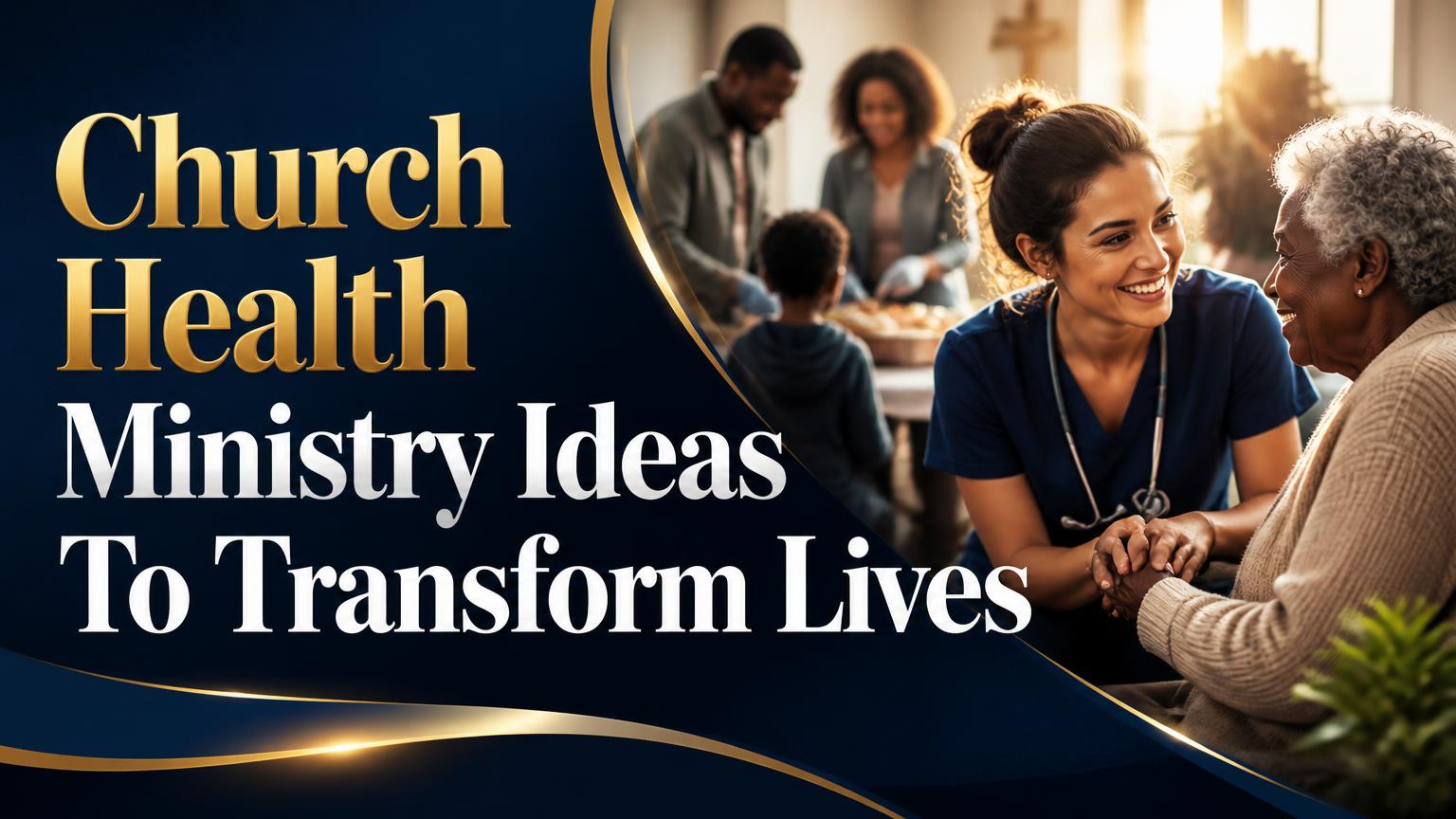
A healthy church cares for more than spiritual attendance. It helps people pursue physical wellness, emotional stability, healthy relationships, practical support, and deeper trust in God while recognizing that churches are not substitutes for doctors, therapists, or emergency services. Effective church health ministry ideas connect biblical compassion with responsible action: assessing real community needs, teaching prevention, supporting caregivers, reducing barriers to care, and creating clear pathways to qualified professionals. The strongest ministries are consistent, accessible, confidential, and designed around the dignity of every person.
Church Health Ministry Ideas That Meet Whole-Person Needs
Church health ministry works best when it addresses the whole person rather than treating health as a series of isolated programs. A congregation might combine health education, exercise opportunities, mental-health support, chronic-illness assistance, prayer, pastoral care, and referrals to licensed professionals. The aim is not to make the church a medical clinic. It is to help people recognize needs earlier, receive appropriate support, and experience practical love within a trustworthy community.
Build a Health Ministry Team Around Real Community Needs
Begin with a small team that may include a pastor, nurse, physician, counselor, social worker, caregiver, fitness professional, or member with experience in community services. Professional credentials are valuable, but the team also needs people who understand the congregation’s language, culture, ages, transportation challenges, and financial pressures.
Before choosing programs, ask members what they actually need. A confidential survey, listening sessions, or conversations with small-group leaders may reveal priorities such as diabetes education, blood-pressure awareness, grief support, elder care, youth anxiety, food insecurity, or transportation to medical appointments. This assessment prevents the ministry from copying attractive programs that do not address local conditions.
Offer Preventive Health Education and Screenings
Preventive education can address subjects such as sleep, nutrition, physical activity, stress, oral health, medication safety, vaccination questions, substance misuse, and routine medical checkups. Short classes after worship, printed guides, discussion groups, and workshops led by qualified professionals can make reliable information more approachable.
Churches may also host blood-pressure checks, health fairs, or referrals for appropriate screenings. These activities require informed consent, privacy, accurate equipment, and a plan for explaining results. A screening is not a diagnosis; an unusual reading should lead to follow-up with a healthcare professional rather than panic or self-treatment. The ministry should also avoid implying that illness results from weak faith or personal failure.
Create Mental Health and Emotional Support Pathways
A church can offer grief groups, peer-support circles, stress-management workshops, parenting resources, and carefully supervised support groups for concerns such as depression, addiction recovery, or caregiver exhaustion. These programs become safer when leaders receive training in listening, boundaries, crisis recognition, and referral practices.
Prayer and pastoral presence can provide genuine comfort, but they should not replace clinical treatment when someone faces severe depression, psychosis, suicidal thoughts, abuse, or substance dependence. Leaders need a written response plan that identifies emergency services, crisis resources, licensed counselors, and procedures for immediate danger. Confidentiality must also have clear limits when a person may harm themselves or someone else, or when abuse or neglect must be reported under applicable law.
Make Physical Activity and Nutrition Accessible
Health ministries can organize walking groups, low-impact exercise classes, stretching sessions, family activity days, or partnerships with nearby recreation centers. Programs should accommodate older adults, people with disabilities, different fitness levels, and those managing chronic conditions. An inclusive walking group, for example, should value companionship and consistency rather than competition or athletic performance.
Nutrition ministries can combine education with practical assistance. Cooking demonstrations, budget-conscious meal planning, community gardens, healthy food distributions, and partnerships with food pantries may be more useful than generalized advice. Food guidance should respect medical conditions, cultural preferences, allergies, and household budgets. The purpose is to support sustainable habits, not create shame around body size, income, or eating patterns.
Support People Living With Chronic Illness and Disability
Chronic illness often creates needs that are invisible to other church members. A health ministry can provide caregiver support groups, respite-care coordination, transportation assistance, meal schedules, home visits, accessible worship spaces, and practical education for families. It can also help members locate durable medical equipment, prescription assistance, disability services, or local support organizations.
Accessibility should include more than ramps. Churches can consider seating, bathrooms, parking, hearing assistance, large-print materials, sensory needs, online participation, and flexible volunteer expectations. These changes communicate that people with disabilities and long-term illnesses are not burdens to be managed; they are full participants whose gifts and presence strengthen the body of Christ.
Connect Prayer, Pastoral Care, and Professional Referral
James 5:14–16 presents prayer and the care of church elders as meaningful responses to suffering, while Scripture does not require believers to reject ordinary medical treatment. A mature health ministry holds spiritual care and professional care together. Pastors and volunteers can pray, listen, visit, encourage, and help someone take the next step without claiming authority they do not possess.
A referral network makes this approach practical. Maintain current contacts for primary-care clinics, licensed therapists, addiction programs, domestic-violence services, hospice providers, disability resources, and emergency assistance. The church should explain that referrals are options, not guarantees, and should avoid endorsing a provider solely because that person attends the congregation. Clear boundaries protect both the person seeking help and the volunteers offering it.
Address Social Conditions That Affect Health
Health is shaped partly by circumstances such as housing, income, transportation, food access, safety, education, and social isolation. A congregation may improve health more effectively by helping someone obtain a bus pass, safe housing referral, nutritious food, or childcare than by offering another lecture about personal discipline.
Luke 10:25–37 portrays neighbor-love through concrete assistance to an injured traveler. Applied to health ministry, that principle means responding to practical obstacles with dignity rather than blaming people for conditions they cannot easily control. Churches can coordinate benevolence, job-support resources, transportation volunteers, community partnerships, and visitation for people who are isolated. Assistance should preserve choice and privacy instead of turning personal hardship into public testimony.
Biblical Principles for a Faithful Health Ministry
Christian health ministry is not based on the idea that physical health determines spiritual worth. Jesus repeatedly showed compassion toward people who were sick, disabled, grieving, or socially excluded, but the Gospels do not present every illness as a direct punishment for sin. In John 9:1–3, Jesus rejects the assumption that a man’s blindness must have resulted from his sin or his parents’ sin. That warning remains important whenever churches discuss illness, disability, or healing.
The body matters to Christian discipleship, as reflected in 1 Corinthians 6:19–20, but this teaching is a call to honor God rather than a demand for perfect health. Galatians 6:2 instructs believers to carry one another’s burdens, which supports practical care for caregivers, people facing disability, families under financial strain, and those experiencing emotional distress. A healthy ministry therefore combines personal responsibility with communal responsibility.
Churches should also speak carefully about healing. Prayer may express trust in God, lament, hope, and solidarity, but no ministry should promise that a specific prayer, diet, donation, or level of faith will produce physical recovery. People can receive medical treatment, counseling, rehabilitation, and palliative care while continuing to pray. This approach avoids both spiritual neglect and false certainty.
How to Organize a Church Health Ministry Responsibly
A workable ministry usually begins with one or two defined priorities rather than an ambitious calendar of unrelated events. The team can identify a need, establish a measurable goal, recruit qualified leaders, set a modest budget, and announce the program clearly. For example, a congregation might begin with a twelve-week walking group and a monthly caregiver gathering before expanding into screenings or broader community partnerships.
Written policies should cover volunteer training, consent, privacy, record storage, emergency response, transportation, child protection, professional boundaries, and referral procedures. Churches should not collect sensitive health information casually or share personal stories without explicit permission. Anyone providing clinical services should work within the requirements of their profession and applicable law, while volunteers should avoid diagnosis, treatment recommendations, and promises of confidentiality they cannot legally maintain.
Evaluation should measure more than attendance. Ask whether participants found the program accessible, whether referrals were completed, whether caregivers received useful relief, and whether barriers prevented participation. Anonymous feedback can reveal problems that attendance figures conceal. A program that attracts many people but creates embarrassment, breaches privacy, or excludes disabled members needs revision rather than automatic expansion.
Common Mistakes to Avoid in Church Health Programs
One common mistake is confusing spiritual encouragement with medical expertise. Volunteers may sincerely want to help but can cause harm by advising someone to stop medication, dismissing symptoms, promoting unverified cures, or treating professional counseling as evidence of weak faith. Training and referral systems reduce these risks.
Another mistake is designing programs for the most visible or physically able members. A fitness event held in an inaccessible space, a food program that ignores diabetes, or a support group scheduled when caregivers cannot attend may unintentionally exclude the people who need help most. Inclusive planning requires asking affected people what participation would look like for them.
Churches should also avoid publicizing private needs. Prayer requests, testimonies, fundraising appeals, and social-media posts can expose diagnoses or family circumstances without meaningful consent. Obtain permission, use only necessary details, and let people decide whether their situation becomes known. Compassion must protect dignity as well as provide assistance.
A Practical Starting Plan for the First 90 Days
During the first month, form a small team, listen to members, identify one pressing need, and map available community resources. Choose a goal that can be evaluated, such as creating a caregiver group, offering monthly blood-pressure education, or establishing a referral pathway for counseling and crisis support.
During the second month, confirm qualified facilitators, write safety and privacy procedures, set the schedule, and communicate what the ministry does and does not provide. During the third month, launch the program on a manageable scale, gather feedback, and adjust it based on participation and actual outcomes. Starting small makes it easier to protect quality, build trust, and learn before adding more services.
Conclusion
The best church health ministry ideas join compassion with competence. They help people pursue healthier lives while acknowledging the limits of church programs and the value of qualified medical, mental-health, and social-service professionals. A faithful ministry teaches prevention, supports people living with illness or disability, responds to practical barriers, protects confidentiality, and offers prayer without making false promises. When churches organize care around dignity, accessibility, wise referrals, and shared responsibility, health ministry becomes a concrete expression of loving one’s neighbor and bearing one another’s burdens.