
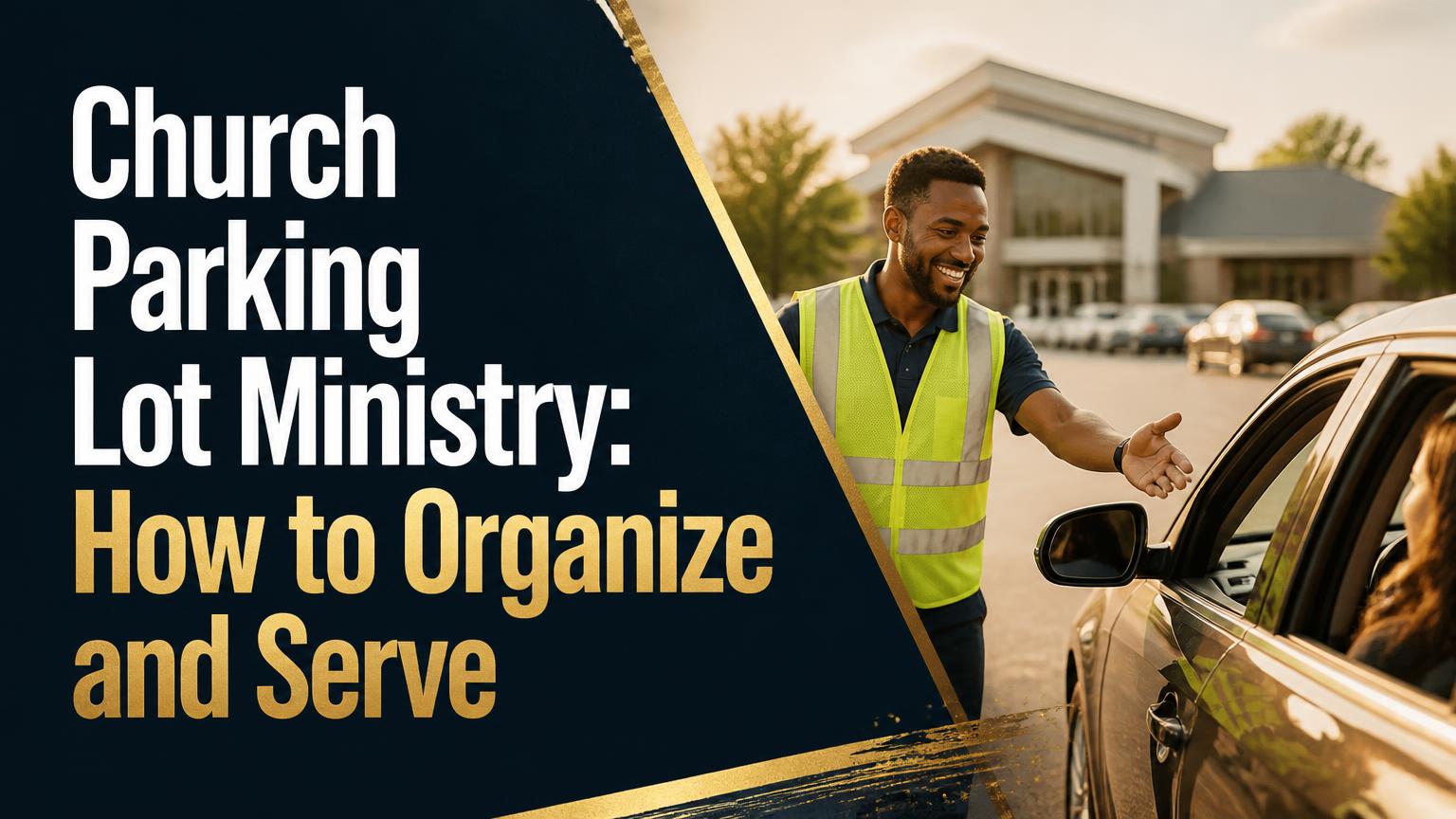
A church parking lot ministry turns arrival and departure into opportunities for practical Christian service. Volunteers guide vehicles, welcome guests, assist people with mobility or family needs, respond calmly to problems, and help the campus feel orderly and hospitable. Although the work may appear logistical, it shapes a visitor’s first experience of the congregation. Effective ministry requires more than reflective vests and traffic cones: it depends on clear roles, thoughtful planning, safety awareness, accessibility, wise communication, and a genuine desire to serve people rather than control them.
Church Parking Lot Ministry: How to Organize and Serve
A well-organized parking lot ministry helps people move from the street to the sanctuary with less confusion and more care. Its purpose is not simply to fill spaces efficiently. It is to notice people, reduce avoidable stress, protect vulnerable individuals, and communicate the church’s welcome through practical action.
The ministry should support—not replace—professional emergency services, facility management, or lawful traffic-control procedures. Churches should follow applicable local regulations, insurance requirements, accessibility standards, and property policies. Volunteers also need clear boundaries: they can assist and direct, but they should not make unsafe traffic decisions, physically intervene in conflicts, or provide medical care beyond their training.
Define the Ministry’s Mission
Begin with a concise mission statement such as: “We help every person arrive, park, and enter safely while demonstrating the welcome and compassion of Christ.” This statement keeps the team focused on people rather than merely on vehicles.
The ministry may serve regular attenders, first-time guests, older adults, parents carrying infants, people with disabilities, delivery workers, and those who are anxious or unfamiliar with the property. A volunteer who notices a confused visitor and walks them to the correct entrance may be serving just as meaningfully as someone directing traffic.
Build a Team With Clear Roles
A parking lot coordinator should oversee the schedule, weather decisions, supplies, communication, and coordination with church leadership. Other roles may include entrance greeters, parking guides, accessibility assistants, shuttle or drop-off attendants, and volunteers assigned to the exit after worship.
Do not assume every volunteer can perform every task. Directing vehicles requires alertness, good judgment, and a clear view of traffic. Greeting requires warmth and attentiveness. Assisting someone with mobility requires respect and permission. Assign people according to their abilities, and provide a substitute plan for absences so that the ministry does not depend on one unusually committed person.
Create a Site-Specific Service Plan
Walk the property during the busiest expected arrival period before launching the ministry. Identify entrances, exits, pedestrian crossings, accessible parking, drop-off points, lighting problems, drainage issues, snow or ice hazards, confusing signs, and locations where vehicles and pedestrians compete for space.
A written plan should answer practical questions:
- Where will volunteers stand?
- Which entrance should guests use?
- How will traffic flow during arrival and departure?
- Where can a parent safely unload children?
- How will accessible spaces remain available for those who need them?
- What happens during rain, extreme heat, darkness, or an emergency?
- How will volunteers communicate without shouting across moving traffic?
Use simple signs and consistent signals. Cones, high-visibility clothing, flashlights for low-light conditions, radios or phones, umbrellas, and name badges can help, but equipment never substitutes for training and sound judgment.
Welcome People Without Pressuring Them
A parking volunteer should offer assistance without making visitors feel watched or managed. A natural greeting might be, “Good morning. Is this your first time here?” or “Can I help you find the children’s entrance?” If someone declines assistance, respect the answer while remaining available.
Hospitality includes recognizing practical needs. A volunteer may point out restrooms, help a guest locate an elevator, escort an older adult to the entrance, or explain where children check in. These actions should preserve dignity. Ask before touching a person, wheelchair, walker, vehicle, or personal belongings, and avoid drawing unnecessary attention to someone’s disability or circumstance.
Make Safety and Accessibility Part of the Ministry
Safety is a form of love because it takes people’s bodies, limitations, and vulnerability seriously. Volunteers should keep pedestrian routes clear, watch for children moving between cars, avoid standing where drivers cannot see them, and never encourage drivers to move faster than conditions allow.
Accessibility requires more than reserving marked spaces. Entrances should be reachable through stable, unobstructed paths, and drop-off areas should allow people to exit vehicles safely. Churches should follow the accessibility requirements that apply in their jurisdiction and regularly inspect routes rather than assuming conditions remain unchanged.
The team also needs an escalation process. Volunteers should know whom to contact for a medical concern, lost child, suspicious situation, severe weather event, vehicle collision, or aggressive behavior. They should call emergency services when appropriate instead of trying to solve serious incidents alone.
Review the Ministry and Improve It
After several weeks, ask both volunteers and attendees what creates confusion or unnecessary difficulty. Useful questions include: Where do guests hesitate? Which spaces fill first? Are accessible routes blocked? Do families understand where to go? Are volunteers present at the right times, or are they standing in the lot after the main need has passed?
Evaluation should examine service quality, not just parking speed. A ministry may move cars efficiently while still making guests feel ignored. Conversely, a warm team may need better traffic procedures. Short debriefs, incident records, and periodic site walks help leaders correct problems before they become normal.
The Biblical Foundation for Parking Lot Service
Christian service is not limited to visible activities inside a worship service. Romans 12:13 connects generosity and hospitality with ordinary life among God’s people. A parking volunteer practices hospitality by reducing confusion, noticing a newcomer, and making room for someone whose needs differ from the majority. The action is small, but the underlying posture is significant: people are treated as neighbors to love rather than interruptions to manage.
Jesus’ teaching about the Good Samaritan in Luke 10:25–37 also directs attention toward practical compassion. The Samaritan did not offer vague concern; he saw a person in need, responded wisely, used available resources, and accepted an appropriate cost. A church parking team applies the same principle in a modest setting by observing real needs and responding within its competence. Philippians 2:3–4 adds an important correction to status-driven service: volunteers should consider the interests of others without using ministry as a way to gain recognition or authority.
This biblical foundation does not mean every parking problem is a spiritual emergency. It means ordinary responsibilities can express Christian character. Patience in a traffic delay, gentleness with a confused guest, fairness in assigning spaces, and restraint when someone is rude can all become practical expressions of love.
A Practical Sunday Workflow
Preparation should begin before volunteers enter the lot. The coordinator checks the weather and site conditions, confirms assignments, verifies communication devices, reviews any special events, and ensures that accessible spaces and pedestrian routes are usable. A brief prayer and safety reminder can establish the right tone without replacing practical instruction.
During arrival, volunteers should take their positions before the first significant group of vehicles appears. One person should not attempt to greet guests, direct traffic, answer facility questions, and monitor children simultaneously. As worship begins, the team can transition from active traffic direction to entrance assistance, late-arrival guidance, and support for people who need help.
Departure often deserves equal planning. Vehicles may leave at the same time, pedestrians may cross unexpectedly, and volunteers may be tired after a long morning. Keep crossing points visible, avoid creating competing directions, and release traffic in a way that protects people walking to their cars. Afterward, collect equipment, report hazards or incidents, and record changes needed for the following week.
Training Volunteers for Competent Service
Training should be short enough for people to remember and specific enough to affect behavior. Demonstrate where volunteers should stand, how they should signal, how to communicate with drivers, and when they must step back. Practice common situations such as a confused first-time guest, a blocked accessible space, a child separated from a parent, a minor vehicle collision, and severe weather.
Every volunteer should know the limits of the role. They should not diagnose medical conditions, search someone’s vehicle, confront a suspected criminal, promise confidentiality in a safeguarding situation, or physically restrain a person unless a properly trained professional and applicable procedures require it. They should report concerns to designated leaders and emergency services when necessary.
Training should also address tone. A volunteer can be technically correct and still communicate hostility through pointing, impatience, or public correction. Calm speech, clear directions, eye contact when safe, and a willingness to apologize can prevent small misunderstandings from becoming conflicts.
Common Mistakes to Avoid
One common mistake is treating the ministry as a parking operation rather than a people ministry. When efficiency becomes the only goal, volunteers may rush families, ignore pedestrians, or reserve the warmest welcome for people who appear influential. Another mistake is assigning unclear authority. If three volunteers give drivers different directions, confusion and frustration follow.
Churches also sometimes begin without a written plan for bad weather, accessibility, emergencies, or volunteer absence. This leaves individuals to improvise under pressure. A further problem is placing untrained people in dangerous locations or expecting older volunteers, parents with small children, or people with health limitations to perform tasks that do not suit them.
Finally, avoid measuring success only by the number of cars parked. A better assessment asks whether people were safe, whether guests could find their way, whether vulnerable individuals received appropriate assistance, and whether volunteers served with patience and respect.
Conclusion
A church parking lot ministry is a practical expression of welcome, stewardship, and neighbor love. Its work includes traffic guidance, but its deeper purpose is to help people arrive safely, feel noticed, and connect with the church without unnecessary barriers. The strongest ministries combine spiritual motivation with competent organization: clear roles, site-specific planning, accessibility, safety procedures, respectful communication, and regular evaluation. When volunteers serve without seeking control or recognition, even a brief interaction beside a parked car can reflect the humility and care Christians are called to show.