
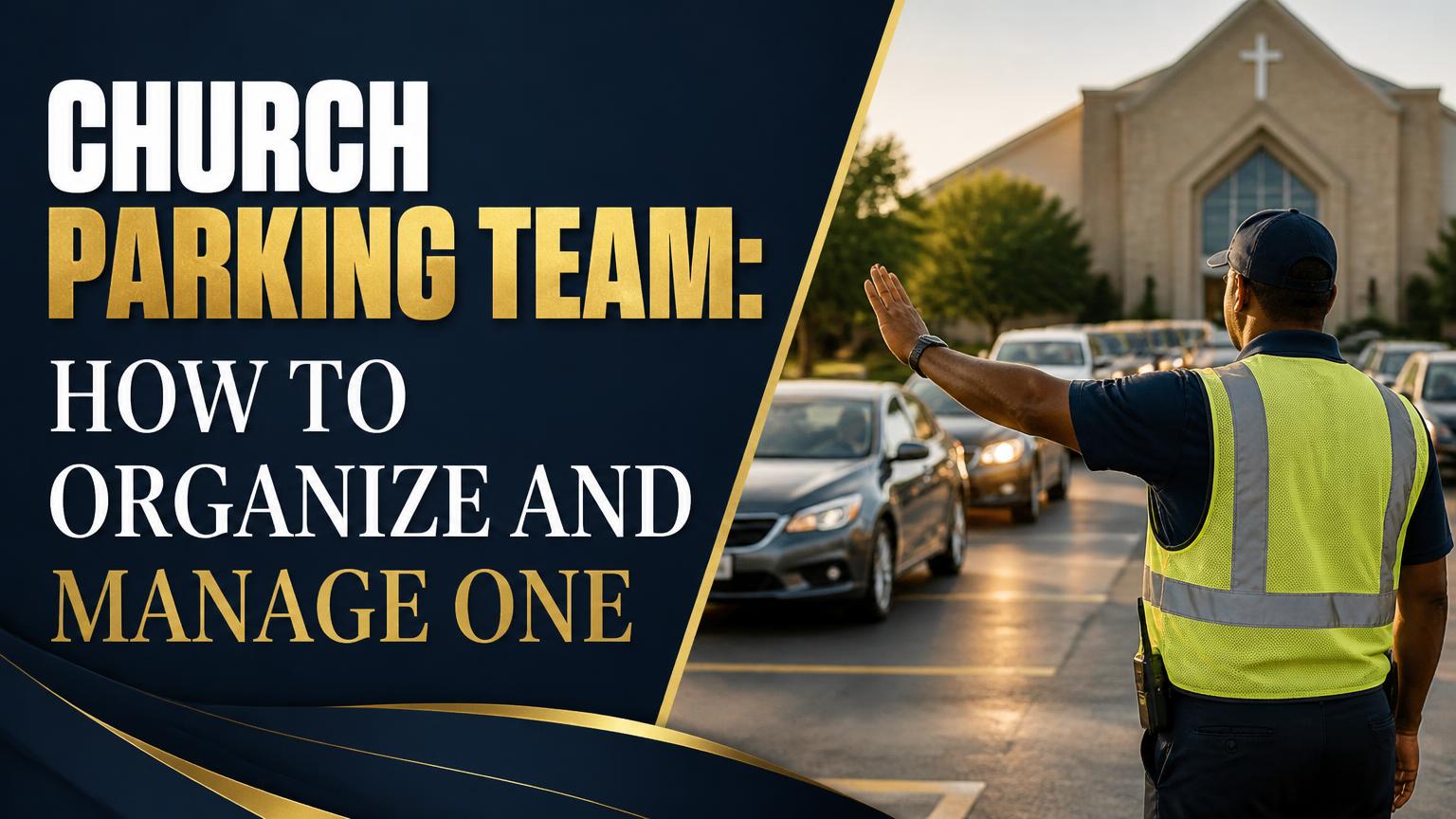
A church parking team organizes vehicle movement, protects pedestrians, assists visitors, and helps people enter and leave worship services with less confusion. It is more than a group of volunteers holding signs: an effective team combines hospitality, traffic planning, safety awareness, accessibility, and clear communication. The best teams are visible without being intrusive, prepared for normal and unusual conditions, and coordinated closely with greeters, ushers, facilities staff, and church leadership.
Church Parking Team: Purpose, Roles, and Responsibilities
Why a Church Needs a Parking Team
A parking team manages the arrival experience before people reach the sanctuary. On a busy Sunday, drivers may be unfamiliar with the property, families may be unloading children, pedestrians may cross active lanes, and visitors may not know where to park. Without direction, vehicles can block fire lanes, accessible spaces, entrances, or one another.
The team’s purpose is therefore both practical and relational. Volunteers reduce congestion while helping people feel welcomed rather than corrected or hurried. Romans 12:13 connects Christian hospitality with meeting practical needs, and parking assistance can express that principle in a simple, organized way. The team should serve everyone fairly, including visitors, older adults, people with disabilities, families, staff, and regular attendees.
Core Roles to Assign
A church does not need a large staff to operate a parking ministry, but it does need clearly assigned responsibilities. Depending on the size of the property and the number of attendees, one person may cover several roles. Larger congregations should avoid placing every volunteer at the main entrance while leaving the rest of the lot unmanaged.
Useful assignments include:
- Parking coordinator: Creates the plan, checks conditions, assigns positions, and handles decisions during the service.
- Entrance attendants: Welcome arriving drivers, identify available areas, and prevent bottlenecks at the entrance.
- Lot guides: Direct vehicles into open rows and help maintain the intended traffic pattern.
- Accessible-parking host: Keeps accessible spaces and access aisles clear and assists people who request help.
- Pedestrian-safety volunteers: Monitor crossings near entrances, children’s areas, sidewalks, and busy driveways.
- Overflow coordinator: Directs drivers to secondary lots or approved street-side areas when the main lot fills.
- Communication or relief volunteer: Carries a radio, replaces volunteers for breaks, and relays changing instructions.
The coordinator should give every person a defined location, task, and escalation procedure. “Help wherever needed” sounds flexible but often produces gaps, duplicated effort, and conflicting directions.
How to Plan the Parking Layout
Begin with a simple map showing entrances, exits, driving lanes, pedestrian routes, accessible spaces, visitor parking, staff parking, fire lanes, drop-off points, loading zones, and overflow areas. Observe the property during the busiest arrival and departure periods rather than planning only from a map. A layout that works when the lot is half-empty may fail when every aisle is occupied.
Use signs and cones to make the intended flow obvious. If possible, establish separate entry and exit points or a one-way circulation pattern. Keep the area nearest the building available for people who need shorter walking distances, but follow applicable accessibility rules rather than creating informal exceptions. Do not use fire lanes, emergency access routes, sidewalks, or accessible access aisles as temporary parking.
Plan for predictable changes. Rain, snow, darkness, construction, funerals, weddings, youth events, and seasonal attendance can alter the parking pattern. Decide in advance where cars will go when the primary lot is full and who will make the changeover announcement.
The Arrival and Departure Procedure
Arrival and departure require different strategies. During arrival, the team should spread vehicles efficiently, identify open spaces, and protect pedestrians near the building. During departure, many drivers leave at the same time, attention is divided, and backing vehicles create additional hazards. A good team plans both phases rather than treating parking as finished once the service begins.
A practical service-day procedure is:
- Inspect the property: Check lighting, signs, cones, ice, standing water, blocked routes, and unexpected obstacles.
- Brief the team: Review assignments, weather conditions, expected attendance, accessible parking, overflow plans, and radio channels.
- Open positions early: Volunteers should be visible before the main arrival wave.
- Use consistent directions: Agree on hand signals and avoid giving drivers contradictory instructions.
- Monitor pedestrian movement: Give people on foot priority at marked crossings and building entrances.
- Manage overflow deliberately: Close a full section and redirect drivers before congestion spreads.
- Prepare for dismissal: Move volunteers into departure positions before the service ends.
- Inspect afterward: Check for blocked vehicles, lost children, damaged property, trash, and remaining safety hazards.
Volunteers should never direct a driver into a space they cannot clearly see or stand directly behind a reversing vehicle. If a driver appears confused, stop providing rapid gestures and communicate calmly from a safe position.
Safety, Accessibility, and Emergency Readiness
Parking volunteers are not automatically law-enforcement officers, traffic engineers, or security guards. Their job is to guide and assist within the church’s procedures, not to physically control people, confront suspected criminals, or improvise dangerous traffic interventions. They should know when to call a supervisor, facility manager, emergency service, or law-enforcement agency.
High-visibility clothing helps drivers identify volunteers, particularly at dusk or in poor weather. Flashlights or illuminated wands may improve visibility, but they should supplement clear signs and safe positioning rather than encourage volunteers to step into traffic. Volunteers should remain out of blind spots, avoid standing between vehicles, and never place themselves in the path of a moving car.
Accessibility requires more than reserving a few spaces. Keep accessible routes, curb ramps, sidewalks, passenger loading areas, and access aisles unobstructed. Offer assistance without assuming what a person needs or touching mobility equipment without permission. Requirements vary by jurisdiction and property type, so church leaders should verify applicable accessibility and fire-safety rules rather than relying solely on custom.
Training and Communication
A short orientation before a volunteer’s first shift can prevent many problems. Training should cover the parking map, assigned positions, hand signals, radio or phone procedures, weather precautions, emergency contacts, accessibility expectations, child-safety boundaries, and methods for handling frustrated drivers. Volunteers should understand that courtesy and safety take precedence over filling every available space.
Use one communication system and a small set of plain-language messages. For example, “Main lot full,” “Pedestrian concern at west entrance,” and “Medical assistance needed at the drop-off” are clearer than vague statements such as “We have a situation.” Radios should be tested before service, and the coordinator should know which volunteers can make decisions and which should report issues.
Role rotation also matters. Standing in cold, heat, rain, or direct sun can reduce attention and create avoidable health risks. Schedule relief periods, provide water and weather-appropriate equipment, and assign indoor responsibilities when conditions become unsafe.
How to Manage the Team on Service Days
Before the First Vehicle Arrives
The coordinator should arrive early enough to inspect the property without rushing. Confirm that signs are visible, cones are correctly placed, access routes are open, and no delivery, construction, or maintenance activity has changed the plan. If the church shares a lot with another organization, verify any special restrictions before directing cars.
Hold a brief team meeting rather than sending volunteers directly to their posts. State the expected attendance, explain the traffic pattern, identify the person in charge, and review what to do if the lot fills or an emergency occurs. A written checklist makes the process repeatable when the usual coordinator is absent.
While Vehicles Are Arriving
The team should guide drivers with calm, predictable movements. Volunteers should point toward open areas, but they should not wave a vehicle forward unless they can confirm that the route is clear. Where possible, encourage drivers to follow signs instead of relying entirely on hand signals; signs provide continuity when a volunteer is temporarily distracted or replaced.
Give special attention to conflict points: entrances shared by cars and pedestrians, narrow aisles, drop-off zones, and places where drivers reverse out of spaces. A volunteer should not attempt to solve congestion by creating a second, unofficial traffic pattern. If the plan is failing, the coordinator should pause incoming traffic or redirect vehicles rather than letting individual volunteers improvise.
During and After the Service
The parking team should not disappear as soon as the last arriving car is parked. At least one person should monitor the lot for urgent issues and remain available for late arrivals, mobility assistance, or a vehicle that needs help. Before dismissal, volunteers should move into positions that protect pedestrian crossings and manage the busiest exits.
After the lot clears, record what happened. Note where congestion formed, whether signs were sufficient, how long the overflow plan lasted, and whether any accessible spaces or pedestrian routes were blocked. A five-minute review can improve the next service more effectively than repeatedly relying on memory.
Common Church Parking Problems and Better Solutions
Conflicting Directions
Drivers become frustrated when one volunteer sends them left while another sends them right. This usually results from unclear authority or volunteers who have not reviewed the same map. Give the coordinator final responsibility for changes, use consistent terminology, and tell volunteers to report problems rather than redesigning the route independently.
Filling Every Space Too Quickly
Packing cars tightly may appear efficient, but it can prevent late arrivals from finding exits, leave no room for emergency access, and make vehicles difficult to maneuver. Efficiency means maintaining a usable system, not simply occupying pavement. Preserve turning space, keep designated routes open, and close a section when it can no longer function safely.
Treating Visitors Like Exceptions to the Plan
Some churches reserve all convenient spaces for members or staff, forcing visitors to search while regular attendees receive preferential treatment. A better approach reserves only spaces justified by accessibility, operational needs, or a clearly communicated ministry purpose. Use signs or a parking host to identify visitor-friendly areas without creating confusion or unfair enforcement.
Ignoring the Departure Rush
A well-managed arrival can still end with blocked aisles and unsafe crossings if no one plans dismissal. Study where pedestrians naturally walk after the service and place volunteers at those points. Encourage drivers to wait patiently rather than competing for an exit, and keep emergency lanes open even when the lot is crowded.
Expanding Volunteer Duties Without Boundaries
Parking volunteers may notice lost children, suspicious behavior, medical needs, or disputes. They should report concerns through established church procedures instead of pursuing people, searching vehicles, or using force. Clear boundaries protect volunteers and the congregation while ensuring that serious matters reach people qualified to respond.
Conclusion
A strong church parking team combines organized traffic flow with genuine hospitality. Its work begins with a realistic site plan and clear assignments, continues through safe and courteous guidance, and ends with a deliberate departure process and brief review. The most important principles are consistency, visibility, accessibility, communication, and restraint: volunteers should help people move safely without improvising authority they do not possess. When church leaders train the team, protect volunteers from unsafe conditions, and improve the plan through observation, parking becomes a dependable part of the church’s welcome rather than a recurring source of confusion.