
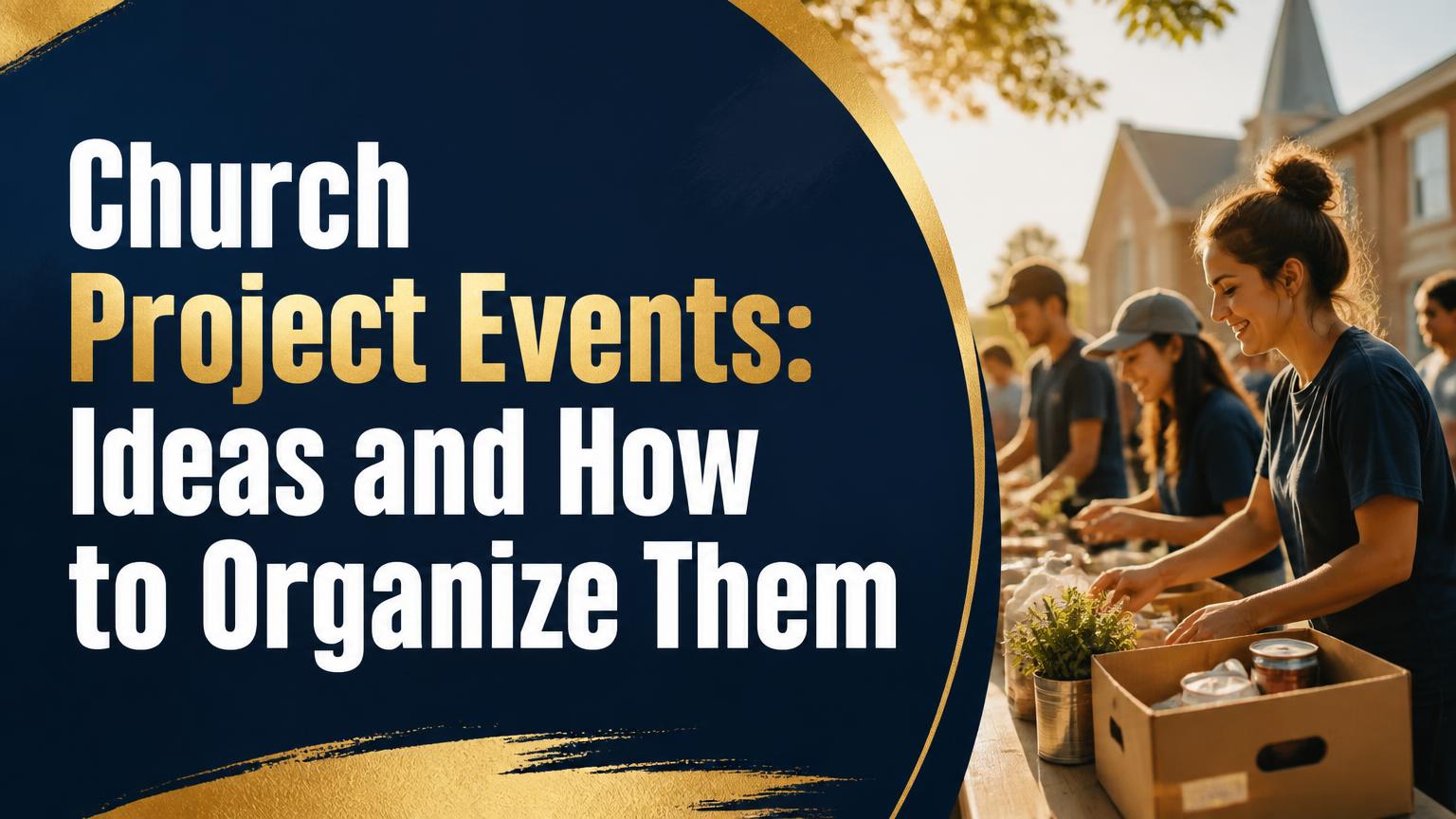
Church project events bring people together to complete a practical, shared task that serves the congregation, supports neighbors, or strengthens the church’s ministry. Unlike a standard fellowship gathering, the central purpose is usually a tangible outcome: cleaning a public space, preparing meals, repairing a home, collecting supplies, or improving church facilities. The strongest events combine meaningful service with clear organization, appropriate volunteer roles, realistic goals, and respectful relationships with the people being served.
Church Project Events: Ideas That Serve Real Needs
A good church project begins with a real need rather than an activity chosen only because it is easy to advertise. Leaders should listen to the congregation and the surrounding community, identify what the church can responsibly address, and design a project that matches available skills, time, money, and volunteers. The following ideas can be adapted for small churches, large congregations, youth groups, women’s or men’s ministries, and intergenerational teams.
Neighborhood Cleanup and Improvement Projects
A congregation can organize a cleanup of a public park, neighborhood street, school garden, community center, or area surrounding the church. Other possibilities include repainting an approved public space, planting trees, removing invasive plants, assembling raised garden beds, or collecting litter after a local event.
These projects are relatively accessible because they can include children, older adults, people with limited experience, and volunteers who cannot commit to long-term service. Before beginning, obtain permission from the property owner or relevant authority, identify hazards, provide gloves and tools, and arrange disposal of collected materials. The project should improve a place that the wider community actually uses, not merely create the appearance of service.
Food, Clothing, and Household Support Projects
Church members can collect and sort food, winter clothing, hygiene products, school supplies, diapers, or household essentials for a food pantry, shelter, refugee-support ministry, or families referred by a trusted local partner. Rather than accepting random donations, organizers should first ask what items are needed, what quantities can be stored, and whether restrictions apply.
A more focused event might prepare fresh meals for a shelter, assemble grocery boxes for older adults, or create welcome kits for families moving into stable housing. Clear purchasing lists reduce waste and make participation easier. Distribution should protect recipients’ dignity: avoid unnecessary public photography, do not treat people as ministry props, and work through organizations that understand local needs.
Home Repair and Practical Assistance Days
Volunteers with appropriate skills can help older adults, people with disabilities, single parents, or families facing financial hardship with tasks such as yard maintenance, painting, minor repairs, accessibility improvements, or weather preparation. Churches without skilled tradespeople can still contribute by organizing teams for cleaning, moving, landscaping, or basic maintenance while referring electrical, plumbing, structural, or roofing work to qualified professionals.
Safety and boundaries matter particularly in home-based projects. Obtain consent, define the work in writing, check insurance requirements, and avoid promising repairs the church cannot complete. A project may be more successful when it handles one clearly defined need—such as installing handrails or preparing a yard for winter—rather than attempting an entire renovation in one day.
Care and Connection Projects
Some church project events focus on reducing isolation and strengthening relationships. Examples include assembling handwritten encouragement cards for nursing-home residents, preparing care packages for college students, visiting homebound members with trained teams, hosting a practical support day for caregivers, or organizing a community meal with conversation tables.
These events should not be presented as a substitute for professional care, counseling, medical treatment, or ongoing pastoral support. Their value lies in dependable human attention and practical kindness. Teams should receive guidance about confidentiality, appropriate conversation, transportation, safeguarding, and when a concern should be referred to a pastor, social worker, emergency service, or other qualified professional.
Church Facility and Ministry Projects
Not every project must take place outside the congregation. A church may hold a workday to repair classrooms, organize storage, improve accessibility, prepare a nursery, create a prayer garden, update signage, or assemble ministry materials. Internal projects can remove obstacles that affect worship, discipleship, hospitality, and children’s programs.
These events are most effective when leaders distinguish essential work from cosmetic preferences. A clean, accessible children’s area may directly support families; a complicated redesign that consumes the budget without improving ministry may not. Invite people to contribute according to ability, including planning, labeling, painting, cooking, data entry, transportation, and cleanup.
How to Organize a Church Project Event
Organization determines whether a service idea becomes a constructive experience or a stressful day with unclear expectations. The planning process should move from need to outcome, then from outcome to people, resources, safety, and follow-up. A simple event can require less preparation, but it still benefits from a named coordinator and a written plan.
Define the Need and the Measurable Outcome
Start by describing the need in one or two precise sentences. “Help the community” is too broad to guide decisions; “prepare 100 grocery boxes requested by a local pantry” gives the team a usable direction. Identify who requested the project, who will benefit, what permission is required, and what completion will look like.
Set an outcome that can be observed without reducing service to a scorecard. Examples include preparing 75 meals, cleaning three blocks, repairing four homes, or creating an accessible entrance. Also define what the event will not attempt. Clear limits protect volunteers from overcommitment and prevent recipients from receiving promises the church cannot keep.
Build a Small Planning Team With Clear Roles
A project coordinator should oversee the event, but one person should not carry every responsibility. Assign specific roles such as volunteer coordinator, site or partner liaison, supplies manager, transportation lead, finance contact, safety lead, food coordinator, and communications person. Smaller events may combine several roles, while larger projects need team leaders for each work area.
Choose people for reliability and suitability, not only enthusiasm. Someone who understands the partner organization may be more valuable than someone who speaks most confidently in meetings. Share written responsibilities, decision-making authority, deadlines, and contact information. When volunteers know whom to approach, the event is less likely to stall over small problems.
Create a Practical Budget and Supply Plan
List every expected cost, including materials, equipment rental, transportation, meals, protective gear, permits, waste disposal, printing, childcare, and contingency funds. Decide which expenses the church will cover, which items can be donated, and which purchases require approval. A donation drive should not be announced until the team knows that the items are needed and can be stored or distributed responsibly.
Prepare a supply checklist with quantities and an owner for each item. Check tools before the event, label shared equipment, and arrange replacements for items likely to be lost or damaged. If the project involves money or donated goods, use ordinary church financial controls so that generosity remains accountable and transparent.
Plan the Schedule, Site, and Volunteer Experience
Give volunteers a clear start time, meeting location, parking instructions, clothing guidance, expected end time, and contact number. Build the schedule around the work rather than assuming that every project requires a full day. A two-hour, well-defined project may produce better participation than an exhausting event with uncertain boundaries.
At the beginning, provide a short orientation covering the purpose, work assignments, safety rules, breaks, restrooms, emergency procedures, and questions. Pair inexperienced volunteers with capable team leaders. Include meaningful roles for people who cannot lift, climb, drive, or work outdoors. Registration should gather only information that the event genuinely requires, such as emergency contacts, dietary needs, transportation needs, or relevant skills.
Protect Participants and the People Being Served
Risk management is part of Christian care, not an administrative distraction. Review hazards related to tools, traffic, weather, lifting, chemicals, food handling, animals, unfamiliar homes, and working with children or vulnerable adults. Use age-appropriate assignments, require supervision where needed, and follow applicable safeguarding, insurance, and consent requirements.
Do not assume that goodwill makes a task safe. Postpone outdoor work during dangerous weather, provide water and rest periods, use protective equipment, and establish a process for reporting injuries or concerns. For projects involving private homes or vulnerable people, use background-checked or appropriately trained volunteers when required, avoid isolated one-on-one situations, and respect privacy.
Communicate Before, During, and After the Event
Promote the project with a specific invitation: explain the need, date, location, tasks, time commitment, and skills required. “Volunteers needed” is less useful than “Two drivers, four people to sort supplies, and six volunteers for outdoor work are needed from 9 a.m. to noon.” Personal invitations often help people understand where they can contribute.
On the day, use a sign-in process, visible team assignments, and one source of current instructions. Afterward, thank volunteers specifically, report the completed work honestly, return borrowed equipment, settle expenses, and ask the partner what should happen next. Follow-up may reveal that the immediate project helped but exposed a larger need requiring a different response.
Choosing the Right Church Project Format
The best format depends on the desired outcome, the people being served, and the church’s actual capacity. A one-day service event works well for a defined task with a clear endpoint. A recurring monthly project may be better when the need involves relationships, maintenance, food distribution, or ongoing mentoring. A project fair can let volunteers choose among several tasks, but it requires more coordination and may dilute attention if too many options are offered.
Consider whether the church should lead the project or support an established community partner. Churches often have volunteers and goodwill but lack specialized knowledge of housing, poverty, disability access, disaster response, or social services. Partnership can prevent duplicated effort and reduce unintended harm. The church’s role may be to provide labor, funding, transportation, meals, or consistent volunteers rather than create a separate program.
Making Church Project Events Welcoming and Sustainable
Participation increases when the event accommodates different ages, physical abilities, schedules, languages, and levels of experience. Offer seated, administrative, logistical, creative, technical, and hands-on roles. If children participate, define age limits and adult supervision clearly. Consider transportation, accessible facilities, shade, rest areas, dietary needs, and whether the time and location exclude people who work weekends or depend on public transit.
Sustainability also requires honest evaluation. After the event, ask what need was addressed, what resources were used, what volunteers learned, what the partner observed, and whether the church should repeat, revise, or stop the project. A successful event is not necessarily the largest one. It may be the project that meets a real need without exhausting volunteers, embarrassing recipients, wasting supplies, or creating obligations the church cannot maintain.
The Christian purpose of service is also broader than visible productivity. Jesus connects love of neighbor with concrete action, while Galatians 6:10 encourages believers to do good as opportunities arise. Those principles call for both compassion and wisdom: service should honor people, respect local knowledge, and seek faithful stewardship rather than recognition. Photographs, attendance numbers, and public praise may be secondary to whether people experienced genuine help and respectful treatment.
Common Mistakes to Avoid
Church project events often struggle because the activity was chosen before the need was understood. Other common problems include unclear leadership, unrealistic schedules, too many volunteers for the available work, insufficient tools, vague instructions, and failure to coordinate with the organization or household receiving assistance. These issues can turn a well-intended event into wasted labor or additional work for the people it was meant to help.
Avoid treating recipients as passive objects of charity. Ask permission, listen to preferences, protect confidentiality, and involve people in decisions affecting their homes or communities. Avoid promising long-term support after a single event, and do not measure faithfulness only by visible scale. A modest project completed carefully can be more responsible than a dramatic event that leaves unfinished work and disappointed expectations.
Conclusion
Church project events are organized opportunities to turn shared faith into practical service, whether the work involves neighborhood improvement, food assistance, home repairs, care for isolated people, or improvements to church facilities. The most effective events begin with a verified need, define a realistic outcome, assign clear responsibilities, prepare supplies and safety procedures, and treat every participant and recipient with dignity. Good planning does not make service less spiritual; it helps the church serve consistently, wisely, and in ways that produce genuine benefit beyond the event itself.