
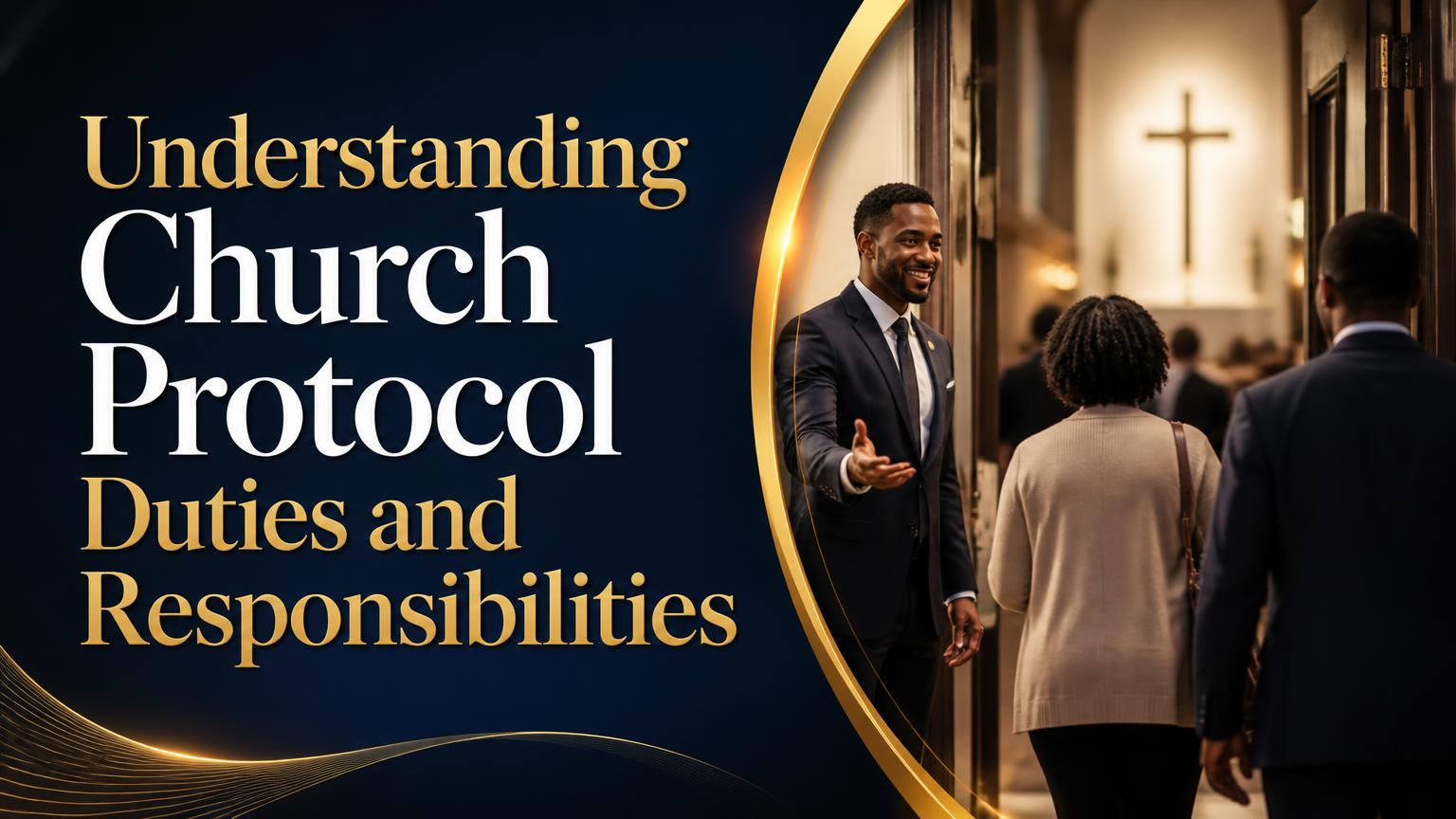
Church protocol duties involve organizing the formal, practical, and relational details that allow a church service, ceremony, conference, or official visit to proceed respectfully and smoothly. The person or team responsible for protocol may coordinate leaders, welcome guests, manage seating and processions, communicate the order of service, prepare participants, and respond discreetly when plans change. These duties are more than ceremonial etiquette: they connect hospitality, administration, worship planning, safeguarding, and respect for the church’s structure.
Protocol differs from denomination to denomination. A small congregation may assign these responsibilities to an ushering team or church administrator, while a larger church may have a dedicated protocol officer or committee. In every setting, the goal is to serve people and protect the purpose of the gathering rather than draw attention to the protocol team.
What Are Church Protocol Duties?
Church protocol duties are the responsibilities involved in maintaining proper order, courtesy, coordination, and hospitality during church activities. They apply especially when services include clergy, visiting ministers, public officials, choirs, guest speakers, processions, ceremonies, or large numbers of attendees.
Effective protocol balances two principles. First, the gathering should follow an agreed structure so that participants know where to go, when to act, and whom to consult. Second, people should be treated with dignity rather than reduced to their titles or positions. Biblical principles such as doing things “decently and in order” (1 Corinthians 14:40) and showing honor without partiality (James 2:1–4) support this balance.
Establish Order Before the Service or Event
Protocol personnel prepare the practical framework before people arrive. This may include confirming the program, identifying participants, checking entrances and reserved areas, reviewing the seating plan, preparing name badges, and ensuring that microphones, robes, ceremonial items, and printed materials are ready.
They also clarify the chain of communication. Everyone involved should know who has authority to make last-minute decisions, who will escort guests, who will signal transitions, and who will handle emergencies. A written schedule or running order is useful because it converts a general plan into specific movements and responsibilities. Good preparation reduces confusion without making the event feel rigid.
Receive and Care for Guests
Welcoming guests is a central church protocol responsibility. Guests may include visiting clergy, missionaries, denominational representatives, community leaders, family members at a wedding or funeral, or people attending church for the first time. Protocol workers should greet them, confirm their roles, explain the program, direct them to appropriate areas, and introduce them to the host or presiding minister.
Hospitality should be attentive rather than excessive. A guest may need information about pronunciation, timing, dress expectations, parking, accessibility, or whether participation is expected. The protocol team should also avoid assumptions about titles, family relationships, mobility, or religious customs. A quiet clarification before the event is usually more respectful than a public correction during it.
Coordinate Clergy, Leaders, and Participants
Church protocol often functions as the communication link between the minister or presiding leader and everyone taking part in the service. This can involve confirming who will lead prayers, read Scripture, preach, present gifts, carry symbols, make announcements, or participate in a procession.
The protocol coordinator should verify names, titles, pronunciations, order of appearance, and special requirements. Participants need to know where to assemble, how long their contribution should take, and what cue begins or ends their role. If a participant is delayed or unable to serve, the protocol team helps identify an appropriate alternative without creating embarrassment.
Coordination also requires respect for ecclesiastical authority. Protocol personnel organize and communicate; they should not independently change doctrine, worship content, or official decisions unless the authorized leader has delegated that responsibility.
Manage Movement, Seating, and Transitions
Seating and movement are visible aspects of church protocol. Duties may include arranging reserved seats, preparing a processional order, escorting dignitaries, directing the wedding party, positioning choirs or musicians, and helping people move safely between parts of the service.
A seating plan should reflect the purpose and customs of the event. In some settings, official precedence matters; in others, family relationships, ministry responsibilities, or practical accessibility matter more. A title alone does not determine every seating decision. The host church should establish the order in advance and explain it to those affected.
Transitions deserve particular attention because delays often occur between activities. Protocol workers can give discreet cues, monitor the readiness of participants, and adjust timing when a service runs longer than expected. Their work should remain mostly invisible: the congregation experiences a coherent service rather than seeing the machinery behind it.
Protect Dignity, Safety, and Confidentiality
Church protocol includes responsibilities that are ethical and sometimes safety-related. Team members may need to manage crowded entrances, protect vulnerable people, maintain clear emergency exits, assist attendees with disabilities, and follow the church’s safeguarding procedures. They should know whom to contact if a medical, security, or safeguarding concern arises.
Confidentiality is equally important. Protocol workers may learn private information about illness, family circumstances, pastoral care, security arrangements, or disputes. Such information should be shared only with people who need it to perform their duties. Publicly discussing a guest’s personal situation or using access to leaders for personal advantage undermines trust.
Respect also means avoiding favoritism. Protocol should accommodate legitimate responsibilities and needs, but it should not create humiliation for ordinary worshipers or imply that wealthy, influential, or prominent people have greater spiritual worth.
Church Protocol Duties in Common Settings
The same principles apply across church activities, but the practical responsibilities change according to the setting. A weekly worship service usually requires simple coordination, while a formal installation, funeral, wedding, or denominational gathering may involve detailed ceremonial and logistical planning.
Regular Worship Services
For an ordinary service, protocol duties may include preparing the order of worship, confirming who is serving, checking the pulpit and communion table, coordinating ushers, and ensuring that readers, musicians, and ministers are ready. The team may also guide late arrivals, manage reserved seating, assist visitors, and respond to accessibility needs.
The level of formality should fit the congregation. Protocol should support worship rather than make a routine service feel like a state ceremony. Clear preparation is helpful, but unnecessary displays of rank or elaborate procedures can distract from prayer, preaching, fellowship, and participation.
Weddings, Funerals, and Other Ceremonies
Ceremonial services require careful attention to people, timing, and emotion. At a wedding, protocol may cover the processional, family seating, attendants, music cues, photographs, receiving lines, and movement between the church and reception. At a funeral, it may involve clergy, family members, pallbearers, readings, musicians, guests, and coordination with the funeral director.
Sensitivity matters more than formality in these settings. Families may be grieving, anxious, or unfamiliar with church customs. Protocol workers should provide clear instructions privately, allow reasonable flexibility, and avoid correcting people harshly. They must also protect personal privacy and follow the presiding minister’s direction when unexpected circumstances arise.
Conferences, Official Visits, and Civic Occasions
Large gatherings and official visits require more extensive planning. Protocol may coordinate arrival times, parking, hospitality rooms, introductions, official greetings, gifts, photographs, media access, stage placement, security, and departure arrangements. A detailed run sheet is often necessary because several organizations or leadership groups may be involved.
Precedence can become relevant when clergy, denominational officers, elected officials, or representatives of partner organizations attend. The church should determine the appropriate order according to its own rules and the purpose of the event. Courtesy does not require surrendering the church’s values or allowing an honored guest to disrupt worship, safety procedures, or pastoral priorities.
How Church Protocol Differs From Related Church Roles
Church protocol overlaps with ushering, hospitality, administration, event planning, and worship leadership, but it is not identical to any one of them. Ushers generally focus on welcoming attendees, seating, offerings, directions, and practical care during a service. Hospitality teams may concentrate on food, accommodation, conversation, and visitor follow-up. Event planners manage the broader schedule, budget, vendors, facilities, and logistics.
Protocol focuses especially on formal relationships, sequence, representation, and coordinated conduct. It answers questions such as: Who receives the visiting bishop? Where does a guest speaker wait? Who introduces the civic representative? What is the processional order? Which leader approves a last-minute change? In a small church, one person may perform all these roles, but distinguishing the functions still helps prevent gaps.
Protocol is also different from personal preference. A coordinator may favor a particular seating arrangement or style of greeting, but valid protocol must be based on the church’s policies, denominational customs, the event’s purpose, safety requirements, and the reasonable needs of participants. Written guidelines are especially useful when leadership changes or different teams serve at different events.
How to Perform Church Protocol Duties Well
Strong church protocol depends less on elaborate ceremony than on preparation, communication, judgment, and a servant-minded attitude. The following framework works for both small and large congregations.
Prepare a Written Brief
Before the event, create a brief containing the date, purpose, schedule, venue, participants, contact information, seating plan, processional order, dress expectations, accessibility arrangements, equipment needs, and emergency contacts. Mark which details are confirmed and which remain subject to approval.
Share only the information each person needs. A minister may need the full program, while a volunteer escort may need only the guest’s name, arrival time, location, and destination. This keeps communication clear and reduces the risk of exposing private information.
Conduct a Walk-Through
A walk-through allows the team to test the plan in the actual space. Check entrances, ramps, restrooms, reserved seating, waiting areas, sound equipment, lighting, processional routes, and emergency exits. Participants should practice movements that are unfamiliar, especially when robes, communion elements, ceremonial objects, or large groups are involved.
The walk-through should also identify points where the plan could fail. For example, a narrow aisle may not accommodate a wheelchair and a procession at the same time, or a visiting speaker may have no quiet place to prepare. Solving these problems beforehand is more respectful than improvising publicly.
Communicate Discreetly and Review Afterwards
During the event, use agreed signals, radios, text messages, or designated liaisons rather than calling out instructions across the sanctuary. Corrections should normally be private and calm. If an error occurs, the protocol worker should protect the dignity of the person involved and help the service continue.
Afterward, review what worked and what did not. Record changes for future events: a guest needed clearer directions, the procession began too early, the reserved seating was misunderstood, or an accessibility adjustment was missing. This turns individual experience into institutional knowledge and gradually improves the church’s procedures.
The Character Behind Church Protocol Duties
Protocol is most effective when it expresses service rather than status. A capable protocol worker is organized but flexible, confident but not controlling, attentive to detail but able to see the larger pastoral purpose. The role requires judgment because not every situation can be solved by a fixed rule.
The best standard is to preserve order while honoring people. That means applying church customs consistently, making reasonable accommodations, protecting confidentiality, and recognizing that the person who appears least prominent may have the greatest immediate need. Courtesy, humility, and reliability are therefore as important as schedules and seating charts.
Conclusion
Church protocol duties encompass the preparation, coordination, hospitality, ceremonial order, communication, safety, and discretion needed for church gatherings to function well. They may be performed by a protocol officer, administrator, ushering team, pastor, or volunteer committee, depending on the congregation’s size and tradition. The central responsibility remains the same: help the church represent its values through orderly conduct and genuine care for people. Good protocol does not draw attention to itself. It creates enough clarity and stability for worship, ministry, community, and important ceremonies to proceed with dignity.