
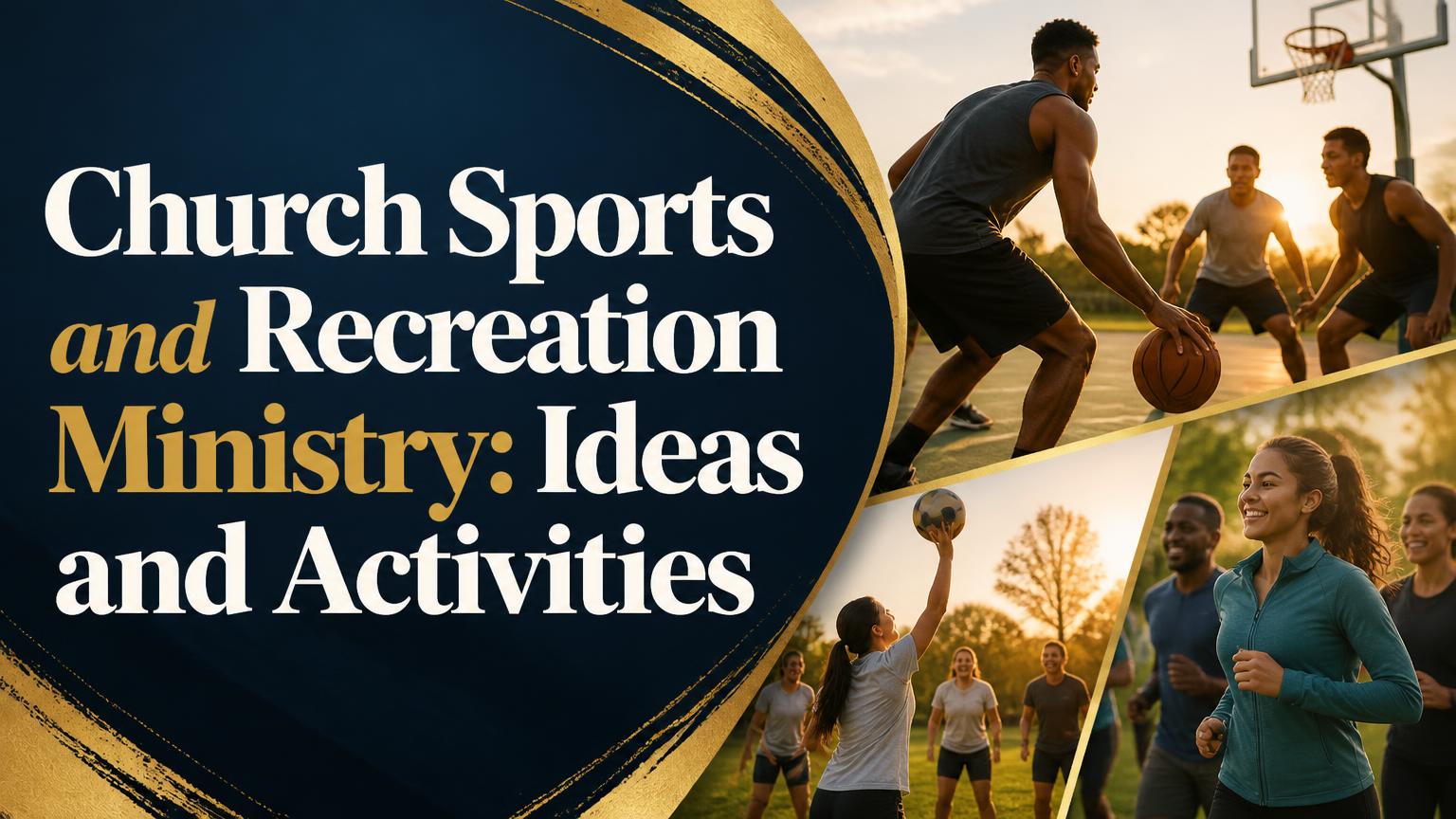
Church sports and recreation ministry uses physical activity, games, and shared leisure to help a congregation build relationships, serve its community, develop character, and create welcoming spaces for discipleship. It can include organized leagues, informal games, walking groups, outdoor outings, fitness classes, or activities adapted for people with disabilities. The activity itself is not the whole ministry. The ministry emerges through the way the church welcomes people, treats competitors, meets real needs, and points participants toward life with Christ.
A healthy program holds two truths together: physical recreation has genuine value, and it must not become more important than spiritual formation or the dignity of the people involved. The strongest ministries therefore combine thoughtful activities with hospitality, safety, inclusion, mentoring, prayer, and consistent relationships.
Church Sports and Recreation Ministry
What It Is—and What It Is Not
Church sports and recreation ministry is the intentional use of sports, exercise, games, and leisure activities to serve people and strengthen Christian community. It may take place inside a church building, on a church field, in a public park, at a recreation center, or through partnerships with local schools and community organizations.
This ministry is more than putting a Christian name on a sports league. A church can run an efficient tournament without creating meaningful ministry. Sports become ministry when leaders use them to welcome outsiders, encourage healthy relationships, model Christlike conduct, identify practical needs, and provide opportunities for spiritual conversations that are genuine rather than forced. Participants should never feel that friendship or access to an activity depends on adopting a particular belief.
Purposes That Give the Ministry Direction
A church sports and recreation ministry can serve several purposes at the same time, but leaders should identify the primary purposes before choosing activities. Common purposes include:
- Building relationships: Repeated practices and games give children, teenagers, adults, and families regular opportunities to know one another.
- Welcoming the community: A low-cost or free activity can introduce people to a church in a natural, nonthreatening setting.
- Developing character: Sports provide real situations in which participants learn self-control, fairness, perseverance, humility, and responsibility.
- Serving practical needs: Recreation may be connected with meals, transportation, equipment access, mentoring, or support for families who lack safe places to gather.
- Encouraging healthy stewardship: Walking groups, fitness classes, and outdoor activities can help people care for their bodies without treating appearance or athletic performance as measures of worth.
- Creating leadership opportunities: Coaches, referees, young assistants, administrators, and hospitality volunteers can use their abilities in service to others.
These purposes should shape the program’s standards. A highly competitive league may serve experienced athletes but exclude beginners. A casual activity may build stronger relationships but require more volunteer consistency. The right choice depends on the people the church hopes to serve.
Ideas and Activities for Different Ages and Abilities
The best activity is one that fits the church’s facilities, volunteers, budget, local interests, and safety capacity. Possible ideas include:
- Youth sports: Soccer, basketball, volleyball, flag football, baseball, or introductory skill clinics can combine instruction with character formation and mentoring.
- Family recreation: Family game nights, parent-child tournaments, swimming outings, skating events, and outdoor adventure days can connect households across generations.
- Adult activities: Walking clubs, recreational volleyball, pickleball, cycling groups, fitness classes, and low-impact exercise can serve adults who want community as much as competition.
- Older-adult programs: Gentle stretching, seated exercise, walking groups, lawn games, and social gatherings can reduce isolation and make participation possible for people with limited mobility.
- Inclusive recreation: Modified rules, adaptive equipment, smaller teams, quieter environments, and trained volunteers can include participants with physical, sensory, intellectual, or developmental disabilities.
- Nonathletic recreation: Board games, gardening, arts activities, hiking, fishing, camping, and skill-sharing events may reach people who do not identify as athletes.
A useful program offers different levels of participation. Someone might play, coach, keep score, welcome guests, provide transportation, prepare food, or simply join the social portion. Giving people multiple ways to contribute prevents athletic ability from becoming the measure of belonging.
Move From an Event to a Ministry Relationship
A one-day tournament can create visibility, but sustained ministry usually requires repeated contact. A church might begin with a community sports day and then invite participants to a weekly program, family meal, mentoring group, or seasonal league. Consistency allows leaders to notice when a child is struggling, when a family needs support, or when a participant is ready for deeper friendship.
Leaders should also plan the moments surrounding the activity. A welcoming check-in, clear introductions, shared refreshments, brief encouragement, and respectful follow-up can matter as much as the game. Prayer may be offered in a way that is appropriate and never coercive. Coaches can model patience when teaching a beginner, apologize after losing control, and explain why fairness matters. Those actions communicate the gospel’s ethical meaning more credibly than religious language disconnected from conduct.
Biblical Foundations for Sports and Recreation Ministry
Treat Physical Activity as a Gift, Not an Idol
Scripture does not present the body as irrelevant to spiritual life. Christians are called to honor God with their bodies, and physical training can provide limited but real value. Paul uses athletic images in 1 Corinthians 9:24–27 and 2 Timothy 4:7 to describe discipline, perseverance, and purposeful effort. These passages do not turn athletic success into a spiritual achievement; they use familiar training practices to illuminate faithfulness.
First Timothy 4:8 provides an important balance: bodily training has some value, while godliness has value for every part of life. A church ministry should therefore encourage health, discipline, and enjoyment without suggesting that athletic performance proves maturity, courage, masculinity, popularity, or divine favor. Participants should be valued whether they win, improve slowly, sit on the bench, or cannot participate physically.
Build Fellowship Through Shared Practice
Christian fellowship involves more than attending the same service. Romans 12:13 calls believers to share with those in need and practice hospitality, while Philippians 2:3–4 directs Christians to consider the interests of others. Recreation creates repeated, ordinary settings in which these principles can become visible.
A coach who gives every child meaningful instruction, a teammate who includes a newcomer, and a church that removes financial barriers are practicing forms of hospitality. Shared activity also reveals relational habits that formal gatherings may conceal. People learn whether the community is patient with mistakes, respectful toward opponents, and attentive to those who are easily overlooked.
Use Competition to Develop Character Rather Than Hostility
Competition is not automatically wrong, but it exposes motives and can magnify pride, anger, favoritism, or fear of failure. First Corinthians 10:31 gives a broad principle: ordinary activities should be conducted for God’s glory. In a sports setting, that includes honest officiating, responsible coaching, respect for opponents, and the refusal to humiliate weaker players.
Galatians 5:22–23 describes the fruit of the Spirit in terms such as patience, gentleness, faithfulness, and self-control. These qualities are not abstract ideals in a recreation ministry; they are tested when a call seems unfair, a teammate makes a mistake, or a child wants more playing time. The program’s rules and leadership responses should make character more important than the scoreboard.
How to Build a Sustainable Program
Begin With People and Needs, Not Activities
Before selecting a sport, listen to the congregation and surrounding community. Ask who lacks safe recreation, which age groups are underserved, what transportation or cost barriers exist, and what skills volunteers already possess. A church with a gym may be able to host basketball, but a church without athletic facilities might serve more effectively through a walking group, park partnership, or mobile recreation program.
A short pilot can reveal whether the schedule, activity level, fees, equipment, and staffing are realistic. The goal is not to launch the largest program possible. It is to create a dependable ministry that can keep its promises and grow only as leadership, facilities, and safeguards allow.
Establish Clear Roles and Healthy Leadership
Every program needs more than enthusiastic participants. Depending on its size, responsibilities may include a ministry coordinator, coaches or activity leaders, a safeguarding lead, first-aid contacts, equipment managers, hospitality volunteers, and people responsible for communication and transportation.
Recruit leaders for both competence and character. Athletic ability is useful, but patience, reliability, emotional maturity, and respect for children and vulnerable adults are equally important. Written expectations should address language, physical contact, discipline, communication with minors, transportation, photography, money, and conflict resolution. Regular check-ins help leaders address problems before they become crises.
Make Safety, Accessibility, and Dignity Nonnegotiable
Church programs involving minors or vulnerable adults require careful safeguarding. Churches should follow applicable laws, insurance requirements, and denominational or congregational policies concerning screening, supervision, consent, emergency contacts, transportation, and reporting concerns. Common safeguards include appropriate adult-to-participant ratios, visible activity spaces, clear pickup procedures, first-aid preparation, and documented emergency plans.
Physical safety also involves hydration, weather conditions, equipment inspection, warmups appropriate to the activity, and honest attention to injuries. Accessibility should be considered before registration rather than treated as a last-minute accommodation. Ask participants or caregivers what support would help them participate safely. Protecting dignity means correcting behavior without public humiliation and ensuring that financial limitations, disability, language, or athletic skill do not become reasons for exclusion.
Common Challenges and Wise Responses
When Competition Overshadows Community
A league can gradually become focused on winning, recruiting the strongest players, or satisfying parents who expect professional-level organization. This shift often pushes beginners and less athletic participants to the margins. Leaders can respond by defining success in broader terms: consistent attendance, skill development, good sportsmanship, inclusion, and relationships formed.
Practical choices reinforce those values. Programs may use balanced teams, developmental divisions, rotation expectations, participation guidelines, or awards for service and encouragement. Competitive excellence can remain part of the program, but it should operate within a culture where people are never treated as useful only when they help produce victories.
When Evangelism Feels Forced
A church has a legitimate desire to bear witness to Christ, but recreation should not become a bait-and-switch arrangement. If participants are promised a sports activity and then pressured into religious participation, trust is damaged. The better approach is transparent hospitality: explain the church’s identity, welcome questions, offer optional spiritual conversations, and allow relationships to develop over time.
Christian witness includes both words and conduct. A coach may speak openly about faith when asked, pray with permission, or connect a family with pastoral care when a serious need arises. Just as important, the ministry can demonstrate honesty, compassion, self-control, and concern for people who may never join the congregation.
When Volunteers or Funding Are Limited
Programs often fail because they depend on one energetic leader or begin with expenses the church cannot sustain. Leaders can reduce this risk by starting with a manageable schedule, borrowing or sharing equipment, partnering with community facilities, and training more than one person for each essential role.
Fees should be examined carefully. Charging a modest amount may cover costs, but high fees can exclude the very people the ministry hopes to serve. Churches can use scholarships, sponsors, donated equipment, or a sliding-scale approach while maintaining confidentiality and dignity. A sustainable program is not necessarily large; it is one that can provide reliable care season after season.
Measuring Whether the Ministry Is Healthy
Attendance is useful, but it cannot tell the whole story. A crowded event may produce little lasting connection, while a small walking group may become a vital source of friendship and support. Leaders should review several kinds of evidence: who participates, who stops attending, whether beginners feel welcome, whether volunteers are supported, whether safety procedures are followed, and whether community relationships are deepening.
Simple feedback from participants, caregivers, coaches, and community partners can identify barriers that leaders do not see. Ask whether schedules work, whether costs are manageable, whether the environment feels respectful, and what activities people would value next. Spiritual fruit should be assessed humbly rather than reduced to attendance numbers. Growth may appear through reconciliation, increased confidence, service, new friendships, practical help, or a participant’s willingness to explore Christian faith.
Conclusion: Make Participation the Ministry
Church sports and recreation ministry is most effective when it treats recreation as a setting for faithful presence rather than merely a strategy for attracting crowds. Sports, games, exercise, and outdoor activities can create regular contact in which people experience welcome, discipline, friendship, service, and honest care. The program’s quality depends less on expensive facilities or elite competition than on the character of its leaders and the clarity of its purpose.
A strong ministry makes room for both athletes and beginners, both competition and compassion, both physical activity and spiritual conversation. It protects participants, removes avoidable barriers, and measures success by more than scores or attendance. When a church uses recreation to honor God, serve neighbors, develop character, and build trustworthy relationships, ordinary activities can become meaningful expressions of Christian community.