
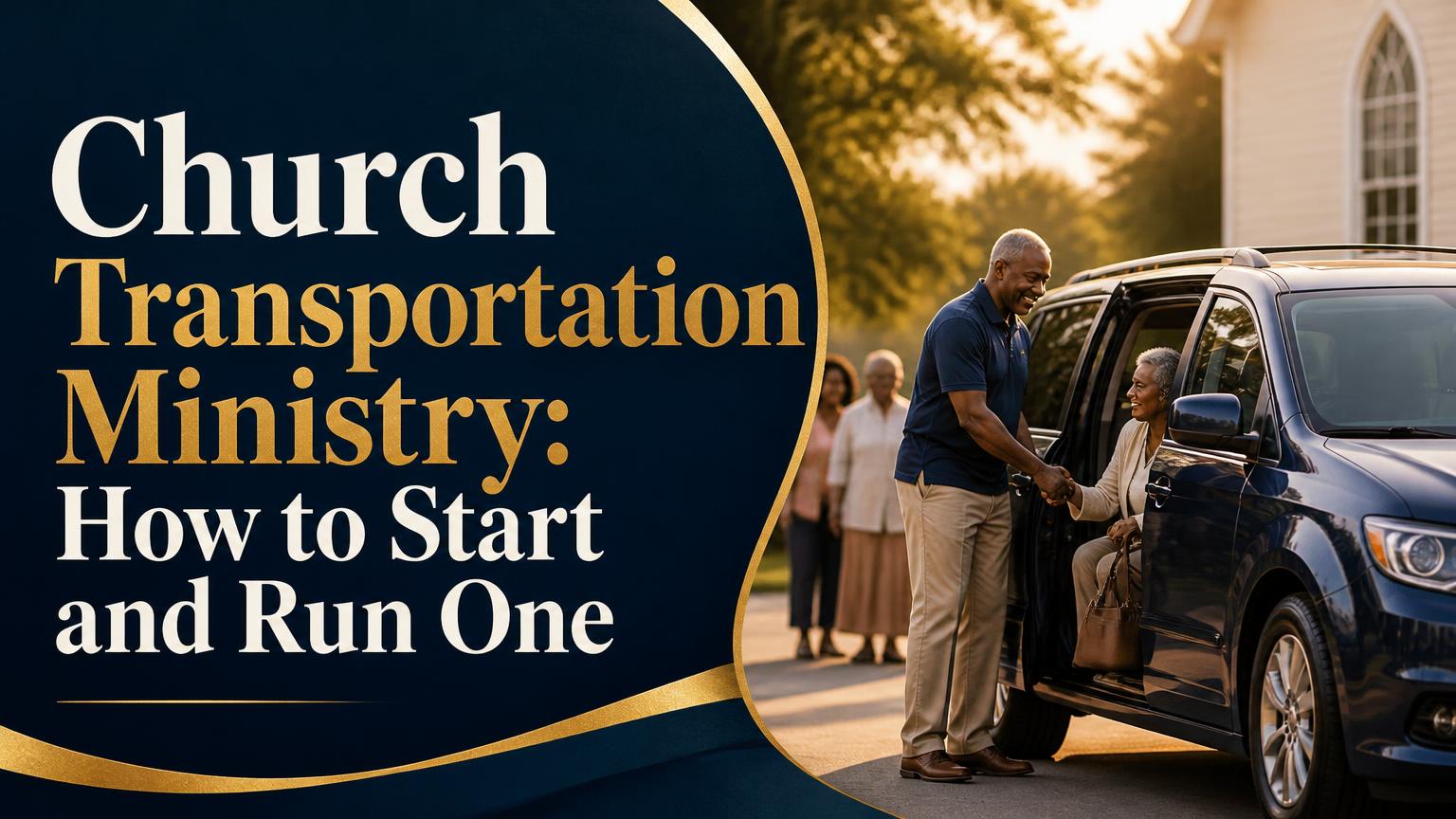
A church transportation ministry helps people attend worship, discipleship, fellowship, and essential church activities when transportation barriers would otherwise prevent participation. It may serve older adults, people with disabilities, families without reliable vehicles, teenagers, visitors, or neighbors in the surrounding community. Starting one requires more than obtaining a van: the church needs a clear mission, qualified drivers, safety procedures, legal and insurance guidance, dependable scheduling, and a budget that can sustain the service without compromising dignity or accountability.
Church Transportation Ministry: How to Start and Run One
A successful ministry begins by treating transportation as a service of hospitality and access rather than simply a vehicle program. The goal is to remove a practical barrier while protecting every passenger’s safety, privacy, independence, and dignity.
Define the Ministry’s Mission and Boundaries
Begin with a written statement explaining whom the ministry serves, which destinations it covers, and when transportation is available. A church might provide rides to Sunday worship and midweek programs, operate a senior-adult shuttle, transport children and teenagers, or respond to specific requests from members and local residents.
Clear boundaries prevent confusion. Decide whether the ministry serves only church activities or also medical appointments, grocery trips, funerals, or community events. Determine whether rides are free, donation-supported, or subject to a modest fee. If the ministry serves people outside the congregation, explain how requests are accepted and whether church participation is expected. Transportation should never be presented as a condition for receiving pastoral care or practical assistance.
The mission can be grounded in biblical hospitality. Romans 12:13 connects Christian service with sharing and hospitality, while the Good Samaritan in Luke 10:25–37 demonstrates practical care for a person facing a physical need. Those principles support generous service, but they also require wisdom, boundaries, and responsible stewardship.
Assess Demand Before Buying a Vehicle
Do not purchase a bus or van before understanding the actual need. Ask ministry leaders, members, local agencies, and community partners about transportation barriers. A short survey or confidential request form can identify common destinations, preferred service times, mobility requirements, average trip length, and the number of likely passengers.
The answers will help determine the right operating model:
- Scheduled shuttle: A fixed route operates before and after a worship service or event.
- Reservation-based service: Passengers request rides by a stated deadline.
- Volunteer ride program: Approved drivers use personal vehicles for individual trips.
- Mixed model: A church vehicle handles larger groups while volunteers cover occasional one-to-one rides.
A large vehicle is not automatically the best choice. A smaller accessible van may be easier to park, insure, maintain, and fill consistently. A church with uncertain demand may begin with volunteer drivers and rented vehicles before committing to ownership. The central question is not, “What vehicle can we buy?” but, “What transportation problem can we reliably solve?”
Recruit, Screen, and Train Drivers
Drivers need more than willingness. Establish written qualifications such as a valid license, acceptable driving history, minimum age, reliable attendance, and the ability to assist passengers appropriately. Requirements may differ according to the vehicle, passenger age, jurisdiction, and type of service.
Use a consistent screening process that may include:
- Application and ministry interview
- Motor-vehicle-record review
- Background check appropriate to the role
- References when useful
- Verification of insurance for personal vehicles
- Defensive-driving or passenger-assistance training
- Child-safety and abuse-prevention training when minors are transported
Training should cover defensive driving, loading and unloading, seat-belt enforcement, distracted-driving rules, weather decisions, emergency communication, confidentiality, and respectful interaction with people who have disabilities. Drivers should know that they are not expected to provide medical care, physical lifting, or unsupervised counseling beyond their training. A dispatcher or ministry coordinator should have authority to suspend a driver or vehicle when safety concerns arise.
Create Safety and Safeguarding Policies
Written policies turn good intentions into consistent practice. At minimum, define who may ride, how reservations are made, who may authorize a trip, how passengers are counted, and what happens during an accident, medical emergency, breakdown, severe weather event, or missing-passenger situation.
A basic vehicle policy should require seat belts, prohibit texting and handheld-phone use while driving, observe capacity limits, and forbid driving under the influence of alcohol, drugs, fatigue, or medication that impairs alertness. Drivers should complete a pre-trip inspection covering tires, lights, mirrors, brakes, fuel, accessible equipment, first-aid supplies, and emergency contact information.
Children require particular care. Follow the church’s child-protection policy for check-in, supervision, authorized pickup, seating, and communication with parents or guardians. Do not leave children alone in a vehicle. Rules such as two-adult supervision, approved pickup lists, and documented handoffs should be applied consistently rather than informally waived for familiar families.
Design a Dependable Scheduling and Dispatch System
Transportation ministries often fail through poor coordination rather than lack of compassion. Assign one coordinator or dispatch team to manage requests, routes, driver availability, passenger information, cancellations, and emergencies. Avoid relying on a single person’s memory or a scattered collection of text messages.
A simple workflow can include:
- Receive the request by phone, form, or church office.
- Confirm the passenger’s address, destination, mobility needs, emergency contact, and preferred pickup window.
- Match the request with an approved driver and suitable vehicle.
- Send the passenger and driver a written confirmation.
- Record completed trips, cancellations, delays, and incidents.
- Review the schedule regularly for recurring needs and inefficient routes.
Tell passengers whether the service provides exact pickup times or arrival windows. Build in time for loading, mobility equipment, traffic, and conversation. A ministry that promises more precision than it can deliver will quickly lose trust. For recurring routes, publish a dependable schedule and communicate changes early.
Build a Realistic Budget and Funding Plan
The cost of transportation includes much more than fuel. Budget for vehicle purchase or rental, inspections, maintenance, tires, repairs, insurance, registration, accessibility equipment, driver training, cleaning, parking, communication tools, and eventual replacement. If the church owns a vehicle, establish a maintenance reserve rather than waiting for a major repair to create a crisis.
Funding may come from the church’s operating budget, designated gifts, grants, fundraising, partner congregations, or voluntary passenger contributions. Designated funds should be used according to the terms communicated to donors. Keep transportation finances separate enough that leaders can see the true cost per trip and make informed decisions.
Financial stewardship also means measuring utilization. If a twelve-passenger vehicle regularly carries two people, the church may need a smaller model, a different schedule, or partnerships with other ministries. The objective is dependable service, not the appearance of having a large transportation program.
Legal, Insurance, and Accessibility Requirements
Before transporting passengers, church leaders should consult the church’s insurer and qualified local professionals about applicable requirements. Rules vary by country, state, province, and municipality, and they can depend on vehicle size, passenger age, compensation, trip purpose, and whether the driver is a volunteer or employee. Some vehicles or uses may require special licensing, endorsements, inspections, permits, or commercial insurance.
The church should confirm that its policy covers the actual transportation activity rather than assuming ordinary premises or general-liability coverage is sufficient. Personal auto insurance may also exclude certain volunteer or passenger uses. Keep written records of driver approvals, vehicle inspections, maintenance, incidents, and training.
Plan for Accessibility From the Beginning
Accessibility should shape the service before the first passenger boards. Ask what assistance a person needs rather than assuming. A passenger may require a ramp or lift, wheelchair securement, a transfer aid, extra boarding time, visual or verbal communication, or space for a service animal.
Drivers should never improvise with mobility equipment or physically lift a passenger without appropriate training and consent. Vehicles must have adequate room to secure wheelchairs and other devices safely. The church should also consider accessible entrances, restrooms, drop-off locations, and seating at the destination; an accessible ride does not solve the problem if the building remains difficult to enter.
Protect Privacy and Personal Dignity
Transportation records may contain addresses, phone numbers, disability information, health-related details, and emergency contacts. Limit access to people who need the information to perform their roles. Do not publish passenger names or circumstances in prayer requests, newsletters, social media, or informal conversations without permission.
Drivers should be friendly without becoming intrusive. Passengers should not feel pressured to discuss finances, family problems, medical conditions, or faith commitments. A church can offer prayer or conversation appropriately, but transportation remains a service—not an opportunity to exploit vulnerability or demand religious participation.
Prepare for Emergencies and Incidents
Every vehicle should carry an emergency contact sheet, first-aid supplies, reflective equipment, and instructions for contacting emergency services. Drivers need a clear procedure for collisions, passenger illness, breakdowns, unsafe pickup locations, severe weather, and disruptive behavior.
After an incident, protect immediate safety first, contact emergency services when needed, notify the designated church leader, document what occurred, and follow insurance and safeguarding procedures. Do not promise secrecy or make informal admissions about responsibility. A post-incident review should identify whether training, equipment, route planning, or policy needs improvement.
Make the Ministry Sustainable and Trusted
Starting the ministry is easier than maintaining it. Sustainability depends on realistic promises, shared responsibility, and regular evaluation. A program that depends on one van, one driver, or one exceptionally energetic volunteer is vulnerable to illness, mechanical failure, burnout, and leadership changes.
Use Teams Rather Than a Single Champion
Create defined roles for a ministry coordinator, scheduler, drivers, vehicle-maintenance contact, safeguarding lead, and pastoral or administrative supervisor. One person may hold more than one role in a small church, but responsibilities should still be documented.
Maintain a substitute-driver list and train volunteers before an emergency occurs. Schedule breaks, rotate routes, and invite feedback from passengers and drivers. Volunteers who feel respected and supported are more likely to serve consistently than those who are treated as an unlimited resource.
Measure Service Quality, Not Just Passenger Counts
Useful measures include completed trips, missed or canceled rides, average passengers per trip, response time, maintenance costs, safety incidents, and unmet requests. Passenger feedback can reveal issues that statistics miss, such as uncomfortable pickup locations, confusing communication, or insufficient boarding time.
Numbers should guide decisions rather than define the ministry’s worth. A single ride may be highly significant if it enables someone to worship, attend a support group, or remain connected to a caring community. At the same time, compassion does not require a church to operate an unsafe or financially unsustainable service. Evaluation helps leaders preserve the mission by adjusting the method.
Build Partnerships When Direct Operation Is Not Best
A church does not have to provide every ride itself. Partnerships with nearby congregations, nonprofit transportation programs, senior centers, disability organizations, or vetted transportation providers may offer better coverage and lower risk. The church might fund rides, coordinate referrals, or provide volunteers for accompaniment instead of owning a vehicle.
Partnerships require clear expectations about insurance, passenger information, accessibility, scheduling, payment, and accountability. The church remains responsible for choosing partners carefully and communicating honestly about what it can and cannot provide.
Conclusion
A church transportation ministry succeeds when it combines Christian hospitality with disciplined administration. Start by identifying a genuine transportation need, then choose a modest service model that the church can operate safely and consistently. Screen and train drivers, verify insurance and legal requirements, design for accessibility, protect passenger privacy, and create a scheduling system that does not depend on memory or last-minute favors. The strongest ministry is not necessarily the one with the largest vehicle or widest route. It is the one that keeps its promises, treats passengers with dignity, and removes transportation barriers in a responsible expression of practical Christian care.