
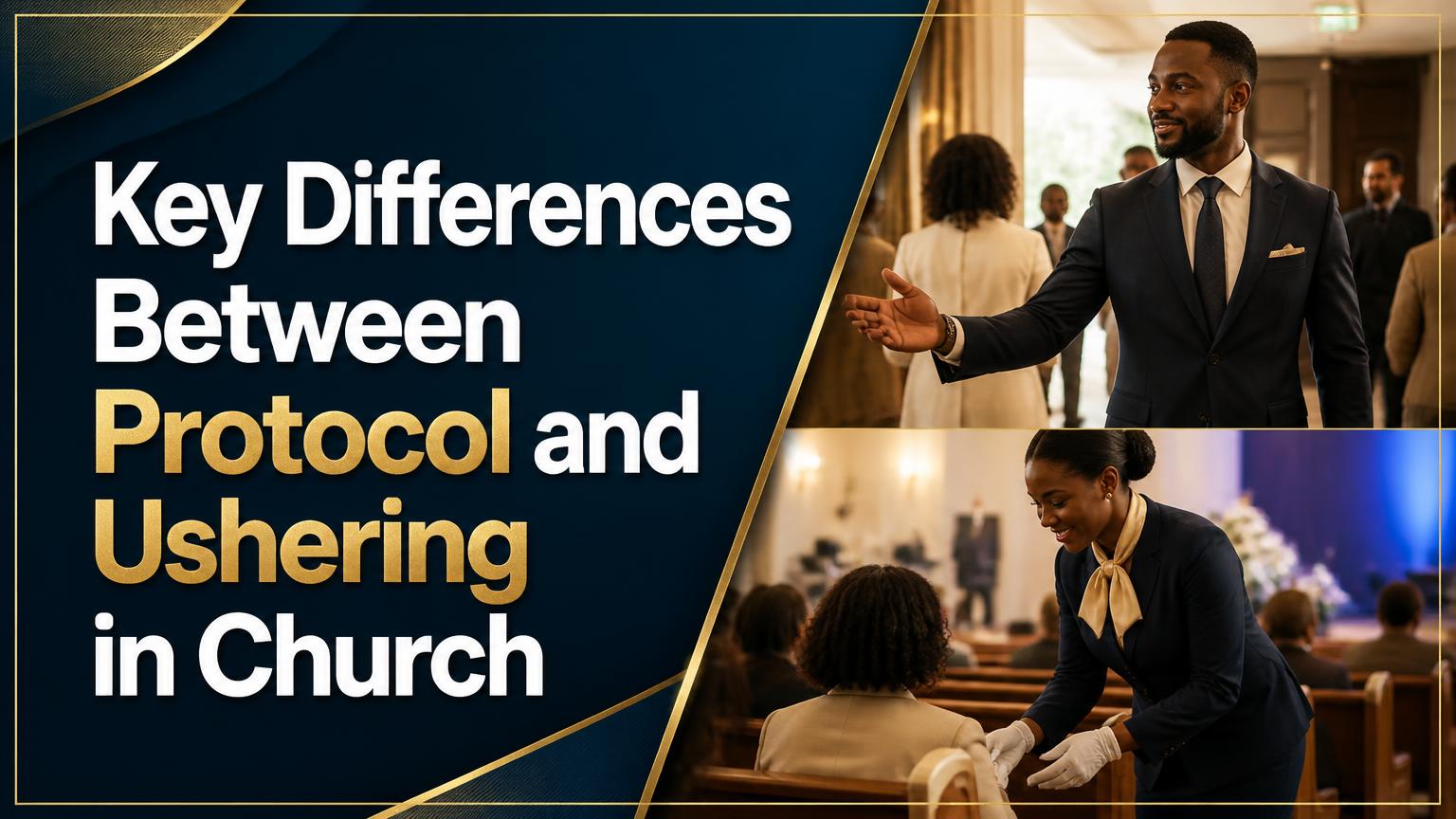
Churches often use “protocol” and “ushering” interchangeably, but they describe different ministry functions. Protocol establishes the order, standards, and procedures for a service or official church event, especially when leaders, guests, or dignitaries are involved. Ushering provides direct care for people by welcoming them, guiding them, helping them find suitable seating, and maintaining an orderly worship environment. The two ministries cooperate closely, but they differ in scope, responsibility, and primary focus.
Difference Between Protocol and Ushering
The clearest distinction is this: protocol manages the order and formal coordination of an event, while ushering manages the movement, welcome, and practical needs of people attending it. Protocol is usually more concerned with planning, precedence, communication, and official procedures. Ushering is more concerned with hospitality, seating, directions, safety, and the congregation’s immediate experience.
These definitions can vary among denominations and local churches. Some churches have a formal protocol department; others assign protocol duties to church administrators, pastors’ aides, or senior ushers. Likewise, ushering may include security, hospitality, or offering coordination in one congregation but not another. The titles matter less than the functions being performed.
Protocol Governs Order, Precedence, and Official Conduct
Church protocol provides a framework for how an organized service or special event should proceed. It may determine who receives guests, where ministers and invited officials sit, how people are introduced, when presentations occur, and how the program moves from one stage to another.
Protocol is especially relevant during events such as:
- Ordinations and installations
- Leadership conferences
- Funerals and weddings
- Anniversaries and dedications
- Visits by denominational leaders
- Civic or interchurch programs
- Formal processions and award ceremonies
A protocol team may prepare seating plans, guest lists, arrival instructions, speaking orders, processional arrangements, and communication procedures. Its purpose is not simply to make an event look formal. Good protocol prevents confusion, protects the dignity of guests, respects legitimate leadership responsibilities, and helps the program operate according to its intended order.
Protocol also involves judgment. If two invited leaders arrive unexpectedly, for example, the protocol coordinator may need to consult the pastor or event chairperson about introductions, seating, and speaking arrangements. That decision requires awareness of the event’s purpose and leadership structure, not merely an ability to direct people to open chairs.
Ushering Focuses on Welcome, Guidance, and Congregational Care
Ushering is a frontline ministry. Ushers are usually among the first people attendees encounter and among the people they approach when they need help. Their work includes greeting worshipers, providing programs, directing visitors, locating seats, assisting people with disabilities, managing late arrivals, and helping maintain a peaceful environment.
During a service, ushers may also:
- Monitor entrances and exits
- Help families find appropriate seating
- Respond to medical or practical needs
- Coordinate movement during communion or altar ministry
- Assist with offerings when assigned
- Reduce unnecessary disruptions
- Direct children, guests, or newcomers to relevant areas
- Communicate urgent concerns to ministry leaders
The usher’s central question is often, “What does this person need in order to participate safely and comfortably?” That makes ushering a ministry of attentive hospitality rather than merely a logistical task. A helpful usher gives clear directions without embarrassment, handles sensitive situations discreetly, and treats both a first-time visitor and a senior member with respect.
Ushering can involve authority, but it should not become controlling behavior. Ushers enforce reasonable arrangements established by church leadership; they do not create personal rules or use their position to intimidate worshipers.
Protocol Works Behind the Event, While Ushers Serve Within It
Protocol usually has a broader, more event-wide perspective. It may begin days or weeks before a service by coordinating schedules, identifying official guests, confirming seating, preparing instructions, and communicating with pastors or program leaders. Ushers generally work closer to the actual gathering, applying those plans in real time.
For example, at a church anniversary, the protocol team may decide the order in which pastors will be introduced and where visiting ministers will sit. Ushers then receive those guests, escort them to the assigned locations, help them move at the correct time, and guide the congregation when seating arrangements change.
This distinction can be expressed simply:
| Area | Protocol | Ushering |
|---|---|---|
| Primary focus | Order, procedure, and official coordination | Welcome, guidance, and practical care |
| Main perspective | The event as a whole | The attendee’s immediate experience |
| Typical timing | Before and throughout the event | Mainly during arrival and the gathering |
| Common responsibilities | Seating plans, introductions, precedence, schedules | Greeting, seating, directions, entrances, assistance |
| Main relationship | Leaders, guests, organizers, and departments | Members, visitors, families, and attendees |
The roles are different, but neither is automatically more important. Protocol without effective ushers may produce a carefully planned event that feels cold or confusing. Ushers without clear protocol may serve people warmly while struggling with guest movement, formal presentations, or changing program requirements.
The Two Ministries Overlap in Hospitality and Order
Protocol and ushering overlap because both aim to help a church gathering proceed respectfully and effectively. Both require preparation, discretion, communication, punctuality, emotional maturity, and an understanding of the church’s leadership structure.
An usher may carry out a protocol instruction, such as escorting a guest to a reserved seat. A protocol coordinator may depend on ushers to report that a guest has arrived, that a seating area is full, or that a planned movement is causing difficulty. In smaller congregations, the same person may perform both functions.
The distinction should therefore guide responsibility rather than create rivalry. Protocol should not treat ushers as invisible labor, and ushers should not be expected to make formal decisions without appropriate direction. Clear reporting lines allow both ministries to serve effectively.
Why Churches Need Both Functions
Church gatherings combine spiritual purposes with practical coordination. Worship services must allow people to pray, hear Scripture, participate, and respond without unnecessary confusion. Special events must also recognize leadership, honor guests, follow a schedule, and accommodate people with different needs. Protocol and ushering address different parts of that challenge.
Protocol creates consistency before problems arise. It clarifies who communicates with invited guests, who approves seating arrangements, who manages official introductions, and who makes decisions when the program changes. Without such preparation, several people may give conflicting instructions, guests may be overlooked, or an important part of the service may be delayed.
Ushering applies care at the point where plans meet real people. A written seating chart cannot predict every family that arrives late, every visitor who needs assistance, or every aisle that becomes crowded. Ushers notice those realities and respond with patience. Their ministry turns organizational planning into a welcoming experience rather than leaving attendees to navigate the event alone.
How Protocol and Ushering Work During a Church Event
The most effective churches define responsibilities before the gathering begins. They also recognize that a plan must remain flexible enough to respond to safety concerns, pastoral decisions, and unexpected changes.
Before the Service or Program
Protocol personnel may confirm the schedule, identify special guests, prepare reserved seating, review introductions, and brief pastors, speakers, musicians, and ushers. They should clarify who has authority to change the order of service and how urgent information will be communicated.
Ushers prepare the worship space by checking entrances, aisles, seating areas, accessibility routes, restrooms, children’s areas, and materials that attendees may need. They should know where visitors can obtain information and whom to contact if a medical, safeguarding, or pastoral issue arises. A short briefing prevents each usher from improvising a different answer.
During Arrival and Seating
Ushers normally take the lead when people enter. They greet attendees, provide directions, identify available seating, and help manage movement without making people feel inspected. If a guest has protocol-related seating, the usher should receive instructions discreetly and avoid announcing private or status-related details unnecessarily.
Protocol personnel monitor whether official guests have arrived and whether the planned arrangements remain workable. If a guest is delayed, brings additional people, or requires a change in seating, protocol should communicate the adjustment to ushers rather than expecting them to guess. This division protects both accuracy and hospitality.
During Presentations, Processions, and Transitions
Protocol coordinates formal movement: who enters first, where participants stand, when guests are introduced, and how the program transitions between segments. The goal is orderly movement that supports the purpose of the event without turning worship into a display of rank.
Ushers help make those movements practical. They keep pathways clear, guide people to the correct location, assist those who need physical support, and manage the congregation’s movement during offerings, communion, altar ministry, or dismissal. If a planned procedure creates congestion or confusion, ushers should report the problem so protocol or the event leader can adapt the plan.
Common Mistakes in Defining These Roles
One mistake is assuming that protocol means giving orders and ushering means performing minor tasks. In reality, protocol requires service-oriented coordination, while ushering requires judgment, emotional intelligence, and responsibility. Both ministries can influence whether people experience a church as organized, respectful, and safe.
Another mistake is copying procedures from a different church without considering local needs. A large formal congregation may need a dedicated protocol office, while a smaller church may need one coordinator and a trained usher team. The structure should reflect the size of the event, the number of attendees, the presence of official guests, accessibility requirements, and the church’s own leadership practices.
A third mistake is confusing hospitality with favoritism. Protocol may appropriately distinguish assigned responsibilities or seating arrangements, but Christian service should not treat ordinary attendees as less valuable. Formal recognition can coexist with humility when leaders explain arrangements clearly and ensure that visitors, older adults, families, and people with disabilities receive thoughtful care.
Biblical and Ministry Principles Behind Protocol and Ushering
The Bible does not establish one universal church department called “protocol” or define ushering as a single standardized office. Churches develop these roles as practical ways to serve the body, honor guests, and conduct gatherings responsibly. Their legitimacy depends less on a title than on whether the work reflects faithful stewardship, hospitality, humility, and order.
First Corinthians 14:40 teaches that worship should be conducted “decently and in order.” In context, Paul addresses the responsible use of spiritual gifts in congregational worship. The principle does not require rigid formality, but it supports thoughtful coordination that prevents disorder from distracting people from worship and ministry.
Hospitality also shapes both roles. Romans 12:13 encourages believers to practice hospitality, while Hebrews 13:2 urges Christians not to neglect welcoming strangers. These passages support more than a friendly greeting. They imply attentiveness to people who may be unfamiliar with the building, the service, or the church community. Protocol can protect respectful relationships with guests; ushering can make that welcome tangible for everyone who enters.
The highest standard is therefore service rather than status. Protocol should not become an opportunity for prestige, and ushering should not become a platform for control. Both ministries serve the church best when they combine competence with gentleness.
How to Organize Protocol and Ushering in a Local Church
A church should begin by listing the actual responsibilities required for its services and events, then assign each responsibility to a specific role. Written guidelines should answer practical questions: Who welcomes visiting ministers? Who approves reserved seating? Who handles late arrivals? Who communicates program changes? Who responds to emergencies? Who supervises ushers?
Training should include more than posture and dress. Team members need practice in clear communication, confidentiality, accessibility, conflict de-escalation, child and vulnerable-person safeguarding, emergency reporting, and respectful treatment of visitors. Role-play is useful because real situations rarely follow a perfect schedule.
Finally, leaders should review events afterward. Ask where attendees experienced confusion, whether guests were properly received, whether movement through the building was safe, and whether any procedure felt unnecessarily rigid. This feedback helps protocol become more realistic and ushering become more responsive. The objective is not flawless ceremony; it is an orderly, welcoming environment that supports the church’s purpose.
Conclusion
The difference between protocol and ushering is primarily a difference of focus. Protocol plans and coordinates the formal order of a church service or event, including guest relations, precedence, seating arrangements, introductions, and program movement. Ushering provides direct hospitality by welcoming people, guiding them, assisting with practical needs, and supporting orderly participation. The functions overlap, and one person may perform both in a smaller church, but the distinction remains useful. Strong protocol gives ushers clear direction, while compassionate ushers make that direction serve people rather than merely procedures.