
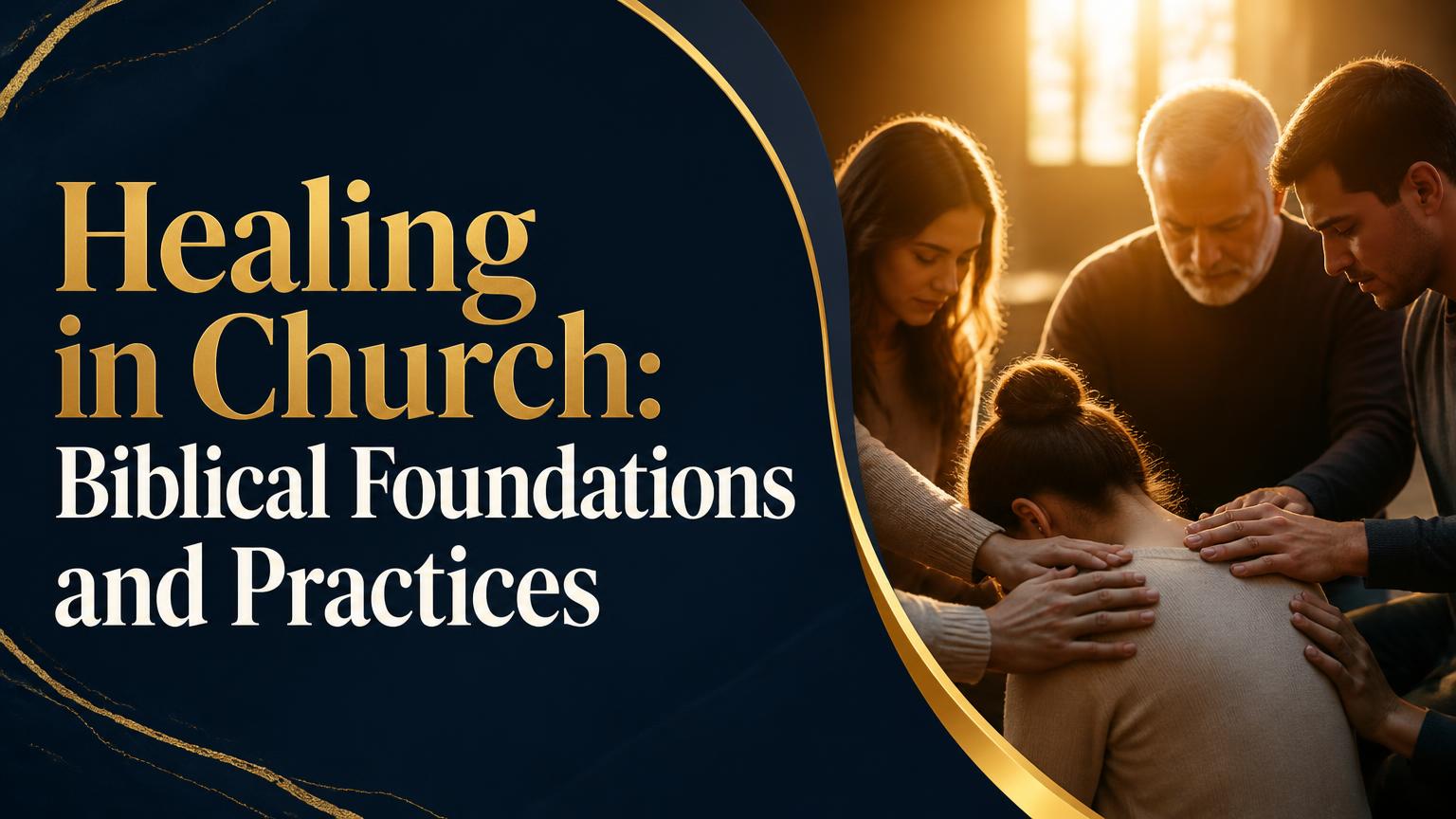
Healing in church is a biblical ministry centered on God’s compassion, prayer, restoration, and the care of the whole person. Scripture presents healing as both a present work of God and a future hope fulfilled in the renewal of creation. It also shows that faithful Christians may pray earnestly without receiving immediate or visible healing. A healthy church therefore combines confidence in God’s power with humility, wise pastoral care, medical responsibility, emotional safety, and compassion for people whose suffering continues.
Healing in Church: Biblical Meaning and Practice
Healing in church should not be reduced to a promise that every illness will disappear immediately. In the New Testament, healing includes physical restoration, freedom from spiritual oppression, forgiveness and reconciliation, emotional support, and the strengthening of people who suffer. The church’s ministry is to bring people before God in prayer while caring for them truthfully and responsibly.
Biblical Foundations for Healing
The Bible consistently presents God as compassionate toward the sick and broken. The Psalms describe God as the one who forgives, heals, and renews (Psalm 103:2–5). Jesus healed people as an expression of mercy and as a sign of the arrival of God’s kingdom. His ministry included leprosy, paralysis, blindness, fever, chronic bleeding, and other forms of suffering. These accounts show that Jesus did not treat sick people as nuisances or moral failures.
The apostles continued praying for healing after Jesus’ resurrection. James instructs a sick person to call the church elders, who should pray, anoint the person with oil in the Lord’s name, and involve the believing community in faithful intercession (James 5:14–16). This passage gives the church a practical pattern: personal care, prayer, pastoral leadership, and dependence on God rather than on human performance.
Yet Scripture also presents healing as part of a larger hope. The final Christian expectation is not merely temporary relief but the resurrection of the body and the removal of death, mourning, and pain (1 Corinthians 15:42–44; Revelation 21:3–5). Present healing can be a gracious sign of that future restoration, but it does not mean that every faithful person will avoid illness or death in this life.
Different Forms of Healing in the Church
Physical healing is the form most often associated with prayer ministry. Churches may pray for recovery from disease, injury, chronic pain, disability, or the effects of aging. Such prayer can include asking God for complete restoration, strength for treatment, wisdom for doctors, and peace during uncertainty. Physical healing should be requested with faith, but it should not be presented as something a person can earn through sufficient confidence.
Emotional and psychological healing may involve relief from grief, trauma, anxiety, depression, loneliness, or the effects of rejection. Prayer and Christian community can provide genuine support, but spiritual care does not eliminate the need for qualified mental-health treatment. Emotional suffering is not automatically caused by weak faith, hidden sin, or demonic activity. Careful discernment avoids explanations that intensify shame.
Relational and spiritual healing can include repentance, forgiveness, reconciliation, freedom from destructive patterns, and restored belonging. James connects confession and prayer with healing, but this does not mean every illness is caused by personal sin. The church must also recognize healing as protection, justice, truthful confrontation, and safe separation from abuse. Reconciliation is not the same as returning an unsafe person to power or requiring a victim to ignore harm.
Prayer, Anointing, and the Laying on of Hands
Churches practice healing prayer in several biblical ways. Believers may pray privately, gather in small groups, ask elders to pray, anoint someone with oil, or lay hands on the person. These actions express solidarity and dependence on God. They do not function as magical techniques, and the physical gesture does not control the outcome.
Oil in James 5 may carry symbolic significance as an act of consecration and care, while oil also had ordinary medicinal uses in the ancient world. The passage should not be used to oppose appropriate medical treatment. Likewise, the laying on of hands communicates blessing, identification, and communal support; it is not a guarantee that healing will occur.
Prayer should be specific without becoming coercive. A church may ask for healing, wisdom, endurance, competent treatment, and comfort. It should also obtain consent before touching someone, protect confidentiality, and avoid public displays that embarrass vulnerable people. A person who requests prayer should remain free to accept, decline, or end the ministry.
Why Healing Does Not Always Occur
The Bible does not teach that every sickness will be healed immediately when someone prays. Paul describes a persistent “thorn” that he asked God to remove, but the answer he received emphasized sufficient grace and divine strength in weakness (2 Corinthians 12:7–10). Timothy was advised to take practical care for his recurring stomach problems (1 Timothy 5:23), and Epaphroditus became seriously ill before recovering (Philippians 2:25–27). These passages resist the claim that continuing illness proves spiritual failure.
Several truths must be held together. God can heal, and Christians should pray with expectation rather than cynicism. God may also answer through treatment, gradual recovery, inner strength, supportive relationships, or grace to endure. Sometimes the reason for a particular outcome remains unknown. The church should not invent explanations for God’s silence or tell grieving people that they lacked faith.
When healing does not occur, the person still deserves prayer, practical support, respect, and full belonging. A congregation should continue visiting, assisting with meals or transportation, helping with medical expenses when possible, and accompanying the person through uncertainty. Christian hope is not denial of pain; it is confidence that suffering and death do not have the final word.
How Churches Can Practice Healing Faithfully
A healing ministry becomes trustworthy when it joins spiritual confidence to ethical responsibility. The goal is not to create dramatic meetings but to serve people who may be frightened, exhausted, or easily pressured. Churches should establish clear practices that protect dignity and encourage honest discernment.
Begin With Compassion and Consent
Jesus’ healing ministry repeatedly displays attention to individual people rather than treating them as demonstrations of power. Churches should listen before praying, ask what the person wants, and avoid assuming that a visible condition explains the whole story. A person may want prayer for recovery, courage, relief from pain, wisdom about treatment, or simply companionship.
Consent is especially important when prayer involves touch, public testimony, emotional disclosure, or sharing a diagnosis. Children, people with cognitive impairments, and those in crisis require additional safeguards. No one should be told that refusing a particular prayer practice demonstrates unbelief.
Combine Prayer With Medical and Professional Care
Prayer and medicine do not have to compete. Christians can ask God for healing while consulting physicians, taking prescribed medication, receiving physical therapy, or seeking counseling. The church should never instruct someone to abandon necessary treatment, conceal symptoms, or substitute prayer for emergency care.
Pastors and prayer ministers should recognize the limits of their training. Serious mental-health symptoms, abuse disclosures, addiction, suicidal thoughts, and medical emergencies require appropriate professional or emergency support. Referral is not a failure of faith; it is often an expression of responsible love.
Protect People From Manipulation and Harm
Church leaders should reject practices that exploit suffering. Healing should not be tied to required donations, guaranteed outcomes, celebrity personalities, or claims that a person will certainly recover if they obey a particular leader. Publicly announcing someone’s “healing” before the person has confirmed it can create humiliation and confusion.
Safeguarding also includes screening ministry workers, maintaining appropriate boundaries, documenting serious concerns, and reporting abuse according to applicable law and church policy. A congregation that speaks about healing while ignoring exploitation contradicts the character of the ministry it claims to represent.
Common Misunderstandings About Healing in Church
One harmful misunderstanding is that sickness always results from personal sin. Jesus rejected that assumption when his disciples asked whether a man’s blindness was caused by his sin or his parents’ sin (John 9:1–3). Scripture does recognize that sin can produce suffering in particular situations, but it does not authorize the church to accuse every sick person.
Another error is treating healing as proof of superior faith. The New Testament honors faith, but it does not turn healing into a spiritual competition. People may pray sincerely and remain ill; others may receive unexpected recovery without possessing a more impressive faith. God’s grace cannot be measured by comparing one person’s outcome with another’s.
A third misunderstanding is the opposite extreme: assuming that because some claims are exaggerated, all healing prayer is irrational or unbiblical. The Christian tradition openly asks God to heal and expects congregations to care for the sick. Discernment requires neither gullibility nor contempt. Churches can welcome testimony while verifying claims carefully and acknowledging uncertainty.
A Balanced Pattern for Healing Ministry
A faithful church can use a simple pattern:
- Listen carefully. Learn what the person is experiencing and what kind of support they want.
- Obtain consent. Ask permission before touch, public prayer, anointing, or sharing information.
- Pray clearly. Ask God for healing, wisdom, comfort, endurance, and appropriate help.
- Offer practical care. Arrange visits, meals, transportation, financial assistance, or other appropriate support.
- Encourage qualified treatment. Do not present prayer as a replacement for medical or psychological care.
- Follow up. Healing ministry is not complete when a meeting ends; continued presence often matters most.
- Remain truthful. Celebrate improvement without exaggerating it, and acknowledge when the outcome is uncertain.
- Keep hope grounded in Christ. Present healing as God’s gracious work rather than a technique controlled by leaders or recipients.
This pattern reflects the communal character of Christian healing. The church does not merely perform a prayer for an individual; it bears burdens, shares resources, welcomes the vulnerable, and points beyond immediate results to God’s final restoration (Galatians 6:2; Romans 8:18–25).
Conclusion
Healing in church is biblically grounded in God’s compassion, Christ’s ministry, the prayers of the church, and the hope of resurrection. It may involve physical recovery, emotional support, spiritual renewal, restored relationships, or faithful care during ongoing illness. The church should pray boldly, but it must not promise outcomes Scripture does not promise or blame people when healing does not occur. The most faithful practice combines prayer with consent, professional care, protection from abuse, practical support, and honest hope. Healing ministry is strongest when it treats people as whole persons and reflects the mercy of Christ whether recovery is immediate, gradual, partial, or still awaited.