
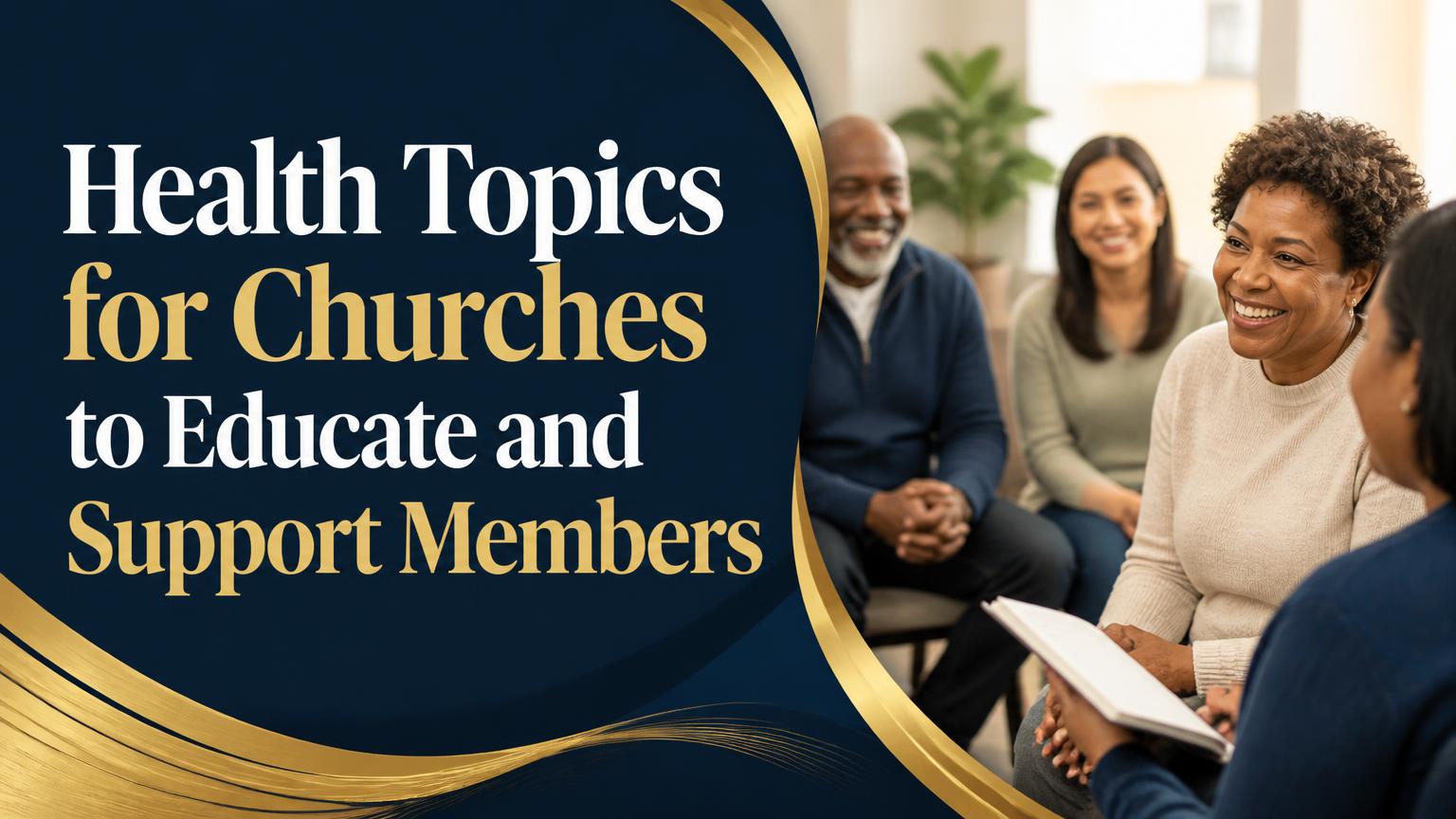
Churches can support healthier congregations by addressing the whole person: physical health, mental and emotional wellbeing, relationships, spiritual life, and the social conditions that affect health. Effective church education does not replace physicians, counselors, or public-health services. Instead, it helps members recognize risks, seek timely care, reduce stigma, support one another, and develop sustainable habits within a trusted community.
Health Topics for Churches
The most useful health topics for churches connect practical education with compassionate support. A congregation may address these subjects through sermons, small groups, workshops, health fairs, youth programs, support groups, or partnerships with qualified professionals. The goal is not to diagnose members but to make reliable information and appropriate encouragement easier to access.
Preventive Care and Health Screenings
Preventive health education helps members understand why routine checkups, vaccinations, dental care, vision examinations, and age-appropriate screenings matter. Many serious conditions are easier to treat when identified early, yet people may postpone care because of cost, fear, transportation problems, or limited health literacy.
A church can invite licensed health professionals to explain what preventive services generally involve and how members can locate affordable care. Education should avoid prescribing a universal screening schedule because recommendations vary according to age, sex, family history, symptoms, and personal risk. The practical emphasis should be preparation, early attention to concerning changes, and respect for professional medical advice.
Nutrition, Food Security, and Healthy Eating
Nutrition programs can move beyond simplistic messages about “good” and “bad” foods. Members benefit from learning about balanced meals, portion awareness, hydration, reading food labels, cultural food traditions, and the relationship between nutrition and conditions such as diabetes or high blood pressure.
Churches should also address food insecurity. A person may understand healthy eating but lack money, transportation, cooking equipment, or reliable access to fresh food. Food pantries, community gardens, congregational meals, grocery assistance, and partnerships with local organizations can make education more realistic. Avoiding shame is essential; financial hardship and health outcomes are often connected to circumstances beyond individual choice.
Physical Activity and Chronic Disease Prevention
Regular movement can support cardiovascular health, strength, balance, sleep, mood, and independence. Church-based walking groups, low-impact exercise classes, stretching sessions, or active programs for children and older adults can make physical activity social and accessible.
Education should recognize different abilities and medical conditions. Someone with arthritis, a disability, heart disease, or a history of falls may need professional guidance and adapted activities rather than a standard exercise plan. Churches should emphasize gradual, safe participation instead of competition or appearance. The broader purpose is to help members incorporate sustainable movement into ordinary life.
Mental Health and Emotional Wellbeing
Mental health education can explain common conditions such as depression, anxiety disorders, trauma-related difficulties, and persistent stress without reducing them to spiritual weakness. Warning signs may include major changes in sleep, appetite, mood, concentration, functioning, or relationships. Members should know that professional treatment, including counseling or medication when appropriate, can coexist with prayer and Christian faith.
Church leaders should also understand how to respond when someone expresses hopelessness, self-harm, or suicidal intent. A congregation needs a clear crisis procedure: take the statement seriously, stay with the person when possible, involve emergency or crisis services when necessary, and avoid promising secrecy. Compassionate listening is valuable, but it is not a substitute for trained clinical care.
Substance Use, Addiction, and Recovery
Churches can discuss alcohol misuse, prescription-drug dependence, illegal drug use, gambling, and other compulsive behaviors with honesty and dignity. Addiction involves powerful changes in behavior, reward, decision-making, and relationships; moral condemnation alone rarely addresses the factors that sustain it.
Helpful congregational responses may include recovery groups, peer support, transportation to treatment, family education, sober social activities, and connections with licensed providers. Leaders should understand relapse as a possible part of recovery rather than proof that change is impossible. Confidentiality, safeguarding, and clear boundaries matter, especially when children, impaired adults, domestic violence, or unsafe driving may be involved.
Sexual Health, Relationships, and Safeguarding
Age-appropriate sexual-health education can cover consent, healthy relationships, sexually transmitted infections, pregnancy, fertility, privacy, body boundaries, and abuse prevention. The exact content should reflect the church’s theology and the age of participants, while still providing medically accurate information and clear protection for children and vulnerable adults.
Churches must distinguish pastoral care from clinical advice and must never use spiritual authority to pressure someone into disclosing private information or remaining in an unsafe relationship. Safeguarding policies should explain reporting obligations, supervision, appropriate adult-child boundaries, and procedures for responding to suspected abuse. Marriage counseling and relationship programs should also identify situations requiring specialized help, particularly coercive control or violence.
Aging, Disability, and Caregiving
Health ministry should include the realities of aging, dementia, disability, chronic illness, and family caregiving. Topics may include fall prevention, medication organization, advance care planning, caregiver stress, accessible worship, transportation, home safety, and maintaining social connection.
The church should treat older adults and people with disabilities as participants with gifts and agency, not merely as recipients of assistance. Practical changes—ramps, seating, hearing support, large-print materials, captioning, flexible transportation, and online access—can reduce barriers. Caregivers also need respite, emotional support, and permission to seek help before exhaustion becomes a crisis.
Infectious Disease and Emergency Preparedness
Church communities gather closely, serve vulnerable people, share meals, and often include children and older adults. Basic education about hand hygiene, staying home when acutely ill, ventilation, food safety, vaccination discussions, and appropriate responses to outbreaks can reduce preventable transmission without creating unnecessary fear.
Emergency preparedness may address severe weather, first aid, medication needs, evacuation, fire safety, and communication plans. Churches should maintain current emergency contacts, train designated volunteers, and consider members who may need mobility, language, hearing, or transportation assistance. Health guidance can change during an outbreak, so leaders should rely on current public-health and medical advice rather than circulating unverified claims.
Grief, Loneliness, and Social Connection
Grief education helps congregations respond to death, miscarriage, divorce, job loss, chronic illness, and other forms of loss. Grief does not follow a fixed timetable, and well-intended statements can sometimes minimize a person’s experience. Trained listening, practical help, memorial practices, and referral options are often more useful than quick explanations.
Loneliness also deserves attention because a person may attend worship and still feel isolated. Intergenerational groups, visitation, transportation, meal support, phone check-ins, and small communities built around genuine relationship can help. Churches should watch for members who disappear from normal activities, while respecting privacy and avoiding assumptions about why someone is absent.
Health Equity and Social Conditions
Health is shaped by more than personal decisions. Housing instability, unsafe neighborhoods, transportation, discrimination, education, employment, caregiving responsibilities, and access to medical services can influence whether people become ill or can follow a treatment plan.
A church can respond through practical ministries such as rental assistance, job support, transportation, language access, benefits navigation, disability inclusion, and partnerships with community clinics. This approach does not eliminate personal responsibility; it recognizes that responsible choices are easier when people have meaningful choices available. Jesus’ teaching about loving one’s neighbor supports attention to both individual needs and unjust conditions that harm vulnerable people.
How Churches Can Teach Health Topics Responsibly
A strong health ministry combines accurate information with humility about the church’s role. Programs are most effective when they are designed around real congregational needs rather than assumptions about what members should know.
Use Qualified Professionals and Reliable Information
Invite physicians, nurses, licensed counselors, dietitians, pharmacists, public-health educators, social workers, or emergency responders according to the subject. Clarify whether a speaker is providing general education or individual advice. Participants should be encouraged to discuss personal symptoms, treatment decisions, and medication changes with their own qualified providers.
Materials should be current, understandable, and available in formats members can use. Avoid miracle cures, unsupported supplements, fear-based claims, and promises that faith will guarantee a particular health outcome. Spiritual encouragement can accompany medical care without replacing it.
Protect Privacy and Establish Clear Boundaries
Health programs may reveal sensitive information, including diagnoses, addiction histories, family conflict, or mental-health concerns. Churches should explain what information will remain private, who may access it, and when safety or legal duties require further action. Volunteers should not collect more personal information than necessary.
Leaders also need referral protocols. A pastor or ministry volunteer may listen, pray, offer practical support, and connect someone with care, but should not present personal opinion as diagnosis or treatment. Written policies reduce confusion when a crisis occurs and protect both participants and volunteers.
Make Programs Accessible and Culturally Respectful
A health event held at an inconvenient time, in an inaccessible room, or in technical language may exclude the people who need it most. Consider transportation, childcare, disability access, interpretation, cost, literacy, and cultural food practices before planning an event.
Respect does not require accepting inaccurate claims. It does require listening carefully, explaining evidence without ridicule, and recognizing that members may have different experiences with healthcare systems. Trust grows when a church communicates honestly about uncertainty and acknowledges barriers rather than blaming individuals.
Measure Practical Outcomes
Evaluation can remain simple. Ask whether members learned something useful, know where to seek help, feel more comfortable discussing the subject, or made a practical connection to a service. For a walking group, this might mean attendance and continued participation; for a mental-health workshop, it might mean increased awareness of referral options.
The purpose of evaluation is improvement, not surveillance. Churches should avoid treating attendance as proof that a program improved health. Health outcomes often depend on many factors outside congregational control, so success may consist of reduced stigma, earlier referrals, stronger relationships, or improved access to support.
A Biblical and Pastoral Foundation for Health Ministry
Christian churches approach health through convictions about human dignity, compassion, stewardship, community, and care for vulnerable people. The command to love one’s neighbor as oneself supports practical concern for physical needs, emotional suffering, and social exclusion. In the parable of the Good Samaritan, care includes noticing injury, offering immediate help, arranging continued support, and accepting responsibility for the person’s immediate safety (Luke 10:25–37).
At the same time, Christian teaching should not imply that illness results from inadequate faith or personal sin. The Book of Job challenges simplistic explanations of suffering, while Jesus rejects the assumption that a particular person’s blindness automatically revealed that person’s sin (John 9:1–3). Prayer and pastoral care can be deeply meaningful, but they should be offered alongside appropriate medical, psychological, and social support. This balance protects members from shame while allowing faith communities to practice informed compassion.
Conclusion
Health topics for churches should help people live with greater knowledge, dignity, connection, and access to care. The strongest programs address prevention, nutrition, movement, mental health, addiction, relationships, aging, infectious disease, grief, and social conditions while recognizing that congregations are not medical clinics. Churches serve members well when they combine prayer and pastoral presence with accurate education, qualified referrals, privacy protections, safeguarding, and practical help. Health ministry is most faithful when it supports the whole person without blaming the sick, promising outcomes it cannot guarantee, or taking the place of professional care.