
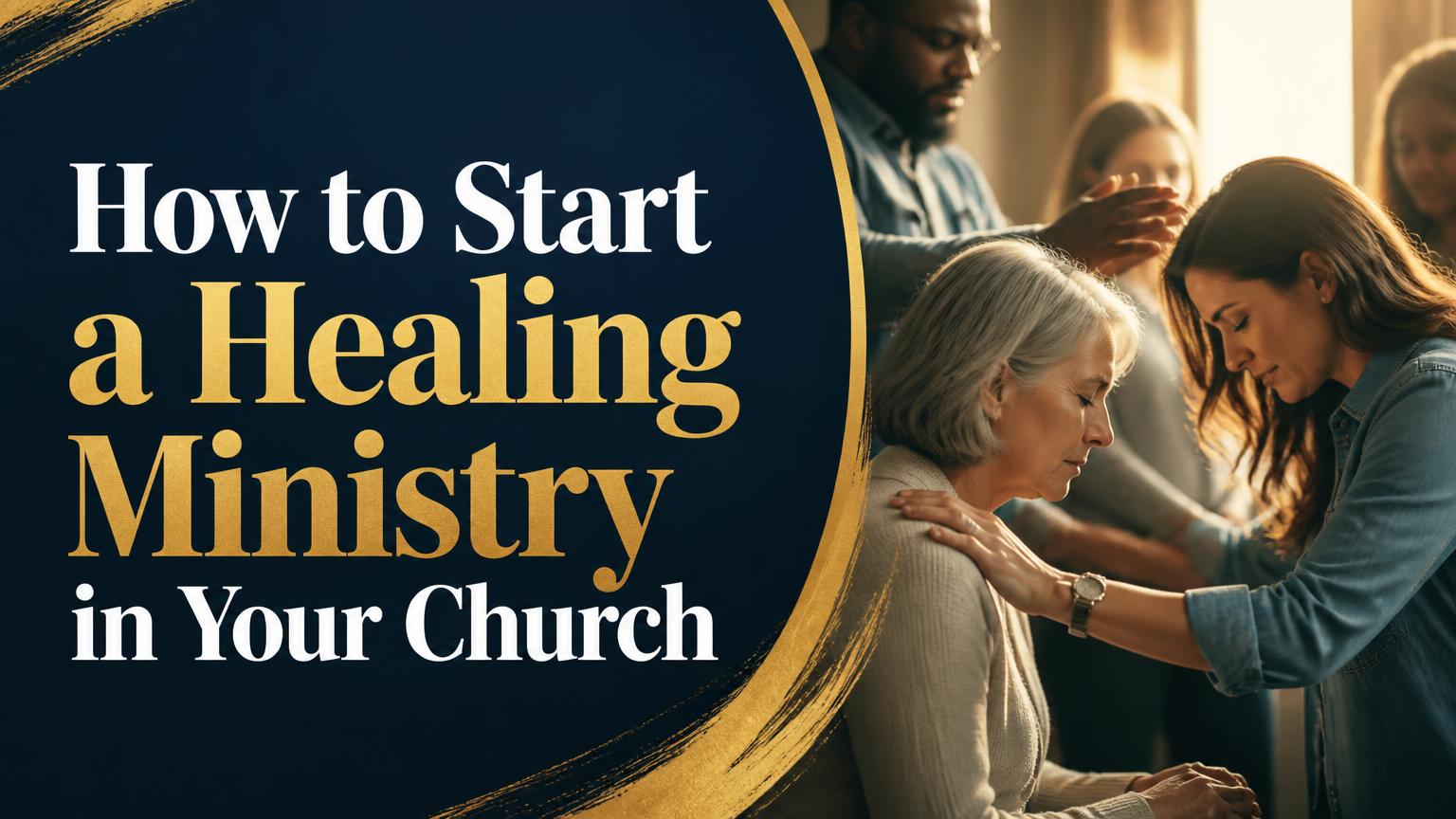
Healing ministry is a church-based ministry of prayer, pastoral care, and compassionate presence for people seeking God’s help in physical, emotional, or spiritual suffering. Starting one requires more than recruiting people who want to pray for the sick. A healthy ministry needs biblical grounding, accountable leadership, trained volunteers, informed consent, appropriate medical boundaries, and a clear process for follow-up. The goal is to serve people faithfully without promising outcomes that belong to God alone.
How to Start a Healing Ministry
Define the Ministry’s Biblical Purpose
Begin by agreeing on what the ministry is and what it is not. Jesus’ ministry included compassion for suffering people, prayer, physical healing, forgiveness, and restoration to community. The church also receives instruction to pray for the sick, including the elders’ ministry of prayer and anointing described in James 5:14–16. First Corinthians 12:9 refers to gifts of healings, while also placing spiritual gifts within the wider life and maturity of the body of Christ.
These passages support prayerful ministry to people who suffer, but they do not authorize the church to guarantee healing or treat every illness as evidence of weak faith. Christian traditions interpret healing gifts differently. Some expect regular miraculous healing; others emphasize God’s providence, pastoral prayer, medical treatment, and the possibility that healing may be gradual, partial, or postponed. A church should state its convictions honestly and avoid pressuring members to adopt a position their congregation does not hold.
Write a short mission statement such as: “We provide compassionate, confidential prayer and pastoral support for people seeking God’s help, while honoring medical care, personal choice, and the mystery of God’s response.” This statement gives volunteers a stable foundation when outcomes are uncertain.
Build Church Oversight and Accountability
A healing ministry should operate under the authority of the church’s pastors, elders, or governing leaders rather than functioning as an independent group. Leadership should approve its purpose, team members, training requirements, confidentiality policy, safeguarding procedures, and relationship to other ministries. Oversight protects both the people receiving prayer and the volunteers providing it.
Choose a ministry coordinator who is spiritually mature, dependable, teachable, and able to handle sensitive information. Establish who may serve, who may lead prayer, who handles complaints, and when a situation must be referred to a pastor or professional. Written policies are especially important when prayer involves trauma, mental-health concerns, marital conflict, abuse, children, or claims of miraculous healing.
Accountability should be pastoral rather than controlling. Team members need regular supervision in which they can discuss difficult encounters, recognize personal limitations, and receive correction. No volunteer should be treated as spiritually superior because people report improvement after prayer.
Prepare and Train the Ministry Team
Volunteers need more than enthusiasm and personal experience. Training should cover the church’s theology of healing, attentive listening, prayer, confidentiality, informed consent, trauma awareness, cultural sensitivity, and appropriate boundaries. Team members should learn how to ask open questions without interrogating people or trying to uncover a hidden cause for illness.
Teach volunteers to distinguish prayer from diagnosis. They should not tell someone that a disease is caused by personal sin, demonic activity, unforgiven resentment, or insufficient faith unless church leadership has established a careful pastoral process for addressing such claims—and even then, speculation should be avoided. They should also never advise someone to stop medication, reject a physician, or delay urgent treatment.
Practical training can include role-play. One volunteer practices receiving a request from someone with chronic pain; another practices responding when no improvement occurs; a third practices setting a boundary when someone requests repeated private contact. These exercises prepare the team for real ministry more effectively than abstract instruction alone.
Create a Safe and Simple Prayer Process
A consistent process helps the ministry remain compassionate without becoming mechanical. A typical prayer appointment might follow these steps:
- Welcome the person and explain the process. Tell them how long the meeting will last, who will be present, and that they may stop at any time.
- Ask what they want prayer for. Do not assume the person’s greatest need from their appearance or diagnosis.
- Request permission before touching or anointing with oil. No form of physical contact should be automatic, including placing a hand on someone’s shoulder.
- Listen briefly and carefully. Avoid forcing a long disclosure when a person has requested prayer rather than counseling.
- Pray clearly and without performance. Use language consistent with the church’s theology, asking God for mercy, healing, wisdom, peace, and strength.
- Check in without creating pressure. Ask whether the person notices any change, but do not suggest improvement that they do not report.
- Offer an appropriate next step. This might include another prayer appointment, pastoral care, medical follow-up, counseling, or practical support.
Usually, two trained people should serve together, particularly when the person receiving prayer is vulnerable or the meeting involves a sensitive matter. A public prayer setting may be suitable for some congregations, while private appointments may better serve others. In either case, privacy and personal dignity should take priority over dramatic presentation.
Integrate Medical and Pastoral Care
A healing ministry should complement responsible healthcare, not compete with it. People may request prayer while receiving treatment, waiting for a diagnosis, recovering from surgery, managing disability, or living with a chronic condition. Prayer teams can support them spiritually while encouraging appropriate consultation with qualified medical professionals.
The ministry should have a referral map. This may include the church’s pastor, licensed counselors, physicians, crisis services, domestic-violence resources, addiction programs, and emergency services. Volunteers need clear instructions for immediate danger, suicidal thoughts, suspected abuse, severe psychiatric symptoms, and medical emergencies. Confidentiality does not mean keeping information secret when someone faces serious harm or when safeguarding obligations apply.
The team should also avoid turning testimonies into medical evidence. A person may sincerely report improvement, but the ministry should not publicly announce a cure without the person’s permission or imply that prayer replaces clinical evaluation. Gratitude and testimony can be appropriate while remaining truthful about what is known and what remains uncertain.
What Healing Ministry Means in Christian Practice
Christian healing ministry is best understood as prayerful service offered in dependence on God, not as a technique that produces a predictable result. Scripture contains accounts of immediate healing, gradual restoration, continued suffering, and faithful believers who remained weak or ill. Paul’s “thorn in the flesh” in 2 Corinthians 12:7–10 illustrates that earnest prayer does not always result in the specific outcome requested. That reality does not make prayer meaningless; it places the ministry within trust, compassion, and hope rather than control.
This distinction protects people from two harmful conclusions: that every illness will certainly disappear if someone prays correctly, or that an absence of healing proves personal failure. A church can pray with confidence while acknowledging uncertainty. It can celebrate improvement without exaggeration, grieve continued suffering without shame, and provide practical care when a miraculous result does not occur. Healing may involve physical recovery, emotional support, reconciliation, endurance, wise treatment, or peace in circumstances that remain difficult.
Common Mistakes to Avoid
Treating Healing as a Test of Faith
Pressure often enters a ministry through careless language. Statements such as “You would be healed if you truly believed” can intensify fear, guilt, and isolation. Faith matters deeply in Christian discipleship, but the Bible does not give the church permission to measure a person’s spiritual worth by the condition of the body. Pray with hope, but refuse to assign blame when healing does not occur.
Making Public Promises About Results
Publicly promising that a particular person will be healed can create emotional and spiritual harm. It may also expose private health information and turn a vulnerable person into a demonstration. Ministry leaders should teach volunteers to speak with humility: “We will pray for healing and trust God with the outcome,” rather than offering certainty they cannot responsibly provide.
Using Spiritual Language to Avoid Professional Help
Prayer is not a substitute for emergency care, medical assessment, psychotherapy, medication management, or protection from abuse. A volunteer who tells someone to abandon treatment has exceeded the ministry’s role. Churches should make this boundary explicit in training and intervene promptly when it is violated.
Allowing Unsupervised or Boundaryless Ministry
Private messaging, repeated one-on-one meetings, unwanted touch, financial requests, and emotionally dependent relationships can develop when boundaries are unclear. Use observable safeguards: team-based appointments, approved meeting locations, documented procedures, consent before contact, and a clear way to report concerns. Good boundaries do not weaken compassion; they make trustworthy compassion possible.
How to Evaluate the Ministry After Launch
Review the ministry after its first few months and then at regular intervals. Ask whether people are being treated with dignity, whether volunteers follow the agreed process, whether referrals are handled appropriately, and whether leaders receive concerns promptly. Evaluation should consider more than attendance or dramatic testimonies. A small ministry may be serving well if people receive patient prayer, practical support, and appropriate care.
Invite anonymous feedback when possible. Ask whether participants felt heard, pressured, exposed, judged, or confused about next steps. Review any reports of healing carefully, preserving privacy and distinguishing a personal testimony from a confirmed medical conclusion. If the ministry produces fear, competition, exaggerated claims, or dependence on particular personalities, leadership should correct its practices rather than protecting its reputation.
The ministry should also remain connected to ordinary congregational life. People seeking healing may need meals, transportation, friendship, counseling, visitation, or help navigating disability—not only a prayer appointment. A mature church treats healing ministry as one expression of the body’s responsibility to “bear one another’s burdens” (Galatians 6:2).
Conclusion
To start a healing ministry, establish a clear biblical purpose, secure pastoral oversight, train a mature team, create a consent-based prayer process, and maintain firm medical and safeguarding boundaries. The ministry should offer genuine compassion and confident prayer without promising outcomes God has not promised or blaming people for continued illness. Its credibility will rest less on dramatic claims than on humility, truthfulness, confidentiality, wise referrals, and faithful care. When prayer is joined to accountability and practical love, the church can minister to suffering people without manipulation or false certainty.