
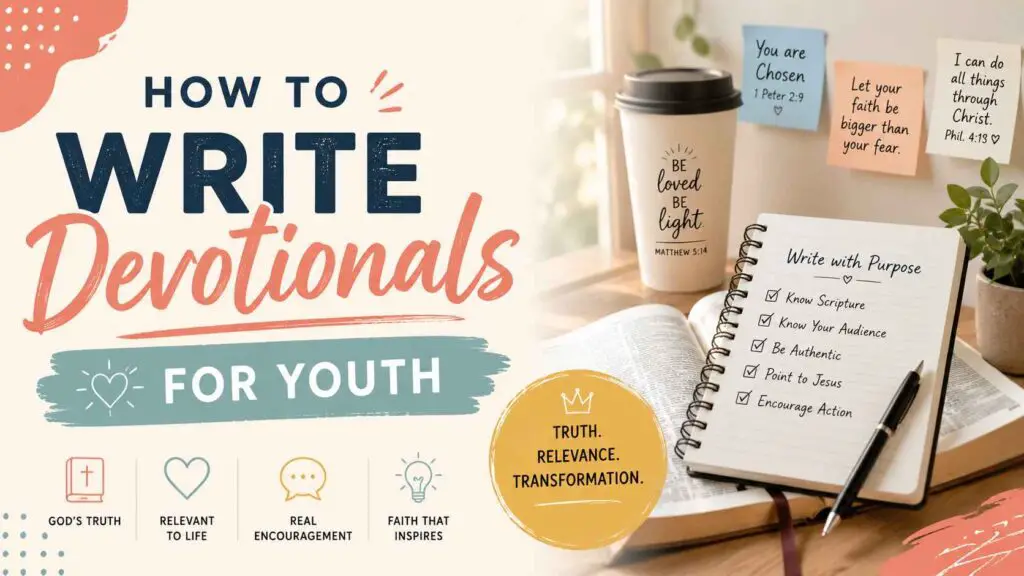
Writing a devotional for youth is a powerful way to encourage young people in their faith journey. A well-written devotional helps teenagers and young adults connect biblical truth to everyday situations such as friendships, anxiety, social media, identity, school pressure, and future decisions.
The best youth devotionals are relatable, Scripture-centered, practical, and easy to understand. Instead of sounding overly formal or preachy, they speak directly to the hearts of young readers and encourage them to apply God’s Word in their daily lives.
Whether you are a youth pastor, church leader, parent, teacher, or student, learning how to write a devotional for youth can help you create meaningful content that inspires spiritual growth and deeper faith.
How to Write a Devotional for Youth
#1. Choose a Relevant Topic Youth Can Relate To
The first step in writing a devotional for youth is selecting a topic that connects with the real-life experiences of teenagers and young adults. Young people are far more likely to engage with a devotional when they feel understood and see how God’s Word applies to their everyday lives.
Focus on topics that youth commonly struggle with, including:
- Peer pressure
- Anxiety and stress
- Identity and self-worth
- Fear and insecurity
- Friendships and relationships
- Social media influence
- Trusting God
- Forgiveness
- Purpose and calling
Avoid trying to cover too many ideas in a single devotional. A focused devotional is easier to understand and leaves a stronger impact.
For example, if your topic is about fear, you can discuss how God gives courage during difficult situations at school, at home, or in friendships.
Actionable Tip:
Ask yourself: “What challenge are young people dealing with right now?” Build your devotional around that answer.
#2. Select a Bible Verse That Supports the Topic
Every effective devotional begins with Scripture. The Bible verse serves as the foundation of the devotional and keeps the message spiritually grounded.
Choose verses that are:
- Easy to understand
- Encouraging and practical
- Relevant to the topic
- Memorable for youth
Some great Bible verses for youth devotionals include:
- 1 Timothy 4:12
- Jeremiah 29:11
- Joshua 1:9
- Philippians 4:6-7
- Psalm 139:14
Take time to study the verse and understand its meaning before writing. Knowing the context of the Scripture will help you explain it clearly and accurately.
Actionable Tip:
Use Bible translations like NIV or NLT to make the devotional easier for young readers to understand.
#3. Start With a Relatable Introduction
A strong introduction captures attention immediately and helps young readers connect emotionally with the devotional.
You can begin with:
- A question
- A personal story
- A common struggle
- A relatable situation
- A short illustration
For example:
“Have you ever felt worried about fitting in or being accepted by others?”
This kind of opening quickly creates connection because it reflects feelings many teenagers experience regularly.
Write in a conversational tone rather than sounding overly formal. The devotional should feel personal and approachable.
Actionable Tip:
Keep your introduction short and engaging so readers stay interested from the beginning.
#4. Explain the Scripture in Simple Terms
After introducing the topic, explain what the Bible verse means and how it applies to daily life.
Your explanation should help readers understand:
- The meaning of the verse
- The context behind it
- Why it matters today
- How it applies personally
Avoid using complicated theological language that may confuse younger readers. Instead, focus on clarity, simplicity, and practical understanding.
For example, if your devotional uses Philippians 4:6-7, explain how God invites believers to bring their worries to Him through prayer instead of carrying anxiety alone.
Actionable Tip:
Write as though you are having a one-on-one conversation with a teenager.
#5. Include Practical Life Application
A devotional should encourage action, not just provide information. After explaining the Scripture, show readers how they can apply the lesson in their everyday lives.
Practical applications may include:
- Praying during stressful moments
- Choosing positive friendships
- Trusting God during uncertainty
- Showing kindness at school
- Limiting harmful online influences
- Spending time reading the Bible
Be specific when giving examples. Clear applications help youth understand exactly how to live out the message.
For example:
“The next time you feel nervous before a test or presentation, pause and pray instead of letting fear take control.”
Actionable Tip:
Challenge readers to take one practical step within the next 24 hours.
#6. Ask Reflection Questions
Reflection questions encourage young readers to think deeply about the devotional and personally apply the message.
Good reflection questions help youth:
- Examine their thoughts and emotions
- Connect personally with Scripture
- Start meaningful conversations
- Grow spiritually
Examples include:
- What fear do I need to give to God?
- Who influences my decisions the most?
- How can I trust God more this week?
- What area of my life needs spiritual growth?
If the devotional is used in a youth group or Bible study, reflection questions can also encourage discussion and participation.
Actionable Tip:
Use open-ended questions that encourage thoughtful responses instead of yes-or-no answers.
#7. End With a Short Prayer
Ending with prayer gives young readers an opportunity to respond spiritually to the devotional.
A good devotional prayer should be:
- Short
- Genuine
- Encouraging
- Focused on the topic
The goal is not to sound overly formal but to help youth feel comfortable talking honestly with God.
Actionable Tip:
Use simple language that young readers could confidently pray on their own.
#8. Keep the Devotional Short and Engaging
Youth devotionals are most effective when they are concise, clear, and easy to read. Most teenagers prefer devotionals that can be completed in about 5–10 minutes.
To improve readability:
- Use short paragraphs
- Include headings and bullet points
- Write conversationally
- Avoid unnecessary repetition
- Focus on one main message
You can also increase engagement by adding:
- Personal stories
- Journaling prompts
- Bible reading challenges
- Weekly faith goals
A devotional that is simple, relatable, and practical will leave a stronger impact than one that feels too long or complicated.
Actionable Tip:
Read your devotional out loud before publishing it to improve flow and clarity.
Sample Devotional for Youth
Devotional Title: Trusting God When You Feel Afraid
Bible Verse
“Have I not commanded you? Be strong and courageous. Do not be afraid; do not be discouraged, for the Lord your God will be with you wherever you go.” — Joshua 1:9
Introduction
Fear is something every young person experiences at some point. You may feel afraid about fitting in at school, speaking in front of others, making future decisions, or dealing with difficult situations at home. Sometimes fear can make you feel overwhelmed and uncertain about what will happen next.
The good news is that God understands your fears and promises to be with you through every challenge. You never have to face difficult moments alone because God walks beside you every step of the way.
Understanding Scripture
In Joshua 1:9, God spoke these words to Joshua as he prepared to lead the Israelites into the Promised Land. Joshua had a huge responsibility, and he likely felt nervous and unprepared. Yet God reminded him to stay strong and courageous because He would always be with him.
This verse teaches us that courage does not mean we never feel afraid. True courage means trusting God even when fear tries to take over. God’s presence gives us strength during uncertain moments.
No matter what challenges you face, God promises that you are never alone.
Practical Life Application
When fear begins to control your thoughts, pause and pray before reacting. Instead of focusing only on your problems, remind yourself of God’s promises.
This week, try these practical steps:
- Pray whenever you feel anxious or worried
- Read Joshua 1:9 every morning
- Talk to a trusted Christian friend or mentor
- Replace negative thoughts with God’s truth
- Remember times when God helped you in the past
Small acts of faith can help you build confidence and trust in God over time.
Reflection Questions
- What fear have I been struggling with recently?
- How can I trust God more during difficult situations?
- What practical step can I take this week to grow stronger in my faith?
Prayer
Dear God,
Thank You for always being with me, even when I feel afraid or uncertain. Sometimes I worry about things I cannot control, and fear tries to take over my thoughts. Help me remember that Your presence gives me strength and courage every single day. Teach me to trust You during difficult situations and remind me that I never have to face challenges alone. Give me wisdom when I make decisions, peace when I feel anxious, and confidence to follow You faithfully. Help me focus on Your promises instead of my fears and guide me to become stronger in my faith each day.
Amen
Closing Thoughts
Learning how to write a devotional for youth is about creating meaningful, Scripture-based messages that connect with young people in practical and encouraging ways. The most effective devotionals combine biblical truth with relatable experiences, simple explanations, and actionable life application.
By choosing relevant topics, using engaging introductions, explaining Scripture clearly, and encouraging reflection, you can create devotionals that inspire spiritual growth and strengthen faith.
Whether you are writing for a church, youth ministry, Christian blog, Bible study group, or personal outreach, your words can make a lasting impact. Start simple, stay authentic, and trust God to use your message to encourage the next generation.