
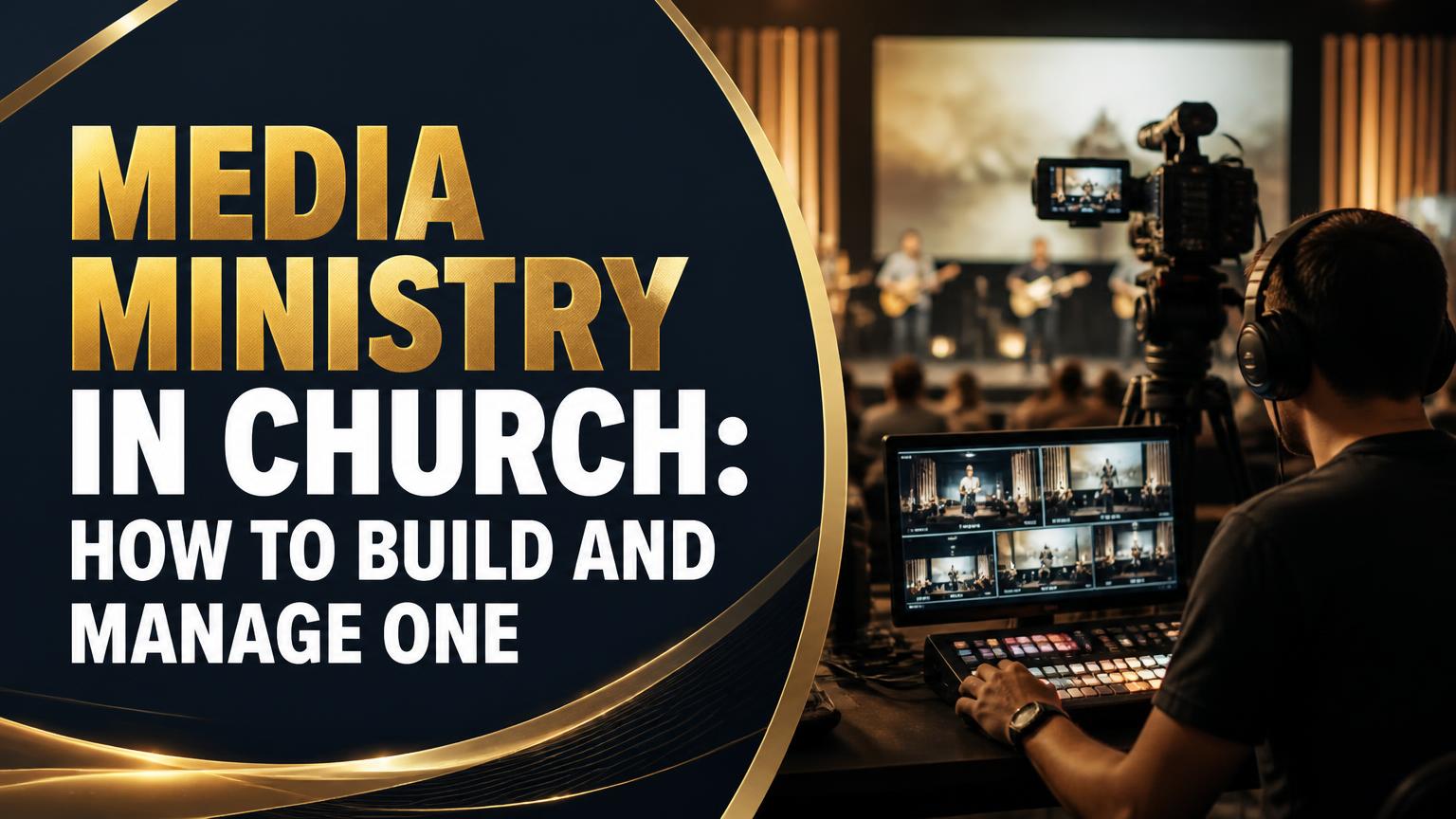
Media ministry in church uses communication tools, creative skills, and digital platforms to support worship, evangelism, discipleship, fellowship, and practical service. It may include livestreaming, sound, video, photography, graphic design, websites, social media, projection, and content production. A healthy ministry does not treat technology as the mission itself. Instead, it uses media to help people encounter biblical truth, participate in the life of the church, and receive clear communication without allowing production demands to overshadow worship or people.
Media Ministry in Church: What It Is and What It Does
More Than a Sunday Livestream
A livestream is only one part of media ministry. The ministry may also prepare sermon recordings, manage presentation slides, produce testimonies, photograph church events, maintain the website, communicate announcements, create discipleship resources, and help people participate when illness, distance, disability, or other circumstances prevent physical attendance.
Its purpose is not simply to make church activities visible. Media should help the church communicate faithfully and serve people effectively. A well-produced video has little value if its message is unclear, its theology is careless, or it encourages spectatorship without meaningful connection. Technical quality supports ministry, but it does not replace spiritual maturity, pastoral care, or genuine Christian community.
How Media Supports the Church’s Mission
Media can extend the reach of a church’s teaching and communication, but its usefulness depends on the ministry’s objective. A church might use a podcast to help members revisit a sermon, a short video to explain a ministry opportunity, or a livestream to serve people who cannot attend in person. Each format should answer a real communication need rather than exist because another church uses it.
The biblical principle is stewardship. Jesus commands his followers to make disciples and teach them to observe his commands (Matthew 28:19–20). Media can assist that work by making teaching accessible, reinforcing biblical truth, and helping people take a next step. It cannot create discipleship by itself. Discipleship still requires relationships, obedience, prayer, accountability, and life together in the church.
Core Areas of a Church Media Ministry
A church may combine several functions in one team or assign them to separate volunteers and staff. Common areas include:
- Audio and production: Mixing microphones, music, sermon audio, livestream sound, and recordings.
- Video: Recording services, editing sermons, producing testimonies, and creating educational or promotional material.
- Visual presentation: Preparing lyrics, Scripture, announcements, sermon points, and other projected content.
- Photography and design: Documenting church life and producing graphics for print and digital communication.
- Website and digital communication: Maintaining accurate schedules, registration information, sermons, giving instructions, and contact details.
- Social media: Sharing useful content, church updates, stories, invitations, and timely pastoral communication.
- Technical support: Managing cameras, computers, networks, streaming platforms, lighting, and data storage.
These functions overlap, but they require different abilities. Someone who enjoys operating a camera may not be suited to writing pastoral announcements, and a gifted designer may not want to manage live audio. Matching people to responsibilities improves both quality and retention.
How to Build a Media Ministry in Church
Define the Mission Before Buying Equipment
Begin with ministry questions rather than equipment questions. Identify whom the church is trying to serve, what communication problems exist, which ministries need support, and what the church can sustain financially and organizationally. A small church may need reliable audio, clear slides, and an accurate website before it needs multiple cameras or elaborate video production.
Write a short purpose statement, such as: “Our media team helps the church communicate the gospel clearly, serve participants responsibly, and connect people with the life and mission of the congregation.” This statement gives the team a standard for deciding what to produce, which requests to accept, and when a technically impressive idea does not serve the church’s actual priorities.
Recruit Character, Teachability, and Skill
Technical ability matters, but character determines whether a media ministry strengthens or strains the church. Recruit people who are dependable, humble, patient under pressure, willing to receive correction, and able to serve without needing public recognition. Media volunteers often work behind the scenes, sometimes solving urgent problems without receiving visible credit.
Do not assume that experienced users of cameras, computers, or social media automatically understand church ministry. Provide training in both technical tasks and ministry expectations. New volunteers can begin with lower-risk responsibilities, observe experienced team members, and gradually serve in live environments. A written role description should explain arrival times, responsibilities, communication procedures, equipment care, and what to do when something goes wrong.
Choose a Sustainable Technical System
A sustainable system is reliable enough for the church’s needs and simple enough for available volunteers to operate. Consider the entire workflow: capture, audio, switching, presentation, internet connection, recording, editing, storage, and publication. Improving one part while ignoring another often creates new problems. A high-quality camera cannot compensate for poor sound, and a strong livestream is of limited value if the website gives visitors outdated information.
Create a replacement and maintenance plan. Label cables and equipment, document settings, protect account credentials, back up important files, and identify who can make repairs or authorize purchases. Budget for recurring costs such as software, subscriptions, internet service, storage, licenses, equipment maintenance, and training—not only the initial purchase.
Establish Policies for People and Content
Church media involves real people, so the ministry needs clear expectations about privacy, consent, child protection, copyright, security, and content approval. Obtain appropriate permission before prominently photographing or recording individuals, especially children. Use approved processes for handling prayer requests, testimonies, contact information, and sensitive pastoral situations.
Copyright also matters. Churches should not assume that religious use automatically permits copying music, images, video clips, fonts, or written material. Use content the church created, properly licensed material, or material clearly available for permitted use. Keep administrative access organized and protected with strong passwords and appropriate account recovery procedures.
How to Manage Media Ministry Well
Build a Repeatable Service Workflow
A dependable workflow reduces stress and protects the congregation from preventable mistakes. A typical process may include:
- Plan: Confirm the service order, speakers, songs, announcements, Scripture, graphics, and special elements.
- Prepare: Test equipment, load presentation files, check batteries and cables, verify internet access, and confirm volunteer assignments.
- Rehearse: Run through transitions and identify changes before the service begins.
- Execute: Keep communication brief and calm during the service, focusing on the congregation rather than personal preferences.
- Review: Record technical issues, content corrections, and improvements for the next service.
- Archive: Store recordings, graphics, and important files according to the church’s retention and access policies.
The goal is not rigid bureaucracy. It is to move decisions earlier, when changes are easier and less distracting. Checklists are particularly useful because familiar services can create overconfidence, while unusual services require extra coordination.
Protect Worship From Production Anxiety
Media teams serve worship; they do not control it. Excessive attention to camera movement, visual effects, volume, or stage appearance can distract the congregation and place production values above participation. The best technical choice is often the one people barely notice because it makes the message, music, and communal response easier to follow.
This requires cooperation between pastors, worship leaders, service planners, and media volunteers. Decide in advance which elements deserve emphasis and which should remain simple. During a live service, favor clarity and stability over experimentation. When mistakes occur, correct them without panic and avoid blaming volunteers publicly. A gracious culture helps people learn and keeps service from becoming a performance competition.
Measure Faithfulness Rather Than Vanity
Media platforms provide numbers such as views, reach, watch time, shares, and followers. These figures can help identify whether content is accessible and whether communication is reaching its intended audience, but they do not measure spiritual growth directly. A large view count may reflect curiosity, controversy, or an easily shared clip rather than lasting discipleship.
Evaluate media through ministry questions: Did people understand the message? Could members find accurate information? Were isolated or absent people meaningfully served? Did content lead people toward prayer, Scripture, conversation, service, or connection with the church? Combine platform data with pastoral observation and direct feedback. Measurement should improve stewardship, not turn ministry into a contest for attention.
Biblical and Ethical Principles for Church Media
Communicate Truthfully and Clearly
The church’s communication should reflect the character of the message it proclaims. Ephesians 4:25 connects Christian speech with truthfulness, while Colossians 4:6 calls believers to communicate with grace and wisdom. In practice, this means avoiding manipulative headlines, misleading thumbnails, exaggerated claims, edited testimonies that distort meaning, and announcements that hide important conditions.
Clarity is also an ethical responsibility. Use understandable language, readable text, accurate dates, and captions where possible. Explain what an event is, whom it is for, how to register, and whom to contact. A media ministry serves people poorly when its content looks polished but leaves them confused about what to do next.
Honor People Rather Than Exploit Their Stories
Testimonies, photographs, interviews, and prayer requests involve dignity and vulnerability. Do not turn someone’s grief, poverty, illness, conversion, or crisis into content without informed consent and wise pastoral judgment. A compelling story is not automatically a story the church should publish.
Philippians 2:3–4 directs believers to consider the interests of others rather than acting from selfish ambition. That principle applies to media decisions. Ask whether publication benefits the person, whether the person understands where the material may appear, and whether the church would still share it if attention or fundraising were not involved. Protecting someone’s dignity may be more faithful than producing a powerful piece of content.
Make Participation More Accessible
Media ministry can remove barriers for people who are deaf or hard of hearing, visually impaired, homebound, geographically distant, unfamiliar with church practices, or unable to attend every gathering. Captions, readable contrast, clear audio, transcripts, descriptive information, and accurate online details can make communication more inclusive.
Accessibility should not be treated as an optional upgrade added only after a problem is reported. The church should consider it during planning. Digital ministry also needs realistic boundaries: online access can supplement embodied fellowship, but it cannot fully replace pastoral presence, sacraments or ordinances as understood by a church tradition, mutual service, and accountable Christian community.
Common Problems in Church Media Ministry
Chasing Technology Without a Ministry Need
New equipment can appear to promise immediate improvement, but technology does not solve unclear priorities, poor preparation, weak communication, or volunteer burnout. Before making a purchase, identify the specific problem, compare simpler solutions, and consider who will operate and maintain the system.
Depending on One Skilled Volunteer
A ministry becomes fragile when one person alone knows the passwords, equipment settings, livestream process, or editing workflow. Cross-train volunteers, document recurring tasks, and schedule backups. Shared knowledge protects continuity when someone moves, becomes ill, or needs a break.
Treating Volunteers as Free Labor
Volunteers are servants, not disposable resources. Excessive schedules, vague expectations, inadequate training, and constant emergency requests eventually produce exhaustion and resentment. Rotate demanding roles, provide meaningful rest, thank people specifically, and make it possible to say no without shame. A ministry that cannot continue without overworking its team needs a smaller scope or better staffing.
Confusing Visibility With Fruitfulness
A church may receive attention online without building trust, understanding, or spiritual maturity. Media should therefore remain accountable to the church’s theological convictions, pastoral leadership, safeguarding practices, and mission. The question is not simply whether content can attract an audience, but whether it communicates truth responsibly and helps people take faithful action.
Build for Faithful Service, Not Mere Visibility
A strong media ministry in church begins with purpose, not production. It uses sound, video, design, websites, and social platforms to communicate the gospel clearly, support worship, strengthen discipleship, and serve people who might otherwise be overlooked. The most expensive system is not necessarily the most effective one; a modest, reliable process operated by prepared and humble servants may serve the church better.
Build gradually, document the work, train more than one person, protect privacy, respect copyright, and review whether each activity advances the church’s mission. Keep technology accountable to truth, love, wisdom, and the needs of real people. When media remains a form of faithful stewardship rather than a pursuit of attention, it can extend the church’s communication without displacing the relationships and embodied community through which Christian ministry is lived.