
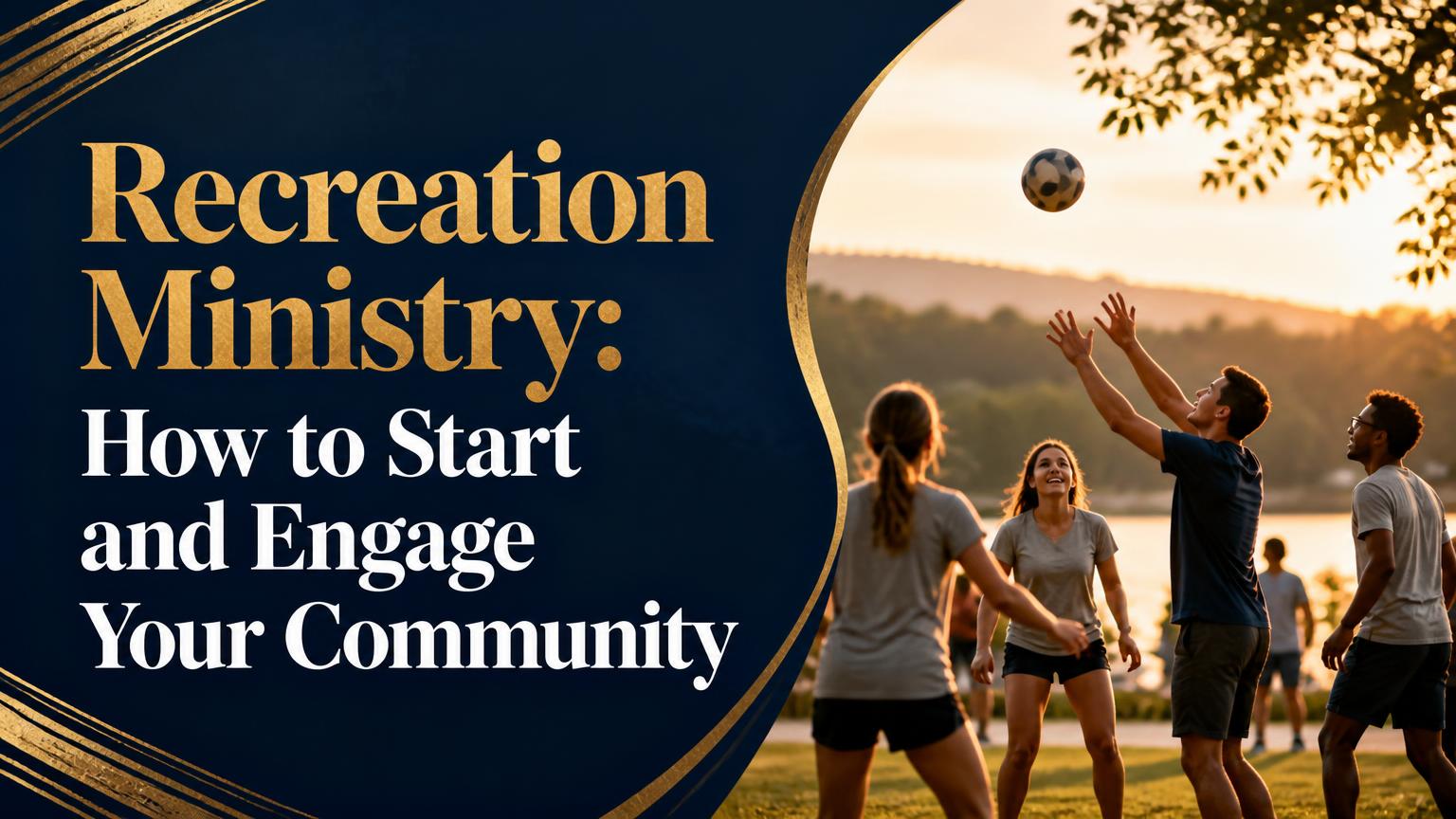
Recreation ministry uses sports, games, arts, outdoor activities, fitness, and shared leisure to build relationships and express Christian service. It is more than keeping people occupied or adding entertainment to a church calendar. A healthy recreation ministry creates welcoming environments where children, teenagers, adults, families, and neighbors can experience belonging, develop skills, receive care, and encounter the character of Christ through consistent relationships.
Starting one requires more than choosing an activity. Leaders must understand the community, define the ministry’s purpose, recruit trustworthy volunteers, plan for safety and accessibility, and create natural opportunities for conversation and service. The strongest programs treat recreation as a setting for discipleship and community care rather than as a substitute for either.
Recreation Ministry
A Definition Grounded in Mission
Recreation ministry is the intentional use of recreational activities to serve people, strengthen relationships, and support the church’s spiritual mission. Activities may include basketball, soccer, hiking, camping, music, art, fitness classes, board games, clubs, dance, cooking, or family events. The activity is the context; the ministry is the way leaders use that context to welcome, encourage, serve, and disciple people.
This distinction prevents two common mistakes. A church may organize enjoyable events without building meaningful relationships, or it may force every activity into an overt religious presentation that makes participation feel transactional. Recreation ministry connects genuine enjoyment with Christian hospitality, practical care, moral formation, and long-term presence in the community.
Biblical Foundation for Welcoming and Serving
Scripture does not prescribe a modern recreation department, but it provides principles that support ministry through shared activity. Jesus welcomed people, noticed overlooked individuals, served practical needs, and formed disciples through sustained personal relationships. His example shows that ministry is not limited to formal teaching. People often become open to spiritual conversation after experiencing patience, respect, and dependable care.
Romans 12:13 instructs believers to practice hospitality and contribute to the needs of others. Recreation can become an expression of that command when a church opens its facilities, shares equipment, provides transportation, welcomes families, or creates a safe place for people who feel isolated. First Corinthians 10:31 also gives a governing principle: ordinary activities can honor God when they are conducted with integrity, gratitude, excellence, and love for others.
The goal is not to label every game a spiritual event. Rather, Christian leaders bring Christian character into the activity. Fairness, self-control, forgiveness, encouragement, humility, and concern for the vulnerable give recreation a distinctly ministry-shaped quality.
What Recreation Ministry Can Include
A recreation ministry can be highly structured or informal, depending on the community and the church’s resources. Common forms include:
- Youth sports leagues with age-appropriate coaching and mentoring
- Open gym or open-field programs for local children and teenagers
- Family recreation nights with games, meals, and conversation
- Outdoor activities such as hiking, camping, fishing, or service projects
- Creative programs involving music, art, drama, or crafts
- Fitness and wellness groups for adults or older people
- Community tournaments, neighborhood events, or seasonal camps
- Clubs organized around chess, gaming, cycling, cooking, or other interests
The best choice is not necessarily the most popular activity. It is the activity the church can provide consistently, safely, and relationally. A modest weekly program with attentive leaders often serves people better than a large event that happens only once and produces no continuing connection.
How to Start a Recreation Ministry
Starting well means matching the ministry to actual people and available capacity. A church should resist copying another congregation’s program without examining its own neighborhood, facilities, volunteers, budget, and pastoral strengths.
Assess the Community and Church Context
Begin by listening. Talk with parents, young people, schools, community organizations, local sports leaders, apartment managers, and church members. Look for unmet needs rather than assuming the church already knows what people want. A community may need a free after-school program, a safe place for teenagers, affordable sports opportunities, activities for older adults, or inclusive events for families with disabilities.
Then identify the church’s capacity. Consider available rooms and fields, storage, transportation, insurance, trained volunteers, communication systems, and the times when facilities are genuinely available. A needs assessment should also identify risks: unsafe locations, inadequate supervision, transportation limitations, or activities that require skills the church does not possess.
Set a Clear Mission and Measurable Goals
A written mission statement gives the ministry direction. For example: “We provide safe, welcoming recreation that helps local families build relationships, develop character, and connect with caring members of the church.” The statement should explain whom the ministry serves, what it provides, and how it reflects Christian purpose.
Set a few practical goals for the first season. These might include serving a specific age group, offering a weekly activity for twelve weeks, recruiting two leaders for every small group, building relationships with local families, or connecting participants with additional support when needed. Attendance matters, but it is only one measure. A program may have modest numbers while producing deep trust and meaningful care.
Build a Team, Budget, and Partnerships
Recreation ministry should not depend on one energetic organizer. Recruit people with different strengths: coaches, hosts, administrators, first-aid responders, communicators, prayer partners, and volunteers who can welcome participants who seem uncertain or left out. Screen and train workers according to the church’s child-protection policies, particularly when minors are involved.
Prepare a realistic budget for equipment, facility maintenance, background checks, training, food, transportation, scholarships, and emergency supplies. Seek partnerships when they improve service without compromising the ministry’s values. Schools, parks, community centers, and local organizations may provide space, referrals, equipment, or specialized expertise. Partnerships should clarify responsibilities, supervision, communication, and safeguarding before activities begin.
Start Small and Improve Deliberately
A pilot program is usually wiser than an ambitious permanent schedule. Choose one audience, one or two activities, and a defined season. A six-week family games program or a weekly open gym can reveal attendance patterns, volunteer needs, transportation barriers, and cultural concerns before the church expands.
After each session, ask what worked, who was missing, what created confusion, and whether participants felt welcomed. Invite honest feedback from families and volunteers, not only from ministry leaders. Improvement may involve changing the time, simplifying registration, adding a quieter activity, adjusting rules, or providing equipment for people who cannot afford it. Consistency builds trust, but thoughtful adaptation keeps the ministry relevant.
How to Engage People Through Recreation
Participation is only the beginning. Engagement grows when people feel seen, safe, and able to contribute. The ministry should create repeated contact rather than treating each event as an isolated production.
Design for Relationships, Not Just Attendance
Activities should make conversation and cooperation possible. A tournament can include team introductions, shared meals, and brief reflection after games. An art group can pair experienced participants with beginners. A hiking program can use small groups rather than one large formation. These choices create natural interaction without requiring leaders to manufacture emotional moments.
Train volunteers to learn names, notice absences, welcome newcomers, and include people who are less skilled. Winning cannot be the only source of status. Rotating teams, teaching rather than criticizing, and recognizing kindness or perseverance help participants experience the ministry as a community rather than a performance contest.
Meet Real Needs With Welcome and Accessibility
An engaging program removes unnecessary barriers. Offer clear information about cost, age range, location, clothing, equipment, registration, and transportation. Keep fees low when possible, provide scholarships discreetly, and maintain loaner equipment so financial limitations do not publicly separate participants.
Accessibility includes more than physical entry. Some participants may need modified rules, sensory breaks, quieter spaces, translated communication, additional time, or a trusted support person. Ask families what would help rather than making assumptions. Dignity matters: assistance should enable participation without making someone feel like a problem to be managed.
Connect Activities to Spiritual Care Without Pressure
Christian identity should be visible through the way leaders act, but participation should not be manipulated. A church can explain its purpose, pray with consent, offer optional Bible discussions, and invite people to worship or other programs. It should not imply that a child must profess faith, listen to a sermon, or perform religious behavior to receive food, equipment, friendship, or fair treatment.
Spiritual care often begins with listening. A coach who notices grief, family stress, bullying, or loneliness may provide encouragement and connect a participant with appropriate pastoral or professional support. Leaders must maintain boundaries and avoid presenting themselves as qualified counselors when a situation requires specialized care.
Safety, Inclusion, and Stewardship
Trust can take months to build and only moments to lose. Safety is therefore part of ministry rather than an administrative detail. Churches should use written policies, train volunteers, document incidents, and review procedures regularly.
Protect Participants Through Clear Policies
Programs involving children or vulnerable adults need appropriate screening, supervision, check-in and release procedures, transportation rules, emergency contacts, first-aid preparation, and standards for digital communication. Avoid isolated one-on-one situations when possible, and ensure that leaders understand how to report suspected abuse or other serious concerns according to applicable law and church policy.
Physical safety also requires activity-specific planning. Inspect equipment and facilities, match activities to age and ability, plan for weather, keep water available, and establish procedures for injuries. Competitive programs need rules against harassment, hazing, intimidation, and reckless play. A leader’s response to misconduct should be prompt, consistent, and protective rather than shaped by a desire to preserve appearances.
Practice Inclusion Without Erasing Standards
Inclusion means providing genuine access and belonging while maintaining reasonable rules. A program can welcome beginners, experienced athletes, people with disabilities, different cultural backgrounds, and participants with limited resources without pretending that every person has identical needs or abilities.
Explain expectations plainly and apply them consistently. Leaders should distinguish between behavior that needs coaching and behavior that threatens others. They should also examine whether traditions, language, schedules, uniforms, or registration requirements unintentionally exclude people. Inclusion becomes credible when the people making decisions listen to those most affected by them.
Steward Money, Facilities, and Influence
Church resources should be managed transparently. Keep records of income and expenses, separate scholarships from public attention, maintain equipment, and explain how donations support the ministry. Avoid using recreation to promote a particular business, political cause, or individual leader without a clear and appropriate reason.
Leaders also steward influence. Children and teenagers may regard coaches as authority figures, and families may interpret the church’s conduct as a representation of Christianity. Humility, confidentiality, appropriate communication, and willingness to apologize are therefore practical expressions of the gospel. A ministry that wins games but damages trust has misunderstood its assignment.
Measuring Fruit and Sustaining the Ministry
Evaluation should examine more than how many people attended. Ask whether participants returned, whether newcomers were welcomed, whether relationships formed across social boundaries, whether volunteers were healthy and prepared, and whether the program addressed a real community need. Gather feedback through short conversations, anonymous forms, and observations from leaders.
Look for evidence of relational and spiritual fruit without claiming more than the evidence supports. Examples may include families requesting prayer, participants serving one another, isolated people finding community, volunteers developing patience and leadership, or participants choosing to join other church or community activities. These signs do not prove that every person has reached a particular spiritual conclusion, but they can indicate that the ministry is creating a trustworthy environment.
Sustainability requires seasons of rest and review. Rotate responsibilities, train new leaders, repair or replace equipment, and end activities that no longer serve the mission. Expansion should follow proven capacity, not pressure to appear successful. A sustainable recreation ministry remains faithful when attendance fluctuates because its purpose is service and relationship, not simply institutional growth.
Conclusion
Recreation ministry is a practical way for a church to express hospitality, develop relationships, serve local needs, and display Christian character through shared activities. Its effectiveness does not depend on expensive facilities or a large program catalog. It depends on a clear mission, trustworthy leaders, accessible activities, consistent presence, and a genuine concern for people beyond their performance or participation.
The strongest approach begins with listening to the community, starts at a manageable scale, and improves through honest evaluation. Sports, games, arts, and outdoor activities become ministry when they are shaped by love of neighbor, wise stewardship, safety, inclusion, and opportunities for authentic spiritual care. When those commitments guide the work, recreation can become a meaningful doorway into belonging and service.