
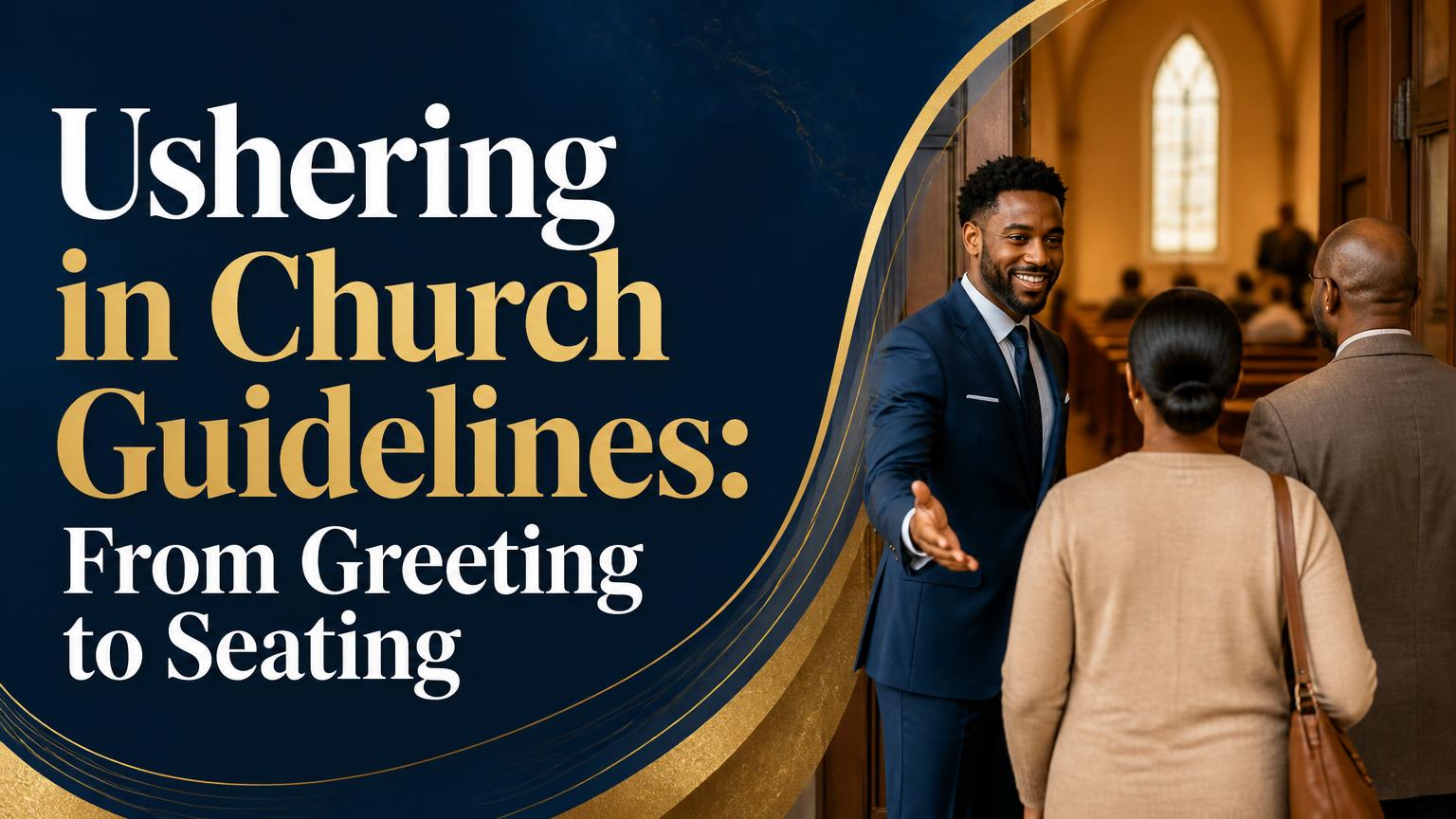
Church ushers help shape a visitor’s first experience and protect the congregation’s ability to worship without unnecessary confusion. Effective ushering involves far more than handing out bulletins or finding empty seats. It combines hospitality, attentiveness, discretion, safety awareness, and cooperation with pastors, deacons, musicians, and other ministry leaders. These ushering in church guidelines explain how to welcome people warmly, seat them wisely, assist with practical needs, respond to disruptions, and serve with a distinctly Christian character.
Ushering in Church Guidelines
Welcome Before the Service Begins
An usher’s first responsibility is to help people feel expected rather than processed. Arrive early enough to inspect entrances, prepare programs or worship materials, check seating areas, and identify any instructions for that service. Greet people with eye contact, a genuine smile, and a brief offer of assistance. Avoid making assumptions about whether someone is a regular member, first-time visitor, family member, or person in need.
Hospitality should be attentive without becoming intrusive. A simple “Good morning; may I help you find a seat?” is usually better than a series of personal questions. If a visitor appears uncertain, explain practical details such as children’s worship, restrooms, accessible entrances, or the location of the sanctuary. When possible, introduce visitors to an appropriate church member rather than leaving them to navigate the congregation alone.
Seat People With Discretion
Seating requires both order and sensitivity. Ushers should know which seats are reserved for worship leaders, a choir, families with specific needs, or people involved in the service. They should also understand whether the congregation fills from the front, back, or sides. Consistent practice prevents confusion, but ushers should not treat a preferred seating pattern as more important than a person’s comfort or dignity.
When helping someone find a seat, avoid publicly announcing why that person needs assistance. Older adults, people with disabilities, parents with infants, or visitors who need an aisle seat may require practical accommodation, but they should not be made to feel like an inconvenience. If seating is limited, offer realistic options calmly. A church’s goal is not maximum visual uniformity; it is orderly, welcoming participation in worship.
Support Worship Without Distraction
Ushers serve the service rather than competing with it. Once worship begins, move quietly, keep conversations brief, silence phones, and avoid unnecessary movement in visible areas. Distribute late-arrival materials discreetly and direct people with minimal interruption. If someone needs help, use a calm voice and simple gestures whenever possible.
During Scripture reading, prayer, preaching, or music, ushers should remain observant without appearing to monitor the congregation. Their presence should reassure people that assistance is available, not create the impression that everyone is being policed. Coordinate with the service leader before making changes to seating, lighting, doors, or movement patterns. Small acts of preparation often prevent larger distractions later.
Handle Late Arrivals and Special Situations
Late arrivals should be received graciously. An usher can quietly determine whether there is an appropriate moment to seat them or whether they should wait briefly in a foyer or designated area. This decision depends on the service format, available seating, and the potential disruption. Never shame people for arriving late; circumstances may include transportation problems, work schedules, childcare difficulties, or emergencies.
Special situations require judgment. A parent may need help locating a crying child, a guest may not understand the order of worship, or someone may become ill during the service. Ushers should respond promptly while protecting privacy. If an issue exceeds their training—such as a medical crisis, suspected abuse, serious conflict, or safety threat—they should contact the designated leader or emergency service rather than attempting to manage it alone.
Protect Safety, Accessibility, and Dignity
Before the congregation gathers, inspect aisles, steps, entrances, and exits for hazards. Keep emergency pathways clear, check that doors function properly, and know the locations of first-aid supplies, fire extinguishers, and accessible facilities. Do not block ramps or place supplies where they create tripping risks. A safe building is part of practical hospitality.
Accessibility means more than providing a wheelchair ramp. Ushers should be prepared to assist people with limited mobility, hearing or vision differences, cognitive disabilities, or temporary injuries. Ask before helping; do not move a person, wheelchair, walker, or personal item without permission. Speak directly to the person receiving assistance, not only to a companion. Respectful service preserves independence instead of treating assistance as charity.
Respond to Emergencies and Conflict
Every church should establish a clear emergency plan, and ushers should know their specific roles. Depending on the congregation, responsibilities may include contacting emergency services, guiding people toward exits, assisting children or vulnerable adults, keeping access routes open, and directing responders to the correct location. During a crisis, use short instructions, remain calm, and avoid spreading unverified information.
Conflict should be handled with patience and limited public exposure. If someone is disruptive, intoxicated, aggressive, or distressed, do not argue in the sanctuary or attempt to prove authority. Create space, request help from a pastor or security-trained team member, and prioritize the safety of the congregation. Christian kindness does not require an usher to tolerate threats or handle a dangerous situation alone.
The Character and Responsibilities of a Church Usher
Church ushering is a ministry of welcome, but it is also a ministry of stewardship. Romans 12:13 connects Christian hospitality with sharing and practical care, while Hebrews 13:2 urges believers to show hospitality to strangers. These passages do not prescribe one universal ushering system, but they establish a valuable principle: people entering Christian worship should encounter thoughtful, dignified care. An usher’s conduct can communicate whether the church views visitors as burdens, interruptions, or neighbors to be received with love.
The role also requires humility. An usher may have access to information about visitors, seating preferences, family circumstances, or sensitive incidents. That information should not become hallway conversation. Ushers should avoid favoritism, gossip, public correction, and unnecessary displays of authority. James 2 warns against honoring people according to status, which applies directly to welcoming wealthy guests while overlooking the poor, unfamiliar, disabled, or socially isolated.
At the same time, an usher is not expected to solve every pastoral or operational problem. The ministry should have defined boundaries: who handles counseling, children’s protection concerns, medical incidents, collections, security, accessibility requests, and complaints. Clear boundaries protect both the congregation and the volunteers. Good ushers know when to act, when to ask for help, and when to refer a matter to someone with appropriate training.
A Practical Ushering Workflow
A dependable routine helps volunteers serve consistently. Before the service, ushers can use this sequence:
- Arrive early and pray for wisdom, patience, and attentiveness.
- Inspect the building for hazards, blocked exits, temperature concerns, and seating problems.
- Review the service plan with the pastor, worship leader, or head usher.
- Confirm assignments for doors, seating, offering, overflow areas, and emergencies.
- Welcome people at entrances and offer directions without pressuring them.
- Monitor the room discreetly once worship begins.
- Assist during transitions such as communion, baptisms, offering, or dismissal.
- Check the building afterward for lost items, spills, remaining guests, or safety concerns.
This workflow should be adapted to the congregation’s size and tradition. A small church may use one or two volunteers who combine several duties, while a larger church may assign teams to hospitality, accessibility, security, children’s ministry, and sanctuary seating. The structure matters less than ensuring that responsibility is clear and no essential task depends on guesswork.
Ushers should also communicate after services. Briefly record recurring problems such as confusing signs, inadequate accessible seating, crowded entrances, or repeated medical concerns. The purpose is improvement, not surveillance. If the same difficulty appears repeatedly, church leaders should address the underlying system rather than expecting volunteers to compensate indefinitely.
Training and Coordination for Ushering Teams
Training should cover more than where to stand. New ushers need instruction in greeting, seating, confidentiality, accessibility, child-safety procedures, emergency response, conflict de-escalation, and the congregation’s service practices. Role-playing common situations can be useful: a visitor arrives during prayer, a person cannot find accessible seating, a child becomes separated from a parent, or an individual refuses to follow a safety instruction.
Written policies are especially valuable when a church handles money, children, vulnerable adults, medical emergencies, or security concerns. Ushers should know who has decision-making authority and how to contact that person. They should not improvise procedures for collecting offerings, releasing children, responding to suspected abuse, or confronting threatening behavior. Local laws and insurance requirements may also affect these policies, so church leadership should review them appropriately.
Coordination prevents conflicting instructions. The head usher or designated ministry leader should communicate changes in the service schedule, seating plans, construction access, special events, and expected attendance. Ushers should also coordinate with disability ministries, children’s workers, greeters, and security volunteers. A visitor experiences one church, not separate departments, so the handoff between ministries should feel coherent and respectful.
Common Mistakes to Avoid
Several well-intended practices can weaken hospitality. Overly forceful seating may make guests feel controlled, while excessive questioning can feel invasive. Correcting someone publicly, commenting on clothing, ignoring people who arrive alone, or assuming that every family follows the same worship customs can create embarrassment. Ushers should give necessary direction without turning personal preferences into spiritual tests.
Another mistake is confusing friendliness with informality. Warmth still requires boundaries. Do not disclose private information, touch someone without consent, enter a conflict impulsively, or promise services the church cannot provide. Likewise, do not confuse order with rigidity. First-time guests may not know where to stand, when to sit, or how to participate. Patient explanation is more effective than visible disapproval.
Finally, churches should avoid relying on one exceptionally capable usher. A sustainable ministry shares knowledge, trains replacements, rotates assignments when possible, and welcomes feedback. If the ministry depends on a single person who knows every procedure, the congregation remains vulnerable when that volunteer is absent.
Conclusion
Effective ushering in church combines practical competence with Christian hospitality. Ushers welcome people before the service, guide them to seating without embarrassment, protect worship from unnecessary disruption, support accessibility, and respond wisely to safety concerns. Their authority should remain servant-shaped: firm when safety requires it, gentle when people need patience, and humble when a matter belongs to pastoral or professional leadership. When churches train ushers carefully and establish clear procedures, the ministry becomes more than crowd management. It creates an environment where visitors, members, children, older adults, and people with differing needs can participate in worship with dignity and peace.