
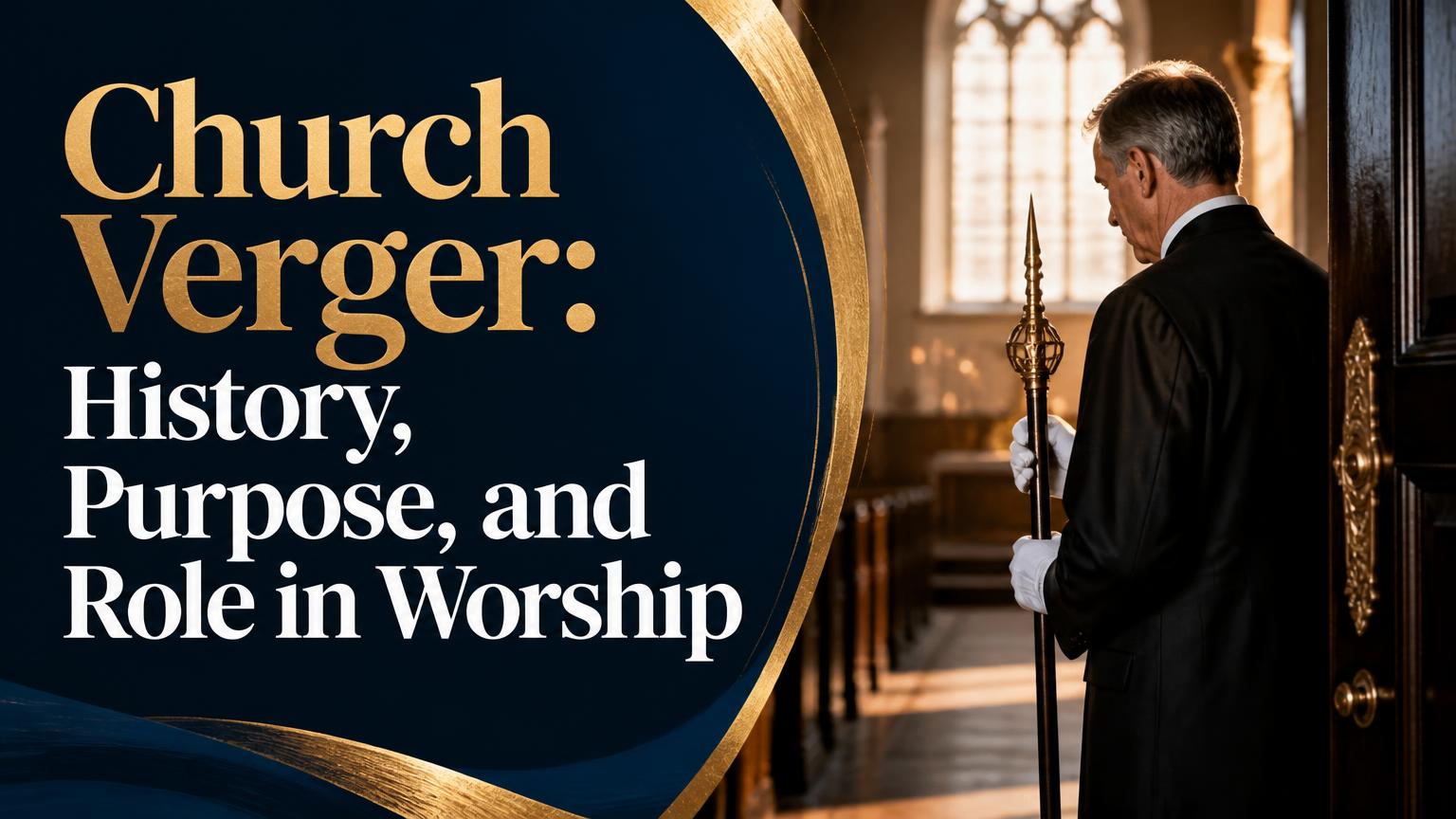
A church verger is a lay officer who helps prepare the building, coordinate worship, support clergy, and maintain good order during services. The role is especially associated with Anglican, Episcopal, and other liturgical churches, although individual responsibilities vary by denomination and congregation. Vergers may organize processions, arrange worship materials, assist at weddings and funerals, welcome visiting clergy, oversee practical details, and help protect the reverence and continuity of public worship. They usually do not replace clergy or exercise sacramental authority; their work enables the service to take place smoothly and appropriately.
What Is a Church Verger?
The Verger’s Basic Purpose
A verger is responsible for many of the practical and ceremonial arrangements that surround worship. The word commonly refers to a church officer who makes sure the worship space, people, furnishings, and schedule are ready for a service.
The role is often described as a bridge between the church’s liturgical life and its practical operation. A verger may know where vestments, vessels, banners, service books, candles, microphones, and processional items are kept. They may also understand the order of services well enough to anticipate what clergy, servers, musicians, readers, and other participants will need.
In many churches, the verger is a paid employee; in others, the position is voluntary. Some congregations have one verger, while large cathedrals may have a team with a head verger who coordinates several assistants.
Responsibilities During Worship
A verger’s duties differ from parish to parish, but common responsibilities include:
- Preparing the sanctuary, nave, chancel, or other worship area
- Arranging chairs, hymn books, service sheets, candles, and liturgical furnishings
- Checking that vestments and ceremonial objects are ready
- Organizing processions and assigning places to participants
- Coordinating readers, acolytes, servers, and lay ministers
- Assisting clergy before, during, and after services
- Managing practical arrangements for weddings, funerals, baptisms, and major festivals
- Responding discreetly to unexpected problems during worship
- Helping maintain appropriate order among participants and visitors
- Securing or resetting the building after the service
During a procession, the verger may direct the movement of participants, carry a ceremonial staff, signal when the procession should begin, or ensure that people know where to stand. During a wedding or funeral, the verger may coordinate entrances, seating, music cues, flowers, and the movement of the congregation.
The verger’s visible actions are only part of the work. Much of the role involves preparation and anticipation. A well-prepared verger reduces distractions so that worship leaders and congregants can concentrate on prayer, proclamation, music, and sacrament.
The Verger’s Relationship With Clergy
Vergers generally support clergy without functioning as clergy. A priest, pastor, or bishop presides at services and carries responsibility for preaching, sacramental acts, pastoral leadership, and theological direction. The verger normally carries responsibility for practical execution, ceremonial coordination, and the readiness of the worship environment.
This distinction matters because the verger may appear highly authoritative during a service. They may give instructions, correct an arrangement, or redirect participants, but that authority is usually delegated and operational rather than sacramental. A verger’s effectiveness depends on knowing when to act, when to ask the clergy, and when to remain unobtrusive.
In a large church, the verger may also coordinate with the sacristan, musicians, building staff, ushers, altar servers, flower arrangers, and event organizers. Clear communication prevents confusion, especially during services involving many participants or unfamiliar visitors.
Pastoral Awareness Without Clerical Authority
Although the verger’s primary role is practical, the position often requires considerable pastoral sensitivity. Vergers may be the first person a visitor meets, the person who helps a grieving family find its place, or the staff member who reassures a nervous wedding party before the procession begins.
They must handle private information discreetly and respond respectfully to people with different levels of familiarity with church customs. A verger may need to explain where someone should sit, what will happen next, or how to participate without making the person feel embarrassed.
This does not mean that every verger provides formal pastoral care. Rather, the role requires awareness that practical decisions affect people spiritually and emotionally. A misplaced funeral arrangement, an unclear instruction, or a poorly managed entrance can add distress to an already significant occasion.
The History of the Church Verger
From the Virge to the Modern Office
The term verger is traditionally connected with the virge or verge, a rod or staff associated with an official who helped maintain order. In medieval church settings, such officers could accompany processions, clear paths, supervise movement, and assist with the practical management of worship.
The precise duties were not identical everywhere. Church organization, local custom, and the size of the institution shaped the office. In a cathedral, a verger might have had responsibilities connected with processions, visitors, ceremonial occasions, and the building itself. In a smaller parish, the position could be more closely associated with preparing the church and supporting the priest.
The historical connection with a staff of office helps explain why the verger is sometimes associated with ceremonial authority. The modern role, however, is broader than carrying a rod or leading a procession. It combines liturgical knowledge, administration, hospitality, event coordination, and care for the worship environment.
The Role in Anglican and Episcopal Churches
The verger’s office is particularly established in Anglican and Episcopal traditions. Cathedrals and historic parish churches often preserve formal verger customs, including distinctive clothing, ceremonial staffs, processional responsibilities, or structured training.
In some places, the verger is a senior lay officer with responsibility for coordinating worship across the church’s calendar. In others, the position is primarily practical and may be combined with duties involving buildings, events, or administration. There is no single universal job description, so the title should be understood within the customs of the particular church.
Other liturgical traditions may use different titles for similar work, including sacristan, sexton, master of ceremonies, or parish caretaker. These terms overlap in some settings but are not interchangeable everywhere.
How a Verger Differs From Related Church Roles
Verger and Sacristan
A sacristan is usually concerned with the sacristy and the objects, garments, and materials required for worship. Their work may include caring for vestments, preparing communion vessels, arranging candles, and ensuring that the altar or sanctuary is properly set.
A verger may perform some of these tasks, especially in a smaller congregation, but the verger’s responsibility often extends further into processions, participants, building operations, and overall service coordination. In a large church, the sacristan may focus on worship items while the verger manages people, movement, timing, and the broader practical environment.
Verger and Sexton
A sexton traditionally cares for the church building and grounds. Duties may include opening and closing the premises, cleaning, maintenance, heating, security, and preparation of spaces for services or community events.
Some churches use sexton for a role that includes many verger responsibilities, while others maintain a clear distinction. A sexton’s primary emphasis is generally the physical property; a verger’s emphasis is usually worship coordination and ceremonial order. The same person may hold both roles when a congregation has limited staff.
Verger and Usher
An usher welcomes people, distributes service materials, assists with seating, receives offerings where appropriate, and helps visitors participate comfortably. Ushers usually serve during the public gathering of the congregation.
A verger may supervise or coordinate ushers, but their work normally begins earlier and continues behind the scenes. The verger prepares the service, coordinates participants, handles ceremonial details, and responds to operational issues that arise during worship. An usher concentrates on congregational hospitality, while a verger oversees a wider system of preparation and order.
What Does a Verger Do Before and After a Service?
Before worship, the verger may inspect the building, review the service plan, communicate with clergy and musicians, prepare liturgical items, check the seating, and confirm that participants know their responsibilities. The amount of preparation increases for services such as Easter, Christmas, ordinations, confirmations, weddings, funerals, and diocesan gatherings.
A verger may also account for practical risks. They can check that entrances are accessible, walkways are clear, microphones function, candles are safely positioned, and emergency procedures are understood. These details are not separate from worship’s purpose; they help create an environment in which people can participate without avoidable disruption.
After the service, the verger may direct the recessional, return objects to their proper places, secure the building, record problems, and prepare for the next event. In churches with several services on a Sunday, this work must be completed efficiently between gatherings. The position therefore requires reliability as much as ceremonial knowledge.
Qualities and Training Required for a Verger
A good verger needs organization, discretion, calm judgment, and a strong understanding of the church’s worship tradition. They must be able to follow a detailed service plan while responding sensibly when circumstances change. A late participant, a missing item, a medical incident, or a technical failure may require immediate action without drawing unnecessary attention.
Useful knowledge includes the church calendar, liturgical seasons, service books, vestments, processional customs, building procedures, safeguarding expectations, and basic health and safety practices. Training may be informal, provided by an experienced verger, or structured through a cathedral, diocese, denomination, or parish.
The role also requires humility. A verger can be highly visible yet should not make the service about personal performance. The aim is dependable service: preparing thoroughly, directing clearly, correcting problems discreetly, and supporting clergy and congregation without seeking unnecessary recognition.
Why the Verger’s Work Matters
Worship involves more than words spoken from the front. It includes movement, space, timing, objects, music, silence, hospitality, and the participation of many people. When these elements are poorly coordinated, distraction can weaken the congregation’s ability to pray and listen. When they are prepared carefully, the structure of the service can support attention and reverence.
The verger helps connect the church’s theological intentions with its practical reality. A congregation may wish to welcome visitors, honor a solemn occasion, or celebrate a major feast, but those intentions require concrete preparation. Seating must work, participants must understand their roles, the building must be ready, and unexpected difficulties must be handled with care.
The office also preserves institutional memory. Vergers often know how the church has traditionally observed particular services, where important equipment is stored, and which arrangements have worked in the past. That knowledge helps a congregation maintain continuity while adapting responsibly to new circumstances.
Conclusion
A church verger is usually a lay officer who prepares the worship environment, coordinates people and ceremonies, assists clergy, and helps services proceed with order and dignity. The role developed from older church offices associated with processions and maintaining order, but its modern responsibilities often include hospitality, event coordination, building awareness, safety, and detailed liturgical preparation.
A verger is not simply an usher, caretaker, or sacristan, although the duties may overlap in smaller churches. The distinctive contribution is comprehensive coordination: making sure that people, objects, space, and timing serve the purpose of worship. Through quiet preparation and disciplined attention, the verger helps the congregation encounter the service with fewer distractions and greater readiness.